
These Korean chicken breast recipes are what I reach for when I want a weeknight dinner that tastes like it took far more effort than it actually did. In my kitchen tests, I’ve found that chicken breast — often dismissed as dry and flavorless — transforms completely when it meets a properly balanced Korean-inspired marinade. The gochujang paste, soy sauce, sesame oil, and brown sugar don’t just add flavor; they chemically alter the surface of the meat, breaking down proteins slightly to keep the chicken tender and juicy. The result is glossy, saucy chicken with a beautifully caramelized crust and a sticky sweetness that lingers.
Why You’ll Love These Korean Chicken Breast Recipes
Korean cooking has a way of layering flavors that most Western recipes simply don’t — sweet, salty, spicy, and fermented all at once. Gochujang, the star of this marinade, is a fermented red chile paste with a slow-building heat that feels rounded rather than sharp. When combined with soy sauce (umami), sesame oil (nutty fat), and brown sugar (caramelization fuel), you get a marinade that works on multiple flavor dimensions simultaneously.
From a meat science perspective, the salt in soy sauce begins a light brine process, drawing moisture into the muscle fibers and keeping the chicken breast from drying out during the high-heat sear. For a deeper dive into how round cuts respond similarly to brining and high heat, this technique is well demonstrated in how to cook top round steak — the same principle of salt-assisted moisture retention applies to poultry.
Ingredients & The Marinade
- 4 boneless, skinless chicken breasts (about 6 oz / 170g each)
- 3 tbsp gochujang paste
- 3 tbsp low-sodium soy sauce
- 2 tbsp sesame oil
- 2 tbsp brown sugar
- 4 cloves garlic, minced
- 1 tbsp fresh ginger, grated
- 2 tsp rice vinegar
- 1 tbsp neutral oil (for pan-searing)
- To serve: sesame seeds, sliced green onions, steamed rice
Fat ratio note: Chicken breast has a very low intramuscular fat content (roughly 1–2%). The sesame oil in the marinade partially compensates by coating the surface and conducting heat more evenly during the sear, reducing the risk of tight, dry muscle fibers.
How to Make Korean Chicken Breast — Step by Step
- Make the marinade. Whisk together gochujang, soy sauce, sesame oil, brown sugar, minced garlic, grated ginger, and rice vinegar in a bowl until smooth. The sugar should dissolve completely — undissolved sugar burns rather than caramelizes during cooking.
- Pound and marinate. Place chicken breasts between two sheets of cling film and pound to an even thickness of about ¾ inch. This ensures uniform cooking. Submerge in marinade, cover, and refrigerate for at least 30 minutes — or up to 4 hours for deeper flavor penetration.
- Sear with intent. Heat a cast iron or stainless skillet over medium-high heat. Add neutral oil and sear chicken for 5–6 minutes on the first side without moving it. This allows the Maillard reaction to develop the deep, savory crust that makes Korean chicken so visually and aromatically compelling.
- Flip and finish. Flip the chicken and cook for another 4–5 minutes. In the last 2 minutes, pour any remaining marinade over the top and let it reduce and glaze the meat. Watch carefully — the sugar content means this can go from caramelized to burned quickly.
- Rest before cutting. Remove from heat and rest for 5 minutes. Resting allows the muscle fibers to relax and reabsorb juices that migrated to the surface during cooking. Cutting immediately loses up to 30% of those juices to the board. Always slice against the grain for maximum tenderness.
Pro Cooking Tips
Don’t skip the pound. An uneven chicken breast means one end overcooks before the thick end is safe. Pounding to uniform thickness isn’t just for aesthetics — it’s the single most impactful step for juicy results.
Deglaze with water or broth. After the chicken rests, there will be charred marinade bits in the pan. Add a splash of water or chicken broth, scrape with a wooden spoon, and reduce for 60 seconds. You’ve just made a finishing sauce with zero extra effort.
For an excellent source of Korean chicken inspiration and variations, the best Korean chicken recipe roundup from Insanely Good covers styles from dakgalbi to honey garlic that pair beautifully with this base technique.
Recipe Variations
🍗 Slow Cooker Version
Add marinated chicken to a slow cooker with ¼ cup chicken broth. Cook on LOW for 3–4 hours. Shred directly in the cooker and toss with the sauce. Perfect for rice bowls or lettuce wraps.
⚡ Instant Pot Version
Place chicken in the pot with marinade and ¼ cup water. Pressure cook on HIGH for 8 minutes, natural release 5 minutes. Switch to Sauté mode and reduce the sauce to a glaze.
🥗 Low-Carb / Keto
Replace brown sugar with a monk fruit sweetener. Swap rice for cauliflower rice and serve over a bed of shredded cabbage with cucumber slices and a sesame-lime dressing.
🔥 Spicy Dakgalbi
Add sliced sweet potatoes, cabbage, and tteok (rice cakes) directly to the pan after the chicken sear. Toss everything in the glaze and cook for 5 additional minutes. A Korean street food classic.
What to Serve With Korean Chicken Breast
- Steamed short-grain rice
- Cucumber kimchi (oi sobagi)
- Bibimbap-style mixed vegetables
- Japchae (glass noodles)
- Simple miso soup
- Sesame spinach banchan
Storage & Meal Prep
Nutritional Information
Per serving (1 chicken breast with sauce), based on 4 servings:
| Nutrient | Amount | % Daily Value |
|---|---|---|
| Calories | 340 kcal | — |
| Total Fat | 11g | 14% |
| Saturated Fat | 2g | 10% |
| Protein | 44g | 88% |
| Total Carbohydrates | 14g | 5% |
| Sodium | 720mg | 31% |
| Iron | 1.4mg | 8% |
Common Mistakes to Avoid
FAQs
Loved This Korean Chicken Breast Recipe?
Pin it to your dinner board and come back to it all week — it meal preps beautifully and gets even better by day two.
📌 Save to Pinterest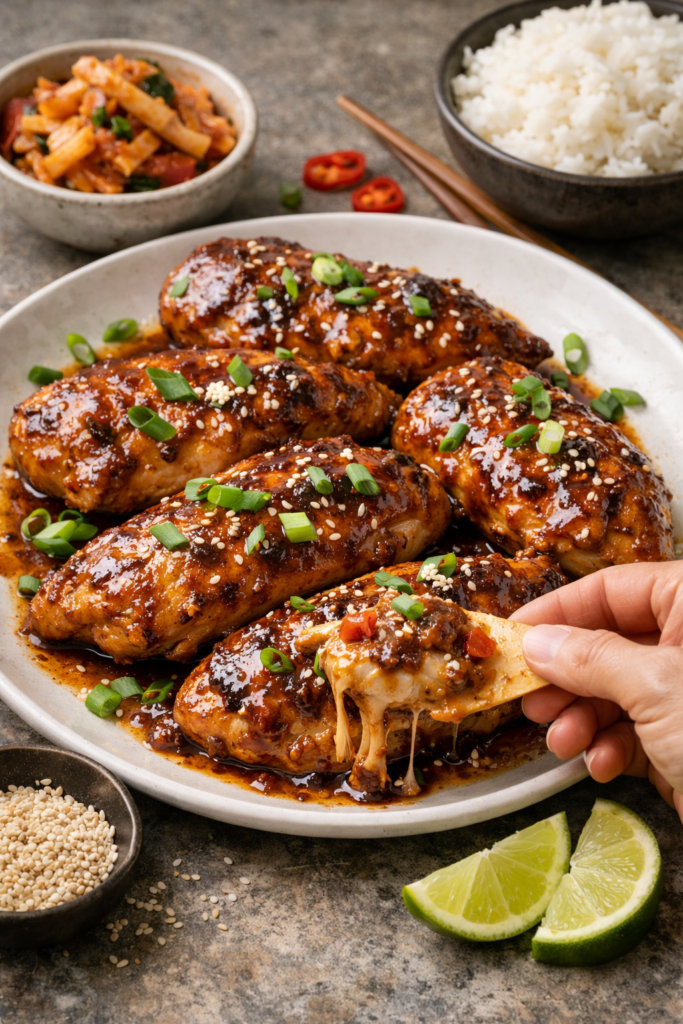
Korean Chicken Breast Recipes — Juicy, Saucy & Ready in 30 Minutes
A Korean-inspired chicken breast recipe with a balanced marinade that transforms the meat into a tender and juicy dish with a caramelized crust and sticky sweetness.
- 4 breasts boneless, skinless chicken breasts about 6 oz / 170g each
- 3 tbsp tbsp gochujang paste
- 3 tbsp tbsp low-sodium soy sauce
- 2 tbsp tbsp sesame oil
- 2 tbsp tbsp brown sugar
- 4 cloves cloves garlic minced
- 1 tbsp tbsp fresh ginger grated
- 2 tsp tsp rice vinegar
- sesame seeds
- sliced green onions
- steamed rice
Make the marinade
Whisk together gochujang, soy sauce, sesame oil, brown sugar, minced garlic, grated ginger, and rice vinegar in a bowl until smooth.
Pound and marinate
Place chicken breasts between two sheets of cling film and pound to an even thickness of about ¾ inch.
Submerge in marinade, cover, and refrigerate for at least 30 minutes — or up to 4 hours for deeper flavor penetration.
Sear with intent
Heat a cast iron or stainless skillet over medium-high heat.
Add neutral oil and sear chicken for 5–6 minutes on the first side without moving it.
Flip and finish
Flip the chicken and cook for another 4–5 minutes.
In the last 2 minutes, pour any remaining marinade over the top and let it reduce and glaze the meat.
Rest before cutting
Remove from heat and rest for 5 minutes.
Always slice against the grain for maximum tenderness.
- cast iron or stainless skillet
This recipe is perfect for a weeknight dinner and can be meal prepped for up to 4 days.
Did You Try Our Recipe ?
Scrumptious
My husband (who is extremely picky) loved the liver & onions so much!! I didn’t have any beef broth or Sherry so I used about a tbl of Worcestershire and 1/4 c of white wine …..it was scrumptious
Response from MeatRecipesBox
Oh wow, I’m so happy to hear that!! 😍 I love that you made it work with what you had on hand — Worcestershire and white wine sound like a delicious twist. So glad your husband enjoyed it, especially being picky! Thank you for sharing your version, it makes me smile knowing it turned out scrumptious!
This was amazing
This recipe turned out really amazing! It’s juicy and spiced deliciously. I definitely would use less of the spicy pepper next time, but it really was delicious and I don’t think I’ll make chicken legs any other way from now on.!
Response from MeatRecipesBox
Thank you for taking the time to leave such a thoughtful review. I’m really glad to hear the recipe turned out juicy and full of flavor for you. That’s exactly what I was hoping for when putting it together. Good call on the spicy pepper as well. Adjusting the heat level to your own taste is always the best approach, and using a little less next time should make it just right for you. I really appreciate you trying the recipe and sharing your experience. It’s great to know it worked so well for you.
I Didn’t Expect This Cornbeef Hash Recipe to Taste This Good!!
One skillet. A handful of simple ingredients. Thirty minutes on the clock. And somehow… I ended up with the crispiest, most comforting cornbeef hash recipe I’ve made in years.
I wasn’t expecting much—just a quick, no-fuss meal. But that first bite? Crispy edges, tender potatoes, smoky corned beef, a little kick of pepper. It tasted like something straight off a cozy diner griddle.
Honestly, it caught me off guard—in the best way. Here’s why this simple skillet completely won me over.


