
Korma isn’t just “the curry that isn’t spicy.” It’s an exercise in restraint — yogurt, ground nuts and caramelised onions doing the work that cream and heat do in other curries. The first time I understood korma properly was watching my Pakistani neighbour pull a jar of homemade cashew paste from her fridge. No cream. No food colouring. Just patience and the right ratio of ingredients. That’s the version you’ll get here.
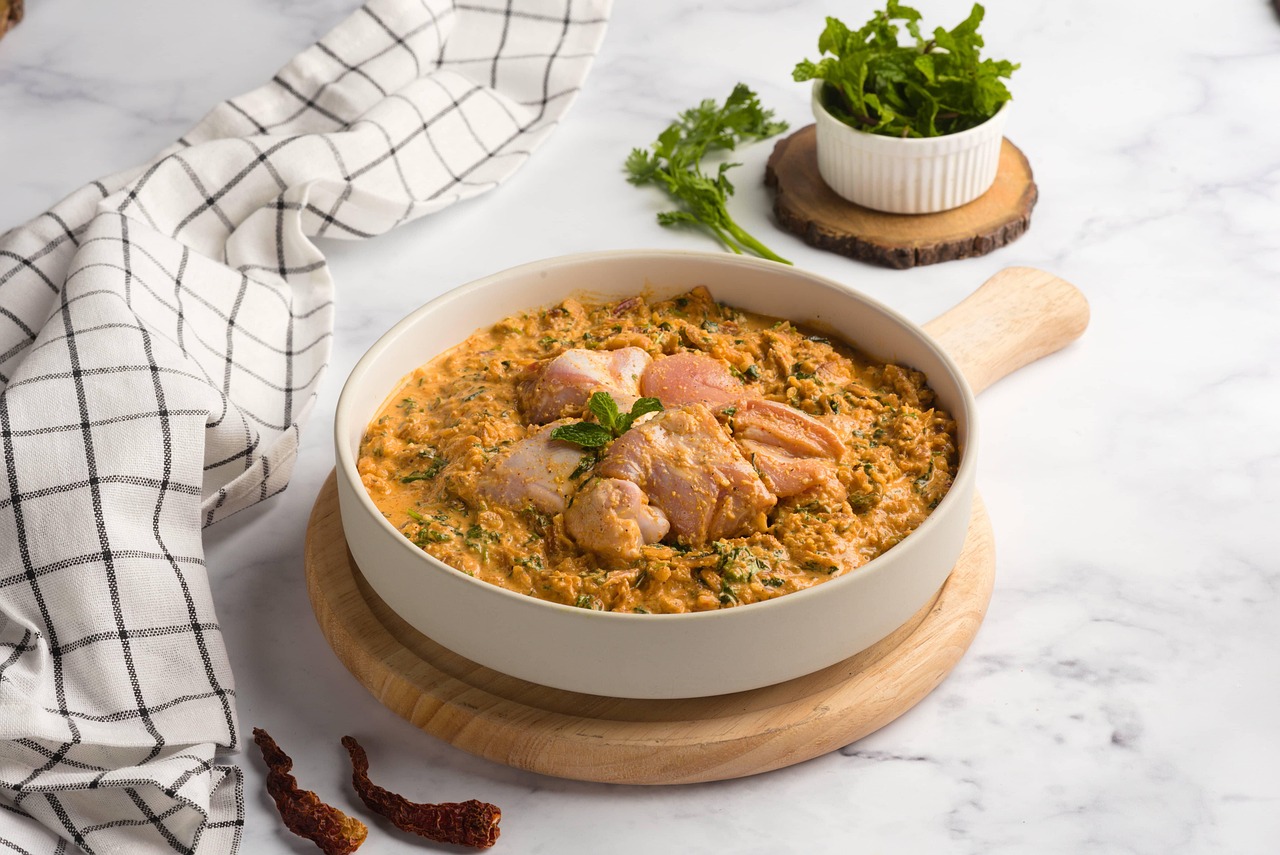
Chicken korma is a mild, creamy Mughlai curry where bone-in chicken simmers in a sauce built from ground nuts, yogurt and caramelised onions. Total cook time 55 min with a 30-minute marinade. Serves 4. Zero chilli heat by default; adjust with green chillies if you want warmth.
Jump to
What Makes This Chicken Korma Different
Most home kormas taste like sweetened curry sauce because they lean on cream and coconut milk to fake richness. This one doesn’t. The body comes from cashews and almonds ground into a paste, plus yogurt whisked in off the heat so it doesn’t split. The colour comes from turmeric and saffron, not paprika or food colouring. And the onions are cooked down slowly for 15 minutes before anything else joins the pan — that’s where 60% of the flavour lives.
Korma vs Tikka Masala vs Butter Chicken (Quick Comparison)
Three curries that look similar on a menu, three completely different techniques. Here’s the breakdown so you can pick the right one for tonight.
| Dish | Sauce base | Heat level | Marinade | Signature ingredient |
|---|---|---|---|---|
| Korma | Yogurt + ground nuts | None to mild | Yogurt, 30 min | Cashew paste |
| Tikka masala | Tomato + cream | Medium | Yogurt + tandoori spices, 4 h | Charred chicken tikka |
| Butter chicken | Tomato + butter + cream | Mild | Yogurt + garam masala, 2 h | Butter and honey finish |
| Pasanda | Yogurt + cream + almonds | None | Papaya + yogurt, 4 h | Tenderised meat, whole spices |
Ingredients You’ll Need
Marinade
- 700 g bone-in chicken thighs, skin removed
- 150 g full-fat plain yogurt
- 1 tbsp ginger-garlic paste
- ½ tsp turmeric
- ½ tsp salt
Sauce base
- 3 large onions, thinly sliced
- 50 g raw cashews
- 25 g blanched almonds
- 3 tbsp ghee (or neutral oil)
- 150 g full-fat yogurt (for the sauce)
- Pinch of saffron in 2 tbsp warm milk
Whole & ground spices
- 4 green cardamom, 2 black cardamom
- 1 cinnamon stick, 4 cloves, 2 bay leaves
- 1 tsp cumin seeds
- 1½ tsp ground coriander
- ½ tsp garam masala (added at the end)
- Fresh coriander to garnish
How to Make Chicken Korma, Step by Step

- Marinate the chicken.Combine chicken with yogurt, ginger-garlic paste, turmeric and salt in a bowl. Massage in and rest 30 minutes at room temperature (or up to 4 hours in the fridge). Longer isn’t better here — korma marinades aren’t like biryani.
- Caramelise the onions.Melt ghee in a heavy pan over medium heat. Add the sliced onions and cook 15 minutes, stirring every 2-3 minutes, until they’re the colour of milk chocolate. This is the slowest step. Do not rush it. Rushed onions = pale, flat korma.
- Make the nut paste.While the onions cook, soak cashews and blanched almonds in ½ cup hot water for 10 minutes. Blend to a smooth cream in a small blender. It should look like double cream, not gritty.
- Bloom the spices.Push the onions to one side. Add cumin seeds, cardamom, cinnamon, cloves and bay leaves to the ghee. Stir 30 seconds until fragrant, then mix everything together.
- Add chicken, sear briefly.Tip the marinated chicken (with its yogurt) into the pan. Turn heat up to medium-high and stir for 5 minutes to seal the outside. Add ground coriander now, plus 100 ml water.
- Whisk in yogurt off the heat.Cover and simmer 15 minutes on low. Then take the pan off the heat, wait one minute, whisk the second batch of yogurt into ¼ cup of the pan liquid separately, and pour it back in. This is how you avoid splitting.
- Finish with nut paste and saffron.Return to low heat. Stir in the nut paste, saffron milk and garam masala. Simmer 8 minutes uncovered until the sauce coats a spoon. Taste for salt. Rest 5 minutes off heat before serving.
How to Get That Restaurant-Style Silky Sauce
Home korma often ends up watery, chunky or split. Three techniques fix all three problems. First, blend your nut paste with hot (not cold) water — the heat starts breaking down the cashew starches, giving you a smoother emulsion. Second, use full-fat yogurt exclusively. Low-fat splits within 30 seconds of hitting hot liquid. Third, finish uncovered for the last 8 minutes so excess water evaporates and the sauce concentrates.
Common Mistakes That Ruin Korma (And How to Fix Them)
Variations Worth Trying
Dairy-free version
Swap yogurt for full-fat coconut milk (300 ml total, split as marinade + sauce). Use extra 20 g cashews to compensate. Slightly sweeter finish; still authentic to South Indian korma tradition.
South Indian style
Replace half the nut paste with fresh grated coconut. Add 6 curry leaves with the whole spices and finish with a squeeze of lime. Cleaner, brighter, less rich — closer to our Chettinad chicken.
Slow cooker
Do steps 1-4 on the stovetop. Transfer everything to a slow cooker, add the nut paste at the start, cook 4 hours on low. Whisk yogurt in during the last 15 minutes only.
What to Serve With Chicken Korma
Korma is rich, so it pairs best with something plain and starchy to soak it up. Basmati rice is the default — plain steamed, not seasoned. Naan or roti works too, especially if you want to eat with your hands. Skip flavoured rice like biryani; you’ll be doubling up on aromatics. On the side: cucumber raita to cool the palate (yes, even for a mild dish), kachumber for crunch, and a small bowl of lime pickle if anyone at the table wants heat.

Storage and Reheating
Questions Readers Ask
Is chicken korma always mild, or can I make it spicy?
Traditional korma has no chilli at all — the heat you sometimes taste in restaurant versions comes from added green chillies or Kashmiri chilli. To spice it up at home, add 2 slit green chillies with the whole spices, or ¼ teaspoon of black pepper at the end. Do not add red chilli powder; it changes the colour.
Can I use coconut milk instead of yogurt?
Yes, and it’s actually authentic to South Indian korma. Use 300 ml of full-fat coconut milk instead of the total yogurt (marinade + sauce combined). The flavour skews slightly sweeter and the sauce becomes more forgiving — coconut milk doesn’t split the way yogurt does.
Why does my korma sauce split when I add yogurt?
Cold yogurt hitting boiling liquid curdles instantly. Fix: pull the pan off the heat, whisk the yogurt into a ladle of warm pan liquid separately, then pour that mixture back into the pan. Also use full-fat — low-fat yogurt splits no matter what you do.
How do I thicken korma sauce without cream?
Add more nut paste — cashews are 21% starch and thicken as they cook. Alternatively, uncover the pan for the final 8 minutes to let excess water evaporate. Never use cornflour or roux in korma; both mask the aromatics.
What’s the difference between korma and pasanda?
Pasanda uses pounded, tenderised meat and includes cream on top of the yogurt and almonds. Korma is lighter — no cream, and the meat stays in bite-sized chunks. Both are mild Mughlai curries, but pasanda is richer and takes longer.
Can I make chicken korma ahead for a dinner party?
Yes, cook up to step 6 (before adding the nut paste) up to a day ahead. Finish with the paste and garam masala just before serving. This preserves the fresh aromatics and gives you the “just-cooked” restaurant taste when the guests arrive.
Save this to Pinterest
Pin the recipe now so you have it ready next time the mild-curry craving hits.
📌 Save to PinterestChicken Korma: Authentic Mild Curry Recipe (No Cream)
A mild, creamy Mughlai curry made with bone-in chicken, ground nuts, yogurt, and caramelised onions.
- 700g g bone-in chicken thighs skin removed
- 150g g full-fat plain yogurt
- 1 tbsp tbsp ginger-garlic paste
- 0.5 tsp tsp turmeric
- 0.5 tsp tsp salt
- 3 large onions thinly sliced
- 50g g raw cashews
- 25g g blanched almonds
- 3 tbsp tbsp ghee or neutral oil
- 150g g full-fat yogurt for the sauce
- 2 tbsp tbsp warm milk with a pinch of saffron
- 4 green cardamom
- 2 black cardamom
- 1 cinnamon stick
- 4 cloves
- 2 bay leaves
- 1 tsp tsp cumin seeds
- 1.5 tsp tsp ground coriander
- 0.5 tsp tsp garam masala added at the end
Marinate the chicken
Combine chicken with yogurt, ginger-garlic paste, turmeric and salt in a bowl. Massage in and rest 30 minutes at room temperature (or up to 4 hours in the fridge).
Caramelise the onions
Melt ghee in a heavy pan over medium heat. Add the sliced onions and cook 15 minutes, stirring every 2-3 minutes, until they're the colour of milk chocolate.
Make the nut paste
Soak cashews and blanched almonds in ½ cup hot water for 10 minutes. Blend to a smooth cream in a small blender.
Bloom the spices
Push the onions to one side. Add cumin seeds, cardamom, cinnamon, cloves and bay leaves to the ghee. Stir 30 seconds until fragrant, then mix everything together.
Add chicken, sear briefly
Tip the marinated chicken (with its yogurt) into the pan. Turn heat up to medium-high and stir for 5 minutes to seal the outside. Add ground coriander now, plus 100 ml water.
Whisk in yogurt off the heat
Cover and simmer 15 minutes on low. Then take the pan off the heat, wait one minute, whisk the second batch of yogurt into ¼ cup of the pan liquid separately, and pour it back in.
Finish with nut paste and saffron
Return to low heat. Stir in the nut paste, saffron milk and garam masala. Simmer 8 minutes uncovered until the sauce coats a spoon. Taste for salt. Rest 5 minutes off heat before serving.
- Heavy pan
- Small blender
Traditional korma has no chilli at all, but you can add green chillies or Kashmiri chilli for heat.


