
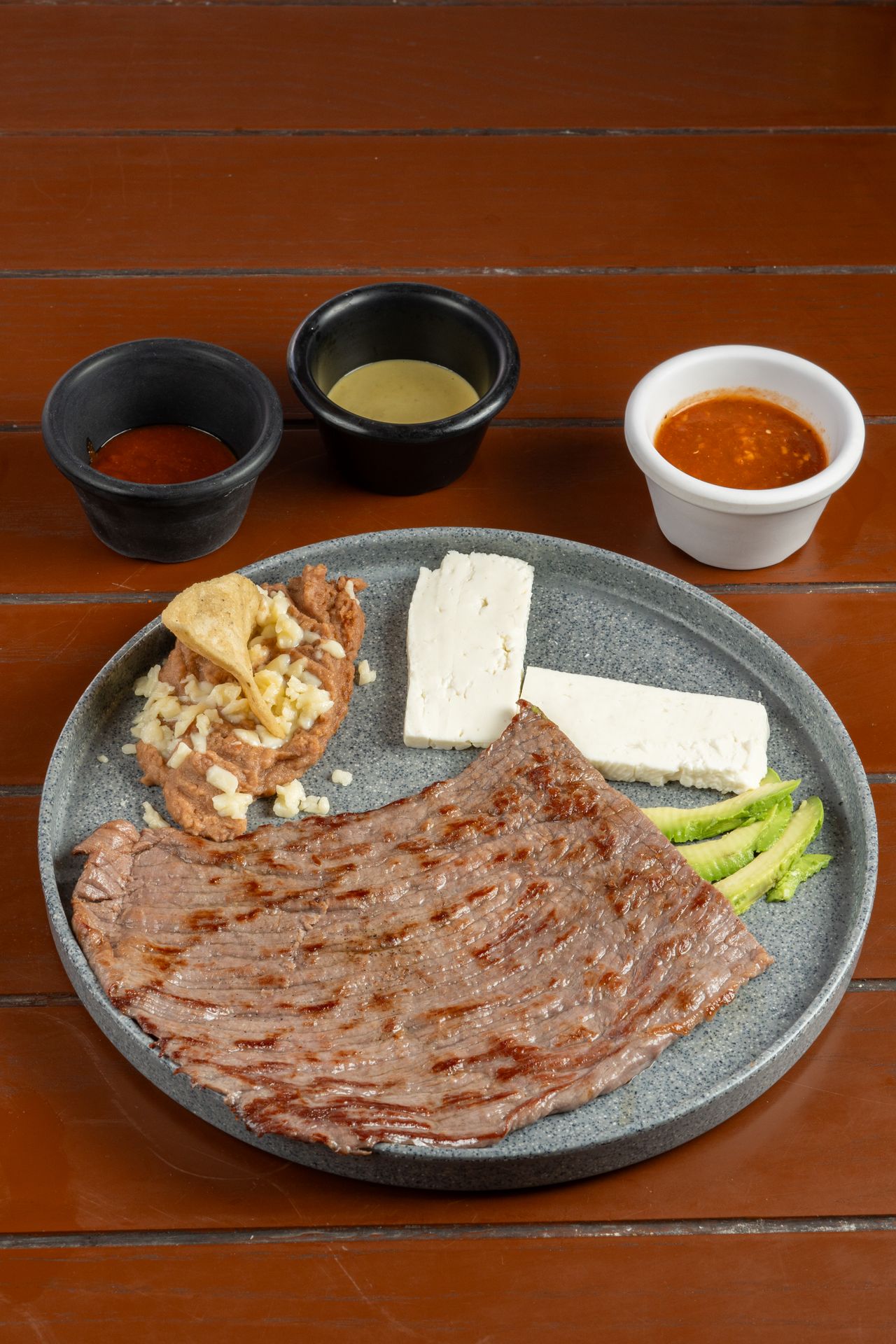
Carne asada literally means “grilled meat” — but at its best, it’s the specific Mexican combination of thin, marinated flank or skirt steak, seared hard over live fire, then sliced paper-thin against the grain and folded into a warm corn tortilla. Get the cut, the marinade, and the slicing right and you get the taqueria-quality plate everyone remembers. Get any of the three wrong and you get tough, chewy meat no marinade can save.
The short answer: Marinate flank or skirt steak in lime, orange juice, garlic, cumin, cilantro, and jalapeño for 2 to 8 hours. Grill over the hottest fire you can build — 3 minutes per side for skirt, 4-5 for flank. Rest 10 minutes, then slice thin against the grain. Serve with warm corn tortillas, chopped onion, cilantro, and lime.
What’s in this guide
Flank or Skirt? The Real Difference
Both cuts come from the belly area of the cow and both work for carne asada — but they cook differently, they taste differently, and one of them is objectively more forgiving. Here’s the honest breakdown:
| Cut | Thickness | Flavor | Cook time | Verdict |
|---|---|---|---|---|
| Skirt steak | ~½ inch (1.25 cm) | Beefier, more intense, more fat | 3 min per side | Best for tacos — traditional taqueria choice |
| Flank steak | ~¾ to 1 inch (2-2.5 cm) | Cleaner, leaner, milder | 4-5 min per side | Best for a plate — easier to slice, better for beginners |
| Outside skirt | ~½ inch | The premium option — most flavorful | 3 min per side | Ask your butcher — usually behind the counter, not in the case |
| Inside skirt | ~⅜ inch | Thinner, tougher, more chew | 2 min per side | Cheapest, but harder to nail |
The Carne Asada Marinade Formula
Every family and every restaurant has their own marinade, but they all follow the same structure. Get the ratio right and the ingredients become almost interchangeable.
| Function | Ingredient | Per 2 lb of steak |
|---|---|---|
| Acid (tenderizes) | Fresh lime juice | ¼ cup |
| Sweet acid (balances) | Fresh orange juice | ½ cup |
| Fat (carries flavor) | Olive or neutral oil | ¼ cup |
| Alliums | Garlic, minced | 5 cloves |
| Heat | Jalapeño, minced (seeded) | 1 whole |
| Herb | Fresh cilantro, chopped | 1 cup |
| Spice base | Ground cumin | 1 tsp |
| Spice depth | Chili powder or ancho powder | 1 tsp |
| Umami boost | Soy sauce or Worcestershire | 1 tbsp |
| Salt & pepper | Kosher salt, cracked black pepper | 1 tsp / ½ tsp |
Ingredients You’ll Need
The steak
- 2 lb (900 g) skirt steak or flank steak
- Extra kosher salt for finishing
The marinade
- ¼ cup fresh lime juice (2-3 limes)
- ½ cup fresh orange juice (1 large orange)
- ¼ cup olive oil
- 5 garlic cloves, minced
- 1 jalapeño, seeded and minced
- 1 cup fresh cilantro, chopped (stems included)
Spices & seasoning
- 1 tsp ground cumin
- 1 tsp ancho chile powder (or regular chili powder)
- 1 tbsp soy sauce or Worcestershire
- 1 tsp kosher salt
- ½ tsp freshly cracked black pepper
For serving (tacos)
- 16 small corn tortillas (5-inch)
- 1 white onion, finely diced
- 1 bunch fresh cilantro, chopped
- Fresh limes, cut into wedges
- Salsa verde or salsa roja
- Diced avocado (optional)
Step-by-Step: How to Cook Carne Asada
- Make the marinade. In a bowl or blender, combine the lime juice, orange juice, olive oil, garlic, jalapeño, cilantro, cumin, chili powder, soy sauce, salt, and pepper. Whisk (or pulse the blender) until well combined. Reserve ¼ cup of the marinade in a separate container for serving.
- Marinate the steak. Place the steak in a large zip-top bag or shallow dish. Pour the remaining marinade over the meat, making sure every surface is coated. Seal or cover and refrigerate for at least 2 hours, ideally 4 to 6 hours. Don’t go past 8 hours — the acid will start to break down the meat’s surface.
- Bring the steak to room temperature. Take the steak out of the fridge 30 minutes before grilling. Cold meat hitting a hot grill cooks unevenly — the outside chars before the inside warms. This step is not optional.
- Get the grill screaming hot. Heat your grill (or cast-iron skillet if indoors) to the highest possible temperature — 500°F / 260°C or more. Carne asada is a fast, hard sear, not a slow cook. Preheat for at least 10 minutes with the lid closed.
- Remove excess marinade. Lift the steak from the marinade and let excess drip off. Pat lightly with paper towels — wet meat steams instead of searing. Discard the used marinade.
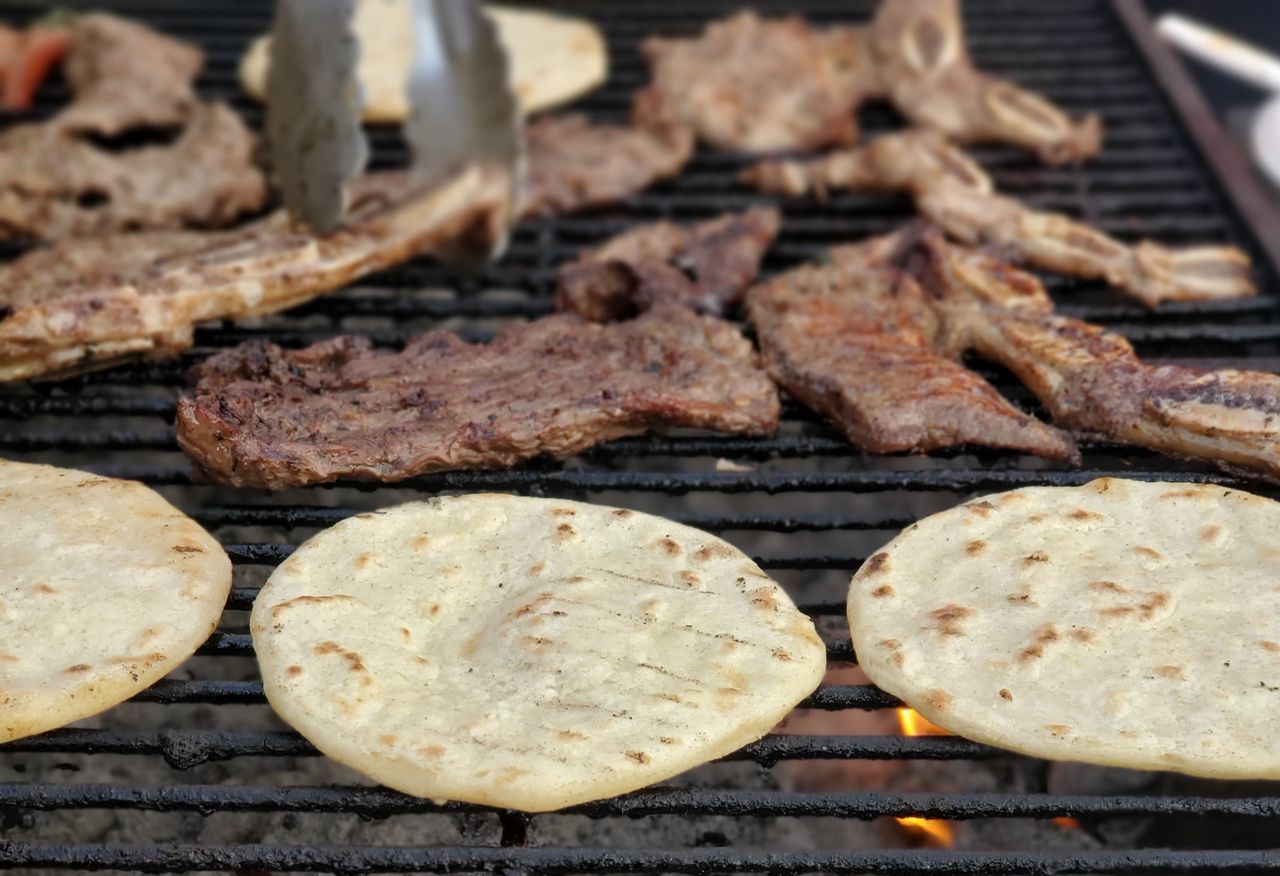
- Grill hot and fast. Place the steak on the hottest part of the grill. For skirt steak, cook 2 to 3 minutes per side. For flank steak, 4 to 5 minutes per side. Aim for an internal temperature of 130°F / 54°C for medium-rare — anything higher and thin cuts get chewy.
- Rest the steak. Transfer to a cutting board. Tent loosely with foil and let rest for a full 10 minutes. If you cut too early, all the juice runs onto the board and the meat turns dry. This is the single most important step after the sear.
- Slice thin, against the grain. Identify the direction of the muscle fibers (the “grain”) — they run in visible parallel lines. Rotate your knife 90° to those fibers and slice thin, about ⅛ inch (3 mm) thick. Cutting with the grain gives you rubber bands; cutting against gives you tender bites.
- Finish and serve. Sprinkle the sliced steak with a pinch of kosher salt and a squeeze of fresh lime. Drizzle with the reserved ¼ cup marinade. Serve with warm corn tortillas, diced onion, cilantro, lime wedges, and salsa on the side. Let each person build their own tacos.
▶ Watch: the full technique
Grill Times by Cut and Method
| Cut | Method | Heat | Time per side | Target temp |
|---|---|---|---|---|
| Skirt steak (½ inch) | Gas / charcoal grill | 500°F+ / 260°C+ | 2–3 min | 130°F / 54°C (medium-rare) |
| Skirt steak | Cast-iron skillet | Smoking hot | 2 min | 130°F / 54°C |
| Flank steak (¾ inch) | Gas / charcoal grill | 500°F+ / 260°C+ | 4–5 min | 130°F / 54°C |
| Flank steak | Broiler (top rack) | High broil | 4 min | 130°F / 54°C |
| Flank steak (thick 1 inch) | Grill | 500°F+ | 5–6 min | 130°F / 54°C |
| Inside skirt (⅜ inch) | Grill | 500°F+ | 1½–2 min | 130°F / 54°C |
The Slicing Rule (This Is Everything)
If you take one thing away from this recipe, take this: cut carne asada against the grain, thin, at a slight bias. Nothing else matters as much. Not the marinade, not the grill, not the rest. This one technique is the difference between “tough” carne asada and “tender” carne asada.
Find the grain
Look at the surface of the steak. You’ll see parallel lines running in one direction — those are the muscle fibers. On skirt and flank, they’re impossible to miss.
Rotate the knife 90°
Turn your blade perpendicular to the fibers. You want to cut across them, not with them. Cutting with the grain leaves long, chewy strands.
Slice thin — ⅛ inch max
Aim for pencil-thickness slices. The thinner the cut, the shorter the fibers, the more tender each bite. Use your longest, sharpest knife.
Cut at a bias
Angle the knife 45° instead of straight down. Longer surface area per bite, more marinade contact, better mouthfeel. This is what makes taqueria carne asada look like it does.
Regional Variations Worth Knowing
Arrachera (Northern Mexico)
Outside skirt steak marinated in beer, lime, and Worcestershire — the Monterrey and Sonoran version. Grilled over mesquite. This is the OG carne asada.
Baja-style
Marinade includes soy sauce and pineapple juice for extra tenderness. Served with grilled onions, guacamole, and pico. Big in Tijuana and Ensenada.
Southern California taqueria
Simpler marinade — just lime, garlic, salt, pepper — because they use higher-quality skirt. Chopped finely (not sliced) for tacos. The LA street style.
Carne Asada Fries
San Diego invention — carne asada, guacamole, sour cream, cheese, and pico piled over french fries. Late-night comfort. Not traditional, but iconic.
What to Serve With Carne Asada
Warm corn tortillas
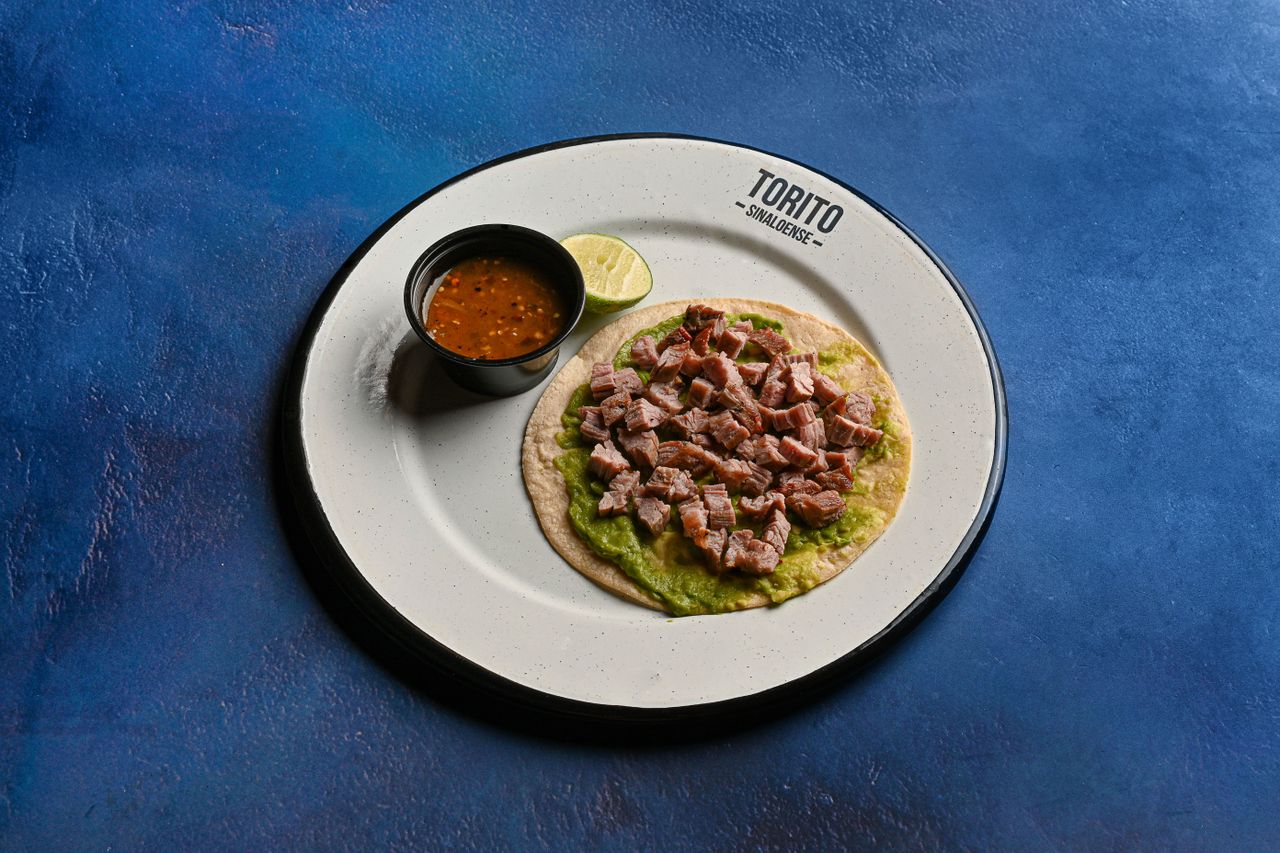
Not flour. Small 5-inch corn tortillas warmed on the grill for 20 seconds per side until pliable and slightly charred. This is non-negotiable for tacos.
Grilled scallions & jalapeños
Whole scallions and jalapeños grilled alongside the steak for 3 minutes. The taqueria table setup. Squeeze lime and sprinkle salt.
Guacamole and pico de gallo
Chunky guac made with lime, salt, and a pinch of cumin. Pico with tomato, onion, cilantro, jalapeño, lime.
Mexican rice and refried beans
If you’re building a plate instead of tacos, red rice and refried pinto beans. Add a wedge of lime and pickled onions on top.
Six Mistakes That Ruin Carne Asada
Storage and Reheating
Common Questions
Can I make carne asada in a pan instead of grilling?
Yes — use a heavy cast-iron skillet over the highest heat your stove can produce. Preheat until you see wisps of smoke. Cook the steak in a single layer, 2 to 3 minutes per side for skirt or 4-5 for flank. Open a window — it smokes.
What’s the best temperature for carne asada?
Pull it at 130°F / 54°C internal temperature for medium-rare. Thin cuts cook fast and continue rising 2-4°F during the rest. Anything past medium (140°F+) and skirt or flank turn dry and tough.
Do I need pineapple juice in the marinade?
No — that’s an add-on some Tex-Mex recipes use for extra tenderizing. Traditional Mexican carne asada uses only lime and orange juice for citrus. Pineapple’s bromelain enzyme is powerful and can turn the surface mushy fast, so keep it out unless you know what you’re doing.
Can I use flap steak or hanger steak instead?
Yes — flap meat (bavette) and hanger steak both work beautifully. Same marinade, same hot sear, same slice-against-the-grain rule. Hanger is a butcher’s-cut with big flavor if you can find it.
Why is my carne asada tough?
Three possible causes: you sliced with the grain, you overcooked past medium-rare, or you used inside skirt (which is thinner and tougher). The slicing is the most common culprit — check the fiber direction next time.
Is beer a good carne asada marinade ingredient?
In northern Mexico (Monterrey especially), yes — a dark Mexican lager like Negra Modelo adds malty depth. Skip if you’re keeping the recipe alcohol-free; the acid and citrus already do the tenderizing.

Carne Asada: Authentic Mexican Recipe (Flank or Skirt)
A traditional Mexican dish of grilled, marinated steak, served with warm corn tortillas, salsa, and lime
- 2 lb skirt steak or flank steak
- 1/4 cup fresh lime juice
- 1/2 cup fresh orange juice
- 1/4 cup olive oil
- 5 garlic cloves, minced
- 1 jalapeño, seeded and minced
- 1 cup fresh cilantro, chopped
- 1 tsp ground cumin
- 1 tsp ancho chile powder or regular chili powder
- 1 tbsp soy sauce or Worcestershire
- 1 tsp kosher salt
- 1/2 tsp freshly cracked black pepper
- 16 small corn tortillas
- 1 white onion, finely diced
- 1 bunch fresh cilantro, chopped
- fresh limes, cut into wedges
- salsa verde or salsa roja
- diced avocado (optional)
Make the marinade
Combine lime juice, orange juice, olive oil, garlic, jalapeño, cilantro, cumin, chili powder, soy sauce, salt, and pepper in a bowl or blender. Whisk until well combined.
Marinate the steak
Place the steak in a large zip-top bag or shallow dish. Pour the marinade over the meat, making sure every surface is coated. Seal or cover and refrigerate for at least 2 hours, ideally 4 to 6 hours.
Grill the steak
Heat your grill to the highest possible temperature. Remove excess marinade from the steak and pat lightly with paper towels. Grill the steak for 2 to 3 minutes per side for skirt steak, or 4 to 5 minutes per side for flank steak.
Rest and slice the steak
Transfer the steak to a cutting board and tent loosely with foil. Let rest for 10 minutes. Slice the steak thin, against the grain, at a slight bias.
Serve
Serve the sliced steak with warm corn tortillas, diced onion, cilantro, lime wedges, and salsa on the side. Let each person build their own tacos.
- Grill
- Cast-iron skillet
- Blender or bowl
- Zip-top bag or shallow dish
Traditional Mexican recipe for grilled steak, marinated in a mixture of lime juice, orange juice, garlic, and spices
Did You Try Our Recipe ?
Scrumptious
My husband (who is extremely picky) loved the liver & onions so much!! I didn’t have any beef broth or Sherry so I used about a tbl of Worcestershire and 1/4 c of white wine …..it was scrumptious
Response from MeatRecipesBox
Oh wow, I’m so happy to hear that!! 😍 I love that you made it work with what you had on hand — Worcestershire and white wine sound like a delicious twist. So glad your husband enjoyed it, especially being picky! Thank you for sharing your version, it makes me smile knowing it turned out scrumptious!
This was amazing
This recipe turned out really amazing! It’s juicy and spiced deliciously. I definitely would use less of the spicy pepper next time, but it really was delicious and I don’t think I’ll make chicken legs any other way from now on.!
Response from MeatRecipesBox
Thank you for taking the time to leave such a thoughtful review. I’m really glad to hear the recipe turned out juicy and full of flavor for you. That’s exactly what I was hoping for when putting it together. Good call on the spicy pepper as well. Adjusting the heat level to your own taste is always the best approach, and using a little less next time should make it just right for you. I really appreciate you trying the recipe and sharing your experience. It’s great to know it worked so well for you.
I Didn’t Expect This Cornbeef Hash Recipe to Taste This Good!!
One skillet. A handful of simple ingredients. Thirty minutes on the clock. And somehow… I ended up with the crispiest, most comforting cornbeef hash recipe I’ve made in years.
I wasn’t expecting much—just a quick, no-fuss meal. But that first bite? Crispy edges, tender potatoes, smoky corned beef, a little kick of pepper. It tasted like something straight off a cozy diner griddle.
Honestly, it caught me off guard—in the best way. Here’s why this simple skillet completely won me over.


