
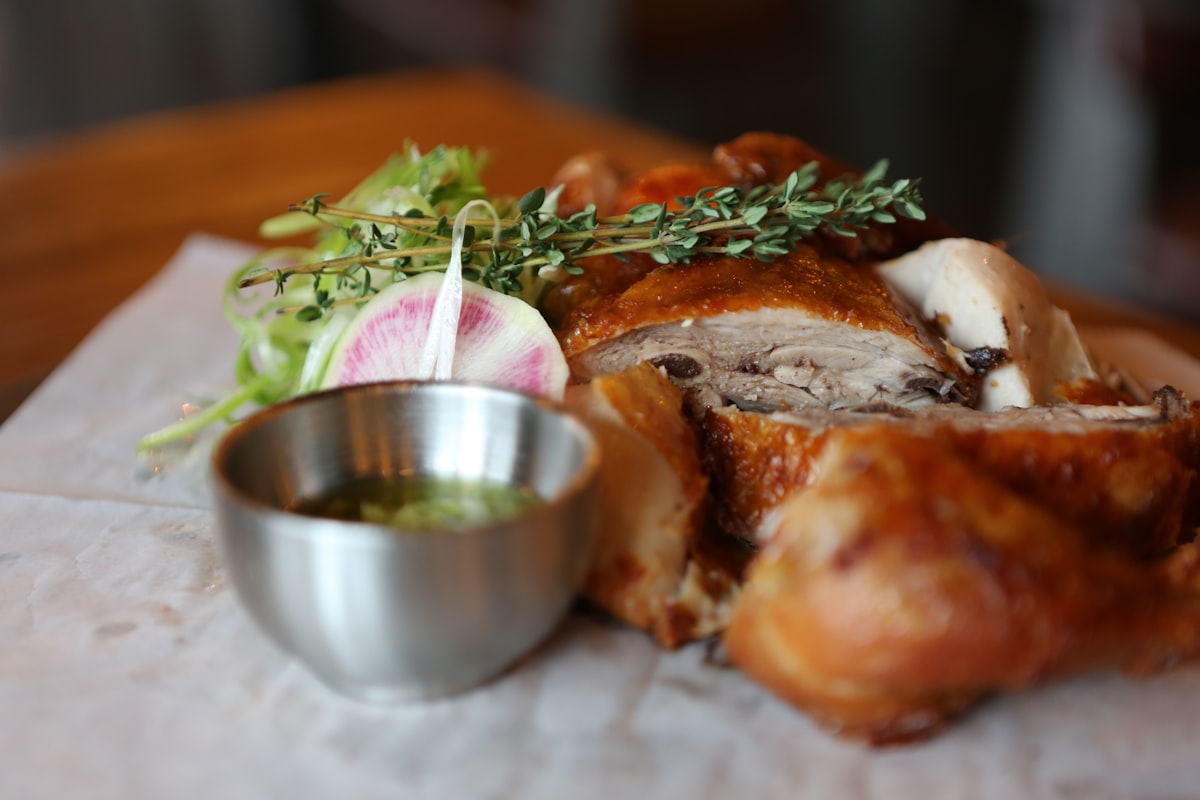
The two ají pastes that make it Peruvian
Without ají panca and ají amarillo, you’re roasting a generic chicken with soy sauce. These two Peruvian chili pastes carry the entire flavor identity of the dish. Ají panca is a mild smoked-red pepper with berry undertones — it builds the dark mahogany color and the deep umami base. Ají amarillo is a bright, fruity yellow pepper (medium heat) that adds the top-note zing. Both come as jarred pastes in any Latin market or online. The Daring Gourmet’s authentic version refuses to substitute either.
Ingredients for 4 servings
- 1 whole chicken (4-4.5 lb / 1.8-2 kg)
- 3 tbsp ají panca paste
- 2 tbsp ají amarillo paste
- 6 garlic cloves, grated
- ¼ cup (60 ml) soy sauce
- 3 tbsp red wine vinegar
- 2 tbsp fresh lime juice
- ½ cup (120 ml) dark beer (stout or porter)
- 2 tbsp olive oil
- 1 tbsp ground cumin
- 1 tbsp smoked paprika
- 2 tsp dried oregano
- 2 tsp fine sea salt
- 1 tsp freshly ground black pepper
- 1 tsp honey
For the ají verde sauce (see recipe below): jalapeño, cilantro, mayonnaise, lime, garlic, ají amarillo.
The method — spatchcock, marinate, roast
- Spatchcock the chicken. Flip the bird breast-down. Using kitchen shears, cut along both sides of the backbone and remove it. Flip breast-up and press hard on the sternum to flatten. This is what mimics the flat rotisserie exposure at home — every square inch of skin now touches heat evenly.
- Blend the marinade. Combine both ají pastes, garlic, soy sauce, vinegar, lime juice, beer, oil, cumin, paprika, oregano, salt, pepper, and honey in a blender. Pulse to a smooth paste. It should look like liquid mahogany.
- Marinate 24 hours. Rub the paste under the skin and all over the surface. Slide the bird into a large zip bag with the rest of the marinade. Refrigerate 24 hours minimum, 48 for real depth. Shorter than 12 hours and the flavor stays on the skin only.
- Bring to room temperature. Pull the chicken from the fridge 45 minutes before roasting. A cold-center bird cooks unevenly and leaves the breast dry by the time the thigh hits temperature.
- Preheat to 425 °F (220 °C). Set a wire rack over a rimmed sheet pan. Place the spatchcocked bird skin-up on the rack. Pat the skin dry — moisture blocks browning.
- Roast 55-65 minutes. The thigh should read 175 °F (80 °C) at the deepest joint and the breast 165 °F (74 °C). Skin should be deep mahogany, almost blackened at the wing tips. If it darkens too fast, tent loosely with foil at the 40-minute mark.
- Rest 10 minutes, then carve. Skip the rest and you lose the juices onto the cutting board. Ten minutes uncovered on a warm plate keeps the skin crispy while the meat reabsorbs. Cut into quarters through the natural joints.
Watch the technique
America’s Test Kitchen figured out how to reproduce a rotisserie chicken in a home oven without a spit — the spatchcock geometry, the rack position, and the exact temperature curve.
The ají verde green sauce — non-negotiable
Ask any Peruvian: the chicken is the vehicle, the sauce is the reason. Salsa verde peruana (or crema de ají) is a bright, spicy green emulsion that gets poured over everything on the plate. Restaurants guard their recipes; here’s the version that gets closest to the Lima street-corner benchmark.
Blend on high until silky: 1 large jalapeño (seeds removed for medium heat, kept for fire), 1 cup cilantro (leaves and tender stems), ¾ cup mayonnaise, 2 tbsp ají amarillo paste, 2 garlic cloves, 2 tbsp lime juice, ¼ cup crumbled queso fresco (or feta), 2 tbsp olive oil, ½ tsp salt.
Chill 30 minutes before serving. Keeps 5 days refrigerated — the flavor deepens by day two.
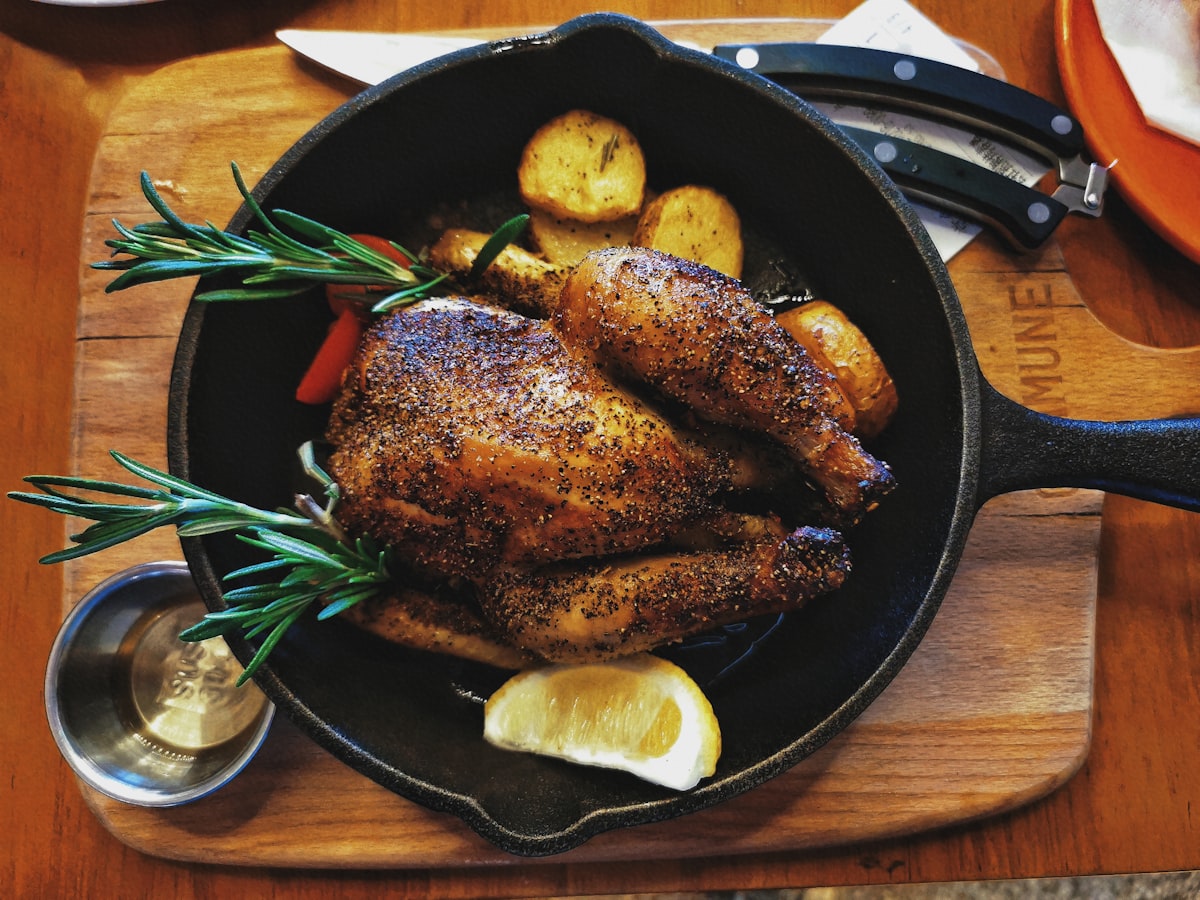
Three mistakes that ruin pollo a la brasa
How Peruvians serve it
In every pollería from Lima to Arequipa, the plate arrives the same way: a quarter chicken (breast or leg, your choice), a mountain of thick-cut french fries, a light salad of lettuce, tomato, and cucumber, and three sauces on the side — ají verde, ketchup, and yellow mustard. That’s it. No rice, no beans, no fancy vegetables. The Peruvian home version keeps the same trio.
The mixed drinks that go with it are just as fixed: an ice-cold Inca Kola (Peru’s neon-yellow bubblegum soda) for the traditional pairing, or a chilled pilsner if you want to cut the richness with something drier.
Your pollo a la brasa questions
Can I make it without ají panca and amarillo?
You can make roast chicken, not pollo a la brasa. The closest substitute if you’re truly stuck: 2 tsp ancho chili powder + 1 tsp chipotle + ½ tsp smoked paprika replaces ají panca in a pinch; there’s no real substitute for ají amarillo’s fruity heat. Order the pastes online — they last 6 months refrigerated after opening.
Do I really need a whole chicken? Can I use thighs?
Thighs work beautifully — cut the marinade quantities by a third and reduce roast time to 35-40 minutes at the same temperature. But the whole-bird version is what the Peruvian tradition calls for, and the presentation is half the pleasure.
What if I don’t have a wire rack?
Use a bed of thick-cut onion rounds or halved potatoes as a “vegetable rack.” The chicken sits above the pan floor, air circulates underneath, and the onions become a bonus side dish soaked in dripping marinade. Not a hardship at all.
Can I grill it instead of roasting?
Yes, and it’s actually more authentic — pollo a la brasa is grilled over hardwood coals in Peru. Set a gas grill to 400 °F with indirect heat, or bank charcoal to one side. Cook skin-side down for 20 minutes over indirect heat, flip, and finish 25-30 minutes. Move to direct heat for the last 3 minutes to crisp the skin.
How do I reheat leftover pollo a la brasa?
Never the microwave — the skin turns to leather. Instead: 375 °F oven, 12 minutes on a wire rack, uncovered. The skin re-crisps and the meat stays juicy. Save the ají verde in a separate container and add fresh when serving; the sauce loses its vibrancy after 5 days.
Once you’re hooked on Peruvian marinades, try our anticuchos beef heart skewers — same ají panca base — or the lomo saltado stir-fry, Peru’s other national dish. Both use the same pantry you just stocked.
Peruvian Pollo a la Brasa: Authentic Recipe with Ají Verde
Did You Try Our Recipe ?
Scrumptious
My husband (who is extremely picky) loved the liver & onions so much!! I didn’t have any beef broth or Sherry so I used about a tbl of Worcestershire and 1/4 c of white wine …..it was scrumptious
Response from MeatRecipesBox
Oh wow, I’m so happy to hear that!! 😍 I love that you made it work with what you had on hand — Worcestershire and white wine sound like a delicious twist. So glad your husband enjoyed it, especially being picky! Thank you for sharing your version, it makes me smile knowing it turned out scrumptious!
This was amazing
This recipe turned out really amazing! It’s juicy and spiced deliciously. I definitely would use less of the spicy pepper next time, but it really was delicious and I don’t think I’ll make chicken legs any other way from now on.!
Response from MeatRecipesBox
Thank you for taking the time to leave such a thoughtful review. I’m really glad to hear the recipe turned out juicy and full of flavor for you. That’s exactly what I was hoping for when putting it together. Good call on the spicy pepper as well. Adjusting the heat level to your own taste is always the best approach, and using a little less next time should make it just right for you. I really appreciate you trying the recipe and sharing your experience. It’s great to know it worked so well for you.
I Didn’t Expect This Cornbeef Hash Recipe to Taste This Good!!
One skillet. A handful of simple ingredients. Thirty minutes on the clock. And somehow… I ended up with the crispiest, most comforting cornbeef hash recipe I’ve made in years.
I wasn’t expecting much—just a quick, no-fuss meal. But that first bite? Crispy edges, tender potatoes, smoky corned beef, a little kick of pepper. It tasted like something straight off a cozy diner griddle.
Honestly, it caught me off guard—in the best way. Here’s why this simple skillet completely won me over.


