

Doro wat is Ethiopia’s national dish — a deep-red, deeply spiced chicken stew where the onions do most of the work. It’s slow food in the truest sense: five or six large onions cooked down for a full hour, without oil at first, until they collapse into a sweet pulp that forms the base of the sauce. Then comes the niter kibbeh (spice-infused clarified butter), the berbere (Ethiopia’s signature chile-and-spice blend), and finally the bone-in chicken and hard-boiled eggs. Served on injera — the sourdough flatbread that doubles as plate and utensil — it’s the kind of dish that turns a Sunday into a ritual.
The short answer: Cook 6 large red onions dry (no oil) for 45 minutes until fully broken down, then add niter kibbeh, garlic, ginger, and berbere. Simmer 15 minutes to bloom the spices. Add lemon-rinsed bone-in chicken, cook 30 minutes. Add hard-boiled eggs in the last 10. Serve with injera. Take your time — this is not a weeknight dish.
What’s in this guide
- What doro wat actually is
- Berbere: buy it or make it?
- Niter kibbeh (Ethiopian spiced butter)
- The one-hour onion rule
- Best cut of chicken (and the lemon rinse)
- Ingredients you’ll need
- Step-by-step method
- Cook times by method
- Variations and mild versions
- What to serve with doro wat
- Common mistakes
- Storage and reheating
- Common questions
What Doro Wat Actually Is
The name breaks down simply: doro means chicken, wat means stew. It’s the most famous of Ethiopia’s wat family (yebeg wat is lamb, sik sik wat is beef, misir wat is red lentils), and it’s the centerpiece of religious holidays — Easter and Christmas in the Ethiopian Orthodox calendar, wedding banquets, feast days.
Structurally, doro wat is unlike almost any other chicken stew. There’s no browning, no searing, no sautéing in oil at the start. Everything is built on the base of dry-cooked onions — five or six large ones, cooked in a heavy pot without any fat until they turn soft, then jammy, then almost paste-like. That onion base is the entire structural backbone of the sauce.
Berbere: The Whole Flavor of the Dish
Berbere is Ethiopia’s iconic spice blend — deep red, warm, aromatic, medium-hot. It’s what makes doro wat taste like doro wat. A good berbere contains 15 to 20 ingredients: dried chiles, fenugreek, paprika, ginger, cardamom, coriander, cumin, cloves, cinnamon, nutmeg, allspice, garlic and onion powder, black pepper, and often ajwain or nigella seeds.
| Berbere source | Notes |
|---|---|
| Ethiopian grocery / Amazon (Brundo, Ethiopia Wolde) | Best option — authentic blend, correct heat |
| Well-stocked international market | Common now in Whole Foods, Wegmans, etc. |
| Homemade blend | Best control; requires 15+ spices toasted and ground |
| Substitute (last resort) | 3 parts smoked paprika + 1 part cayenne + ½ tsp fenugreek + ½ tsp cardamom — imperfect but functional |
Niter Kibbeh: The Spiced Clarified Butter
Niter kibbeh is Ethiopian clarified butter infused with spices — cardamom, cumin, fenugreek, cinnamon, cloves, ginger, and often nigella seeds. It’s what gives doro wat (and most Ethiopian wats) their aromatic depth. Buy it at any Ethiopian market, or make a small batch in 20 minutes:
Melt 1 lb (450 g) unsalted butter over low heat with 3 crushed cardamom pods, 1 tsp cumin seeds, 1 tsp fenugreek seeds, 1 cinnamon stick, 4 cloves, and a 2-inch piece of fresh ginger. Simmer very gently for 15 minutes until the milk solids drop to the bottom and turn golden. Strain through cheesecloth. Keeps 6 months refrigerated. Use it in every Ethiopian dish you cook.
The One-Hour Onion Rule
This is the single most important technique in doro wat, and it’s the one every shortcut recipe skips. The onions are the entire body of the sauce — not the chile, not the butter, not the chicken. Five to six large red onions, finely diced, cooked in a heavy pot with the lid on but no oil, over medium-low heat, for about 60 minutes.
What happens: the onions release their own water, then start to caramelize in their own sugars. After 40 minutes they collapse into a soft golden pulp. After 60 minutes they’re almost jammy, sweet, translucent-red. That mass is what will hold the berbere and coat the chicken. Skip this step and you get a thin, harsh stew.
Best Cut of Chicken (and the Lemon Rinse)
Traditional Ethiopian doro wat uses a whole chicken cut into 8 pieces — thighs, drumsticks, wings, and breast halves. Modern home versions often stick to bone-in thighs and drumsticks, which are more forgiving. The skin is always removed — this is not a crispy-skin dish, and the fat renders into the sauce and makes it greasy if left on.
The lemon rinse is traditional and functional. Before cooking, the chicken pieces are rubbed with lemon juice and salt, then rinsed with cold water. This does two things: acidifies the meat’s surface (slight tenderizing) and removes any surface off-flavors from packaged chicken.
Ingredients You’ll Need
The chicken
- 3 lb (1.35 kg) bone-in chicken thighs and drumsticks, skin removed
- Juice of 1 lemon (for the rinse)
- 1 tsp salt (for the rinse)
- 4 hard-boiled eggs, peeled and pricked with a fork
The onion base
- 6 large red onions (about 3 lb / 1.35 kg), very finely diced
- 8 garlic cloves, grated or minced
- 2 tbsp fresh ginger, grated
The wat sauce
- 4 tbsp niter kibbeh (or ghee + cardamom/cumin/fenugreek)
- 3 tbsp berbere spice blend (adjust to heat tolerance)
- 1 tbsp tomato paste
- ½ tsp ground cardamom
- ½ tsp ground fenugreek
- 1½ cups chicken stock or water
- Salt to taste
To serve
- Injera flatbread (store-bought or homemade)
- Extra hard-boiled eggs (traditional — often served whole per person)
- Cottage cheese or ayib (Ethiopian fresh cheese) to cool the heat
Step-by-Step: How to Make Doro Wat
- Prep the chicken. Remove the skin from all pieces. Rub each piece with lemon juice and salt, let sit for 5 minutes, then rinse under cold water and pat dry. Set aside in the fridge while you build the base.
- Dry-cook the onions. Place the diced onions in a large heavy-bottomed pot (Dutch oven works perfectly). Cover with a lid, set over medium-low heat, and cook with no oil for 45 to 60 minutes. Stir every 8 to 10 minutes. The onions will release water, then slowly reduce and turn deep golden. This is the foundation — don’t rush it.
- Add fat and aromatics. When the onions have collapsed into a soft, jammy mass, add the niter kibbeh, garlic, and ginger. Cook, stirring, for 5 minutes until fragrant. The onions will now start to caramelize deeper and turn a rich mahogany color.
- Bloom the berbere. Push the onions to one side. Add the tomato paste to the empty spot and let it caramelize for 60 seconds. Sprinkle the berbere over the top and toast in the fat for another 60 seconds — this releases the spices’ oils and deepens the color. Stir it all together.
- Build the sauce. Add the cardamom, fenugreek, and 1 cup of the chicken stock. Bring to a bare simmer. Cook uncovered for 10 minutes, stirring occasionally, until the sauce thickens and takes on a glossy, deep-red color.
- Add the chicken. Nestle the chicken pieces into the sauce, coating each piece well. Add the remaining ½ cup of stock — you want the sauce to come about halfway up the chicken. Cover and simmer at very low heat 195°F / 90°C for 30 minutes, turning the pieces once halfway through.
- Add the eggs. Prick each hard-boiled egg all over with a fork (this lets the sauce penetrate the whites). Nestle the eggs into the sauce during the last 10 minutes of cooking. They’ll take on the deep red color and absorb the spice.
- Rest and adjust. Remove from heat, taste for salt, and let the wat sit covered for 10 minutes before serving. The flavors marry and the sauce thickens further.
- Serve on injera. Spoon the doro wat onto a large piece of injera flatbread. Place the eggs on top or alongside. Tear off pieces of extra injera and use them to scoop everything — no cutlery. That’s the point.
▶ Watch: the full technique
Cook Times by Method
| Method | Temperature | Total Time | Notes |
|---|---|---|---|
| Stovetop (traditional Dutch oven) | Very low, bare simmer | 2 h 15 min | The way it should be made — best texture |
| Oven (transfer after step 6) | 300°F / 150°C, covered | 2 h 30 min | Hands-off after braise starts |
| Instant Pot (after onion base) | High pressure | 1 h 30 min total | Onions still need 45 min on Sauté first |
| Slow cooker (after onion base) | LOW | 1 h prep + 4 h slow | Onions and berbere prep on stovetop |
| Doubled batch (feast style) | Same temp | 3 h+ | Onion time scales; use two pots |
Variations and Mild Versions
Alicha Doro (mild version)
Made without berbere — uses turmeric, cardamom, and ginger instead. Yellow-gold color, warm and aromatic but not spicy. Served during Ethiopian Orthodox fasting periods when meat isn’t allowed. Great for kids.
Doro Alicha (turmeric version)
Same as above but with chicken. A lighter, gentler wat, still with the caramelized onion base but no chile heat. Good starting point if berbere isn’t in your pantry yet.
Yebeg Wat (lamb wat)
Same technique, lamb shoulder cubes instead of chicken. Braising time goes up to 90 minutes because lamb takes longer to become tender. The richer meat pairs beautifully with berbere.
Sega Wat (beef wat)
Beef chuck cubes, same onion base and berbere. Cook time similar to lamb. The stronger meat flavor stands up to the berbere better than chicken in some cooks’ opinion.
What to Serve With Doro Wat
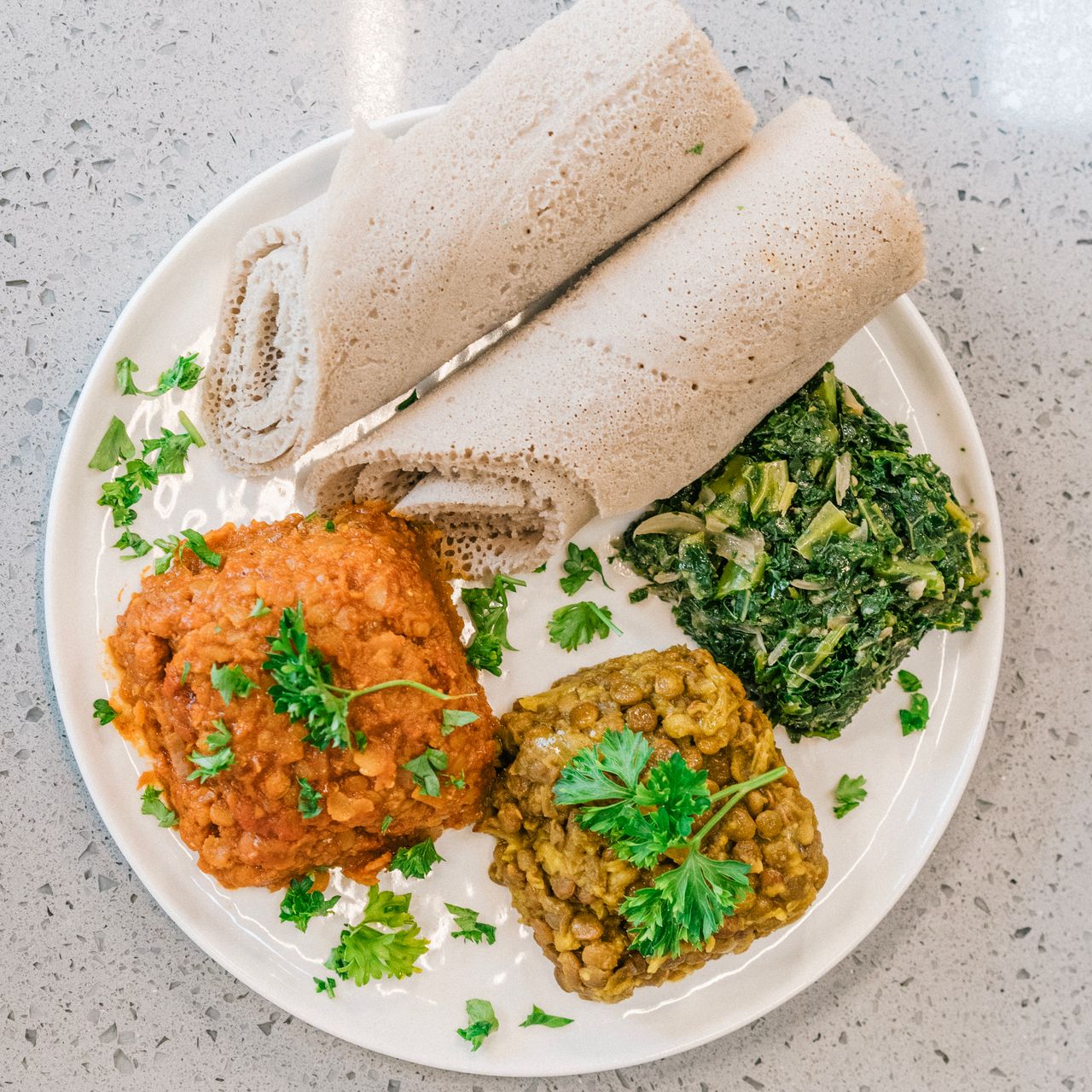
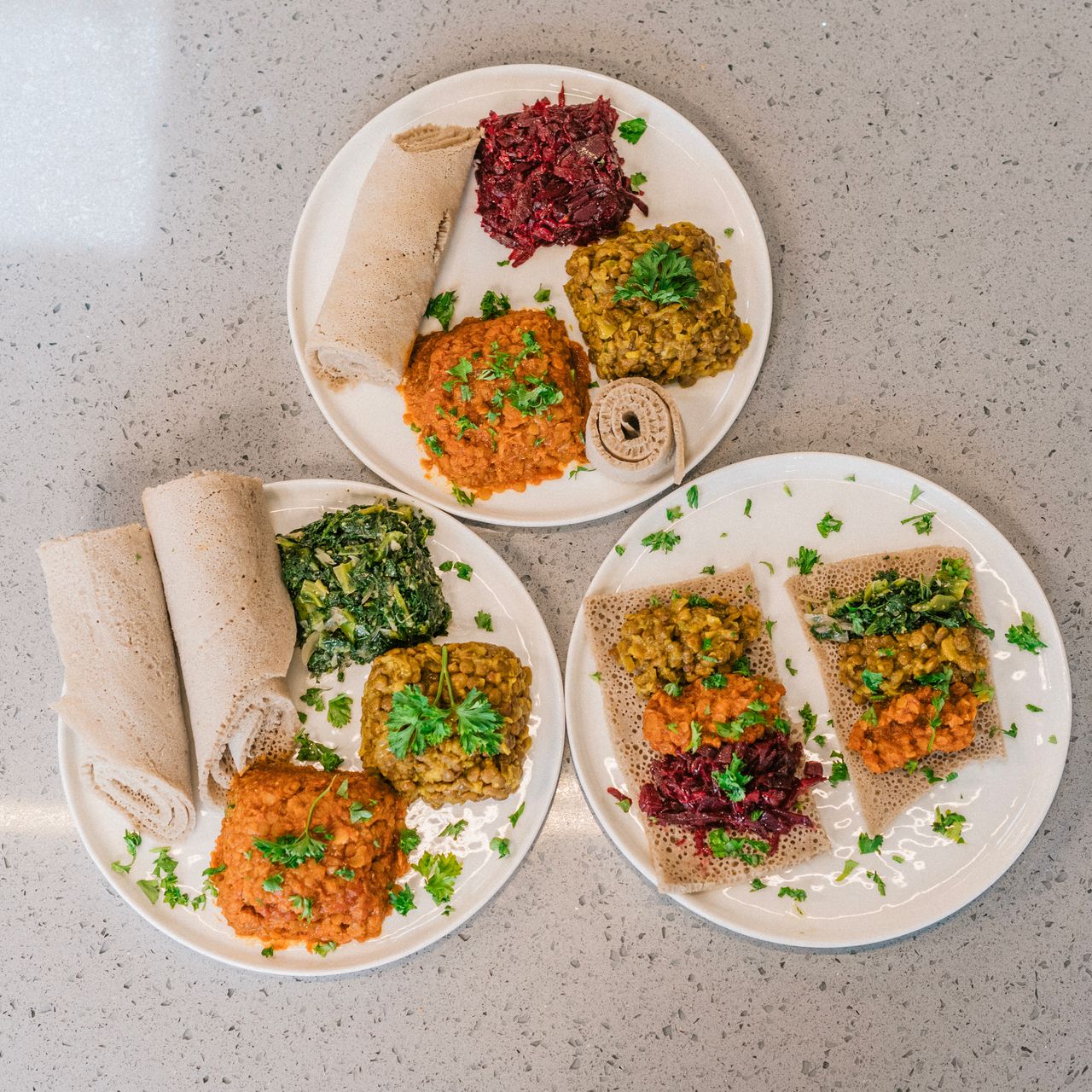
Injera
The sourdough teff flatbread that serves as both plate and utensil. Find it at Ethiopian markets or bake sourdough alternatives from teff flour. The sour tang is a perfect counterpoint to the spicy wat.
Misir Wat (red lentil stew)
Doro wat’s closest relative — same berbere base, red lentils instead of meat. Serving both on the same injera is traditional and non-optional at any Ethiopian meal.
Gomen (collard greens)
Ethiopian braised collards with ginger, garlic, and a touch of green chile. The bright, bitter greens cool the palate between bites of wat.
Ayib (fresh cheese)
A crumbly, mild cottage-cheese-adjacent Ethiopian cheese. Served in a small mound alongside the wat to cut the heat. Cottage cheese works as a substitute.
Five Mistakes That Ruin Doro Wat
Storage and Reheating
Common Questions
How spicy is doro wat?
Traditional doro wat is medium-hot — noticeable warmth but not painful. The heat comes from the berbere spice blend, not from fresh chiles. Reduce the berbere by half for a mild version, or make alicha doro (turmeric-based, no berbere) for a fully mild alternative. Cottage cheese served alongside also cools the heat.
What can I substitute for berbere?
The closest DIY substitute is 3 tbsp smoked paprika + 1 tsp cayenne + ½ tsp ground fenugreek + ½ tsp ground cardamom + ¼ tsp ground cloves + ¼ tsp ground cinnamon. It’s not identical — you’ll miss the toasted-chile depth — but it gets you 80% of the way there. Real berbere is available on Amazon and worth the wait.
Do I really need to cook the onions for an hour?
Yes. The dry-cooked onion base is what gives doro wat its signature body and sweetness — it’s what turns a spicy braise into a rich, jammy stew. Cutting the onion time in half produces a fundamentally different (and less good) dish. This is not a step that can be shortcutted.
Where can I buy injera?
Ethiopian and Eritrean markets carry it fresh or frozen. In North American cities with an Ethiopian diaspora (DC, Minneapolis, Atlanta, Toronto), it’s often available at general international markets. Online, several US brands ship nationwide. Frozen injera reheats well — just warm briefly wrapped in a damp cloth.
Why do Ethiopians add hard-boiled eggs to doro wat?
Eggs are the traditional accompaniment — one whole egg per guest is the standard at Ethiopian celebrations. Eggs also symbolize fertility and abundance in Ethiopian Orthodox culture, which is why doro wat is the signature dish at Easter and wedding banquets. Prick the eggs so they absorb the sauce and turn deep red.
Can I make doro wat in a slow cooker?
Partially. The onion base and berbere bloom must happen on the stovetop — those steps require concentrated heat and stirring. Once the sauce is built, you can transfer everything to a slow cooker on LOW for 4 hours. Add the eggs in the last 30 minutes. Convenient, but the flavor is slightly less concentrated than the fully stovetop version.
Loved this recipe?
Explore more slow-braised chicken classics from around the world.
See more recipes →Doro Wat: Authentic Ethiopian Chicken Stew Recipe
Did You Try Our Recipe ?
Scrumptious
My husband (who is extremely picky) loved the liver & onions so much!! I didn’t have any beef broth or Sherry so I used about a tbl of Worcestershire and 1/4 c of white wine …..it was scrumptious
Response from MeatRecipesBox
Oh wow, I’m so happy to hear that!! 😍 I love that you made it work with what you had on hand — Worcestershire and white wine sound like a delicious twist. So glad your husband enjoyed it, especially being picky! Thank you for sharing your version, it makes me smile knowing it turned out scrumptious!
This was amazing
This recipe turned out really amazing! It’s juicy and spiced deliciously. I definitely would use less of the spicy pepper next time, but it really was delicious and I don’t think I’ll make chicken legs any other way from now on.!
Response from MeatRecipesBox
Thank you for taking the time to leave such a thoughtful review. I’m really glad to hear the recipe turned out juicy and full of flavor for you. That’s exactly what I was hoping for when putting it together. Good call on the spicy pepper as well. Adjusting the heat level to your own taste is always the best approach, and using a little less next time should make it just right for you. I really appreciate you trying the recipe and sharing your experience. It’s great to know it worked so well for you.
I Didn’t Expect This Cornbeef Hash Recipe to Taste This Good!!
One skillet. A handful of simple ingredients. Thirty minutes on the clock. And somehow… I ended up with the crispiest, most comforting cornbeef hash recipe I’ve made in years.
I wasn’t expecting much—just a quick, no-fuss meal. But that first bite? Crispy edges, tender potatoes, smoky corned beef, a little kick of pepper. It tasted like something straight off a cozy diner griddle.
Honestly, it caught me off guard—in the best way. Here’s why this simple skillet completely won me over.


