
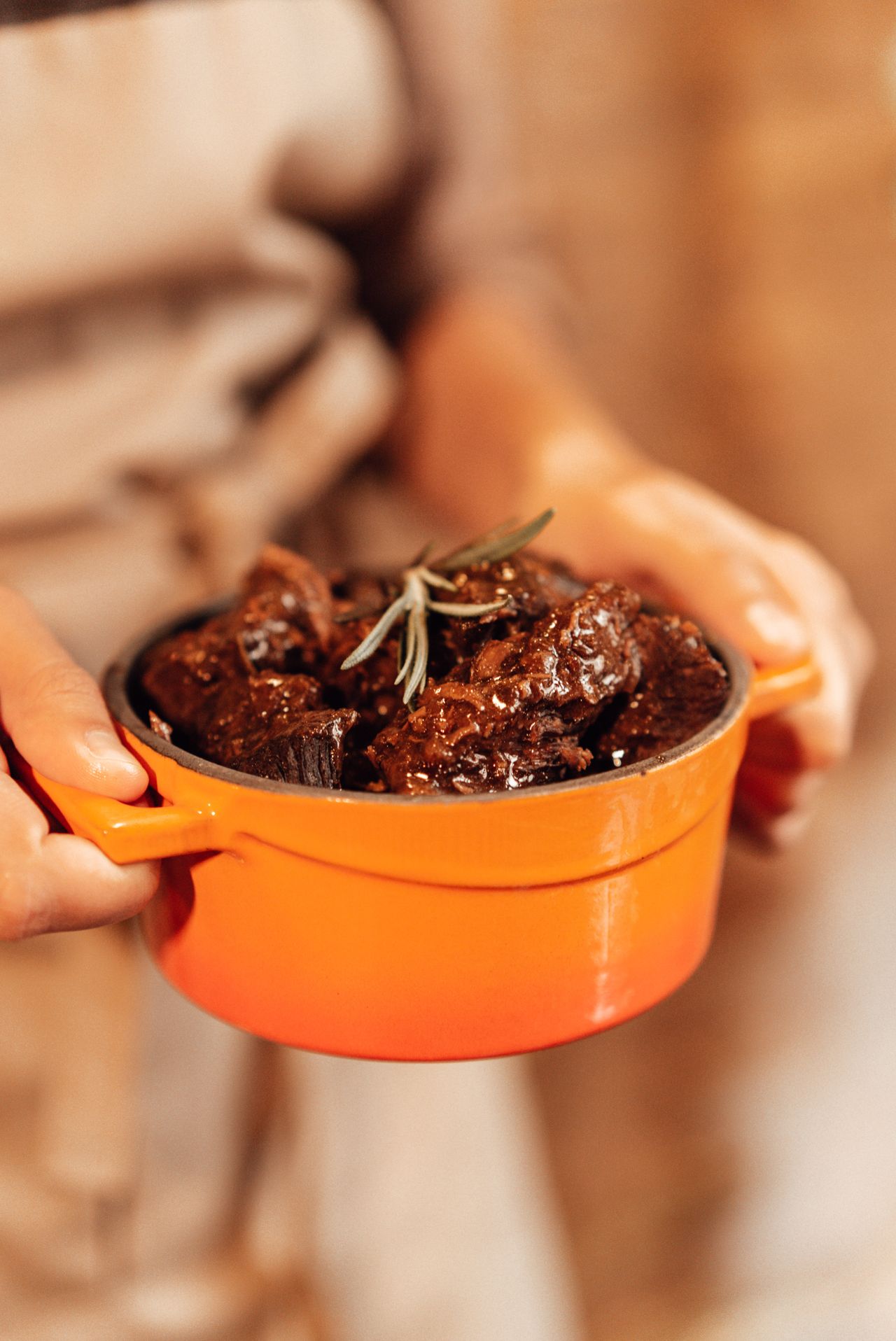
Daube provençale is the South of France’s answer to boeuf bourguignon — the same low-and-slow braise of tough beef, but with the sun-baked Provençal accents that make it its own dish: orange peel, whole cloves, black olives, and herbs de Provence. The classic version marinates the beef overnight before a 3-hour braise in a heavy pot called a daubière. Modern home cooks use a Dutch oven, but the technique is unchanged. This guide walks through the full method — marinade, braise, overnight rest — plus a proper alcohol-free version for anyone who wants the flavor without the wine.
The short answer: Marinate cubed chuck roast overnight with wine (or grape juice + balsamic for alcohol-free), aromatics, orange peel, and herbs de Provence. Sear the beef, sauté vegetables, deglaze with the marinade, add tomatoes and olives, braise covered for 3 hours at 300°F / 150°C. Rest overnight if possible — the daube is legendarily better on day 2.
What’s in this guide
- Daube vs bourguignon: what’s different?
- Best beef cuts for daube
- The Provençal signature: orange, herbs, olives
- Red or white wine (or none)?
- Ingredients you’ll need
- Step-by-step method
- Cook times by method
- Variations (alcohol-free, white wine, camargue)
- What to serve with daube
- Common mistakes
- Storage and reheating
- Common questions
Daube vs Bourguignon: What’s Actually Different?
Both are French red-wine beef braises. Both use tough cuts and long slow cooking. The differences are regional, and they matter:
| Element | Daube Provençale (South) | Boeuf Bourguignon (Burgundy) |
|---|---|---|
| Wine | Southern red (or white) — Côtes du Rhône, Bandol | Burgundy red — Pinot Noir |
| Signature aromatics | Orange peel, herbs de Provence, cloves | Bay leaf, thyme, parsley bouquet |
| Distinctive add-in | Black olives (Niçoise), sometimes anchovy | Pearl onions, mushrooms, lardons |
| Tomatoes | Yes — a big part of the sauce | No — occasionally 1 tbsp paste |
| Traditional vessel | Daubière (clay pot with concave lid) | Cast-iron cocotte |
| Marinade | Overnight; sometimes 48 hours | Overnight, often shorter |
The two dishes are cousins, not twins. Daube tastes brighter, more Mediterranean, with the citrus-and-olive lift you don’t get in bourguignon. Bourguignon tastes deeper and more forest-floor. Neither is better; they’re built for different weather.
Best Beef Cuts for Daube
Daube is a working-class dish made for tough cuts. The magic is in the long braise, which turns cheap collagen-heavy cuts into silky, spoon-tender beef. Never use tender cuts here — they’ll dry out and go stringy.
Chuck roast (best)
The workhorse cut. Marbled, plenty of connective tissue, breaks down beautifully in 3 hours. Cut into 2-inch cubes. Buy 3 to 4 pounds for 6 people.
Beef cheek (traditional)
The most authentic Provençal cut — joue de bœuf. Ridiculously rich in collagen, turns silky in a braise. Ask at a real butcher; hard to find at supermarkets. Cook the same 3 hours.
Beef shin (jarret)
Cross-cut shin with the marrow bone included. The bone flavors the sauce dramatically. Use 4 lb because you’ll lose bone weight after cooking.
Oxtail (queue de bœuf)
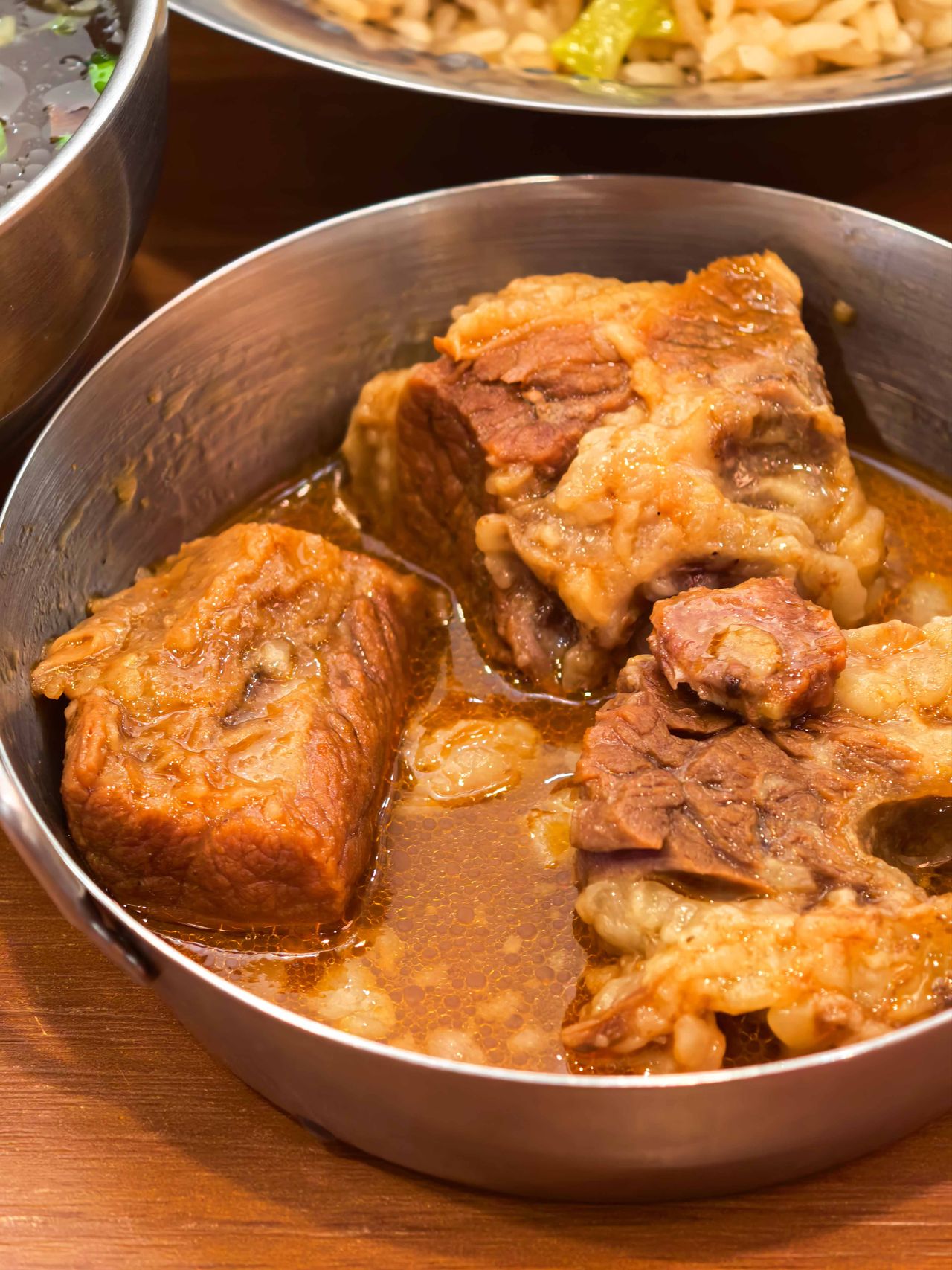
Excellent alternative or addition. Add 1 lb of oxtail to 2 lb of chuck for a spectacularly rich sauce. Cook 30 min longer to fully soften the tail meat.
The Provençal Signature: Orange, Herbs, Olives
Three ingredients define daube provençale. Skip any one of them and you’ve made a generic beef stew, not a daube:
Dried orange peel
Non-negotiable. Fresh orange peel works too — use a 2-inch strip of just the zest (no white pith). The citrus brightens the whole braise and cuts the richness. Dried peel from herb shops is more concentrated than fresh.
Herbs de Provence
The classic blend: thyme, rosemary, savory, marjoram, sometimes lavender. Add 1 tbsp to the marinade and 1 tsp during braising. If you can find the lavender-inclusive blend, use it.
Niçoise black olives
Small, wrinkled, brine-cured olives from around Nice. Kalamata is the closest substitute. Add ½ cup in the last 30 minutes of braising — earlier and they lose their character.
Whole cloves (optional but classic)
Two or three whole cloves added to the marinade. Warm, slightly medicinal note that ties the orange and herbs together. Fish them out before serving.
Red or White Wine — or Neither?
Traditional daube provençale uses a rustic Southern French red — Côtes du Rhône, Bandol, Corbières. Full-bodied, tannic, high-acid. The alternative is daube blanche — white wine version, especially common near the coast in Nice. Both are traditional; pick based on what’s in the fridge:
| Liquid | Use when | Final character |
|---|---|---|
| Red wine (Côtes du Rhône) | Classic version, cool weather | Deep, dark, tannic |
| White wine (Cassis, Bandol) | Summer, seafood pairing | Lighter, brighter, more citrus-forward |
| Alcohol-free (grape juice + balsamic + stock) | Halal, family, sober | Fruit-forward, tangy, kid-friendly |
The alcohol-free version uses the same substitute formula as coq au vin: for every 1 cup of wine, use ½ cup red grape juice + ½ cup beef stock + 1 tbsp balsamic vinegar + 1 tsp tomato paste. See the alcohol-free variation card below for the full swap.
Ingredients You’ll Need
The beef and marinade
- 3 lb (1.35 kg) chuck roast, cut into 2-inch cubes
- 1 bottle (750 ml) Côtes du Rhône or similar dry red wine
- 2 tbsp olive oil
- Salt and freshly cracked black pepper
Aromatics for the marinade
- 1 large yellow onion, sliced
- 2 carrots, sliced into thick coins
- 6 garlic cloves, smashed
- 2 strips dried orange peel (or fresh zest of 1 orange)
- 2 bay leaves
- 1 tbsp herbs de Provence
- 3 whole cloves
- 10 black peppercorns
The braise
- 5 oz (150 g) beef bacon or turkey lardons, diced (optional)
- 2 tbsp all-purpose flour
- 1 (14 oz) can diced tomatoes
- 1 cup beef stock
- 1 tbsp tomato paste
- 1 tsp additional herbs de Provence
The finish
- ½ cup Niçoise or Kalamata olives, pitted
- Fresh flat-leaf parsley, chopped
- Extra strip of orange zest, for garnish
Step-by-Step: How to Make Beef Daube Provençale
- Marinate the beef (day before). Place the cubed beef in a large non-reactive bowl or zip-top bag. Add the sliced onion, carrots, garlic, orange peel, bay leaves, 1 tbsp herbs de Provence, cloves, and peppercorns. Pour in the entire bottle of red wine. Cover and refrigerate for at least 12 hours, ideally 24. Stir once or twice.
- Drain and separate. Lift the beef out of the marinade with a slotted spoon. Reserve the marinade liquid and the vegetables separately — you’ll use both. Pat the beef dry with paper towels (dry beef sears; wet beef steams).
- Render the lardons. Heat a large Dutch oven over medium heat. Add the diced beef bacon and cook until crisp and the fat has rendered, 6 minutes. Lift them out with a slotted spoon and set aside. Leave the fat.
- Sear the beef. Season the beef with salt and pepper. Sear in batches in the rendered fat over medium-high heat, 4 minutes per side, until deeply browned. Don’t crowd the pan or you’ll steam instead of sear. Transfer to a plate.
- Sauté the vegetables. In the same pot, add the reserved marinated vegetables (onion, carrot, garlic). Cook over medium heat for 8 minutes until softened and starting to caramelize. Stir in the flour and tomato paste; cook 90 seconds to remove the raw flour taste.
- Deglaze and build. Pour in the reserved marinade liquid, scraping the bottom of the pot to release all the fond. Add the diced tomatoes (with juice), beef stock, and the extra 1 tsp herbs de Provence. Bring to a boil.
- Return the meat and braise. Return the seared beef and rendered lardons to the pot. Give one gentle stir. The liquid should just cover the meat. Cover with the lid.
- Low and slow. Transfer to a preheated oven at 300°F / 150°C. Braise for 3 hours undisturbed. Alternatively, keep it on the stovetop at the barest simmer for the same duration. Beef is done when a fork slides in with no resistance.
- Add olives, rest overnight. In the last 30 minutes of braising, stir in the olives. When done, remove from the oven and let the pot cool at room temperature for 1 hour, then refrigerate overnight — this is where daube becomes daube. The rest matures the flavor dramatically.
- Reheat and serve. The next day, skim any solidified fat from the surface. Reheat gently on the stovetop over medium-low heat for 20 minutes until piping hot. Discard the bay leaves, cloves, and orange peel. Taste for salt. Shower with chopped parsley and fresh orange zest just before serving.
▶ Watch: the full technique
Cook Times by Method
| Method | Temperature | Braise Time | Total Time (with marinade) |
|---|---|---|---|
| Oven (classic Dutch oven) | 300°F / 150°C | 3 hours | ~28 hours (24 marinade + 4 cooking) |
| Stovetop (bare simmer) | ~195°F / 90°C | 3 hours | ~28 hours |
| Clay daubière (traditional) | Oven at 275°F / 135°C | 4 hours | ~29 hours |
| Instant Pot (pressure) | Sealed | 50 min + 20 min natural release | ~26 hours |
| Slow cooker (LOW) | Low setting | 8 hours | ~33 hours |
| With oxtail added | 300°F / 150°C | 3 h 30 min | ~28 h 30 |
Variations Worth Knowing
Daube Blanche (white wine version)
Traditional in Nice and along the Riviera. Swap the red wine for dry white (Cassis blanc, Sancerre). Lighter, more citrus-forward. Skip the tomatoes — use extra stock instead. Serve in summer.
Alcohol-free daube
Replace the wine bottle (750 ml) with 1.5 cups red grape juice + 1.5 cups beef stock + 3 tbsp balsamic vinegar + 1 tbsp tomato paste. Marinate the beef in this mix overnight. Rest of the recipe is identical.
Daube Camarguaise
Uses bull meat (or beef shin) from the Camargue region. Add ½ cup dry white wine to the red, and finish with a splash of pastis (or fennel seed if alcohol-free). Deeper, gamier version.
Daube with anchovies (Marseille)
Melt 4 chopped anchovy fillets into the sauce during the last hour. Adds huge umami without a fishy taste. Signature of the Marseille version — powerful and briny.
What to Serve With Daube Provençale
Macaronade
The classic Provençal accompaniment — wide pasta (macaroni or pappardelle) tossed with a ladle of the daube sauce and grated Gruyère. Not on the side; served underneath.
Polenta
Soft creamy polenta finished with butter and Parmesan. Excellent for soaking up the wine-and-tomato sauce. Slightly Italian influence from nearby Liguria.
Mashed potatoes
The most universal side. Yukon Golds, whipped smooth with butter and warm cream. Nothing complicated — the daube is the star.
Crusty baguette
Torn and used to mop up the sauce. If you serve daube in Provence, you serve it with pain de campagne. No spoon, no fork for the last bite.
Five Mistakes That Ruin Daube Provençale
Storage and Reheating
Common Questions
What’s the difference between daube and boeuf bourguignon?
Both are French red-wine beef braises but from different regions. Daube provençale comes from the South and features orange peel, herbs de Provence, olives, and tomatoes — Mediterranean flavors. Boeuf bourguignon comes from Burgundy and features pearl onions, mushrooms, lardons, and Pinot Noir — cooler, deeper, less citrus.
Can I make daube without wine?
Yes. Replace the 750 ml bottle of red wine with 1.5 cups red grape juice + 1.5 cups beef stock + 3 tbsp balsamic vinegar + 1 tbsp tomato paste. Marinate the beef in this mix overnight — the tomato paste and balsamic recreate the acid and depth wine normally provides. The result is halal-friendly, kid-friendly, and still tastes distinctly Provençal.
What kind of wine should I use for daube?
A rustic Southern French red — Côtes du Rhône is the classic, easy-to-find choice. Bandol, Corbières, or Costières de Nîmes all work. Avoid Cabernet Sauvignon (too tannic) and Pinot Noir (too delicate for this braise). If you want to try daube blanche, use a dry white like Cassis or Sancerre. Never use “cooking wine”.
Do I really need to marinate the beef for 24 hours?
For the traditional daube, yes. The overnight marinade tenderizes the beef, infuses it with wine and aromatics, and starts the flavor development. A 4-hour minimum is workable, but you’ll notice the difference. If time is tight, cook it anyway — even a short-marinated daube beats a rushed weeknight stew.
Can I make daube in a slow cooker?
Yes, with modifications. Marinate the beef overnight as directed. Sear the beef on the stovetop first — don’t skip this. Transfer everything to the slow cooker and cook on LOW for 8 hours. The sauce will be thinner than the oven version; reduce it in a pan on the stove after cooking if needed. Add olives in the last hour.
What’s a daubière and do I need one?
A daubière is a traditional Provençal clay pot with a concave lid designed to condense steam and drip it back onto the food during braising. Beautiful and functional, but not necessary — a good Dutch oven with a tight-fitting lid does the same job. If you own one, great; if not, don’t hesitate to make daube in your regular pot.
Loved this recipe?
Explore more French classics and slow-braised beef from around the world.
See more recipes →Beef Daube Provençale: Authentic French Recipe (South)
Did You Try Our Recipe ?
Scrumptious
My husband (who is extremely picky) loved the liver & onions so much!! I didn’t have any beef broth or Sherry so I used about a tbl of Worcestershire and 1/4 c of white wine …..it was scrumptious
Response from MeatRecipesBox
Oh wow, I’m so happy to hear that!! 😍 I love that you made it work with what you had on hand — Worcestershire and white wine sound like a delicious twist. So glad your husband enjoyed it, especially being picky! Thank you for sharing your version, it makes me smile knowing it turned out scrumptious!
This was amazing
This recipe turned out really amazing! It’s juicy and spiced deliciously. I definitely would use less of the spicy pepper next time, but it really was delicious and I don’t think I’ll make chicken legs any other way from now on.!
Response from MeatRecipesBox
Thank you for taking the time to leave such a thoughtful review. I’m really glad to hear the recipe turned out juicy and full of flavor for you. That’s exactly what I was hoping for when putting it together. Good call on the spicy pepper as well. Adjusting the heat level to your own taste is always the best approach, and using a little less next time should make it just right for you. I really appreciate you trying the recipe and sharing your experience. It’s great to know it worked so well for you.
I Didn’t Expect This Cornbeef Hash Recipe to Taste This Good!!
One skillet. A handful of simple ingredients. Thirty minutes on the clock. And somehow… I ended up with the crispiest, most comforting cornbeef hash recipe I’ve made in years.
I wasn’t expecting much—just a quick, no-fuss meal. But that first bite? Crispy edges, tender potatoes, smoky corned beef, a little kick of pepper. It tasted like something straight off a cozy diner griddle.
Honestly, it caught me off guard—in the best way. Here’s why this simple skillet completely won me over.


