
Braciole (pronounced brah-CHOH-leh) is the Sunday-gravy centerpiece of Italian-American kitchens — thin slices of beef top round rolled around prosciutto, provolone, and a garlic-parsley breadcrumb filling, then braised low and slow in red wine marinara until fork-tender. The name comes from the Italian bracciola, meaning “a small slice of meat.” Get the cut right, and the rest is patience.
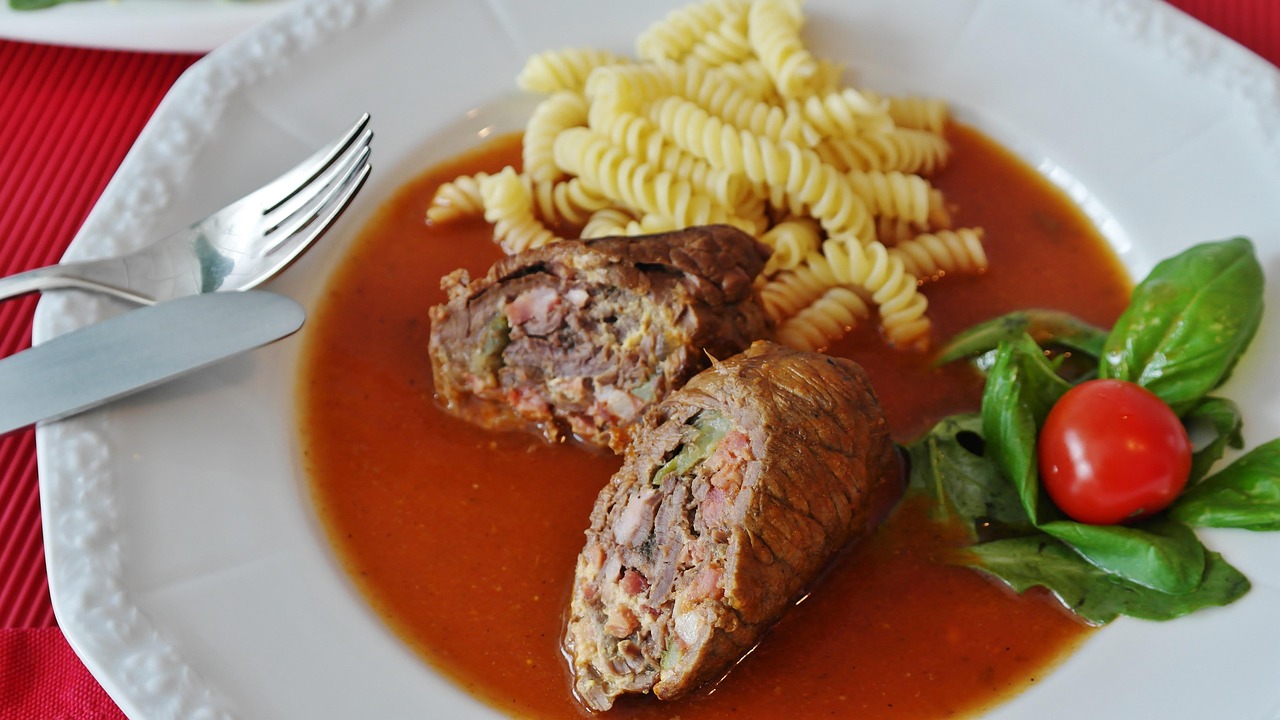
Quick answer: Use top round or flank steak pounded to ¼ inch, stuff with prosciutto + provolone + garlic-parsley breadcrumbs, tie or toothpick shut, sear on all sides, then braise in tomato sauce with red wine at 325°F / 160°C for 1½ to 2 hours until fork-tender. Serves 6, and the sauce becomes your pasta sauce for the same meal.
Jump to
What is braciole, exactly?
Braciole is a thin cut of beef rolled around a savory stuffing and simmered in tomato sauce. In Southern Italy — especially Naples, where the dish was born — it’s a ragù anchor, meaning the meat and the sauce cook together for hours, each seasoning the other. The finished rolls are sliced into pinwheels that show off the filling, and the sauce goes onto rigatoni or bucatini as a first course.
The word itself is where American cooks stumble. In standard Italian it’s brah-CHOH-leh. In the Neapolitan and Sicilian dialects that traveled to New York and New Jersey, the final vowel drops and the “ci” softens: you’ll hear brah-ZHOOL, brah-JOHL, or simply bra-JOOL. All are correct in context. Order it in a Bronx trattoria with the standard-Italian pronunciation and you may still get a smile.
The best cut of beef for braciole (and why)
Top round is the classic choice — it’s lean, uniformly thick, and slices cleanly against the grain into wide, thin sheets that pound out to the perfect ¼-inch thickness without tearing. Bottom round and eye of round work too, and flank steak is the most common substitute in American home kitchens because it’s easier to find and forgives a heavy hand with the mallet.
Top round (recommended)
Lean, even, holds its shape. Ask your butcher for six ¼-inch slices, each about 4×6 inches.
Flank steak
Wide grain, richer flavor. Slice horizontally into two thinner sheets, then pound.
Sirloin tip
Middle ground — a touch more marbling than top round, still lean enough to roll cleanly.
Skirt or bottom round
Both work. Skirt gives a chewier bite; bottom round mimics top round almost exactly.
Whatever cut you pick, the ask is the same: pound it to ¼ inch (6 mm) between two sheets of plastic wrap. Any thicker and the roll won’t cook through in the same time as the sauce reduces; any thinner and the filling punches through when you sear it.
Ingredients you’ll need
The Beef
- 1.5 lb (680 g) top round, cut into 6 slices, pounded to ¼ inch
- Kosher salt & black pepper
- 2 tbsp olive oil, for searing
The Filling
- 6 thin slices prosciutto di Parma
- 1 cup (100 g) provolone, shredded
- ¾ cup (75 g) plain breadcrumbs
- ⅓ cup (30 g) Parmigiano-Reggiano, grated
- 3 garlic cloves, minced
- ¼ cup flat-leaf parsley, chopped
- 3 tbsp olive oil
The Sauce
- 1 medium yellow onion, finely diced
- 3 garlic cloves, sliced
- ¾ cup (180 ml) dry red wine (Chianti, Sangiovese)
- 28 oz (800 g) crushed San Marzano tomatoes
- 1 tsp dried oregano
- 2 fresh basil leaves
- 1 tsp sugar (balances acidity)
How to make braciole, step by step
- Pound the beef.Lay each slice between plastic wrap and pound with the flat side of a meat mallet until ¼-inch thick and roughly 4×6 inches. Season both sides with salt and pepper.
- Mix the filling.In a bowl, combine breadcrumbs, Parmigiano, minced garlic, parsley, and olive oil. It should hold together when squeezed but still crumble — add a splash more oil if it feels dry.
- Assemble the rolls.Lay one slice of prosciutto on each pounded beef sheet. Scatter shredded provolone over the prosciutto, then spread 2 tablespoons of breadcrumb mix in a strip along the short edge.
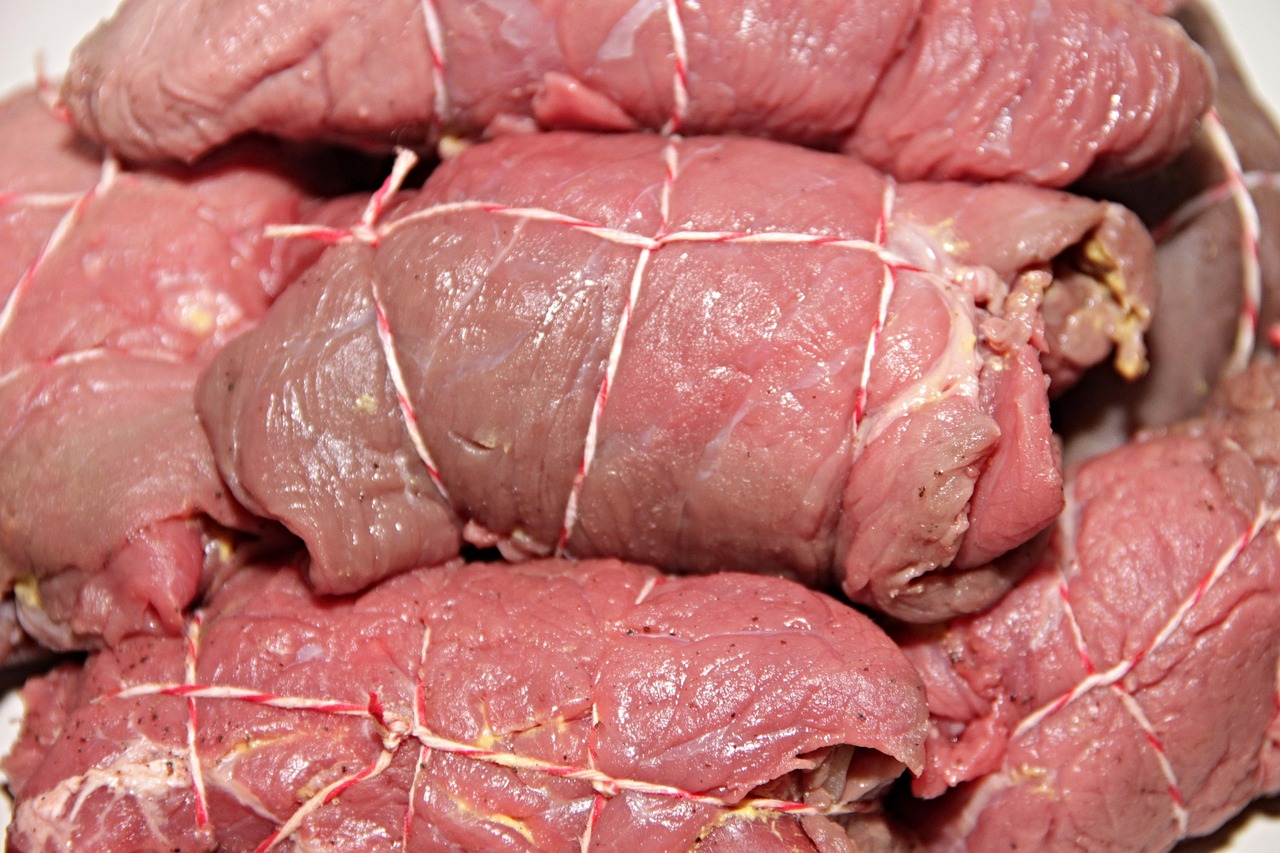
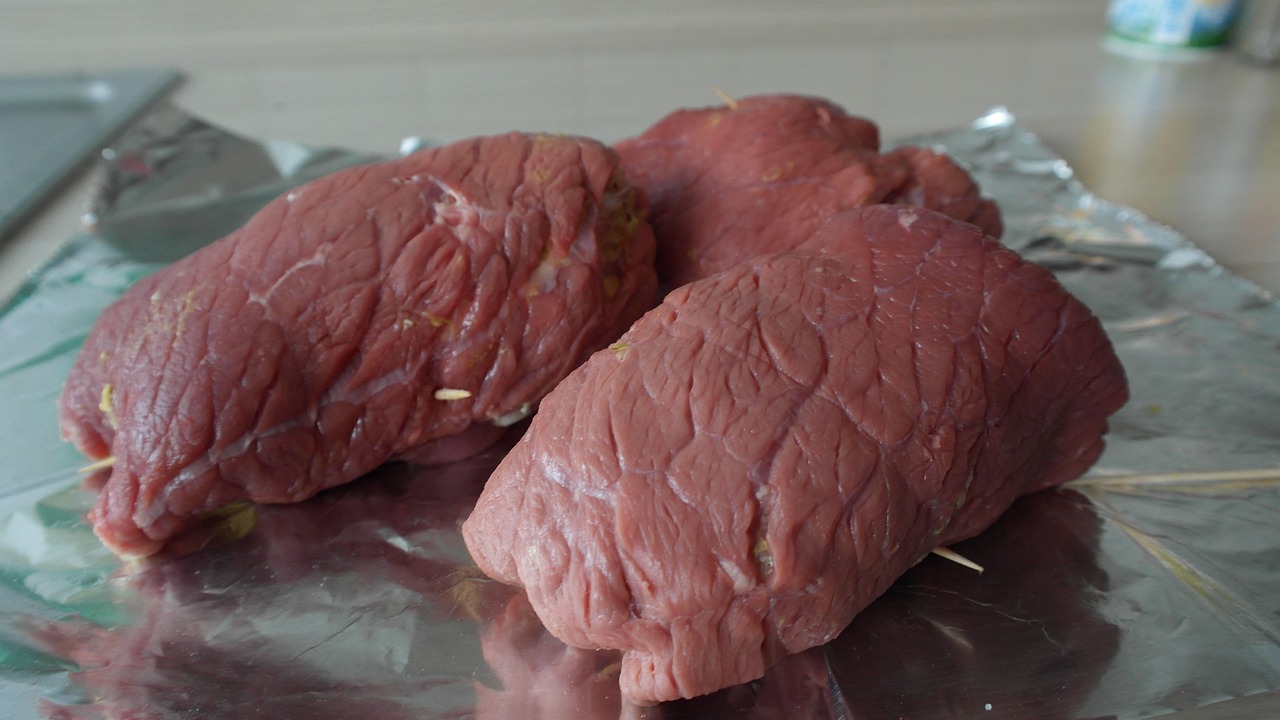
- Roll and tie.Starting at the filled edge, roll the beef into a tight cylinder, tucking the sides in as you go. Secure with two loops of kitchen twine or three toothpicks. Twine gives a cleaner slice.
- Sear on all sides.Heat 2 tbsp olive oil in a Dutch oven over medium-high. Sear the rolls 2 minutes per side, all four sides — about 8 minutes total. You want a deep mahogany crust, not gray meat. Transfer to a plate.
- Build the sauce base.Lower heat to medium. Add onion to the same pot, cook 5 minutes until soft. Add sliced garlic, cook 30 seconds. Pour in the red wine and scrape up the browned bits — this fond is where the flavor lives.
- Add tomatoes and simmer.Stir in crushed tomatoes, oregano, sugar, and basil. Bring to a gentle simmer. Nestle the seared rolls back in so the sauce reaches halfway up their sides.
- Braise low and slow.Cover with the lid slightly ajar and transfer to a 325°F / 160°C oven. Braise 1½ to 2 hours, turning the rolls once at the 45-minute mark, until a knife slides in with zero resistance.
- Rest, slice, serve.Lift rolls onto a cutting board and rest 10 minutes. Snip the twine (or pull the toothpicks), then slice each roll into 4 pinwheels. Spoon sauce over the top; serve the rest with pasta as a first course.
The sauce (and why the wine matters)
The sauce isn’t a bystander here — it’s the second half of the dish. Two hours in a covered pot means the sauce absorbs the beef’s rendered fat, prosciutto salt, and roasted-garlic notes from the sear. What comes out is deeper and rounder than any 30-minute marinara you’d make on its own.
Use a dry, medium-bodied red — Chianti Classico, Sangiovese, Montepulciano d’Abruzzo, or a Zinfandel all work. Skip anything oaky or high-alcohol; the tannins turn bitter after a long reduction. And skip “cooking wine” from the grocery aisle — it’s over-salted and adds nothing you want. If wine is off the table, replace it with ½ cup beef broth plus 1 tablespoon red wine vinegar.
Traditional Neapolitan vs. American variations
The recipe above is the version most American families know — prosciutto, provolone, garlic-parsley breadcrumbs. Cross the Atlantic and the filling shifts. The Neapolitan original leans sweet-savory, borrowing raisins and pine nuts from the region’s Arab-Norman past. Sicilian cooks add hard-boiled egg. Every family has a version, and every version is correct.
Neapolitan (traditional)
Pine nuts, golden raisins, pecorino, breadcrumbs, and a whisper of cinnamon. No prosciutto, no provolone.
Sicilian (braciole di manzo)
Add chopped hard-boiled egg, capers, and grated caciocavallo to the breadcrumb mix.
Italian-American (this recipe)
Prosciutto and provolone deliver a saltier, meltier bite. The version that traveled to New York.
Barese (Puglia)
Cured pork lard (lardo) inside, cooked in tomato sauce that becomes the ragù for orecchiette.
Common mistakes to avoid
Storage & reheating
Frequently asked questions
How is braciole pronounced?
In standard Italian, brah-CHOH-leh. In the Southern Italian dialects spoken in most Italian-American households, the final vowel drops and you’ll hear brah-ZHOOL or brah-JOHL. Both are correct.
Can I make braciole ahead of time?
Yes — and it’s better the next day. Braise fully, cool, refrigerate in the sauce, then reheat gently over low heat for 15 minutes. The overnight rest lets the flavors settle into the meat.
Twine or toothpicks — which is better?
Twine gives cleaner slices because it holds the whole roll shape, not just three points. Toothpicks are faster but always leave puckered spots. If you plan to serve pinwheels, use twine.
Can I make braciole in a slow cooker?
Yes. Sear the rolls in a skillet first (non-negotiable), then transfer to a slow cooker with the sauce. Cook on LOW for 6 hours or HIGH for 3½ hours. The texture is close to oven-braised.
What do I serve with braciole?
The traditional pairing is pasta — rigatoni or bucatini — sauced with the braising liquid as a first course, then the sliced braciole as the second. A simple green salad and crusty bread finish the meal. For a bigger Italian-American spread, add a plate of chicken parmesan alongside.
Can I use ground beef instead of a whole slice?
No — you’d be making meatballs, not braciole. The defining feature of braciole is the thin-rolled cut of whole muscle. If you want the same flavors in ground form, try Sunday-style meatballs in the same marinara base.
Is braciole gluten-free?
Not as written — the breadcrumb filling contains gluten. Swap in gluten-free breadcrumbs or almond flour at a 1:1 ratio; texture stays close to the original and no other ingredient in the recipe contains wheat.
Save this to Pinterest
Sunday-dinner braciole, the way it’s supposed to taste — pin it for the next slow afternoon.
📌 Save to PinterestBraciole: Authentic Italian Beef Rolls Recipe
Did You Try Our Recipe ?
Scrumptious
My husband (who is extremely picky) loved the liver & onions so much!! I didn’t have any beef broth or Sherry so I used about a tbl of Worcestershire and 1/4 c of white wine …..it was scrumptious
Response from MeatRecipesBox
Oh wow, I’m so happy to hear that!! 😍 I love that you made it work with what you had on hand — Worcestershire and white wine sound like a delicious twist. So glad your husband enjoyed it, especially being picky! Thank you for sharing your version, it makes me smile knowing it turned out scrumptious!
This was amazing
This recipe turned out really amazing! It’s juicy and spiced deliciously. I definitely would use less of the spicy pepper next time, but it really was delicious and I don’t think I’ll make chicken legs any other way from now on.!
Response from MeatRecipesBox
Thank you for taking the time to leave such a thoughtful review. I’m really glad to hear the recipe turned out juicy and full of flavor for you. That’s exactly what I was hoping for when putting it together. Good call on the spicy pepper as well. Adjusting the heat level to your own taste is always the best approach, and using a little less next time should make it just right for you. I really appreciate you trying the recipe and sharing your experience. It’s great to know it worked so well for you.
I Didn’t Expect This Cornbeef Hash Recipe to Taste This Good!!
One skillet. A handful of simple ingredients. Thirty minutes on the clock. And somehow… I ended up with the crispiest, most comforting cornbeef hash recipe I’ve made in years.
I wasn’t expecting much—just a quick, no-fuss meal. But that first bite? Crispy edges, tender potatoes, smoky corned beef, a little kick of pepper. It tasted like something straight off a cozy diner griddle.
Honestly, it caught me off guard—in the best way. Here’s why this simple skillet completely won me over.


