

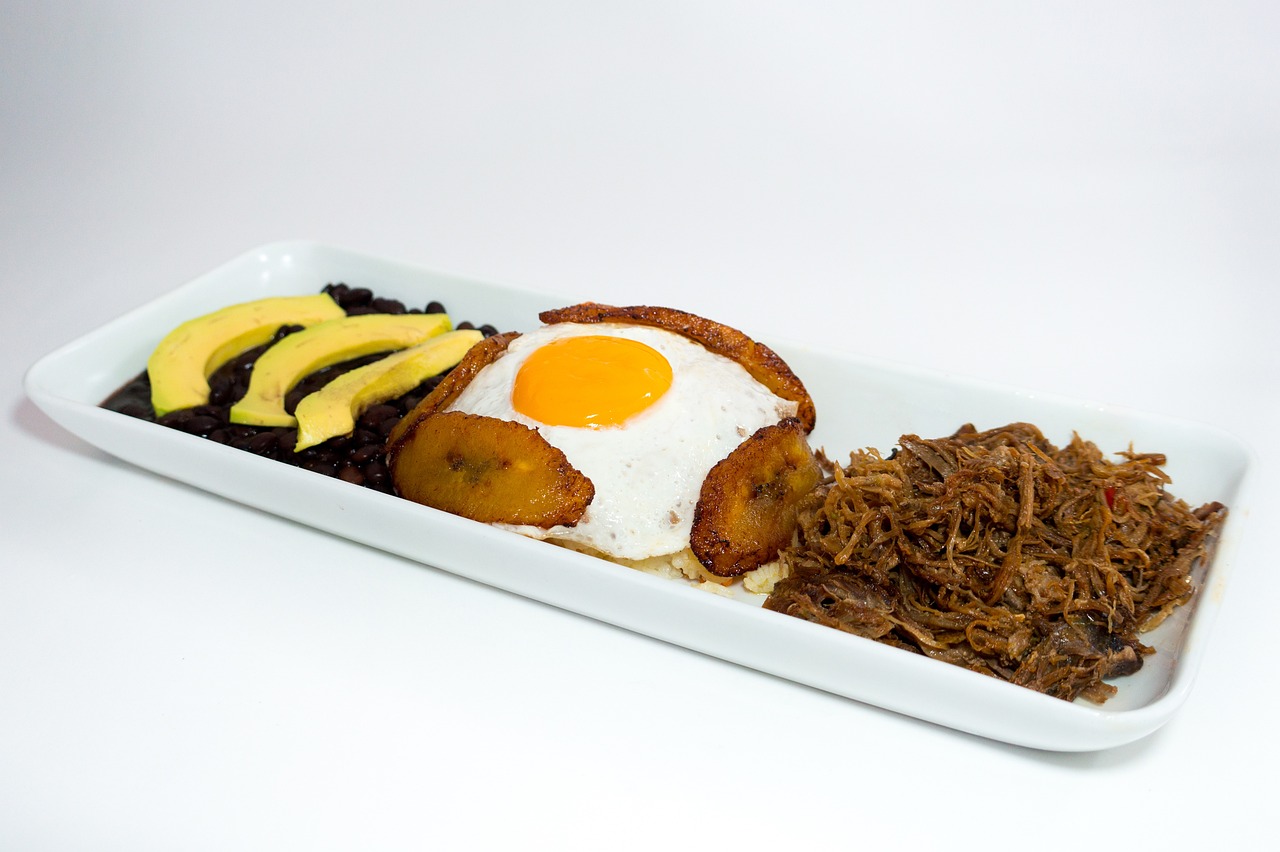
What is ropa vieja, exactly?
Ropa vieja means old clothes in Spanish — a joke about how the shredded beef looks like a pile of tattered rags in tomato sauce. The dish traces back to the Sephardic Jewish and Canary Islander kitchens of medieval Spain, then landed in Cuba with 16th-century settlers and became, along with black beans and rice, one of the three unofficial national dishes of the island.
Every Cuban family has its own version, but the frame is the same: a tough, grainy cut of beef is simmered until it surrenders, then finished in a bright, garlicky sofrito loaded with peppers, tomato and wine. The trick isn’t a secret spice — it’s patience. If you want another slow-braise from the same family of Sunday-pot dishes, our braised beef brisket recipe uses the same low-and-slow logic on a bigger cut.
What cut of beef should I use?

Look for a piece around 2 to 2.5 lb (900 g to 1.1 kg), evenly thick, deep red with light marbling. The USDA-affiliated Beef Cuts guide classifies flank as a lean, coarse-grained muscle from the abdominal wall, which is exactly why it shreds instead of falling into pulp. Trim any thick silverskin, but leave the fat cap alone — it renders down and flavors the sauce. If your butcher offers “flap meat” or bavette, that’s the same family and will shred beautifully. For other ways to cook this cut, see our complete flank steak guide.
Ingredients for authentic Cuban ropa vieja
For the beef and broth
- 2 lb flank steak
- 1 yellow onion, quartered
- 1 carrot, cut in chunks
- 4 garlic cloves, smashed
- 2 bay leaves
- 1 tsp whole black peppercorns
- 1 tsp salt
- Water to cover (about 6 cups)
For the sofrito & sauce
- 3 tbsp olive oil
- 1 large yellow onion, sliced thin
- 1 red bell pepper, julienned
- 1 green bell pepper, julienned
- 6 garlic cloves, minced
- 2 tsp ground cumin
- 1 tsp dried oregano (Cuban oregano if you can find it)
- ½ tsp smoked paprika
- 1 tsp tomato paste
- 1 can (14 oz) crushed tomatoes
- ½ cup dry white wine
- ½ cup reserved beef broth
- ⅓ cup pimiento-stuffed green olives, halved
- 2 tbsp capers (optional)
- ¼ cup chopped fresh cilantro or parsley
How do you cook ropa vieja step by step?
You cook it in two stages: boil the beef whole until fork-tender, then build a sofrito and stew the shredded meat in the sauce. Total hands-on time is about 30 minutes; the rest is the pot doing the work. If you’re new to layered Cuban aromatics, Saveur’s ropa vieja archive piece is a good sanity-check on the classical order of operations.
- Simmer the beef. Put the flank steak in a large pot with the quartered onion, carrot, smashed garlic, bay leaves, peppercorns and salt. Cover with water. Bring to a boil, then drop to a bare simmer and cook, partly covered, for 1 hour 45 minutes to 2 hours, until the meat pulls apart with two forks. Skim the foam every so often.
- Rest and reserve. Lift the beef onto a board and let it cool 15 minutes. Strain the broth and keep at least 1 cup — this is your umami base.
- Shred by hand. With clean hands or two forks, pull the beef along the grain into ragged strands, roughly ¼-inch thick. Don’t chop — shredding is the whole point of the dish.
- Build the sofrito. Heat the olive oil in a wide Dutch oven over medium. Add the sliced onion and both bell peppers with a pinch of salt. Cook 10–12 minutes, stirring, until soft and just starting to caramelize at the edges.
- Bloom the spices. Push the vegetables aside, drop in the minced garlic, cumin, oregano, smoked paprika and tomato paste. Stir 60 seconds until fragrant — the paste should darken a shade.
- Deglaze. Pour in the white wine, scrape the bottom of the pot, and let it bubble hard for 2 minutes to burn off the alcohol.
- Build the sauce. Add the crushed tomatoes and ½ cup reserved broth. Simmer 5 minutes to marry the flavors.
- Return the beef. Slide the shredded meat back into the pot, stir to coat every strand, then add olives and capers. Cover partly and simmer 30–40 minutes on low. The sauce should cling to the meat, not pool around it — cook uncovered a few minutes longer if it’s watery.
- Finish and rest. Kill the heat, stir in the cilantro, taste for salt. Let the pot sit 10 minutes off the burner — ropa vieja tastes noticeably better after a short rest, and even better the next day.
Watch it made from start to finish
Chef John’s Food Wishes walkthrough on YouTube — a home-cook-friendly braise that lines up with the method above.
What do you serve with ropa vieja?
The classic Havana plate is white long-grain rice, black beans, and fried sweet plantains (plátanos maduros). When the rice and beans are cooked together in one pot they become moros y cristianos — “Moors and Christians” — and eating the two together is the whole cultural point of the meal. Our Cuban black beans and rice recipe is the exact side we pair with this pot.
A few good pairings if you want to build a full spread:
- Yuca con mojo — boiled cassava splashed with a garlic-citrus oil.
- Tostones — twice-fried green plantains, salted while hot.
- Ensalada de aguacate — sliced avocado, thin-cut white onion, lime, olive oil, salt.
- A cold Cuba Libre or a dry Spanish white — an Albariño mirrors the wine already in the sauce.
Can I make it in a slow cooker or Instant Pot?
Two things to watch when you shortcut the braise: reduce the liquid by about ¼ (pressure cookers don’t evaporate — see the Instant Pot pressure-cooking primer on liquid ratios), and add the olives at the end — long pressure cooking turns them mushy and mutes the brine. Our slow cooker beef recipes hub collects the timings we use across cuts.
How do I store and reheat leftovers?
Ropa vieja actually improves overnight — the beef absorbs the sauce and the sofrito mellows. Cool the pot uncovered for 30 minutes, then transfer to an airtight container. Follow the USDA leftover food-safety window — cooked beef stays safe up to 4 days refrigerated at 40 °F or below.
- Fridge: up to 4 days. Reheat gently on the stovetop with a splash of water or broth.
- Freezer: up to 3 months in a flat freezer bag. Thaw overnight in the fridge before reheating.
- Second-day trick: tuck the leftovers into warm corn tortillas with a slice of avocado — Cuban-style tacos, no apology needed. Same move works with our shredded beef tacos.
Common mistakes and how to avoid them
The beef is tough, not shreddy
You pulled it out too early. Flank steak has to pass a plateau where it feels chewy before it collapses — if two forks meet resistance, it needs another 20 minutes in the broth. Don’t rush this step or nothing you do after will fix it.
The sauce is watery
Either you used too much broth or you covered the pot the whole time. Simmer uncovered on medium-low until the sauce clings to a spoon and coats the shreds — the finish should look glossy, not soupy.
It tastes flat
Almost always under-seasoned. Flank steak absorbs a lot of salt while boiling, so the sauce needs to be assertive. Add a pinch of salt, a squeeze of lime and a small extra spoon of olive brine at the end — the acid and salinity wake the whole pot up.
Frequently asked
Is ropa vieja Cuban or Spanish?
Both, in a sense. It began as a peasant stew in the Sephardic and Canary Islander kitchens of medieval Spain, then crossed the Atlantic with settlers. Today Cuba claims it as a national dish, but you’ll also find versions in Puerto Rico, the Dominican Republic, the Philippines and the Canary Islands.
Why is it called “old clothes”?
The shredded beef in red sauce looks like a heap of colorful tattered rags. There’s also a Spanish folk story about a poor man who shredded his own worn clothes into a stew pot, prayed over them, and served the family a rich meat dish — the miracle recipe.
Can I make it without wine?
Yes. Replace the ½ cup of dry white wine with the same amount of reserved beef broth plus 1 tablespoon of white wine vinegar or fresh lime juice. You want the acidity, so don’t just drop the wine and add nothing back.
What’s the difference between ropa vieja and barbacoa?
Barbacoa is Mexican, uses beef cheek or chuck, and is seasoned with dried chiles, cumin and clove — no bell peppers, no olives, no tomato-forward sauce. Ropa vieja is Cuban, flank-based, and lives on sofrito. Similar shred, entirely different flavor profile. Compare side by side with our beef barbacoa recipe.
Is ropa vieja spicy?
Traditional Cuban ropa vieja is not spicy — it’s savory, briny and slightly sweet from the peppers. If you want heat, add a chopped jalapeño to the sofrito, or finish the plate with a spoon of pickled Scotch bonnet in oil.
A note from Emma
I first learned this recipe from a Cuban neighbor in Miami who cooked it every Sunday, and the thing she drilled into me was: don’t overthink the sofrito. Slow onions, sweet peppers, real garlic, and time. If your pot smells like a warm kitchen in Havana by the second hour, you’re already there.
If you try this recipe, come back and tell me how it turned out — and whether you served it with rice and beans or went rogue with tortillas. Next Sunday, try our Cuban lechón asado for the pork half of the Havana table.
Did You Try Our Recipe ?
Scrumptious
My husband (who is extremely picky) loved the liver & onions so much!! I didn’t have any beef broth or Sherry so I used about a tbl of Worcestershire and 1/4 c of white wine …..it was scrumptious
Response from MeatRecipesBox
Oh wow, I’m so happy to hear that!! 😍 I love that you made it work with what you had on hand — Worcestershire and white wine sound like a delicious twist. So glad your husband enjoyed it, especially being picky! Thank you for sharing your version, it makes me smile knowing it turned out scrumptious!
This was amazing
This recipe turned out really amazing! It’s juicy and spiced deliciously. I definitely would use less of the spicy pepper next time, but it really was delicious and I don’t think I’ll make chicken legs any other way from now on.!
Response from MeatRecipesBox
Thank you for taking the time to leave such a thoughtful review. I’m really glad to hear the recipe turned out juicy and full of flavor for you. That’s exactly what I was hoping for when putting it together. Good call on the spicy pepper as well. Adjusting the heat level to your own taste is always the best approach, and using a little less next time should make it just right for you. I really appreciate you trying the recipe and sharing your experience. It’s great to know it worked so well for you.
I Didn’t Expect This Cornbeef Hash Recipe to Taste This Good!!
One skillet. A handful of simple ingredients. Thirty minutes on the clock. And somehow… I ended up with the crispiest, most comforting cornbeef hash recipe I’ve made in years.
I wasn’t expecting much—just a quick, no-fuss meal. But that first bite? Crispy edges, tender potatoes, smoky corned beef, a little kick of pepper. It tasted like something straight off a cozy diner griddle.
Honestly, it caught me off guard—in the best way. Here’s why this simple skillet completely won me over.


