
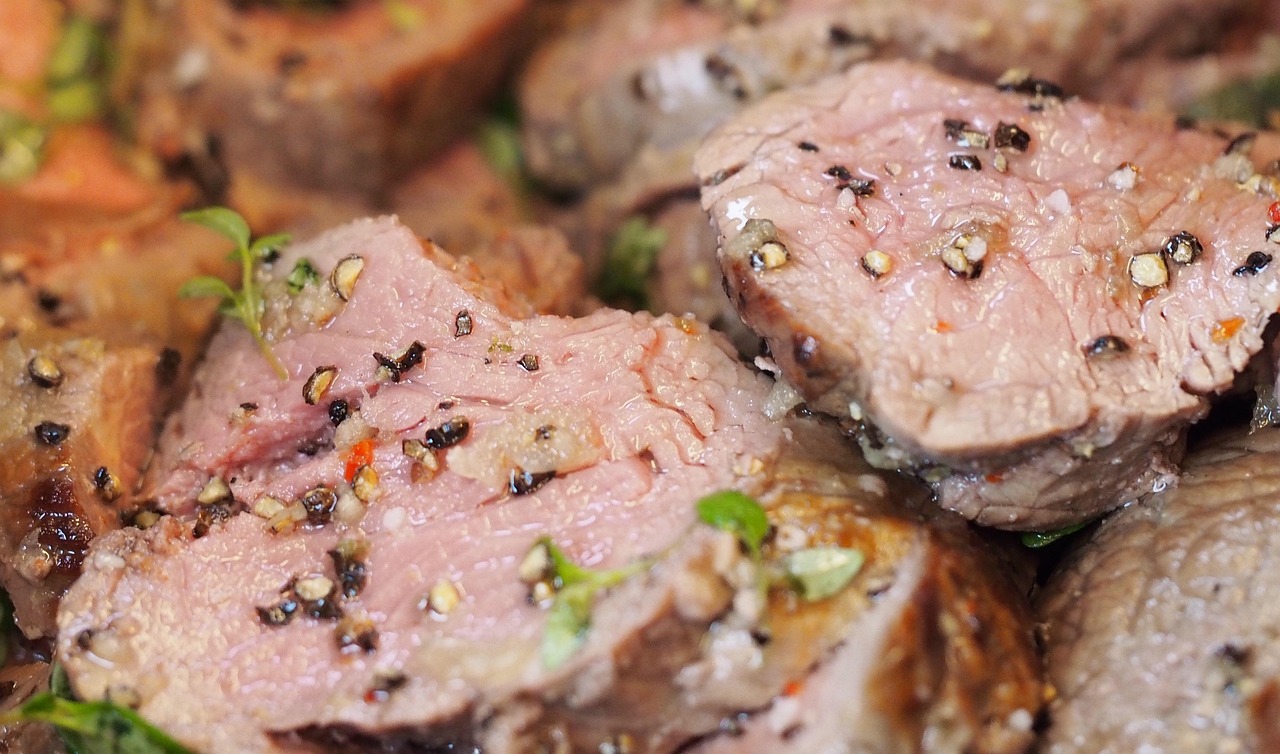
Key Takeaways
- 500°F for 20 min then 350°F is the classic two-stage method taught by America’s Test Kitchen.
- Pull at 125°F internal. Carryover cook adds 5–10°F during rest ([ThermoWorks](https://blog.thermoworks.com/simple-perfect-roast-beef-tenderloin/)).
- Tenderloin is unforgiving past medium. Every degree past 135°F costs juiciness.
- Total cook time for a 5-lb PSMO tenderloin: 40–50 minutes plus 20-minute rest.
Why 500°F First, Then 350°F?
The high-heat blast crusts the outside before the interior warms too far. Twenty minutes at 500°F builds a deep brown crust from the Maillard reaction — the same browning that gives seared steak its flavor. Drop to 350°F and the residual mass of the roast finishes gently, giving you edge-to-edge pink instead of a gray band.
Skip the sear and the tenderloin bakes pale and lifeless. Sear too long and the outer inch turns to leather.
The Temperature Chart That Matters
According to The Reluctant Gourmet’s tenderloin doneness guide, pull-from-oven temperature should sit 5°F below your target final temp because carryover cooking continues while the roast rests. This is the entire secret to a tenderloin that isn’t overdone.
| Doneness | Pull From Oven | Final After Rest |
|---|---|---|
| Rare | 115°F | 120°F |
| Medium-Rare | 125°F | 130°F |
| Medium | 130°F | 135°F |
| Medium-Well | 140°F | 145°F |
The Full Recipe
Whole Beef Tenderloin, 500°F Sear Method
Serves 8–10 · 90 minutes total (with rest)
Ingredients
- 1 whole beef tenderloin (5–6 lb), trimmed and tied (PSMO or Chateaubriand center-cut)
- 2 tbsp neutral oil (grapeseed or avocado)
- 2 tbsp kosher salt
- 1 tbsp cracked black pepper
- 1 tbsp fresh rosemary, chopped
- 1 tbsp fresh thyme, chopped
- 4 cloves garlic, grated
- 4 tbsp unsalted European butter, softened
Method
- Salt and rest, 24 hours out. Pat the trimmed tenderloin dry. Salt it heavily all over and refrigerate uncovered on a rack for 24 hours. This dry-brine deepens the crust and seasons all the way through.
- Tie it, 90 minutes out. Truss the roast at 1.5-inch intervals with butcher’s twine. Even thickness = even cooking. Pull from the fridge and let it sit on the counter for 60 minutes.
- Heat the oven. Rack in the middle, oven to 500°F. Set a rimmed sheet pan with a wire rack inside.
- Coat the roast. Rub with oil, then press on garlic, rosemary, thyme, and pepper. Do NOT add more salt — it’s already brined.
- Sear at 500°F, 20 minutes. Place on the rack, sheet pan below. No basting. Insert leave-in probe into the thickest end.
- Drop to 350°F. Continue roasting 20–30 minutes until probe reads 125°F for medium-rare.
- Slather with butter. Pull from oven, spread softened butter across the crust so it melts into the resting juices.
- Rest 20 minutes uncovered. Never tent with foil — steam ruins the crust and pushes internal temp past target.
- Slice against the grain in 3/4-inch medallions. Serve immediately.
Watch a December 2025 Walkthrough
This side-by-side test from December 2025 covers the pull-temp discipline better than any written guide:
How to Trim and Tie a Whole Tenderloin
A PSMO (“peeled, side muscle on”) tenderloin from Costco or a butcher runs about 6 pounds untrimmed and about 4.5 pounds after cleanup. Peel the silverskin with a boning knife by lifting one corner and slicing under it at a shallow upward angle. Remove the chain (the long side muscle) and either roast it separately or grind it for tartare.
Fold the thin tail end back on itself so the roast is one even thickness, then tie snugly with butcher’s twine every 1.5 inches. Even thickness is the single biggest win for uniform doneness.

What Sauce Goes With Beef Tenderloin?
Tenderloin is famously mild — it’s all texture, low on beef flavor compared to ribeye or strip. That’s why classical French cookery pairs it with pan-driven sauces. Three go-to matches: red wine jus, green peppercorn cream, or a horseradish creme fraiche.
For a 20-minute red wine jus, sweat one shallot in butter, deglaze the sear-pan drippings with a cup of dry red wine, reduce by two-thirds, add a cup of beef stock, reduce again, finish with cold butter. Salt to taste. Our full red wine jus recipe covers the ratios and shortcuts.

Common Mistakes That Ruin a Tenderloin
Three things kill this cut. First, skipping the dry brine — unsalted tenderloin tastes flat no matter how well it’s cooked. Second, cooking cold roast straight from the fridge — the outside overcooks before the center warms. Third, tenting the rest with foil — residual steam pushes internal temp from 130°F to 145°F and softens the hard-won crust.
All three feel intuitive when a $120 roast is on the line. All three are wrong.
Common Questions
How long does it take to roast a 5-pound beef tenderloin?
About 40–50 minutes total oven time using the 500°F/350°F method — roughly 8–10 minutes per pound at those temperatures. Add a 20-minute rest before slicing. A leave-in probe is the only real timer.
What’s the difference between Chateaubriand and PSMO?
Chateaubriand is the center-cut section of the tenderloin (usually 2–3 lbs, uniform thickness, no tail). PSMO is the whole tenderloin with the side muscle attached (5–6 lbs, needs trimming). PSMO is roughly 40% cheaper per pound and worth the 15 minutes of knife work.
Can I sear a tenderloin on the stovetop instead?
Yes, and many chefs prefer it for even browning. Sear the tied roast in a hot cast-iron skillet with oil for 2 minutes per side (six sides total), then finish in a 350°F oven to 125°F. Skip the 500°F oven blast entirely with this variation.
How far ahead can I prep the tenderloin?
Salt and truss up to 24 hours ahead — the dry brine actually improves overnight. Do not sear until dinner-time. A pre-cooked tenderloin held warm loses juice fast and slides past medium-rare within 30 minutes.
The Verdict
The 500°F sear method is the least fussy way to nail edge-to-edge medium-rare on a whole tenderloin. Two oven temps, one probe, twenty minutes of rest. Serve with red wine jus and something acidic on the side to cut the richness.
Next up: pair this roast with our horseradish cream sauce, or graduate to a full beef Wellington for the holiday spread.

Did You Try Our Recipe ?
Scrumptious
My husband (who is extremely picky) loved the liver & onions so much!! I didn’t have any beef broth or Sherry so I used about a tbl of Worcestershire and 1/4 c of white wine …..it was scrumptious
Response from MeatRecipesBox
Oh wow, I’m so happy to hear that!! 😍 I love that you made it work with what you had on hand — Worcestershire and white wine sound like a delicious twist. So glad your husband enjoyed it, especially being picky! Thank you for sharing your version, it makes me smile knowing it turned out scrumptious!
This was amazing
This recipe turned out really amazing! It’s juicy and spiced deliciously. I definitely would use less of the spicy pepper next time, but it really was delicious and I don’t think I’ll make chicken legs any other way from now on.!
Response from MeatRecipesBox
Thank you for taking the time to leave such a thoughtful review. I’m really glad to hear the recipe turned out juicy and full of flavor for you. That’s exactly what I was hoping for when putting it together. Good call on the spicy pepper as well. Adjusting the heat level to your own taste is always the best approach, and using a little less next time should make it just right for you. I really appreciate you trying the recipe and sharing your experience. It’s great to know it worked so well for you.
I Didn’t Expect This Cornbeef Hash Recipe to Taste This Good!!
One skillet. A handful of simple ingredients. Thirty minutes on the clock. And somehow… I ended up with the crispiest, most comforting cornbeef hash recipe I’ve made in years.
I wasn’t expecting much—just a quick, no-fuss meal. But that first bite? Crispy edges, tender potatoes, smoky corned beef, a little kick of pepper. It tasted like something straight off a cozy diner griddle.
Honestly, it caught me off guard—in the best way. Here’s why this simple skillet completely won me over.


