

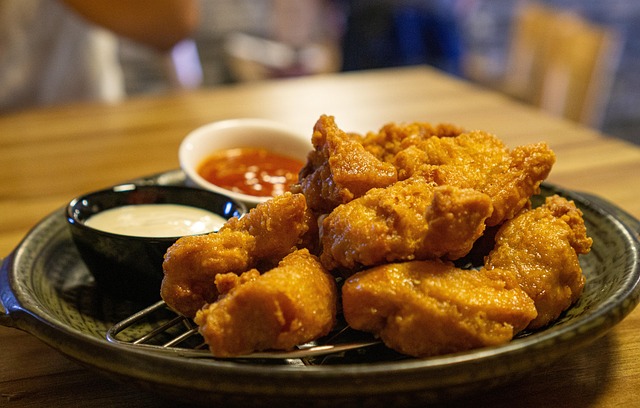
Recipe at a glance
- Prep20 min
- Cook10 min
- Total30 min
- Serves4
- Calories~410 / serving
- LevelEasy
What Makes Karaage Different from American Fried Chicken?
Karaage (唐揚げ) skips the buttermilk-and-flour drill entirely. There’s no batter, no brine, no dredge station. The chicken carries its own flavor from a short soy-based marinade, and the coating is a single dusting of potato starch — nothing else. That’s why the crust reads as glass, not bread. If you’ve mastered our classic buttermilk fried chicken, prepare to unlearn most of it: karaage is a faster, lighter, sharper cousin.
The dish traces back to Kyushu in the 1920s and became a nationwide bento staple after WWII. Today it’s the most-ordered izakaya dish in Japan and, according to the Karaage Association, over 100 regional variations exist — Ōita’s Nakatsu-style (no ginger, garlic-forward) and Hokkaidō’s zangi (wetter marinade, egg in the coat) being the two most famous.
Karaage vs. tempura vs. American fried chicken
| Karaage | Tempura | US fried chicken | |
|---|---|---|---|
| Coating | Potato starch | Cold flour batter | Buttermilk + flour |
| Marinade | Soy, sake, ginger | None | Buttermilk brine |
| Cut | Boneless bite pieces | Shrimp / veg | Bone-in parts |
| Fry style | Double-fry | Single, quick | Single, long |
| Crust | Glassy, thin | Lacy, airy | Craggy, thick |
The Ingredients (and Why Each One Matters)

For 4 servings (about 500 g / 1 lb chicken)
- 500 g boneless chicken thigh, skin on — thigh is non-negotiable. Breast dries out in the second fry. See our quick guide to deboning chicken thighs if you only find bone-in.
- 2 tbsp soy sauce — Japanese soy (Kikkoman-style), not Chinese light soy. Provides salt + amino depth.
- 1 tbsp sake — tenderizes and burns off any gaminess. Dry sherry works if you must.
- 1 tsp mirin — the whisper of sweetness that balances the salt.
- 1 tsp toasted sesame oil — bloomed aroma at the end of the fry.
- 1 tbsp grated fresh ginger — juice and all. Powdered ginger will not do this.
- 2 cloves garlic, grated
- 6 tbsp potato starch (katakuriko) — the answer to “why is my karaage soggy?” Never substitute flour if you can avoid it. Cornstarch is second-best.
- Neutral oil for frying — rice bran, canola, or peanut. About 1 L / 4 cups for a 24 cm pan.
- Lemon wedges + Kewpie mayo to serve.
How to Make Chicken Karaage (Step by Step)
Method — 30 minutes, start to finish
- Cut the chicken. Trim excess fat but keep the skin. Slice into 4 cm / 1.5-inch bite pieces — larger than you’d think, because they shrink.
- Marinate 20 minutes. Combine soy, sake, mirin, sesame oil, ginger and garlic in a bowl. Add the chicken, massage, cover, refrigerate. Don’t push past 30 minutes or the soy over-cures the outer layer and turns it rubbery.
- Coat. Tip potato starch onto a plate. Lift each piece out of the marinade — let it drip but don’t shake it dry — and roll to coat. The tacky spots are what will blister into that iconic craggy shell.
- First fry — 160 °C / 320 °F, 90 seconds. Fry in batches of 6–8 pieces. The chicken should barely color. This stage cooks the meat.
- Rest 4 minutes on a rack. Carry-over heat finishes the interior while the crust dries out. Skipping this rest is the #1 home-cook mistake.
- Second fry — 180 °C / 360 °F, 60 seconds. Hard sizzle, deep gold. This stage crisps. Drain on a rack, not paper towel.
- Serve immediately with lemon wedges and Kewpie. Squeeze the lemon over the chicken at the table — the acid on hot crust is the whole point.
Oil Temperature and Timing Cheat Sheet
| Stage | Oil temp | Time | What’s happening |
|---|---|---|---|
| 1st fry | 160 °C / 320 °F | 90 sec | Chicken cooks through, minimal color |
| Rest | Room temp | 4 min | Carry-over finishes interior; crust dehydrates |
| 2nd fry | 180 °C / 360 °F | 60 sec | Starch blisters, deep gold color, shatter crust |
| Drain | Wire rack | 2 min | Steam escapes downward — never wilts the crust |
Watch It Made (5-Minute Video)
Chef Yuto walks through the exact double-fry rhythm, including the crucial 4-minute rest. If your karaage has ever come out either raw-in-the-middle or dry-and-brown, this is the fix.
The Three Mistakes That Ruin Karaage
1. Using chicken breast
Breast has no intramuscular fat to survive the second fry. The result is fried sawdust in a good shell. Buy thigh. If breast is all you have, treat it more like our chicken katsu — panko-breaded and single-fried — and you’ll be happier with the outcome.
2. Coating in flour instead of potato starch
Flour creates gluten under heat, which traps steam and softens the crust within 10 minutes of resting. Potato starch has no gluten — the crust stays crisp for hours and re-crisps beautifully in a hot oven at 180 °C for 4 minutes.
3. Single-frying at one temperature
Fry hot only → burnt outside, raw inside. Fry cool only → greasy, pale, and steamed. The two-stage fry isn’t a chef’s flourish; it’s the physics of the dish. Korean fried chicken uses the same principle — see our Korean fried chicken guide for the sweet-heat cousin of this recipe.
What to Serve With Karaage
The classic izakaya plate is karaage + shredded raw cabbage + a mound of Kewpie mayo + lemon wedge. From there, common pairings:
- Rice + miso soup — the teishoku (set meal) treatment
- Cold soba noodles — summer combo, cuts the richness
- Cold Sapporo or Asahi lager — the reason izakaya invented this dish
- Yuzu kosho or 7-spice shichimi — dry seasonings on the side, never on the chicken before frying
- Round out the table with our teriyaki chicken or a bowl of gyudon for a full izakaya-at-home spread
Storing and Reheating
Fridge: up to 3 days in a sealed container.
Reheat: 180 °C / 360 °F oven or air fryer for 4–5 minutes. Never microwave — the crust turns to wet cardboard.
Freeze: arrange on a tray, freeze, then bag. Reheat straight from frozen at 180 °C for 8 minutes. Karaage is actually engineered for bento — it’s designed to eat cold, and does.
Quick Answers
Can I bake or air-fry karaage instead?
Air fryer at 200 °C / 400 °F for 12 minutes, flipping once, gets you 85% of the way there — good weeknight compromise. Oven-baking, even at high heat, will not blister potato starch the same way; the crust stays matte instead of glassy.
Why is my karaage greasy?
Two causes: oil below 160 °C on the first fry (the coating absorbs before it seals), or overcrowding the pot (temperature drop of 20 °C+). Work in small batches and let the oil recover between rounds.
Do I need sake?
Yes, but you can swap. Sake tenderizes protein and evaporates any raw-poultry aroma. Dry sherry is the closest cousin; dry vermouth works; Chinese Shaoxing changes the flavor toward Chinese salt-and-pepper chicken but is still delicious.
How far ahead can I marinate?
20–30 minutes is the sweet spot. Overnight marinating — a habit imported from Korean fried chicken — over-salts the chicken and cures the outer 3 mm into ham. Karaage is a fast marinade dish; trust it.
Is karaage gluten-free?
Almost. Swap regular soy sauce for tamari and confirm your sake is gluten-free (most are). Potato starch is naturally GF, so the crust itself is safe.
The One-Line Version
Thigh + short soy marinade + potato starch + two fries. Everything else is regional accent. Once you feel the rhythm of 160 °C → rest → 180 °C, you’ll never go back to any other fried chicken on a weeknight. Hungry for more? Browse the rest of our chicken recipe collection.
Did You Try Our Recipe ?
Chicken hears and gizzards
I would love you to send me the recipe please. I have no printer to print it off. [email protected]
Response from MeatRecipesBox
Hi Sharon, thank you so much for your kind words! I’ve just sent the full recipe to your inbox. Enjoy, and let me know how it turns out! 😊
Scrumptious
My husband (who is extremely picky) loved the liver & onions so much!! I didn’t have any beef broth or Sherry so I used about a tbl of Worcestershire and 1/4 c of white wine …..it was scrumptious
Response from MeatRecipesBox
Oh wow, I’m so happy to hear that!! 😍 I love that you made it work with what you had on hand — Worcestershire and white wine sound like a delicious twist. So glad your husband enjoyed it, especially being picky! Thank you for sharing your version, it makes me smile knowing it turned out scrumptious!
This was amazing
This recipe turned out really amazing! It’s juicy and spiced deliciously. I definitely would use less of the spicy pepper next time, but it really was delicious and I don’t think I’ll make chicken legs any other way from now on.!
Response from MeatRecipesBox
Thank you for taking the time to leave such a thoughtful review. I’m really glad to hear the recipe turned out juicy and full of flavor for you. That’s exactly what I was hoping for when putting it together. Good call on the spicy pepper as well. Adjusting the heat level to your own taste is always the best approach, and using a little less next time should make it just right for you. I really appreciate you trying the recipe and sharing your experience. It’s great to know it worked so well for you.
I Didn’t Expect This Cornbeef Hash Recipe to Taste This Good!!
One skillet. A handful of simple ingredients. Thirty minutes on the clock. And somehow… I ended up with the crispiest, most comforting cornbeef hash recipe I’ve made in years.
I wasn’t expecting much—just a quick, no-fuss meal. But that first bite? Crispy edges, tender potatoes, smoky corned beef, a little kick of pepper. It tasted like something straight off a cozy diner griddle.
Honestly, it caught me off guard—in the best way. Here’s why this simple skillet completely won me over.


