
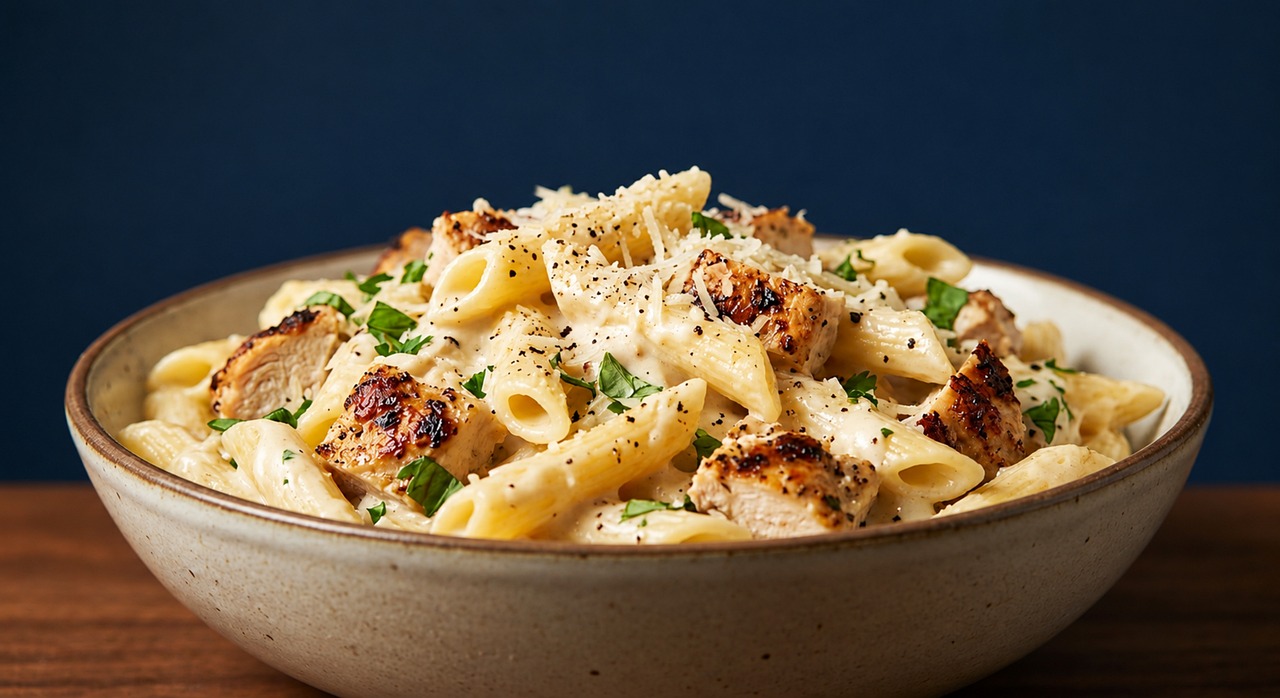
This is the Chili’s-style version most people search for: bold Cajun spice, a silky cream sauce that actually clings to the pasta, and no fussy technique. I’ve cooked it dozens of times, and the two things that separate a great pan from a mediocre one are the sear on the chicken (dry surface, hot pan) and the moment you add the cream (off the boil, not before). Everything else is timing.
Ingredients (serves 4)
Nothing exotic. If you don’t have Cajun seasoning, there’s a 60-second blend below the recipe card.
- 2 large boneless, skinless chicken breasts (about 1 lb / 450 g), sliced into ½-inch strips
- 2 tbsp Cajun seasoning, divided (1½ tbsp for the chicken, ½ tbsp for the sauce)
- 2 tbsp olive oil
- 2 tbsp unsalted butter
- 1 red bell pepper, thinly sliced
- 1 small yellow onion, thinly sliced
- 4 garlic cloves, minced
- 1½ cups heavy cream (36% fat — don’t sub half-and-half; it splits)
- ½ cup low-sodium chicken broth
- ¾ cup finely grated Parmesan, plus more to serve
- 12 oz (340 g) penne or fettuccine
- Salt, black pepper, chopped parsley to finish
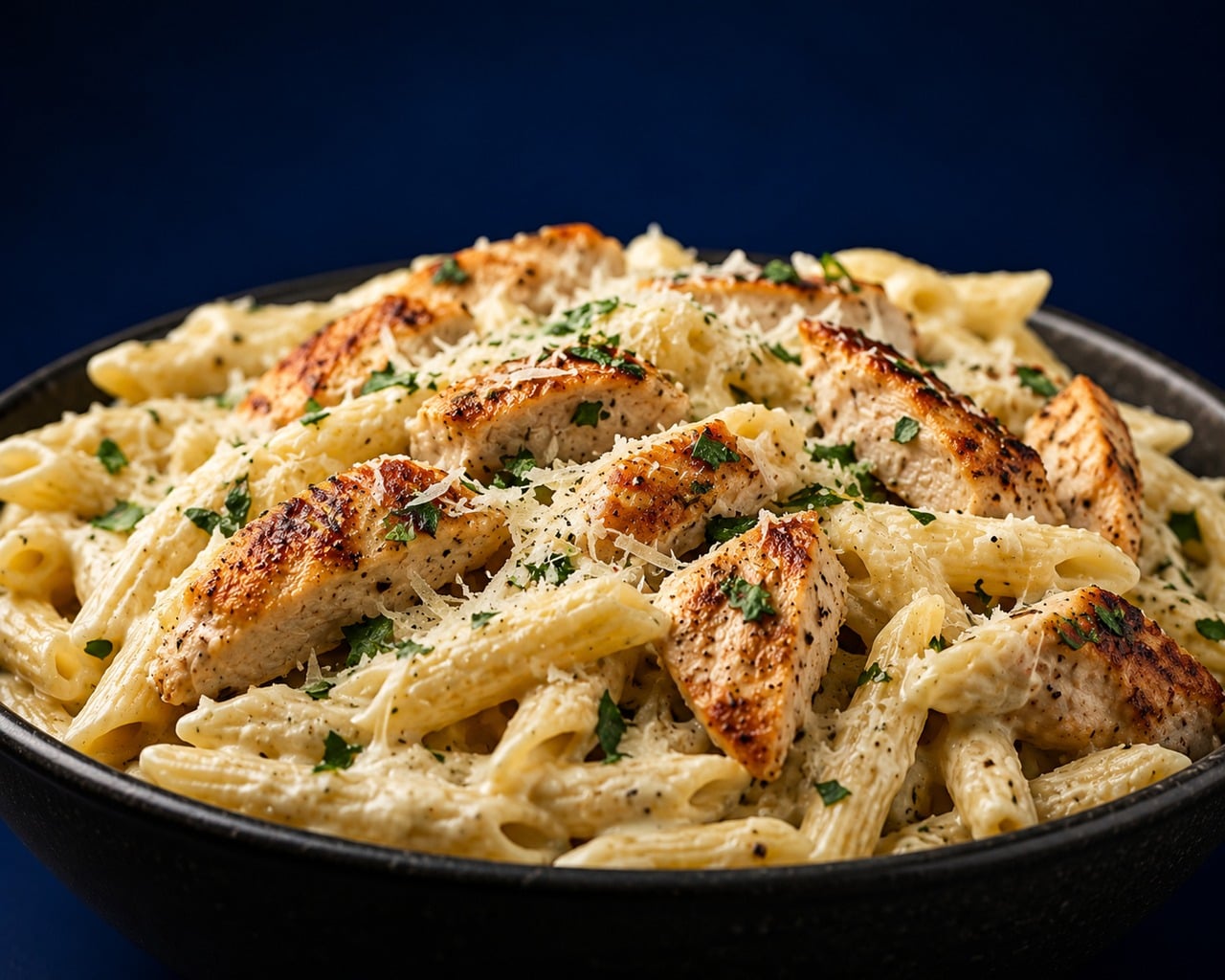
How to make it: step by step
Creamy Cajun Chicken Pasta
Method
- Boil the pasta. Salt the water heavily (it should taste like the sea). Cook penne 1 minute under package al dente — it finishes in the sauce. Reserve 1 cup pasta water before draining.
- Season and sear the chicken. Toss chicken strips with 1½ tbsp Cajun seasoning and a pinch of salt. Heat olive oil in a large skillet over medium-high. Sear chicken in a single layer, undisturbed, 3 minutes per side until golden and cooked through (165°F / 74°C internal). Transfer to a plate.
- Sauté vegetables. Lower heat to medium. Add butter, then bell pepper and onion. Cook 4 minutes until softened but still with bite. Add garlic; cook 30 seconds until fragrant — don’t let it color.
- Build the sauce. Pour in chicken broth, scraping the browned bits off the pan. Reduce 1 minute. Add cream and the remaining ½ tbsp Cajun seasoning. Bring to a bare simmer (small bubbles at the edge, not a rolling boil), and cook 3–4 minutes until the sauce coats the back of a spoon.
- Finish. Kill the heat. Stir in Parmesan a handful at a time. Add drained pasta and chicken back to the pan, tossing until glossy. If the sauce tightens, loosen it with a splash of the reserved pasta water. Taste, adjust salt.
- Serve. Top with parsley and extra Parmesan. Eat immediately — cream sauces wait for no one.
Homemade Cajun seasoning (60 seconds)
If you’re out of pre-mixed, whisk this in a small bowl. Yields ~3 tbsp — enough for one batch with a little left over.
- 1 tbsp smoked paprika
- 1 tsp garlic powder
- 1 tsp onion powder
- 1 tsp dried oregano
- 1 tsp dried thyme
- ½ tsp cayenne (dial down to ¼ tsp for mild, up to 1 tsp for hot)
- ½ tsp black pepper
- ½ tsp salt
For a deeper dive on layering heat, our complete Cajun seasoning guide breaks down the spice ratios by dish type.
Watch it come together
The three mistakes that ruin Cajun chicken pasta
1. Boiling the cream
Heavy cream splits above a low simmer. Once you see a rolling boil, the fat separates and you get a greasy pool instead of a coating sauce. Keep it at a bare simmer — the cream will thicken in 3–4 minutes without any drama.
2. Under-seasoning the pasta water
Cajun seasoning brings heat and smoke, but the pasta itself needs to be seasoned from the inside. A tablespoon of salt per quart of boiling water is the floor. Bland pasta drags the whole dish down.
3. Adding Parmesan on high heat
Off the heat, always. Parmesan added over an active flame clumps into rubbery strings. Take the pan off the burner, stir it in a handful at a time, and the sauce turns silky.
Variations that actually work
- Cajun chicken and shrimp pasta. Add ½ lb peeled shrimp in step 3 after the chicken comes out. Sear 90 seconds per side, remove, and return with the chicken at the end. See our full Cajun shrimp pasta recipe for the shrimp-only version.
- Extra heat. Double the cayenne in the seasoning blend and add ½ tsp crushed red pepper with the garlic. A splash of hot sauce (Louisiana-style, not Tabasco — too vinegary) at the finish lifts everything.
- Lighter version. Swap heavy cream for ¾ cup evaporated milk + ¼ cup Greek yogurt whisked in off the heat. Not identical, but it holds together.
- Sun-dried tomatoes. A ¼ cup, drained and chopped, added with the garlic. Turns it into a Tuscan-Cajun hybrid that has no business being this good.

What to serve with it
The pasta is rich, so pair it with something bright and green. A simple lemon-dressed arugula salad is the standard — 3 handfuls of arugula, juice of half a lemon, olive oil, salt, shaved Parmesan. Garlic bread is the crowd-pleaser, but it doubles down on the richness. If you’re feeding a bigger group, a grilled chicken Caesar alongside stretches the meal without adding another cream sauce.
Storing and reheating
Cream sauces reheat badly in a microwave — they split. In an airtight container, the pasta keeps 3 days in the fridge. To reheat, add 2–3 tablespoons of milk or cream to the portion in a skillet over low heat, stirring gently until loose. Don’t freeze it. The cream sauce breaks on thaw and the texture never comes back. If you’re meal-prepping, freeze the seasoned raw chicken and cook the pasta fresh.
Quick answers
How spicy is Cajun chicken pasta?
Medium-mild as written. Cajun seasoning gets its warmth from cayenne, and the cream tames it hard. If you’re spice-shy, use ¼ tsp cayenne in the blend. For real heat, push it to 1 tsp and finish with hot sauce. The dish is designed to be adjustable — taste the sauce before the pasta goes in and add more seasoning if it reads flat.
Can I make it ahead?
Partially. Sear the chicken and slice the vegetables up to a day in advance and refrigerate. Boil the pasta and build the sauce fresh — it takes 15 minutes with the prep done. Fully assembled, the sauce loses its silkiness within an hour as the pasta drinks it up.
What’s the best pasta shape?
Penne rigate, hands down. The ridges grab the sauce and the tubes hold it inside. Fettuccine is the second choice for its wide surface area. Avoid smooth shapes (linguine, spaghetti) — the cream slides off. Short shapes without ridges (elbows, rotini) work in a pinch.
Can I use chicken thighs instead of breasts?
Yes, and they’re arguably better. Boneless skinless thighs stay juicier under Cajun heat and don’t dry out if you overshoot 165°F by a minute. Cook time is nearly identical — 3–4 minutes per side, sliced into ½-inch strips. See our chicken thighs vs breasts breakdown for the full trade-off.
Is Cajun chicken pasta halal-friendly?
Yes — no pork, no wine, no gelatin. Use halal-certified chicken and check your Cajun seasoning label; most commercial blends are pure spice, but a few add pork-derived anti-caking agents. Homemade (recipe above) removes the question.
References and further reading
Cross-checked technique against Budget Bytes’ one-pot version, Natasha’s Kitchen creamy Cajun chicken pasta, and The Kitchn’s method. For food-safety cooking temperatures on chicken, see the USDA FSIS poultry guidance.
Next up: try our blackened chicken Alfredo for a milder, richer cousin, or the one-pot chicken pasta collection if you’re building a weeknight rotation.
Did You Try Our Recipe ?
Scrumptious
My husband (who is extremely picky) loved the liver & onions so much!! I didn’t have any beef broth or Sherry so I used about a tbl of Worcestershire and 1/4 c of white wine …..it was scrumptious
Response from MeatRecipesBox
Oh wow, I’m so happy to hear that!! 😍 I love that you made it work with what you had on hand — Worcestershire and white wine sound like a delicious twist. So glad your husband enjoyed it, especially being picky! Thank you for sharing your version, it makes me smile knowing it turned out scrumptious!
This was amazing
This recipe turned out really amazing! It’s juicy and spiced deliciously. I definitely would use less of the spicy pepper next time, but it really was delicious and I don’t think I’ll make chicken legs any other way from now on.!
Response from MeatRecipesBox
Thank you for taking the time to leave such a thoughtful review. I’m really glad to hear the recipe turned out juicy and full of flavor for you. That’s exactly what I was hoping for when putting it together. Good call on the spicy pepper as well. Adjusting the heat level to your own taste is always the best approach, and using a little less next time should make it just right for you. I really appreciate you trying the recipe and sharing your experience. It’s great to know it worked so well for you.
I Didn’t Expect This Cornbeef Hash Recipe to Taste This Good!!
One skillet. A handful of simple ingredients. Thirty minutes on the clock. And somehow… I ended up with the crispiest, most comforting cornbeef hash recipe I’ve made in years.
I wasn’t expecting much—just a quick, no-fuss meal. But that first bite? Crispy edges, tender potatoes, smoky corned beef, a little kick of pepper. It tasted like something straight off a cozy diner griddle.
Honestly, it caught me off guard—in the best way. Here’s why this simple skillet completely won me over.


