
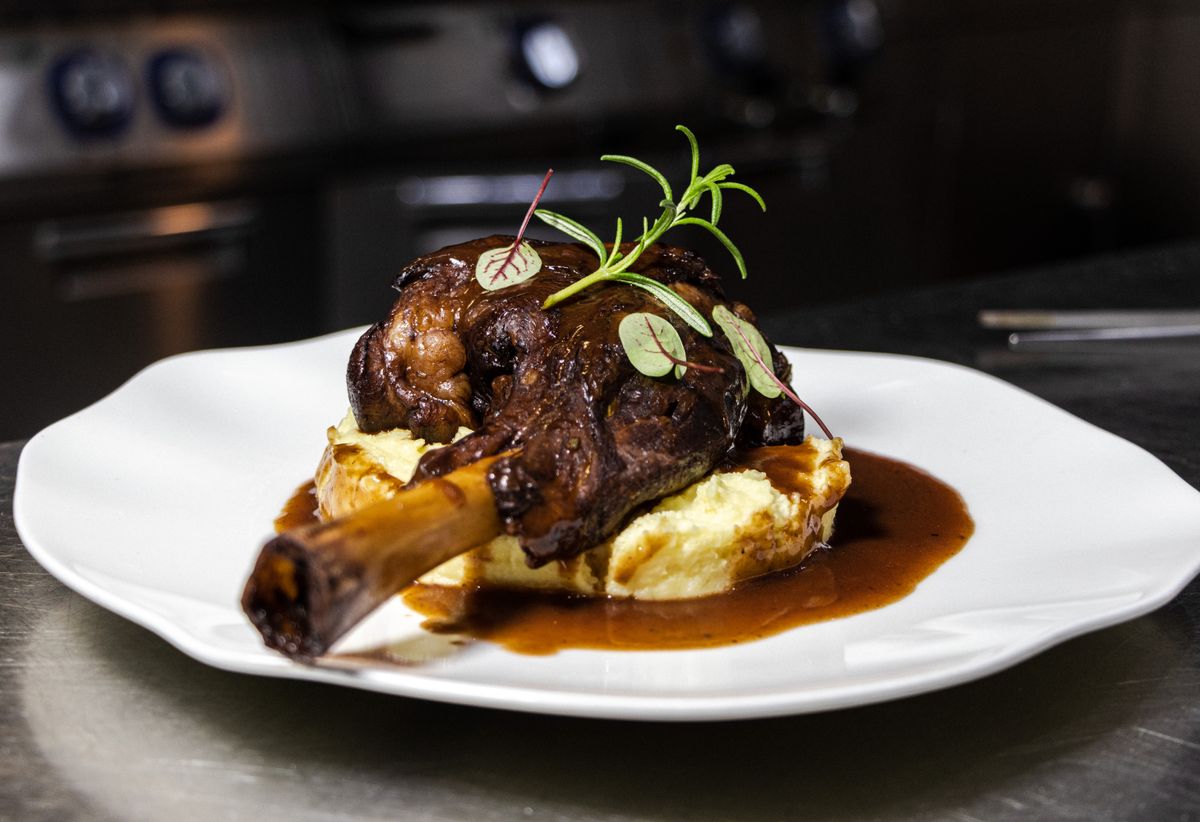
Braised lamb shanks in one sentence: sear four hindshanks hard on all sides, then braise them covered at 325 °F (163 °C) in stock, unsweetened dark grape juice and aromatics for 2 to 2½ hours, until a fork twists in the meat with no resistance.
Liquid should reach halfway up the shanks — never submerge them. Rest 15 minutes uncovered, skim the fat, and reduce the sauce hard before serving. This is a fully alcohol-free braise — grape juice plus a spoon of red-wine vinegar delivers the fruit and acidity that a classical wine reduction gives, without the wine.
Which shank should you buy?
A lamb shank is the lower leg — the shin, essentially. There’s a foreshank (front leg) and a hindshank (back leg), and if the butcher lets you pick, take the hindshank. It’s meatier, usually 1 lb to 1½ lb (450 – 680 g) each, and the single bone runs cleanly down the centre. Foreshanks are smaller and have more connective tissue to break down, which just means you cook them a touch longer.
Look for shanks with a good fat cap and deep, dark-red meat. Pale-pink shanks come from very young lamb and don’t develop the same depth. One shank per person is standard — a portion size Felicity Cloake settles on in her Guardian walkthrough as well. Anyone who says two are for hungry people has clearly never eaten a full hindshank.
The times and temperatures at a glance
| Stage | Temperature | Time | What’s happening |
|---|---|---|---|
| Sear | Stovetop, medium-high | 10 min per pair | Mahogany crust; fond builds in the pot |
| Sweat vegetables | Stovetop, medium | 6 – 8 min | Onion, carrot, celery soften and colour |
| Braise (covered) | 325 °F / 163 °C | 2 – 2½ hours | Collagen converts to gelatin |
| Rest & reduce | Room temp / stovetop | 15 min | Skim fat, reduce sauce to nappé |
Two hours in the oven is the honest floor. Two and a half is where most shanks land. Three is fine — this is not a cut you can overcook by 20 minutes. What ruins it is undercooking: pulling at 1½ hours because it “looks done.” Collagen only begins converting to gelatin around the 90-minute mark at 325 °F, and the shift from chewy to yielding happens in the last 40 minutes.
Ingredients (serves 4)
- 4 lamb shanks (hindshank preferred), about 1¼ lb / 560 g each
- 2 tbsp olive oil
- Kosher salt and freshly cracked black pepper
- 1 large yellow onion, diced
- 2 carrots, diced
- 2 celery stalks, diced
- 6 garlic cloves, smashed
- 2 tbsp tomato paste
- 1½ cups (360 ml) unsweetened dark grape juice (Concord or red grape, 100% juice)
- 2 tbsp red-wine vinegar
- 1 tbsp pomegranate molasses (optional; adds depth and a light tang)
- 2½ cups (600 ml) beef or lamb stock, warm
- 2 sprigs rosemary, 4 sprigs thyme, 2 bay leaves
- 1 strip orange peel (optional but transformative)
Why grape juice + vinegar instead of red wine
A classical red-wine braise gives you three things: dark fruit, gentle tannin, and acidity that keeps the sauce from tasting heavy. Unsweetened dark grape juice covers the fruit and colour. Red-wine vinegar covers the acidity — 2 tbsp is enough, more and the sauce turns sharp. Pomegranate molasses is optional but bridges the gap by adding a subtle astringency that stands in for tannin. Blind-tested against a Côtes du Rhône braise, the finished sauce sits within a hair’s breadth, minus the alcohol.
Why the shanks should stay half above the liquid
Fully submerged shanks poach — you get tender meat but no reduction happening on top and a diluted sauce at the end. Half above, half below, covered pot: the top of the shank braises in steam while the bottom simmers in the aromatic liquid. The exposed meat also holds its shape better on the plate, which matters more than it sounds.
Step-by-step: how to braise lamb shanks
- Dry the shanks aggressively. Pat every surface with paper towel, then salt generously and let them sit uncovered on a rack for 40 minutes if you have time. Wet meat steams; it does not sear.
- Sear in batches. Heat the olive oil in a heavy Dutch oven over medium-high until it shimmers and just barely smokes. Brown two shanks at a time — never all four — turning every 2 – 3 minutes until every side has a mahogany crust. Roughly 10 minutes per pair. Rest them on a plate.
- Sweat the vegetables in the fond. Drop the onion, carrot and celery into the same pot, scraping up the brown bits. Cook 6 – 8 minutes until softened and taking on colour. Add the garlic and tomato paste, stir 90 seconds until the paste turns brick-red and smells sweet.
- Deglaze with the grape juice and vinegar. Pour in the grape juice, red-wine vinegar and pomegranate molasses. Scrape hard. Let it bubble down by about a third — 5 – 6 minutes — until the pot smells rounded and slightly jammy, not raw.
- Return the shanks. Nestle them back in, tuck the herbs and orange peel around, and pour in enough warm stock to reach halfway up the meat. If the tops poke above the surface, that’s correct.
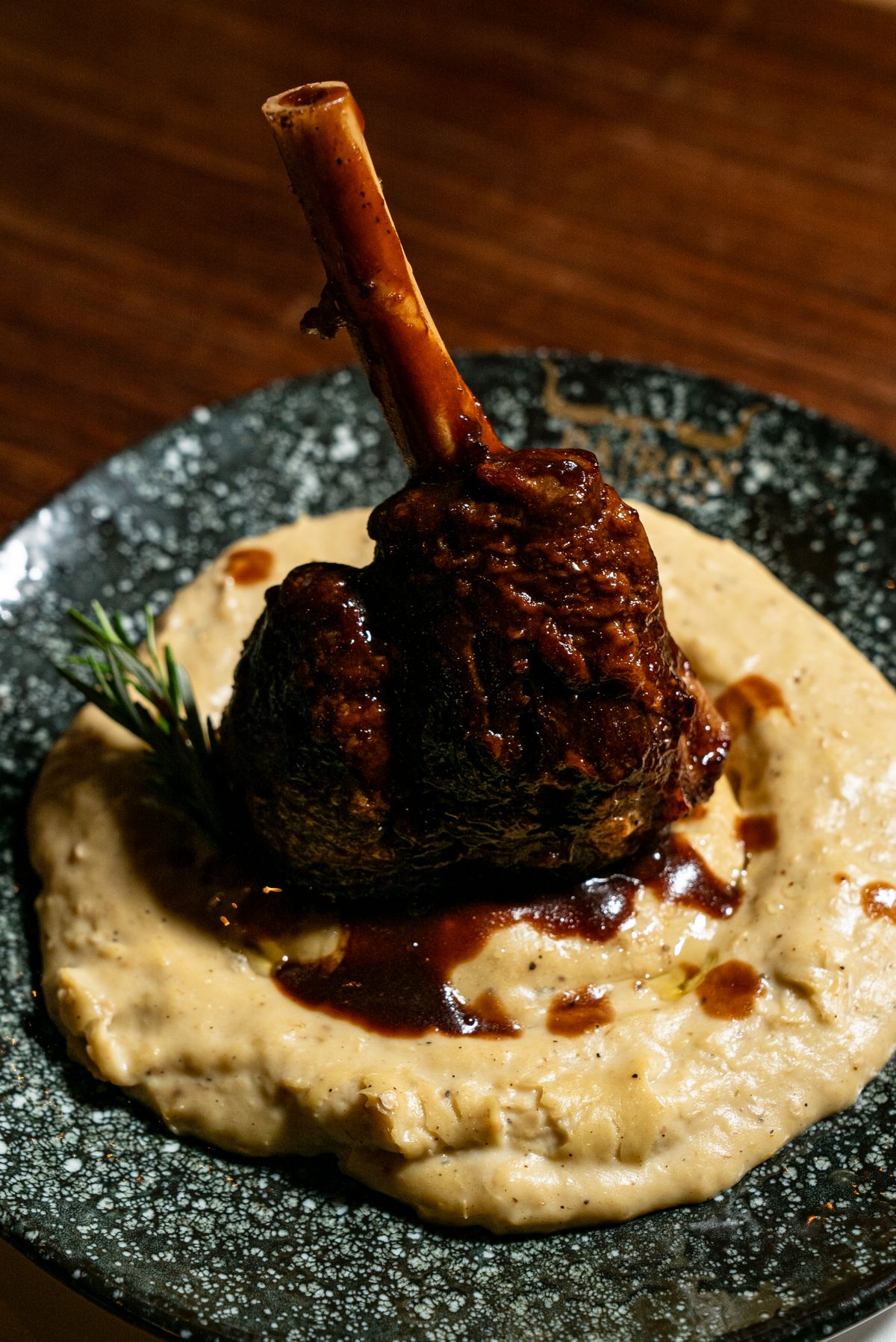
- Braise covered at 325 °F. Lid on, transfer to a 325 °F / 163 °C oven, and cook 2 hours. Check at the 2-hour mark: a fork slid into the thickest part should twist with no resistance. If there’s any tug, give it another 20 – 30 minutes.
- Rest the shanks. Move them to a warm platter, cover loosely, and let them sit 15 minutes while you finish the sauce. Do not skip the rest — the shanks tighten if you plate them straight from the pot.
- Skim, strain, reduce. Strain the braising liquid through a fine-mesh sieve into a saucepan, pressing on the solids. Let it settle 5 minutes, skim the fat off the top (there will be more than you expect — take it all), then reduce over medium-high until it coats the back of a spoon, 8 – 12 minutes.
- Finish and taste. The sauce almost always needs a squeeze of lemon and a final pinch of salt. A cold knob of butter whisked in at the end gives it gloss, but the dish is rich enough that you don’t have to.
Watch the technique on video
The walkthrough below follows the same sear-sweat-deglaze-oven-reduce rhythm and is a good visual reference for the final sauce consistency (just substitute grape juice and vinegar for the wine step).
What to serve underneath
Braised shanks need something to catch the sauce. In order of how well they work:
- Creamy polenta — the classic. Stone-ground, cooked in milk and stock, finished with parmesan.
- Pommes purée — Yukon Golds pushed through a ricer with plenty of butter and warm milk. Foolproof.
- Buttered egg noodles — the fastest option, and better than it sounds. Wide noodles, salted water, butter and parsley.
- White beans stewed with olive oil and rosemary — this is what I make when I want the meal to feel like southern France.
- Warm hummus — the Levantine move. Spread thick on the plate, shank on top, sauce spooned around. A pinch of sumac finishes it.
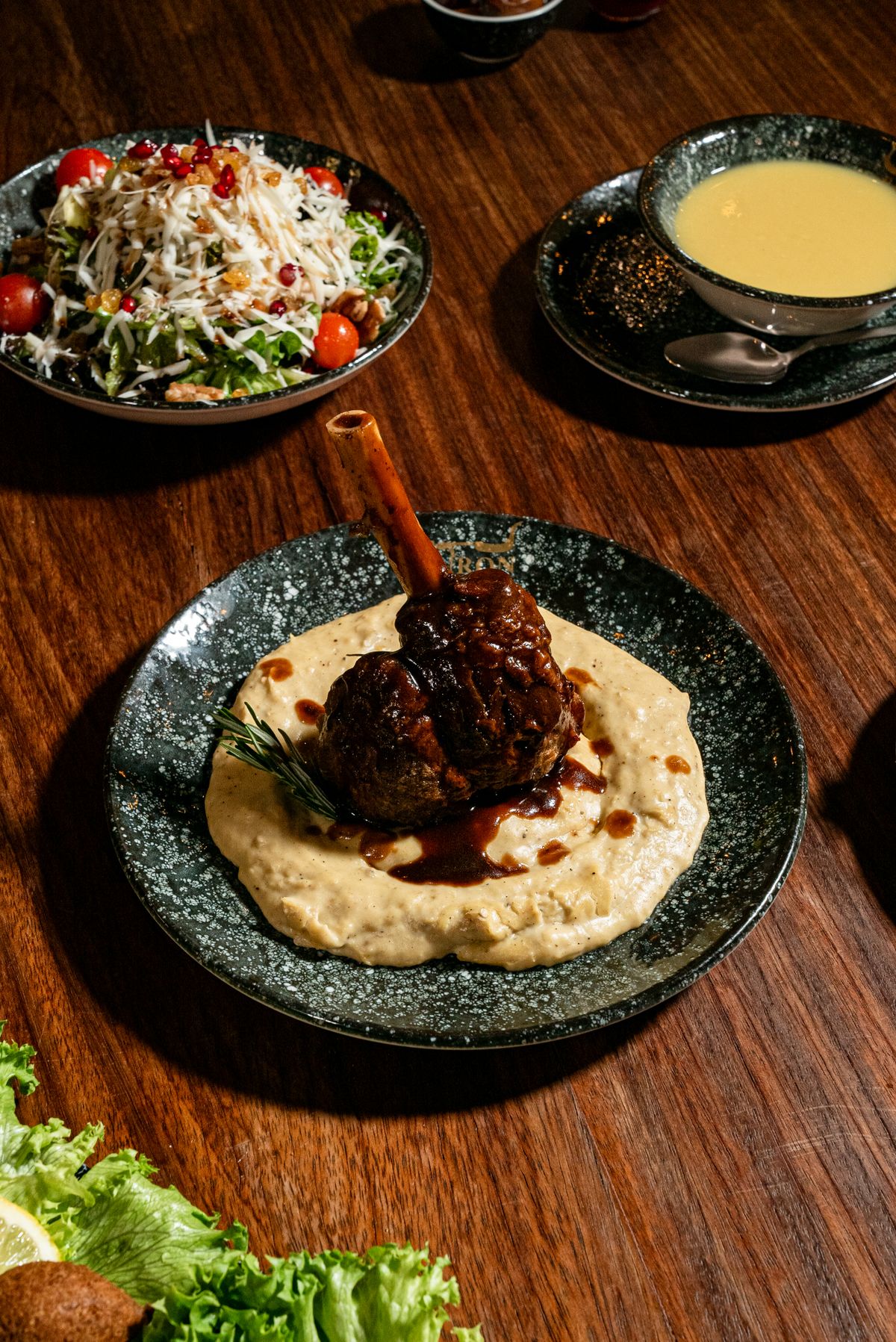
Skip rice unless you’re going the Middle-Eastern route with hummus — a plain rice pilaf is too neutral for a sauce this deep, but the whole plate reconfigures when hummus takes the base. For more slow-cooked mains on the same rhythm, see our complete lamb cooking guide.
Make it the day before
Braised shanks are actually better on day two. Cool everything in the braising liquid, refrigerate overnight, and the fat solidifies on top — lift it off in a single sheet. Reheat covered at 300 °F for 30 minutes, still in the sauce. The meat will have absorbed more of the stock and grape juice overnight and the sauce will be deeper.
If you’re cooking for a dinner party, this is not a shortcut — it’s the correct move. The only thing you finish on the day is the sauce reduction after skimming the cold fat.
Common mistakes and how to fix them
The shanks are tough instead of tender
Undercooked. Collagen needs time, and there is no rushing it. Put them back in for another 30 minutes and check again. If the fork still meets any resistance, another 20.
The meat is falling apart before you serve it
Overcooked, but only slightly. Transfer them very gently with two spoons, keep them intact on the platter, and spoon the reduced sauce over the top. No one at the table will complain.
The sauce tastes flat
It needs acid. Add lemon juice a teaspoon at a time until the flavours lift. If it tastes muted rather than flat, the missing ingredient is salt — add a small pinch, wait 30 seconds, taste again.
The sauce tastes too sweet
The grape juice reduced further than intended. Balance it with a splash more red-wine vinegar (½ tsp at a time) and a pinch of salt. Sweetness in a savoury sauce almost always reads as missing acid, not too much sugar.
There’s a strong “lamb” smell that overwhelms everything
Probably older lamb, or shanks that weren’t trimmed well. The orange peel and rosemary knock this back. Next time, ask the butcher for spring lamb — under a year old — and trim any silver skin before searing.
Can I do this in a slow cooker or Instant Pot?
Yes. Slow cooker: sear in a skillet first, then transfer everything to the crock and cook 6 hours on low or 3½ on high. Instant Pot: sauté mode for the sear, then 45 minutes on high pressure with a 15-minute natural release. Skipping the sear costs you a third of the depth — don’t.
Where braised lamb shanks fit into the MeatRecipesBox library
The technique here is the same French braise pattern that underpins beef bourguignon-style braises and osso buco — sear, sweat, deglaze, low oven, reduce. Once that mental model clicks, most tough cuts stop feeling mysterious. For the beef version of exactly this recipe, see our beef braise guide; for a lighter take on lamb, our slow-roast lamb shoulder uses the same low temperature over a longer window with no braising liquid at all.
If you’re braising shanks for the first time, don’t multitask. Sit near the oven with a book. Check them at 90 minutes just to smell the pot. It’s one of the best hours you’ll spend in a kitchen.
Did You Try Our Recipe ?
Scrumptious
My husband (who is extremely picky) loved the liver & onions so much!! I didn’t have any beef broth or Sherry so I used about a tbl of Worcestershire and 1/4 c of white wine …..it was scrumptious
Response from MeatRecipesBox
Oh wow, I’m so happy to hear that!! 😍 I love that you made it work with what you had on hand — Worcestershire and white wine sound like a delicious twist. So glad your husband enjoyed it, especially being picky! Thank you for sharing your version, it makes me smile knowing it turned out scrumptious!
This was amazing
This recipe turned out really amazing! It’s juicy and spiced deliciously. I definitely would use less of the spicy pepper next time, but it really was delicious and I don’t think I’ll make chicken legs any other way from now on.!
Response from MeatRecipesBox
Thank you for taking the time to leave such a thoughtful review. I’m really glad to hear the recipe turned out juicy and full of flavor for you. That’s exactly what I was hoping for when putting it together. Good call on the spicy pepper as well. Adjusting the heat level to your own taste is always the best approach, and using a little less next time should make it just right for you. I really appreciate you trying the recipe and sharing your experience. It’s great to know it worked so well for you.
I Didn’t Expect This Cornbeef Hash Recipe to Taste This Good!!
One skillet. A handful of simple ingredients. Thirty minutes on the clock. And somehow… I ended up with the crispiest, most comforting cornbeef hash recipe I’ve made in years.
I wasn’t expecting much—just a quick, no-fuss meal. But that first bite? Crispy edges, tender potatoes, smoky corned beef, a little kick of pepper. It tasted like something straight off a cozy diner griddle.
Honestly, it caught me off guard—in the best way. Here’s why this simple skillet completely won me over.
Did You Try Our Recipe ?
Scrumptious
My husband (who is extremely picky) loved the liver & onions so much!! I didn’t have any beef broth or Sherry so I used about a tbl of Worcestershire and 1/4 c of white wine …..it was scrumptious
Response from MeatRecipesBox
Oh wow, I’m so happy to hear that!! 😍 I love that you made it work with what you had on hand — Worcestershire and white wine sound like a delicious twist. So glad your husband enjoyed it, especially being picky! Thank you for sharing your version, it makes me smile knowing it turned out scrumptious!
This was amazing
This recipe turned out really amazing! It’s juicy and spiced deliciously. I definitely would use less of the spicy pepper next time, but it really was delicious and I don’t think I’ll make chicken legs any other way from now on.!
Response from MeatRecipesBox
Thank you for taking the time to leave such a thoughtful review. I’m really glad to hear the recipe turned out juicy and full of flavor for you. That’s exactly what I was hoping for when putting it together. Good call on the spicy pepper as well. Adjusting the heat level to your own taste is always the best approach, and using a little less next time should make it just right for you. I really appreciate you trying the recipe and sharing your experience. It’s great to know it worked so well for you.
I Didn’t Expect This Cornbeef Hash Recipe to Taste This Good!!
One skillet. A handful of simple ingredients. Thirty minutes on the clock. And somehow… I ended up with the crispiest, most comforting cornbeef hash recipe I’ve made in years.
I wasn’t expecting much—just a quick, no-fuss meal. But that first bite? Crispy edges, tender potatoes, smoky corned beef, a little kick of pepper. It tasted like something straight off a cozy diner griddle.
Honestly, it caught me off guard—in the best way. Here’s why this simple skillet completely won me over.


