

Beef pho — phở bò — is the dish where the broth is 90% of the recipe and everything else is assembly. Get the broth right and the rest is chopping herbs. Get it wrong and no amount of Thai basil or lime will save you. There’s no honest twenty-minute version, but there is a very good ninety-minute version that beats every restaurant bowl in a fifty-mile radius. If you’ve cooked our phở gà (chicken pho), you already know the discipline — beef just asks for longer at the stove and better bones.
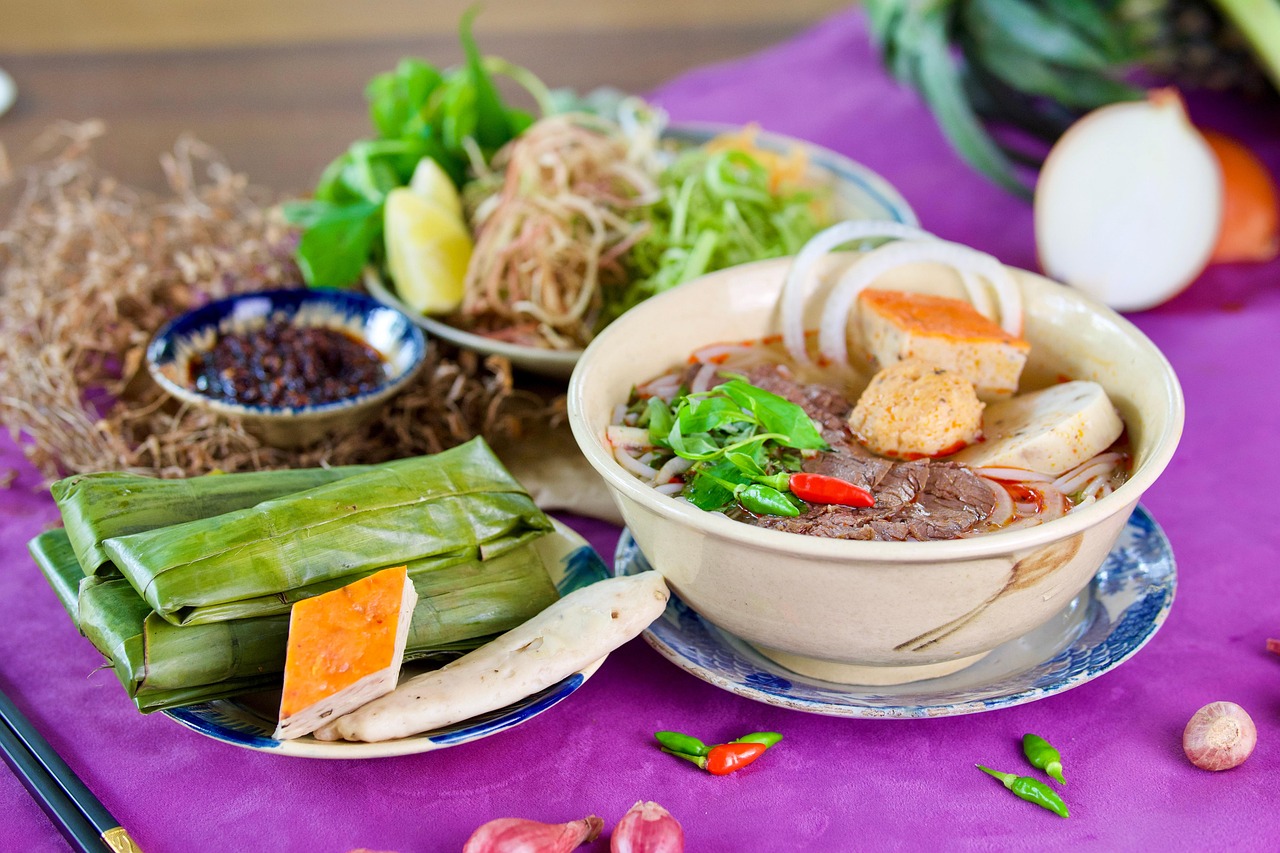
Beef pho (phở bò) is Vietnamese beef noodle soup built on a broth of parboiled beef bones (marrow + knuckle + oxtail), charred onion and ginger, and toasted whole spices (star anise, cinnamon, cloves, cardamom, coriander seeds). Simmer at a bare 85 °C / 185 °F for 3 hours minimum, ideally 6. Bowl assembly: rice noodles + paper-thin raw eye round + boiling broth ladled over so the beef cooks in the bowl. Herbs and lime on the side.
Jump to
What actually makes pho taste like pho
Three techniques separate a real pho broth from a beef stock with star anise thrown in. Skip any one and the bowl tastes vaguely off, even if you can’t name why. Do all three and even a shortcut version passes for restaurant quality.
1. Parboil the bones. Cover bones with cold water, bring to a hard boil for 10 minutes, dump the water, rinse the bones under cold running water until the surfaces are pale. This purges the coagulated blood and impurities that turn broth cloudy and metallic. Non-negotiable.
2. Char the aromatics. Onion and ginger, halved, placed cut-side down on an open flame or under a screaming broiler until visibly blackened at the edges (not evenly browned — blackened). The char compound is what gives pho its signature deep, smoky backbone. Raw onion and ginger produce a flat, medicinal broth.
3. Toast the spices. Star anise, cinnamon, cloves, cardamom pods, coriander seeds — dry pan, medium heat, 2–3 minutes tossing until they smell aggressive. Untoasted spices taste like potpourri; toasted spices taste like pho.
Bones and beef cut — what to buy
Pho broth needs three things from bones: collagen (body), marrow (richness), and time in water. That’s why the standard Vietnamese blend is marrow bones + knuckle + oxtail. Each contributes something different. Ask your butcher directly — many supermarkets don’t stock all three, but any halal, Asian or old-school Western butcher will cut them fresh.
| Bone type | Contribution | Amount for 3L broth |
|---|---|---|
| Marrow bones (femur, split) | Rich, fatty depth | 1 kg |
| Knuckle bones (joint) | Collagen, body, silkiness | 800 g |
| Oxtail | Deep beefy flavour + meat to eat later | 500 g |
| Beef shank (with bone) | Optional — adds meat you’ll slice into the bowl | 400 g |
For the raw beef you slice into the bowl, you want a lean, tender cut you can shave paper-thin against the grain. Freeze it 30 minutes first — firm meat slices thin without shredding. The three cuts that work:
- Eye of round — the classic. Lean, mild, holds shape when raw slices hit hot broth.
- Flank steak — beefier flavour, marbled just enough. Slightly chewier bite.
- Filet or sirloin tips — the luxury move if you have leftover steak from a prime rib or other roast.
Ingredients (serves 6, 3L broth)
Bones & broth
- 1 kg beef marrow bones, split
- 800 g beef knuckle bones
- 500 g oxtail
- 400 g beef shank (optional)
- 4 L cold water (plus more for parboil)
- 2 tbsp fish sauce
- 30 g rock sugar (or 2 tbsp light brown sugar)
- 1½ tbsp fine salt (adjust)
Toasted spices
- 4 star anise pods
- 1 cinnamon stick (7 cm)
- 6 whole cloves
- 3 green cardamom pods, crushed
- 1 black cardamom pod (optional but classic)
- 1 tbsp coriander seeds
- 1 tsp fennel seeds (optional)
Charred aromatics
- 2 large yellow onions, halved
- 1 knob fresh ginger (~80 g), halved lengthwise
Assembly & garnish
- 500 g flat rice noodles (bánh phở), dried or fresh
- 400 g eye of round, frozen 30 min then sliced paper-thin
- 4 spring onions, thinly sliced
- 1 small yellow onion, sliced paper-thin, rinsed in cold water
- Handful cilantro, chopped
- Thai basil, mint, bean sprouts
- Lime wedges, sliced Thai chilies, hoisin, sriracha
The 8-step method
- Parboil the bones.Place all bones in your largest stockpot. Cover with cold water. Bring to a hard rolling boil, cook 10 minutes. You’ll see grey-brown scum rise. Dump everything into a colander. Rinse bones and pot under cold running water until bones are pale and no debris remains. Yes, all of it. This is the clarity step.
- Char the onion and ginger.Halved cut-side down over an open gas flame, or under a broiler on high, until visibly blackened — 6–8 min direct flame, 12 min broiler. Scrape off the burnt outer layer with a knife; leave the charred flavour compound behind. Set aside.
- Toast the spices.Dry skillet, medium heat, add all whole spices. Toast 2–3 minutes tossing constantly until deeply aromatic. Tie in a cheesecloth bundle or a metal tea ball. Set aside.
- Start the broth.Return rinsed bones to the clean pot. Cover with 4 L fresh cold water. Bring to a simmer over medium-high heat. Reduce heat to 85 °C / 185 °F — the surface should show occasional bubbles, never a rolling boil. Boiling makes cloudy broth.
- Add aromatics after 1 hour.Once the broth has simmered clean for 60 minutes, add charred onion and ginger plus the spice bundle. Continue at bare simmer another 2–3 hours (6 hours ideal). Skim any scum every 30 minutes.
- Season.In the final 20 minutes, add fish sauce, rock sugar and salt. Taste. Adjust — Vietnamese broth reads first as salt, then sweet, then aromatic. If it tastes flat, add more salt before you add anything else. Strain broth through a fine mesh into a clean pot. Discard bones (or shred oxtail meat for the bowl).
- Cook the noodles.Boil rice noodles according to package direction (usually 4–5 min). Drain, rinse briefly under cold water, divide among warmed bowls immediately.
- Assemble the bowl.Lay 6–8 paper-thin slices of raw eye round on top of the noodles in each bowl. Bring the strained broth back to a hard boil. Ladle boiling broth directly over the raw beef — it cooks in seconds. Top with sliced onion, spring onion, cilantro. Serve immediately with the garnish plate.
Long version vs shortcut — the honest tradeoff
The single most-searched pho question is how long to simmer the broth. Here’s what each duration actually gets you.
| Simmer time | What you get | Verdict |
|---|---|---|
| 90 min (shortcut with quality beef stock) | 75% of the depth, still recognisably pho if all 3 non-negotiables are done | Weeknight-acceptable |
| 3 hours (bones from scratch) | 90% depth, clear broth, all collagen extracted | Sweet spot |
| 6 hours | Full body, silky mouthfeel, restaurant-tier | Best. Weekend project. |
| 12+ hours (overnight low) | Diminishing returns; bones start giving up bitter notes | Too far |
The 90-minute shortcut: use 2 L high-quality beef stock + 1 L water + 500 g oxtail (still parboiled first) + all charred aromatics and toasted spices. You lose some silkiness from the collagen but keep 100% of the aromatic complexity. Perfectly serviceable Tuesday-night pho.
Three mistakes that ruin the broth
The garnish plate — anatomy of the side
Thai basil
Tear leaves and drop them in as you eat — they wilt in seconds, releasing the anise-clove note that ties the whole bowl together.
Bean sprouts
Handful per bowl. Adds cold crunch against the hot broth. Southern Vietnamese style; some northern purists skip them.
Lime and chilies
Squeeze one lime wedge in halfway through. Sliced bird’s eye chilies for those who want the heat — never in the broth from the start.
Hoisin and sriracha
Squirt into a small dipping bowl on the side — never into the pho itself. That’s for dipping the beef slices. Purists don’t add hoisin to the broth; casual eaters do.

Storage and reheating
Common questions
How long should I simmer pho broth?
Three hours is the honest minimum for a broth built from raw bones — that’s when the collagen fully renders and the spices have infused. Six hours is the sweet spot for restaurant-tier body. Beyond twelve hours you hit diminishing returns and the bones start giving up bitter notes. A 90-minute shortcut works if you start with quality beef stock and add oxtail plus all the charred aromatics.
What’s the difference between beef pho and chicken pho?
Beef pho (phở bò) uses beef bones and spans richer, deeper, longer-simmered territory. Chicken pho (phở gà) uses a whole chicken, simmers in half the time (~2 hours), and reads cleaner and lighter. Same charred-aromatics-and-toasted-spices technique; different weight class. Our phở gà recipe is the faster weeknight cousin.
Can I use beef stock instead of making broth from bones?
Yes — this is the accepted 90-minute shortcut. Use 2 L of a good-quality low-sodium beef stock plus 1 L water plus 500 g parboiled oxtail plus all the charred onion, ginger and toasted spices. You lose the silky collagen mouthfeel that only long-simmered knuckle bones deliver, but you keep 100% of the aromatic depth. Perfectly acceptable for weeknight pho.
Why is my broth cloudy?
Two causes, both fixable next time. Either you skipped the parboil (the single biggest cause of cloudy broth), or you let the broth boil hard instead of holding a bare simmer. A rolling boil emulsifies the fat back into the water and creates permanent cloudiness. Cold-water start, hard parboil, rinse, then hold at 85 °C for the entire long simmer.
Do I really need all those whole spices?
Star anise and cinnamon are non-negotiable — they’re the signature aroma of pho. Cloves, cardamom and coriander build depth but the broth is still recognisable without one of them. Skip the fennel and black cardamom if you can’t find them. What you cannot skip is toasting whatever spices you do use — that step matters more than the completeness of the blend.

Beef Pho (Phở Bò): Authentic Vietnamese Recipe
Vietnamese beef noodle soup built on a broth of parboiled beef bones, charred onion and ginger, and toasted whole spices
- 1 kg kg beef marrow bones
- 800 g g beef knuckle bones
- 500 g g oxtail
- 400 g g beef shank optional
- 4 L L cold water
- 2 tbsp tbsp fish sauce
- 30 g g rock sugar
- 1.5 tbsp tbsp fine salt
- 4 star anise pods
- 1 cinnamon stick
- 6 whole cloves
- 3 green cardamom pods
- 1 black cardamom pod optional
- 1 tbsp tbsp coriander seeds
- 1 tsp tsp fennel seeds optional
- 2 large yellow onions
- 1 knob fresh ginger
- 500 g g flat rice noodles
- 400 g g eye of round
- 4 spring onions
- 1 small yellow onion
- 1 handful cilantro
- Thai basil
- mint
- bean sprouts
- lime wedges
- sliced Thai chilies
- hoisin
- sriracha
The 8-step method
Parboil the bones
Char the onion and ginger
Toast the spices
Start the broth
Add aromatics after 1 hour
Season
Cook the noodles
Assemble the bowl
- Large stockpot
- Colander
- Dry skillet
- Cheesecloth bundle or metal tea ball
Parboil the bones, char the aromatics, and toast the spices for a deep and smoky broth
Did You Try Our Recipe ?
Scrumptious
My husband (who is extremely picky) loved the liver & onions so much!! I didn’t have any beef broth or Sherry so I used about a tbl of Worcestershire and 1/4 c of white wine …..it was scrumptious
Response from MeatRecipesBox
Oh wow, I’m so happy to hear that!! 😍 I love that you made it work with what you had on hand — Worcestershire and white wine sound like a delicious twist. So glad your husband enjoyed it, especially being picky! Thank you for sharing your version, it makes me smile knowing it turned out scrumptious!
This was amazing
This recipe turned out really amazing! It’s juicy and spiced deliciously. I definitely would use less of the spicy pepper next time, but it really was delicious and I don’t think I’ll make chicken legs any other way from now on.!
Response from MeatRecipesBox
Thank you for taking the time to leave such a thoughtful review. I’m really glad to hear the recipe turned out juicy and full of flavor for you. That’s exactly what I was hoping for when putting it together. Good call on the spicy pepper as well. Adjusting the heat level to your own taste is always the best approach, and using a little less next time should make it just right for you. I really appreciate you trying the recipe and sharing your experience. It’s great to know it worked so well for you.
I Didn’t Expect This Cornbeef Hash Recipe to Taste This Good!!
One skillet. A handful of simple ingredients. Thirty minutes on the clock. And somehow… I ended up with the crispiest, most comforting cornbeef hash recipe I’ve made in years.
I wasn’t expecting much—just a quick, no-fuss meal. But that first bite? Crispy edges, tender potatoes, smoky corned beef, a little kick of pepper. It tasted like something straight off a cozy diner griddle.
Honestly, it caught me off guard—in the best way. Here’s why this simple skillet completely won me over.


