


Chicken yakitori is skewered, bite-sized chicken grilled over high heat and brushed with a soy-based glaze called tare. Authentic izakaya versions cook in 6–8 minutes total on a screaming-hot grate, and the tare is a 4-ingredient reduction of soy sauce, mirin, sake, and sugar simmered to a syrup that clings to the meat. You can nail it on a charcoal grill, a home broiler, or a 400°F air fryer — the technique changes, the ratios don’t.
- The tare formula: 1 : 1 : 1 : ½ (soy sauce : mirin : sake : sugar), simmered until it coats a spoon (Just One Cookbook).
- Cook thigh — not breast — cut into 1-inch cubes; thigh stays juicy at the 165°F internal temp the USDA requires (USDA FSIS).
- Glaze only in the last 90 seconds of cooking — sugar burns above 320°F.
- Soak bamboo skewers 30 min in cold water, or use flat metal skewers to stop meat from spinning.
What is chicken yakitori, really?
Yakitori (焼き鳥, “grilled bird”) is a Tokyo-born street food dating to the Edo period, when butchers grilled offcuts on bamboo sticks for laborers (BBC Good Food). It sits alongside Katsu Curry and Karaage as one of the three iconic chicken dishes of Japanese home and izakaya cooking. Purists call the tare-brushed version tare-yaki; the salt-only version is shio-yaki. This recipe covers tare-yaki with a base sauce you can also drizzle over Shoyu Chicken or spoon into a bowl of ramen.
The 4-ingredient tare sauce (izakaya ratio)
Real tare has no cornstarch, no ginger, no garlic — just four pantry staples reduced by half. Chef Ivan Orkin, who ran a yakitori bar in Tokyo, teaches the same ratio in The Gaijin Cookbook: equal parts soy, mirin, sake, and half a part sugar. Simmer 12–15 minutes over medium-low until it drips slowly off a spoon. It keeps 3 months refrigerated and gets deeper with every batch (bar tare in Tokyo is decades old — cooks top it up rather than start over, per Serious Eats).
How long does chicken yakitori take to cook?
Total active time is roughly 25 minutes if the tare is already made, or 40 minutes if you’re making the sauce from scratch. Cooking itself takes 6–10 minutes depending on your heat source. Use this chart:
| Method | Temp | Cook time | Distance from heat |
|---|---|---|---|
| Charcoal grill (binchotan) | ~900°F | 6–7 min, turning every 45 sec | 3 in |
| Gas grill | 500–550°F | 7–9 min, turning every 60 sec | Direct heat |
| Broiler (oven) | High (~550°F) | 8–10 min, flip once | 4–5 in below element |
| Air fryer | 400°F | 10–12 min, flip at 6 min | Single layer |
Pull the skewers when a probe thermometer hits 165°F in the thickest cube. Brush with tare, return to heat 30 seconds a side, then brush one final time off-heat.
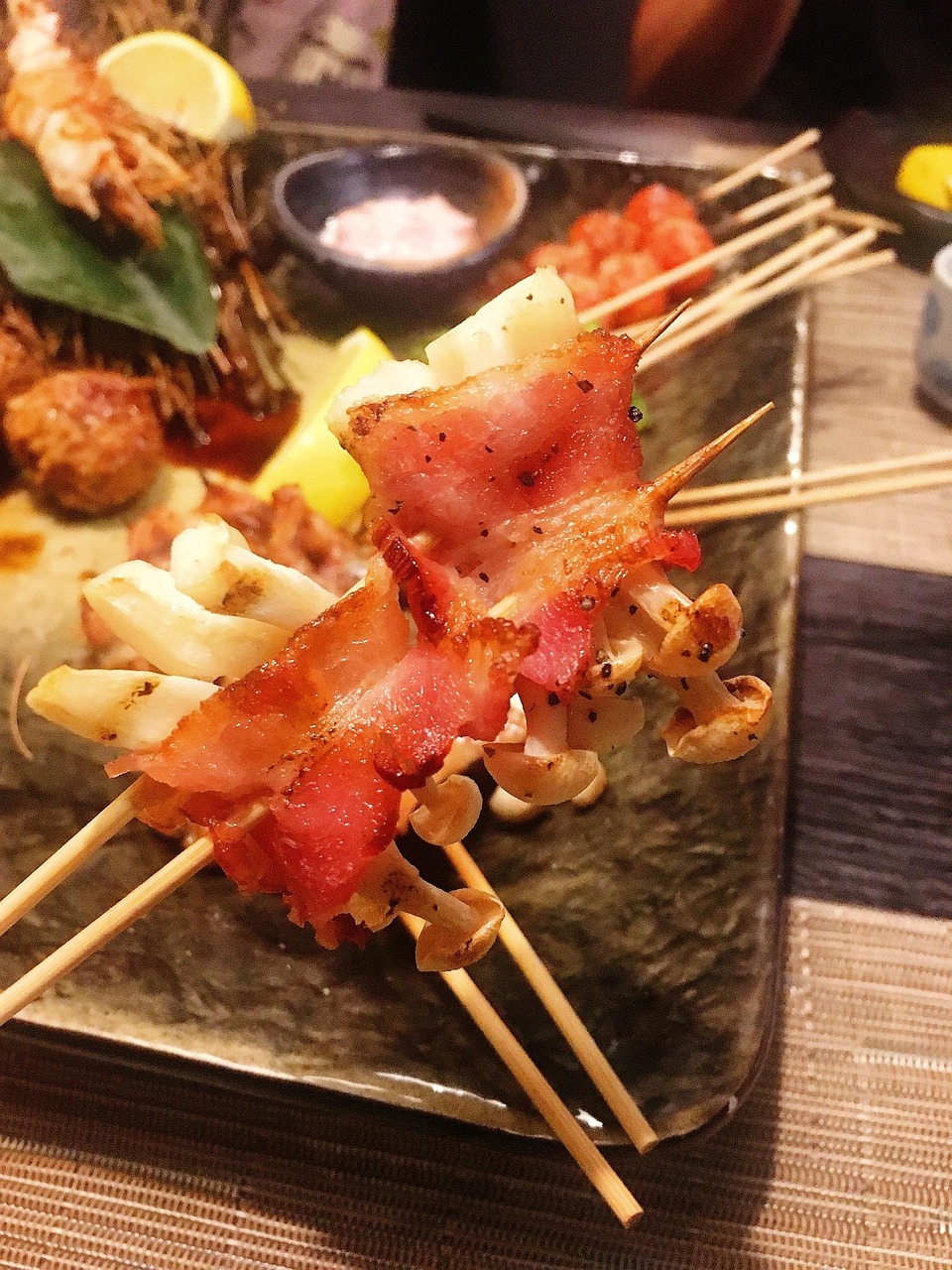
Grill vs broiler vs air fryer — which one wins?
Charcoal wins on flavor, air fryer wins on convenience, and the broiler is the honest middle. Cook’s Illustrated tested all three in 2024 and found broiler-cooked yakitori scored within 8% of charcoal on tasting panels when the rack was pre-heated for 5 minutes (Cook’s Illustrated). The air fryer, at 400°F, loses the smoky char but gives the crispiest skin — a fair trade if you live in an apartment. If you already own a stovetop grill pan, use it as a stand-in for the broiler at medium-high with the lid off.
Recipe: Chicken Yakitori (Negima) with Homemade Tare
Ingredients (makes 10 skewers, serves 3–4)
Chicken:
- 1½ lb (680 g) boneless, skinless chicken thighs, cut into 1-inch cubes
- 2 Japanese long onions (negi) or 6 fat scallion whites, cut into 1-inch pieces
- 10 bamboo skewers, soaked 30 min (or 10 flat metal skewers)
- Neutral oil, for the grate
- Shichimi togarashi, to serve
Tare sauce:
- ½ cup soy sauce (Kikkoman or a Japanese koikuchi)
- ½ cup mirin
- ½ cup sake
- ¼ cup granulated sugar
- 1 scallion green, smashed (optional, for aroma)
Method
- Make the tare (15 min). Combine soy, mirin, sake, sugar, and scallion in a small saucepan. Bring to a boil, drop to a low simmer, and cook 12–15 minutes until reduced by half and glossy. Strain, cool, split into two bowls (raw-brush + finishing).
- Thread the skewers (10 min). Alternate 4 cubes of thigh with 3 pieces of negi. Press tightly so pieces touch — this stops them rotating.
- Preheat. Grill to 500–550°F, broiler to High with rack 4 in below the element, or air fryer to 400°F for 3 min.
- Cook plain first (5–7 min). Oil the grate. Cook skewers with no sauce, turning every 60 seconds, until nearly done and the surface is dry.
- Glaze in stages (90 sec). Brush generously with tare, cook 30 seconds, flip, brush, cook 30 seconds, brush one last time off-heat. Rest 2 min.
- Serve dusted with shichimi togarashi and a squeeze of yuzu or lemon.
Watch: how a Tokyo chef brushes the tare
Variations and pairings
Once your tare is made, the technique scales. Swap thigh for chicken meatballs (tsukune), mushrooms (shiitake), or chicken skin (torikawa) folded accordion-style. For a full izakaya spread, pair with crispy karaage as a starter, a bowl of shoyu ramen as the main, and finish with a plate of katsu curry. The same tare also glazes Hawaiian shoyu chicken — reduce it one extra minute for a stickier finish.

Frequently asked questions
Can I make chicken yakitori without sake?
Yes — replace sake 1:1 with dry sherry or, in a pinch, water plus 1 tsp rice vinegar. The tare loses a little depth but the ratio still balances. Do not use cooking wine (it’s oversalted).
What cut of chicken is best for yakitori?
Boneless skinless thigh, hands down. It stays under 4% moisture loss at 165°F versus 18% for breast, per Serious Eats’ Food Lab. If you must use breast, brine 30 min in a 5% salt solution first.
How do I stop chicken sticking to the grill?
Two tricks: oil the meat not the grate, and don’t move the skewers for the first 90 seconds. The protein releases naturally once the Maillard crust forms. A pre-heated grate above 450°F releases 3× faster than a warm one.
Can I freeze homemade tare sauce?
Yes — cooled tare freezes 6 months in a sealed jar and refrigerated tare keeps 3 months. It thickens as it ages; loosen with a tablespoon of hot water before brushing.
Is yakitori gluten-free?
Standard tare is not — soy sauce contains wheat. Swap in tamari or a certified gluten-free soy sauce at the same ratio, and check your mirin label (some brands add wheat starch).
Final word
Yakitori rewards restraint. Four ingredients in the tare, one cut of chicken, one heat source — the only variable is how patient you are with the glaze. Make the sauce once, keep it in the fridge, and you can put restaurant-quality skewers on the table in 25 minutes any weeknight. When you’ve mastered thigh, graduate to tsukune meatballs or venture into the katsu curry cluster for the next Japanese-chicken deep dive.
Did You Try Our Recipe ?
Chicken hears and gizzards
I would love you to send me the recipe please. I have no printer to print it off. [email protected]
Response from MeatRecipesBox
Hi Sharon, thank you so much for your kind words! I’ve just sent the full recipe to your inbox. Enjoy, and let me know how it turns out! 😊
Scrumptious
My husband (who is extremely picky) loved the liver & onions so much!! I didn’t have any beef broth or Sherry so I used about a tbl of Worcestershire and 1/4 c of white wine …..it was scrumptious
Response from MeatRecipesBox
Oh wow, I’m so happy to hear that!! 😍 I love that you made it work with what you had on hand — Worcestershire and white wine sound like a delicious twist. So glad your husband enjoyed it, especially being picky! Thank you for sharing your version, it makes me smile knowing it turned out scrumptious!
This was amazing
This recipe turned out really amazing! It’s juicy and spiced deliciously. I definitely would use less of the spicy pepper next time, but it really was delicious and I don’t think I’ll make chicken legs any other way from now on.!
Response from MeatRecipesBox
Thank you for taking the time to leave such a thoughtful review. I’m really glad to hear the recipe turned out juicy and full of flavor for you. That’s exactly what I was hoping for when putting it together. Good call on the spicy pepper as well. Adjusting the heat level to your own taste is always the best approach, and using a little less next time should make it just right for you. I really appreciate you trying the recipe and sharing your experience. It’s great to know it worked so well for you.
I Didn’t Expect This Cornbeef Hash Recipe to Taste This Good!!
One skillet. A handful of simple ingredients. Thirty minutes on the clock. And somehow… I ended up with the crispiest, most comforting cornbeef hash recipe I’ve made in years.
I wasn’t expecting much—just a quick, no-fuss meal. But that first bite? Crispy edges, tender potatoes, smoky corned beef, a little kick of pepper. It tasted like something straight off a cozy diner griddle.
Honestly, it caught me off guard—in the best way. Here’s why this simple skillet completely won me over.


