
What makes chicken noodle soup “classic”?
Classic means three things: a real chicken (not just cubed breast), a proper mirepoix, and noodles that still have bite. Everything else — the herbs, the finishing touches, whether you use dill or thyme — is regional preference. What separates a homemade bowl from the canned version is time: 30 minutes of gentle simmering to pull collagen and flavor out of the chicken bones into the broth.
If you’ve only ever eaten it from a red-and-white can, the first spoonful of homemade will surprise you. The broth tastes like chicken, not salt. Our chicken recipes hub has the rest of the weeknight lineup.
What ingredients do I actually need?
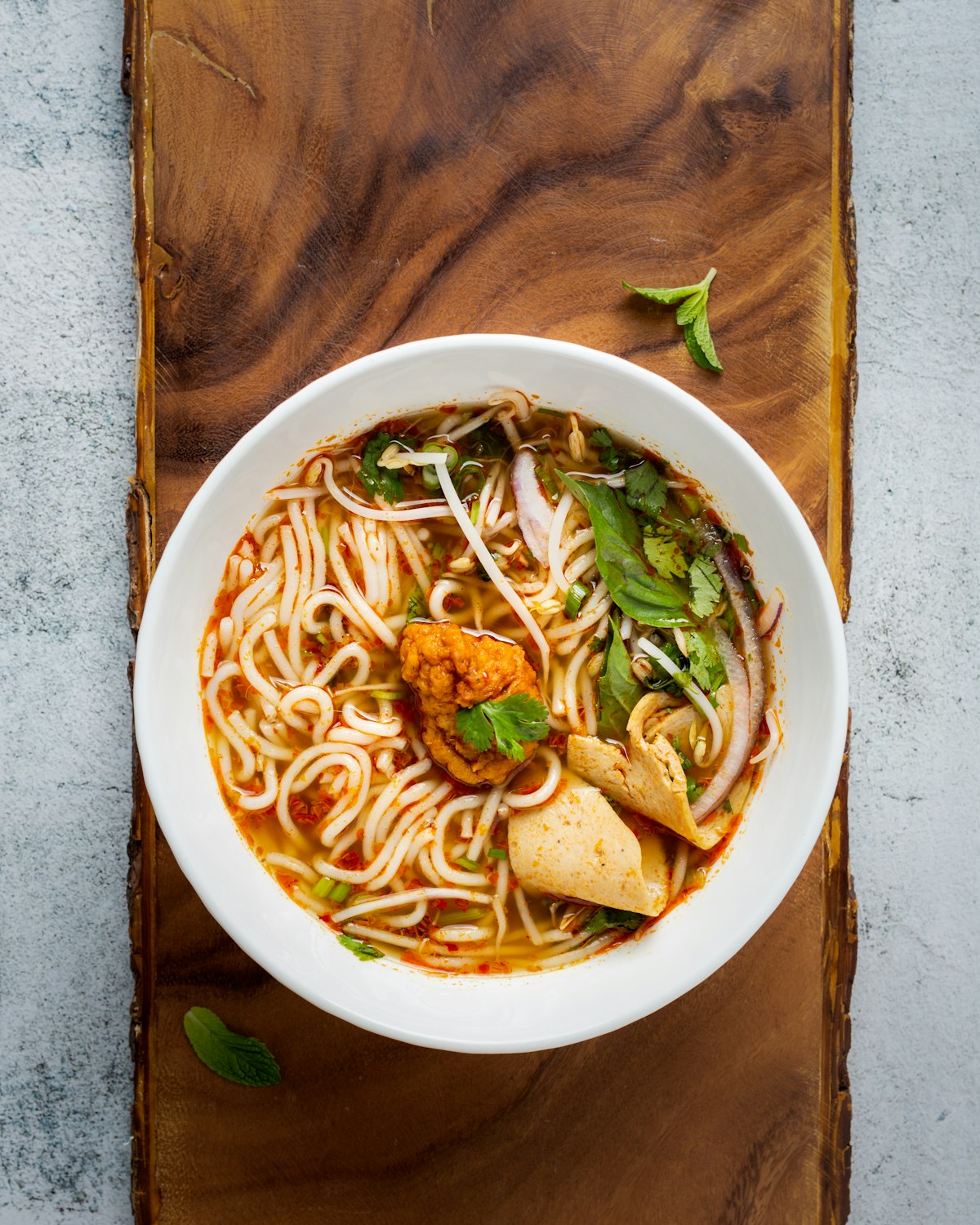
Use bone-in, skinless chicken thighs if you can — the bones dissolve gelatin into the broth, giving it body a boneless breast can’t match. If you only have boneless chicken, either skin it and pull it out after simmering, or shred rotisserie chicken and add it in the last 10 minutes. The Beef Cuts guide’s cross-referenced poultry sibling covers the anatomy if you’re curious.
Full ingredient list
Soup base
- 2 tbsp olive oil (or butter)
- 1 large yellow onion, diced
- 2 medium carrots, sliced ¼-inch coins
- 2 celery ribs, sliced ¼-inch
- 4 garlic cloves, minced
- 1½ lb bone-in skinless chicken thighs
- 8 cups low-sodium chicken broth
- 2 bay leaves
- 1 tsp fresh thyme (or ½ tsp dried)
- 1 tsp kosher salt (plus more to taste)
- ½ tsp black pepper
Noodles & finish
- 8 oz wide egg noodles
- 2 tbsp fresh parsley, chopped
- 1 tbsp fresh lemon juice
- Fresh dill (optional, small handful)
How do you make classic chicken noodle soup step by step?
The order matters. Sweat the mirepoix first, then simmer the chicken whole to pull flavor into the broth, shred and return it, and finally cook the noodles separately so they don’t turn to paste in leftovers.
- Sweat the mirepoix. Heat olive oil in a large Dutch oven over medium. Add onion, carrots, and celery with a pinch of salt. Cook, stirring occasionally, for 6–8 minutes until soft and just translucent. Don’t brown — you want a clean broth.
- Bloom the aromatics. Add minced garlic, thyme and bay leaves. Cook 60 seconds until fragrant.
- Add broth and chicken. Pour in the chicken broth, then nestle the whole chicken thighs into the pot. Bring to a boil, then drop to a low simmer.
- Simmer gently. Cover partly and simmer 25 minutes until the chicken is fork-tender and reads 175 °F internal per USDA FSIS. Skim any foam that rises to the top.
- Shred the chicken. Lift the thighs onto a cutting board with tongs. Let cool 5 minutes, then shred the meat off the bone with two forks. Discard bones and any cartilage.
- Cook noodles separately. While the chicken cools, boil the egg noodles in a second pot of salted water — 6–8 minutes, until just tender. Drain, do not rinse.
- Return chicken to the pot. Add the shredded chicken back to the simmering broth. Taste. Adjust salt and pepper.
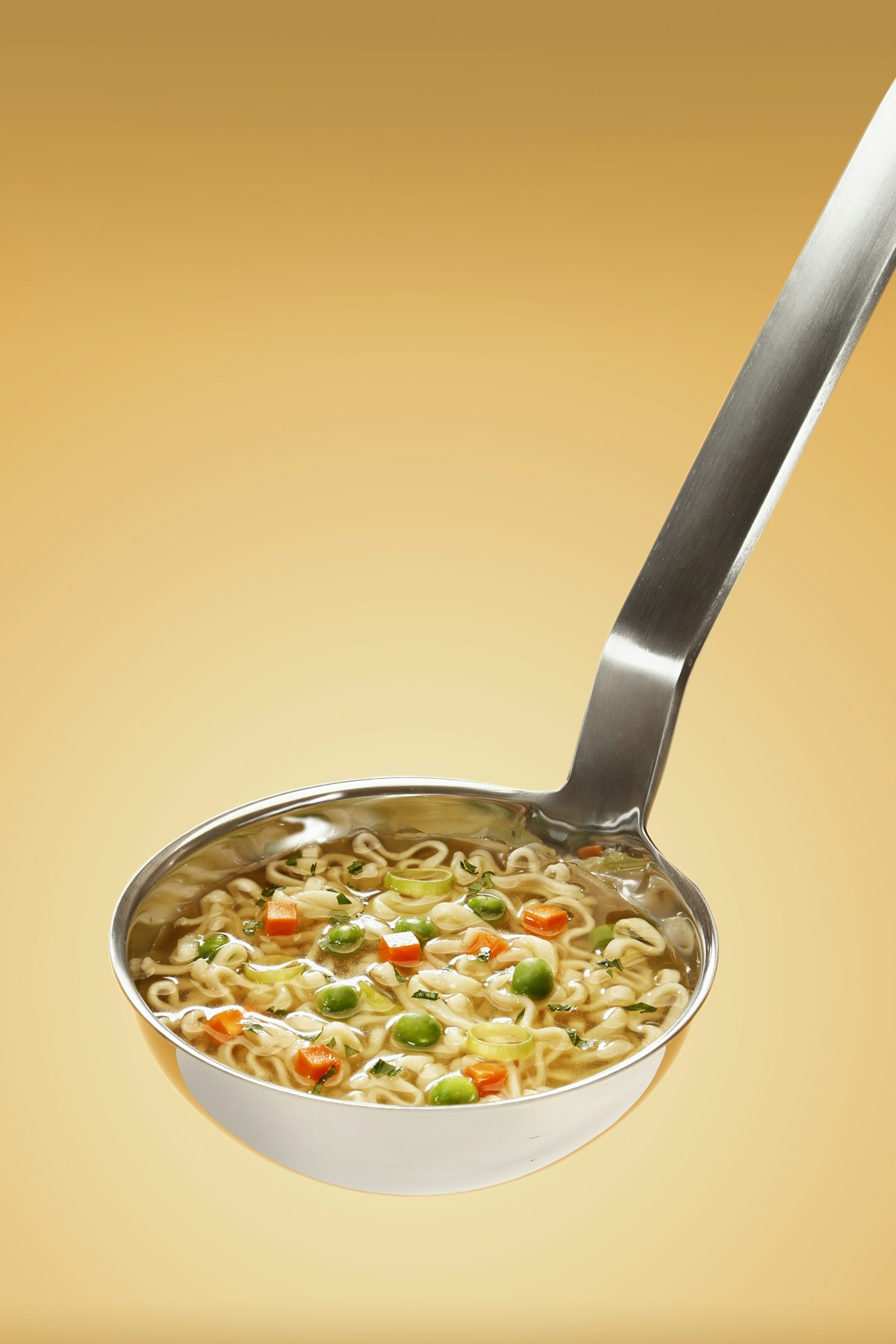
- Finish. Stir in parsley and lemon juice. Kill the heat. Ladle broth into bowls, add a scoop of drained noodles to each bowl, and top with fresh dill if using.
Why cook the noodles separately?
If you know the entire pot will be eaten in one sitting, sure — add the noodles directly and cook 6–8 minutes at the end. For any batch you plan to store or reheat, keep them separate and combine bowl-by-bowl. It’s the single change that separates “restaurant-good” from “canned-tasting” leftovers.
Watch it done step by step
Full walkthrough on YouTube — the classic method, same mirepoix-then-simmer flow used above.
What noodles work best?
Classic chicken noodle soup uses wide egg noodles (Kluski or Amish-style if you can find them) — they hold their shape in broth and match the texture of shredded chicken. But you have options:
- Wide egg noodles — the traditional pick, tender and slightly chewy.
- Reames frozen egg noodles — thick, homemade-style noodles that need an extra 5 minutes. Grocery store secret weapon.
- Ditalini or small shells — great for kids; the pasta cups catch broth.
- Homemade egg noodles — flour, eggs, salt, a splash of milk. 15 minutes of rolling and you’ll never go back.
- Rice noodles — non-traditional but excellent for gluten-free.
How do I store and reheat leftovers?
Store the broth and noodles in separate containers. This is the single most important thing you’ll do to make good leftovers.
- Broth + chicken + vegetables: up to 4 days in the fridge, or 3 months frozen. Per USDA leftover guidance, cool within 2 hours and store at 40 °F or below.
- Noodles: up to 3 days refrigerated in a lightly oiled container so they don’t stick together.
- Reheating: warm the broth on the stovetop, add a portion of noodles to each bowl. Never microwave everything together in one pot.
- Freezing tip: freeze broth + chicken + veg in a flat freezer bag. Cook fresh noodles when you thaw.
Common mistakes and how to fix them
The broth is bland
Three usual suspects: under-salted, no acid, or watered-down broth. Fix in this order — add ½ teaspoon salt at a time until the broth tastes like broth, then add the squeeze of lemon at the end. Lemon brings the whole pot into focus. If it’s still flat, next time simmer chicken bones in the broth for an extra 20 minutes.
The chicken is stringy or dry
You overcooked or used the wrong cut. Bone-in thighs at a gentle simmer stay juicy for 30 minutes; boneless breasts turn to sawdust past 12 minutes. Pull chicken the moment it reaches 175 °F internal, and shred while still warm.
The noodles turn to mush
You cooked them in the soup and stored leftovers together. From now on: separate pot, drain, oil lightly, store apart. Same amount of dishes, ten times better leftovers.
Frequently asked
Can I use a rotisserie chicken?
Yes — it’s the fastest shortcut. Shred 2 cups of rotisserie meat and add it in the last 10 minutes of simmering. You’ll lose a little collagen richness (the bones aren’t there to give it up), so consider stirring in 1 teaspoon of gelatin or using bone broth to compensate.
Is chicken noodle soup actually good for a cold?
The old wives’ tale has some science behind it — a 2000 study from Nebraska Medical Center found chicken soup slowed the movement of neutrophils, potentially reducing cold symptoms. It’s also hot, hydrating, and mineral-rich. Not a cure, but a real comfort.
Can I make it in a slow cooker?
Yes. Add everything except noodles and parsley to the slow cooker, cook on LOW for 6 hours or HIGH for 3 hours. Shred the chicken, cook noodles separately, and combine at serving. Add the lemon and parsley at the end, not the start.
What herbs go in classic chicken noodle soup?
Bay leaf, thyme and parsley are the classic trio. Fresh dill is a Northeast/Jewish-American addition that’s excellent. Sage works if you’re going more herbal, and a tiny pinch of turmeric adds golden color without changing the flavor.
Can I add cream or milk?
You can — stir in ½ cup heavy cream at the end and you’ve made “creamy chicken noodle.” It’s not classic, but it’s a legitimate variation. Don’t boil after adding cream or it can break; keep it under a simmer.
How long does it stay good in the fridge?
Broth with chicken and vegetables keeps 4 days at 40 °F or below. Cooked noodles keep 3 days stored separately in a lightly oiled container. Combined leftovers are safe for 4 days but the noodles will be soft after day 2 — plan accordingly.
A note from Emma
My grandmother made this every Sunday afternoon of my childhood, and she had exactly two rules: use the whole chicken and cook the noodles apart. That’s it. Everything else — the herbs, the vegetables, whether you add a squeeze of lemon — is you making the recipe yours. Get those two things right and you’ll never buy a can again.
Pair it with a warm loaf of no-knead bread for the full comfort-food set, and if you’re cooking for someone under the weather, our homemade chicken broth is the foundation this soup deserves.
Did You Try Our Recipe ?
Scrumptious
My husband (who is extremely picky) loved the liver & onions so much!! I didn’t have any beef broth or Sherry so I used about a tbl of Worcestershire and 1/4 c of white wine …..it was scrumptious
Response from MeatRecipesBox
Oh wow, I’m so happy to hear that!! 😍 I love that you made it work with what you had on hand — Worcestershire and white wine sound like a delicious twist. So glad your husband enjoyed it, especially being picky! Thank you for sharing your version, it makes me smile knowing it turned out scrumptious!
This was amazing
This recipe turned out really amazing! It’s juicy and spiced deliciously. I definitely would use less of the spicy pepper next time, but it really was delicious and I don’t think I’ll make chicken legs any other way from now on.!
Response from MeatRecipesBox
Thank you for taking the time to leave such a thoughtful review. I’m really glad to hear the recipe turned out juicy and full of flavor for you. That’s exactly what I was hoping for when putting it together. Good call on the spicy pepper as well. Adjusting the heat level to your own taste is always the best approach, and using a little less next time should make it just right for you. I really appreciate you trying the recipe and sharing your experience. It’s great to know it worked so well for you.
I Didn’t Expect This Cornbeef Hash Recipe to Taste This Good!!
One skillet. A handful of simple ingredients. Thirty minutes on the clock. And somehow… I ended up with the crispiest, most comforting cornbeef hash recipe I’ve made in years.
I wasn’t expecting much—just a quick, no-fuss meal. But that first bite? Crispy edges, tender potatoes, smoky corned beef, a little kick of pepper. It tasted like something straight off a cozy diner griddle.
Honestly, it caught me off guard—in the best way. Here’s why this simple skillet completely won me over.


