

Cuban mojo chicken is a citrus-and-garlic marinated bird — bright, sharp, aggressively garlicky — traditionally made with sour orange (naranja agria), a fruit you almost never find outside Latin markets. The fix is a three-juice mix that gets you 95% of the way there: fresh orange, fresh lime, and a splash of grapefruit. Add crushed (not minced) garlic, cumin, oregano, and enough olive oil to bind it all, marinate overnight, then roast, grill, or air-fry. This guide walks through the marinade formula, the sour-orange workaround, and the cooking method that produces the caramelized, mahogany-skinned chicken you get in Miami and Havana.
The short answer: Crush 12 cloves of garlic with salt into a paste. Mix with ¾ cup orange juice, ¼ cup lime juice, 2 tbsp lime zest, cumin, oregano, olive oil. Marinate bone-in chicken 24 hours. Roast at 400°F / 205°C for 40–45 minutes, or grill over medium-high for 25 minutes. Serve with black beans and rice.
What’s in this guide
- What Cuban mojo actually is
- The sour orange substitute formula
- Best cut of chicken
- The marinade rules (crush the garlic)
- Ingredients you’ll need
- Step-by-step method
- Cook times: oven, grill, air fryer
- Regional variations and mojo pork
- What to serve with mojo chicken
- Common mistakes
- Storage and reheating
- Common questions
What Cuban Mojo Actually Is
Mojo (pronounced mo-ho) is a Cuban sauce and marinade built on three things: sour citrus, a lot of garlic, and warm spices. That’s the whole identity. It comes from the Canary Islands originally — Spanish colonists brought mojo canario to the Caribbean, and Cuban cooks adapted it using the bitter oranges (naranja agria) that grew on the island.
Cuban mojo splits into two versions. The raw uncooked one is used as a marinade and finishing sauce. The cooked “mojo criollo” version is heated with oil to bloom the garlic and mellow the acid — used more as a table sauce. This recipe uses the raw marinade version, which is what mojo chicken actually calls for.
The Sour Orange Substitute Formula
Sour orange (naranja agria, or bitter orange) is the traditional citrus. It’s the aggressively tart, thick-skinned fruit used across Cuban and Yucatecan cooking. If you find it at a Latin market, use it — 1 cup of sour orange juice is the whole citrus component. If you don’t, this is the substitute formula every serious Cuban cook uses:
| Substitute mix | Ratio | Notes |
|---|---|---|
| Orange + lime (basic) | ¾ cup orange juice + ¼ cup lime juice | Most common home substitute; slightly sweeter than real |
| Orange + lime + grapefruit (best) | ½ cup orange + ¼ cup lime + ¼ cup grapefruit | Grapefruit adds bitterness that mimics naranja agria closely |
| Orange + lemon + lime | ½ cup orange + ¼ cup lemon + ¼ cup lime | Sharper, works if grapefruit isn’t around |
| Bottled mojo (Goya) | Follow bottle instructions | Emergency option; results are duller than fresh |
Best Cut of Chicken for Mojo
Bone-in thighs (best)
Cheapest, most forgiving, most flavorful. The bones deepen the flavor during roasting; the skin crisps under the caramelizing marinade. 6 to 8 pieces for 4 people.
Whole chicken, spatchcocked
The traditional Cuban Sunday-lunch presentation. Split the bird along the spine so it lies flat, marinate 24 hours, roast at high heat. Even cooking, beautiful presentation.
Drumsticks
Great for grilling — handheld, easy to flip, and the mojo caramelizes beautifully on the skin. Kids love them. 10 to 12 for 4 people.
Chicken breast (with caveat)
Works if you cut the marinade time to 4 hours max (acid over-tenderizes breast) and cook it fast. Otherwise it turns dry and mealy.
The Marinade Rules (Crush the Garlic)
Two rules make or break Cuban mojo:
Rule 1: Crush the garlic, don’t mince it. Cuban cooks use a mortar and pestle to smash the garlic with salt into a rough paste. Crushing (versus mincing) breaks more cell walls and triggers a bigger enzymatic reaction that releases allicin — the compound responsible for the aggressive garlic bite that defines mojo. Mincing keeps too many cells intact.
Rule 2: Marinate a full 24 hours. Every recipe that says “at least 30 minutes” is compromising. Twenty-four hours is what lets the citrus fully penetrate bone-in chicken. Eight hours minimum, but a day is what gives you the real thing.
Ingredients You’ll Need
The chicken
- 3 lb (1.35 kg) bone-in skin-on chicken thighs and drumsticks (or 1 whole chicken, spatchcocked)
- Extra olive oil for the pan
The mojo marinade
- 1 cup sour orange juice OR ½ cup orange + ¼ cup lime + ¼ cup grapefruit
- 2 tbsp fresh lime zest
- 12 garlic cloves, peeled (a full head)
- ½ cup extra-virgin olive oil
- 2 tsp kosher salt
Spices
- 1 tbsp ground cumin
- 1 tbsp dried oregano (Mexican or Mediterranean)
- 1 tsp freshly cracked black pepper
- 1 tsp smoked paprika (optional but recommended)
To finish
- 1 large white onion, thinly sliced
- Handful fresh cilantro, chopped
- Extra lime wedges for serving
- Extra virgin olive oil for the reserved mojo sauce
Step-by-Step: How to Make Cuban Mojo Chicken
- Crush the garlic into a paste. Place the 12 peeled garlic cloves on a cutting board with the 2 tsp kosher salt. Crush with a mortar and pestle or the flat side of a chef’s knife until it forms a rough paste. This is where mojo flavor lives — don’t skip it.
- Mix the marinade. In a large bowl, whisk the garlic paste with the citrus juices, lime zest, cumin, oregano, pepper, smoked paprika, and olive oil. Whisk until it emulsifies into a slightly cloudy liquid. Reserve ½ cup of the marinade in a jar in the fridge — this becomes the finishing sauce.
- Marinate the chicken. Place the chicken in a large zip-top bag or non-reactive glass dish. Pour the remaining marinade over the top and turn the pieces to coat. Add the sliced onion. Refrigerate for at least 8 hours, ideally 24. Turn the bag once or twice during that time.
- Bring to room temperature. Take the chicken out of the fridge 30 minutes before cooking. Cold chicken hitting a hot oven or grill cooks unevenly and the skin never crisps properly.
- Preheat and prep the pan. Heat the oven to 400°F / 205°C. Line a rimmed sheet pan with parchment or foil and brush lightly with olive oil.
- Arrange and drizzle. Remove the chicken from the marinade (letting excess drip off) and arrange skin-side up on the sheet pan. Scatter the marinated onion slices around the chicken. Discard the used marinade — it’s had raw chicken in it.
- Roast until deeply golden. Roast for 40 to 45 minutes, until the skin is deeply caramelized and the internal thigh temperature reads 175°F / 80°C at the thickest point. If the skin isn’t dark enough, broil for the last 2 minutes.
- Rest and finish. Transfer the chicken to a serving platter and let it rest 5 to 10 minutes. Meanwhile, warm the reserved ½ cup of mojo marinade in a small pan over low heat with 2 tbsp olive oil for 60 seconds — just enough to take the raw-garlic edge off without cooking it through.
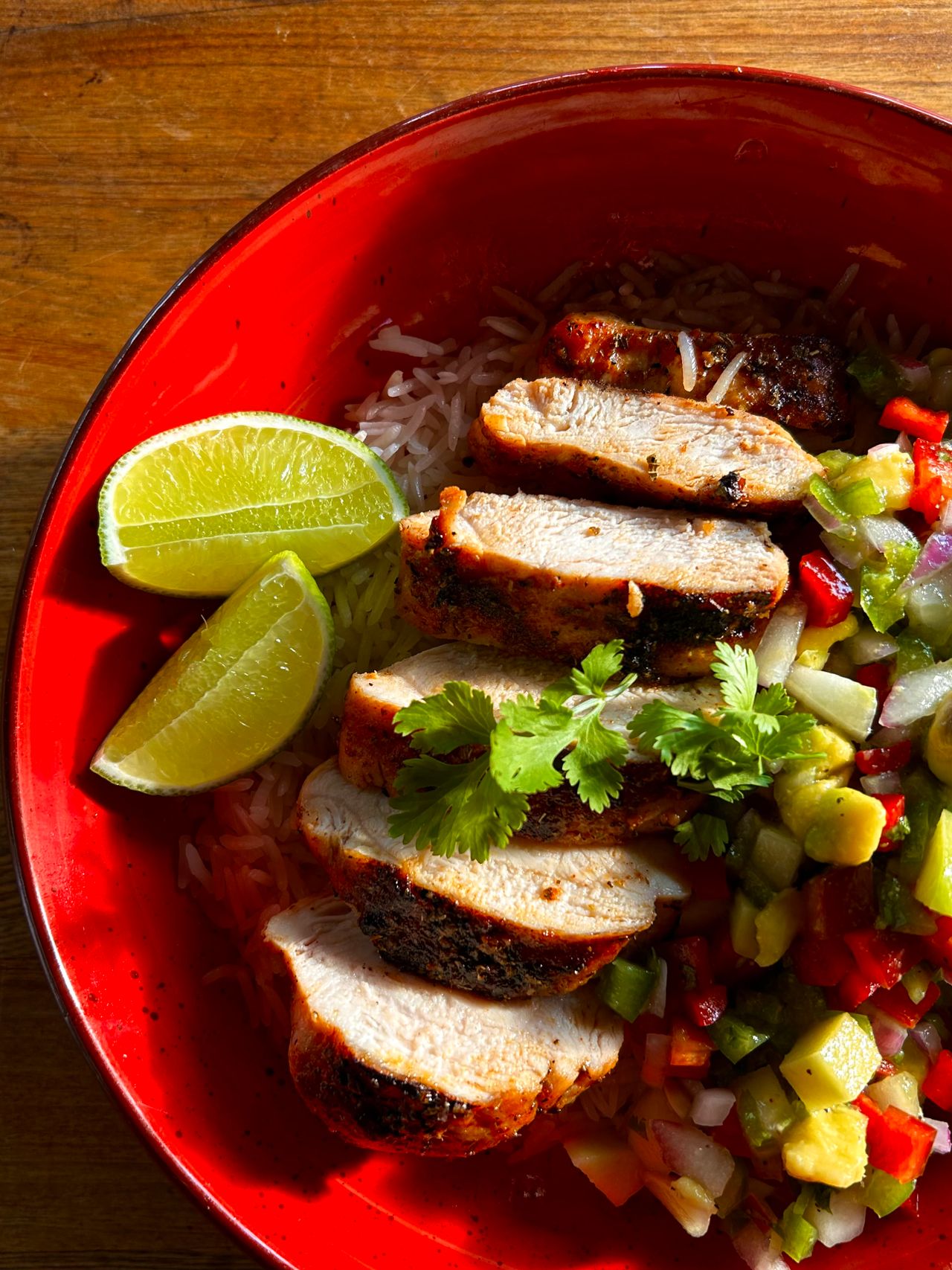
- Drizzle and serve. Pour the warm mojo sauce over the rested chicken. Shower with chopped fresh cilantro. Serve with lime wedges, black beans, white rice, and fried plantains.
▶ Watch: the full technique
Cook Times: Oven, Grill, Air Fryer, Rotisserie
| Method | Temperature | Cook Time | Notes |
|---|---|---|---|
| Oven (sheet pan) | 400°F / 205°C | 40–45 min | Best for weeknight; even skin browning |
| Grill (charcoal or gas) | Medium-high, indirect | 25–30 min | Traditional; watch for citrus flare-ups |
| Air fryer | 380°F / 195°C | 22–25 min | Great for thighs; crispiest skin |
| Whole spatchcocked chicken (oven) | 425°F / 220°C | 45–55 min | Rest 15 min before carving |
| Rotisserie | Medium heat | 1 h 15 min for whole bird | Baste every 20 minutes with reserved mojo |
| Slow cooker (breasts, dry mojo) | LOW | 4 hours | Lighter version, sauce is more like a stew |
Variations and Related Cuban Dishes
Lechon Asado (Cuban mojo pork)
Same marinade, pork shoulder instead of chicken. Marinate 24 to 48 hours, roast low and slow at 300°F for 4 hours. The Cuban Christmas Eve centerpiece — pork picadillo for a week after.
Grilled mojo shrimp
Same marinade, but only 30 minutes for shrimp (the acid cooks them if you go longer). Skewer and grill 2 minutes per side. Serve with mojo drizzle and lime.
Mojo verde (green mojo)
Add ½ cup packed cilantro or parsley to the marinade for a bright herbal version. Popular in the Canary Islands and Miami. Excellent on grilled fish.
Cuban chicken sandwich
Slice leftover mojo chicken. Layer on Cuban bread with sliced roast pork, Swiss cheese, pickles, and yellow mustard. Press in a sandwich press. The best-ever cubano upgrade.
What to Serve With Mojo Chicken
Moros y Cristianos
Black beans cooked with rice in one pot — the “Moors and Christians” plate. The single most classic Cuban side. Season with cumin, oregano, and a bay leaf.
Tostones (twice-fried plantains)
Green plantains sliced thick, fried, smashed flat, fried again until crisp. Salt while hot. Dip in the extra warm mojo sauce.
Maduros (sweet plantains)
Ripe (black-spotted) plantains sliced diagonally and fried until caramelized. Sweet counterpoint to the sharp mojo. Non-negotiable at a Cuban dinner.
Ensalada de aguacate
Simple Cuban avocado salad — sliced avocado, thin red onion, olive oil, lime juice, salt. Cool, creamy, cuts the garlic hit.
Five Mistakes That Ruin Mojo Chicken
Storage and Reheating
Common Questions
What can I substitute for sour orange in Cuban mojo?
The best substitute is a mix of orange, lime, and grapefruit — ½ cup orange juice, ¼ cup lime juice, ¼ cup grapefruit juice per 1 cup of sour orange needed. If you don’t have grapefruit, ¾ cup orange + ¼ cup lime works. Always use freshly squeezed, never bottled — bottled juice is pasteurized and lacks the acidity that makes the marinade work.
How long should I marinate Cuban mojo chicken?
24 hours is the target for bone-in chicken. 8 hours is the practical minimum. Under 4 hours and the citrus doesn’t fully penetrate the meat — you get surface flavor only. For boneless breast, cap the marinade at 4 hours because the acid can over-tenderize the leaner cut.
Is mojo chicken spicy?
No — traditional Cuban mojo has no chili. The heat comes from raw garlic, which is warming and aromatic but not capsaicin-hot. If you want spice, add half a habanero to the marinade (Yucatecan style) or serve with a hot sauce on the side.
Can I grill mojo chicken instead of roasting it?
Yes — grilling is the traditional Cuban method. Use medium-high indirect heat for 25 to 30 minutes, turning every 5 minutes. Watch for flare-ups from the citrus and oil in the marinade — keep a spray bottle of water handy. The result has a smokier depth than the oven version.
Do I need to boil the marinade before using it as sauce?
Only if it’s had raw chicken in it. The cleanest approach: reserve ½ cup of the fresh marinade before pouring the rest over the chicken. Use that reserved portion as the finishing sauce — warm briefly with olive oil to soften the raw-garlic edge. Discard any marinade that touched raw chicken.
What’s the difference between mojo chicken and lemon chicken?
Different citrus, different quantity, different garlic ratio. Lemon chicken usually uses lemon juice and zest in a lighter proportion. Mojo uses sour orange (or an orange-lime blend) with about twice the garlic and a distinctive cumin-oregano-cilantro finish. Mojo is punchier, more layered, more Cuban.

Cuban Mojo Chicken: Authentic Recipe + Sour Orange Fix
A citrus-and-garlic marinated chicken dish, traditionally made with sour orange, garlic, and spices, then roasted or grilled to perfection
- 3 lb pounds bone-in skin-on chicken thighs and drumsticks
- 1 cup cups sour orange juice (or substitute mix)
- 12 cloves garlic
- 2 tbsp tablespoons fresh lime zest
- 1/2 cup cups extra-virgin olive oil
- 2 tsp teaspoons kosher salt
- 1 tbsp tablespoons ground cumin
- 1 tbsp tablespoons dried oregano
- 1 tsp teaspoons freshly cracked black pepper
- 1 tsp teaspoons smoked paprika optional
- 1 large each white onion thinly sliced
- 1 handful handfuls fresh cilantro chopped
- extra each lime wedges
- extra each olive oil
Step-by-Step Instructions
Crush the garlic into a paste
Mix the marinade
Marinate the chicken
Bring to room temperature
Preheat and prep the pan
Arrange and drizzle
Roast until deeply golden
Rest and finish
Drizzle and serve
- Mortar and pestle
- Chef's knife
- Cutting board
- Large bowl
- Zip-top bag or non-reactive glass dish
- Rimmed sheet pan
- Oven
- Grill
Traditionally made with sour orange, but a substitute mix of orange, lime, and grapefruit can be used
Did You Try Our Recipe ?
Scrumptious
My husband (who is extremely picky) loved the liver & onions so much!! I didn’t have any beef broth or Sherry so I used about a tbl of Worcestershire and 1/4 c of white wine …..it was scrumptious
Response from MeatRecipesBox
Oh wow, I’m so happy to hear that!! 😍 I love that you made it work with what you had on hand — Worcestershire and white wine sound like a delicious twist. So glad your husband enjoyed it, especially being picky! Thank you for sharing your version, it makes me smile knowing it turned out scrumptious!
This was amazing
This recipe turned out really amazing! It’s juicy and spiced deliciously. I definitely would use less of the spicy pepper next time, but it really was delicious and I don’t think I’ll make chicken legs any other way from now on.!
Response from MeatRecipesBox
Thank you for taking the time to leave such a thoughtful review. I’m really glad to hear the recipe turned out juicy and full of flavor for you. That’s exactly what I was hoping for when putting it together. Good call on the spicy pepper as well. Adjusting the heat level to your own taste is always the best approach, and using a little less next time should make it just right for you. I really appreciate you trying the recipe and sharing your experience. It’s great to know it worked so well for you.
I Didn’t Expect This Cornbeef Hash Recipe to Taste This Good!!
One skillet. A handful of simple ingredients. Thirty minutes on the clock. And somehow… I ended up with the crispiest, most comforting cornbeef hash recipe I’ve made in years.
I wasn’t expecting much—just a quick, no-fuss meal. But that first bite? Crispy edges, tender potatoes, smoky corned beef, a little kick of pepper. It tasted like something straight off a cozy diner griddle.
Honestly, it caught me off guard—in the best way. Here’s why this simple skillet completely won me over.


