

What is Hainanese chicken rice?
Hainanese chicken rice is a Singaporean-Malaysian dish of gently poached whole chicken served at room temperature, sliced onto rice cooked in the same poaching broth, and eaten with three sauces on the side. The dish traces back to migrants from Hainan Island in southern China, who arrived across Southeast Asia in the early 1900s — the Wikipedia entry tracks the full lineage.
What makes it hard isn’t the ingredient list — it’s short — it’s the poach temperature and the ice bath. Miss either and you get a dry, matte chicken instead of the silky, jelly-under-the-skin version you’re picturing.
Ingredients for a whole chicken (serves 4–6)
Every component matters. If you’re stocking an Asian pantry from scratch, our Asian pantry essentials guide covers the sauces, aromatics and rice types worth keeping around.
For the chicken
- 1 whole chicken, 3–3½ lbs (1.5 kg), preferably free-range or “kampung” style
- 4 inches fresh ginger, sliced into thick coins and lightly smashed
- 6 scallions, whites smashed, greens reserved
- 1 tbsp Shaoxing wine or dry sherry
- 1½ tbsp fine salt (for the pot)
- 1 tsp salt for rubbing the raw chicken
- A large bowl of ice water for the shock
For the rice
- 2 cups (400 g) jasmine rice, rinsed until the water runs clear and drained
- 3 tbsp reserved chicken fat (from the cavity, rendered)
- 1 tbsp neutral oil
- 4 garlic cloves, minced
- 1½-inch piece of ginger, finely grated
- 2 pandan leaves, tied in a knot (optional, but classic)
- 2 cups (480 ml) reserved poaching broth
- ½ tsp salt
For the three sauces
Ginger-scallion oil: ½ cup neutral oil, 3 tbsp grated ginger, 3 tbsp finely sliced scallions, ½ tsp salt.
Chili-lime-garlic: 6 red bird’s eye chilies, 2 garlic cloves, 1-inch ginger, 3 tbsp lime juice, 2 tbsp reserved broth, 1 tsp sugar, ¼ tsp salt — all blended.
Dark sweet soy: Just a puddle of Malaysian kecap manis on the plate. That’s it.
Step-by-step: poach, ice, cook the rice, blend the sauces
- Rub and rest. Rub the chicken all over with 1 tsp salt, inside and out. Rest at room temperature 20 minutes while the pot heats — cold chicken lowers poach temp too fast.
- Set up the poach. Fill a stockpot with enough water to submerge the chicken by 2 inches. Add smashed ginger, scallion whites, wine and salt. Bring to a low boil.
- Dip and dunk. Hold the chicken by the neck cavity, lower it into the boiling water for 15 seconds, lift out, count to 10, dip again, lift out. Repeat 3 times. This locks the skin, sets the shape.
- Poach low. Lower the chicken breast-side up into the pot. As soon as the water returns to a gentle simmer, reduce heat until the surface is barely trembling — this is the 175°F (80°C) zone. Cover, cook 30–40 minutes depending on size. A thigh joint should show clear juices when pierced with a skewer.
- Ice shock. Lift the chicken carefully into the ice water bath. Fully submerged. Rest 10–15 minutes until the meat cools to room temp and the skin turns that translucent, jelly-set look. This is the whole game.
- Cook the rice. In a wide pot, heat oil and chicken fat over medium. Add garlic and ginger, cook 90 seconds until fragrant. Add drained rice, stir 2 minutes until every grain is coated. Pour in warm broth, add pandan and salt. Cover, low heat, 15 minutes. Rest off heat 10 more.
- Blend the sauces. Ginger-scallion: heat the oil to shimmering, pour over the ginger, scallion and salt in a heatproof bowl — it will sizzle. Stir and cool. Chili-lime: blend everything smooth. Dark soy: pour and done.
- Slice and plate. Rub the cooled chicken with a teaspoon of sesame oil for that glossy finish. Chop through the bone into bite-size pieces (or debone if it’s easier). Serve at room temperature, fanned over the rice, cucumber slices alongside, three sauces in little dishes, a bowl of the strained hot broth on the side.
Watch a Hainanese cook walk through the method
Worth watching for the poach cadence — the dip-and-dunk at the start looks fussy but takes 90 seconds and genuinely changes the skin texture. If the water hits a rolling boil during the main poach, the meat goes stringy fast. Low and slow is the whole point.
Why is the ice bath non-negotiable?
The cold shock stops the residual cooking dead and gelatinizes the collagen right under the skin, which is what gives you that famous “jelly” layer between meat and skin. Skip it and the chicken keeps cooking as it cools — the breast overshoots into dry territory, the skin loses its slick sheen. Twelve minutes of ice water is cheaper than a whole new bird.
How cold does the ice bath need to be?
Genuinely cold — fill the bowl half with ice, half with water. If the ice is fully melted after 5 minutes, add more. You’re chasing a drop from 165°F internal to under 90°F within 15 minutes. A cooler chicken cavity is the visual cue: touch the inside; if it’s still warm, keep it in the bath.
Why not just skip to room-temp cooling?
Because room-temp air can’t pull heat out fast enough. The chicken cools in about 90 minutes at room temperature, and during that window the residual heat overshoots the breast by 10–15°F. The ice bath finishes the drop in 12 minutes. It’s the same principle as blanching vegetables — stop-the-cook before texture drifts.
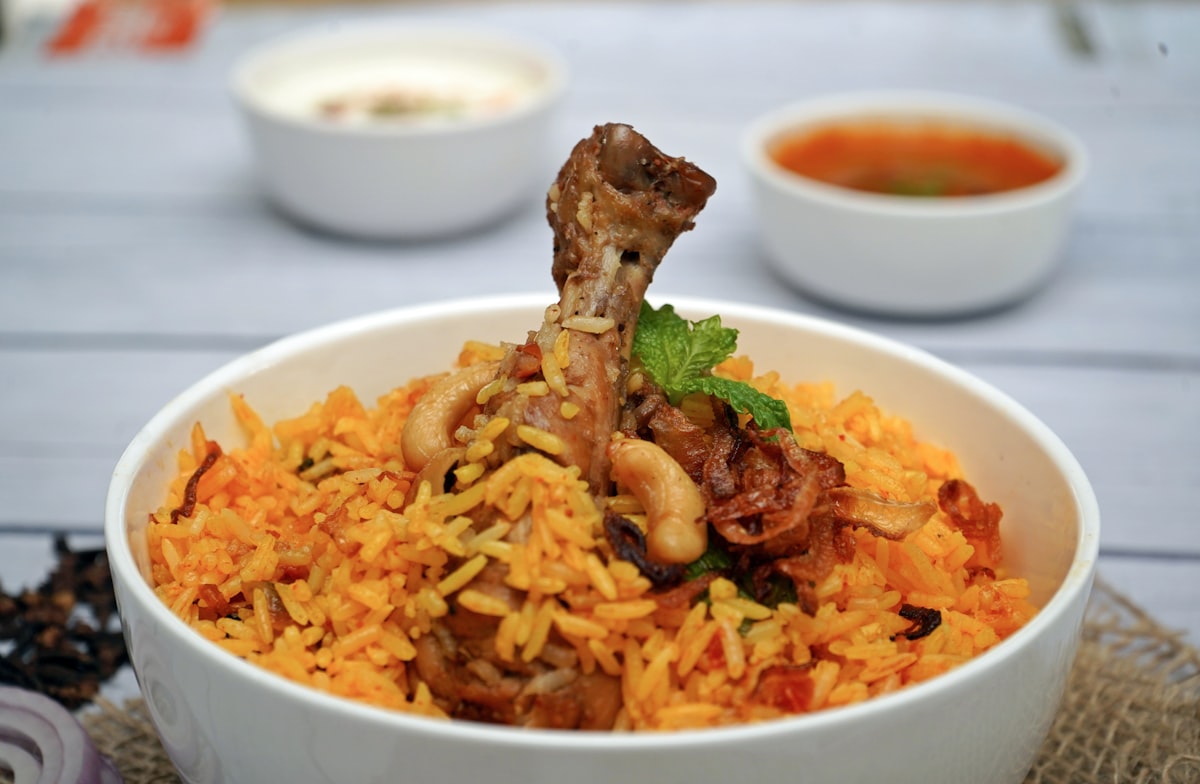
The rice is half the dish (maybe more)
Ask anyone who grew up on Hainanese chicken rice: the rice is what they miss when they leave home. Every grain is coated in rendered chicken fat and toasted with garlic and ginger before liquid hits it, then it’s cooked in the salted, aromatic broth. That’s why rice-cooker shortcuts fall flat — you need the toasting step to build those savory notes.
Use a wide pot, not a saucepan
Wide gives you a thinner rice layer, so the bottom develops a light crust without the top staying wet. Cast iron or an enamel Dutch oven works better than a tall narrow pot.
Broth-to-rice ratio matters
1:1 by volume with jasmine rice, after a proper rinse. Old rules of thumb from parboiled or long-grain don’t apply — jasmine is more absorbent when rinsed and drained well.
Emma’s fix-it notes
- Chicken skin came out matte instead of jelly? Poach temperature was too high. Aim for 175°F, not a simmer.
- Breast dry, thigh perfect? Bird was too big for the poach time. Try 3 lbs max, or truss so the breast is protected.
- Rice pot got scorched? Heat too high, or lid off during cooking. Cover, lowest possible flame, hands off.
- Chili sauce too flat? Add a splash more lime and a pinch more sugar — the balance should sting-sour-salty-sweet in that order.
How to serve chicken rice like a hawker stall
Plate it in the Singapore-style order every time. Cucumber slices around the edge, a scoop of rice pressed into a small dome in the center, chicken pieces fanned on top, a sprig of cilantro. Sauces in three small dishes on the side — never poured over. A bowl of the strained hot broth (with a few scallion greens floated) sits alongside. The way you eat it: dip each bite of chicken in whichever sauce you’re in the mood for, spoonful of rice, sip of broth. Repeat.
Round out the meal with a plate of simple stir-fried greens (bok choy or Chinese broccoli, garlic, oyster sauce) and finish with fresh fruit — a wedge of pineapple or watermelon is standard.
Common questions
Can I make Hainanese chicken rice with just chicken thighs?
You can, and it’s a legitimate weeknight shortcut. Use 6–8 bone-in skin-on thighs, poach 20–25 minutes total, ice bath same as the whole bird. You lose the theater of the whole chicken and some collagen from the carcass, but the flavor holds up.
How long does chicken rice keep in the fridge?
Chicken keeps 3 days sealed; rice keeps 3–4 days. Both reheat poorly with the microwave — the chicken toughens and the rice dries. Better: eat the chicken cold like it’s meant to be served, and refry the rice in a hot pan with a splash of oil until warm through.
What’s the best chicken for this dish?
A free-range, air-chilled bird under 4 lbs. Bigger birds don’t fit the poach window without overcooking the breast. In Singapore, “kampung” (village) chickens are traditional — they’re leaner and more flavorful. Any organic or heritage-breed chicken from a butcher will get you close.
Can I use brown rice or basmati?
Neither works well for this dish. Brown rice takes too long and doesn’t absorb the broth the same way. Basmati is too separated and dry — jasmine’s slight stickiness is what makes the rice bind into that satisfying spoonful. Stick with jasmine.
Why is my chili sauce splitting?
Blended too hot. Let the reserved broth cool to room temp before adding, and keep the blender speed moderate. If it’s already split, drizzle in another teaspoon of cold broth and blend again — usually pulls it back together.
Did You Try Our Recipe ?
Scrumptious
My husband (who is extremely picky) loved the liver & onions so much!! I didn’t have any beef broth or Sherry so I used about a tbl of Worcestershire and 1/4 c of white wine …..it was scrumptious
Response from MeatRecipesBox
Oh wow, I’m so happy to hear that!! 😍 I love that you made it work with what you had on hand — Worcestershire and white wine sound like a delicious twist. So glad your husband enjoyed it, especially being picky! Thank you for sharing your version, it makes me smile knowing it turned out scrumptious!
This was amazing
This recipe turned out really amazing! It’s juicy and spiced deliciously. I definitely would use less of the spicy pepper next time, but it really was delicious and I don’t think I’ll make chicken legs any other way from now on.!
Response from MeatRecipesBox
Thank you for taking the time to leave such a thoughtful review. I’m really glad to hear the recipe turned out juicy and full of flavor for you. That’s exactly what I was hoping for when putting it together. Good call on the spicy pepper as well. Adjusting the heat level to your own taste is always the best approach, and using a little less next time should make it just right for you. I really appreciate you trying the recipe and sharing your experience. It’s great to know it worked so well for you.
I Didn’t Expect This Cornbeef Hash Recipe to Taste This Good!!
One skillet. A handful of simple ingredients. Thirty minutes on the clock. And somehow… I ended up with the crispiest, most comforting cornbeef hash recipe I’ve made in years.
I wasn’t expecting much—just a quick, no-fuss meal. But that first bite? Crispy edges, tender potatoes, smoky corned beef, a little kick of pepper. It tasted like something straight off a cozy diner griddle.
Honestly, it caught me off guard—in the best way. Here’s why this simple skillet completely won me over.


