
Chicken breast on a pellet grill goes wrong for one reason: it’s the leanest cut in the bird, with almost no fat to protect it, and most guides tell you to cook it at a single temperature from start to finish. That’s why yours ends up dry. The fix isn’t a longer brine or a fancier rub. It’s cooking in two heat zones, back to back.
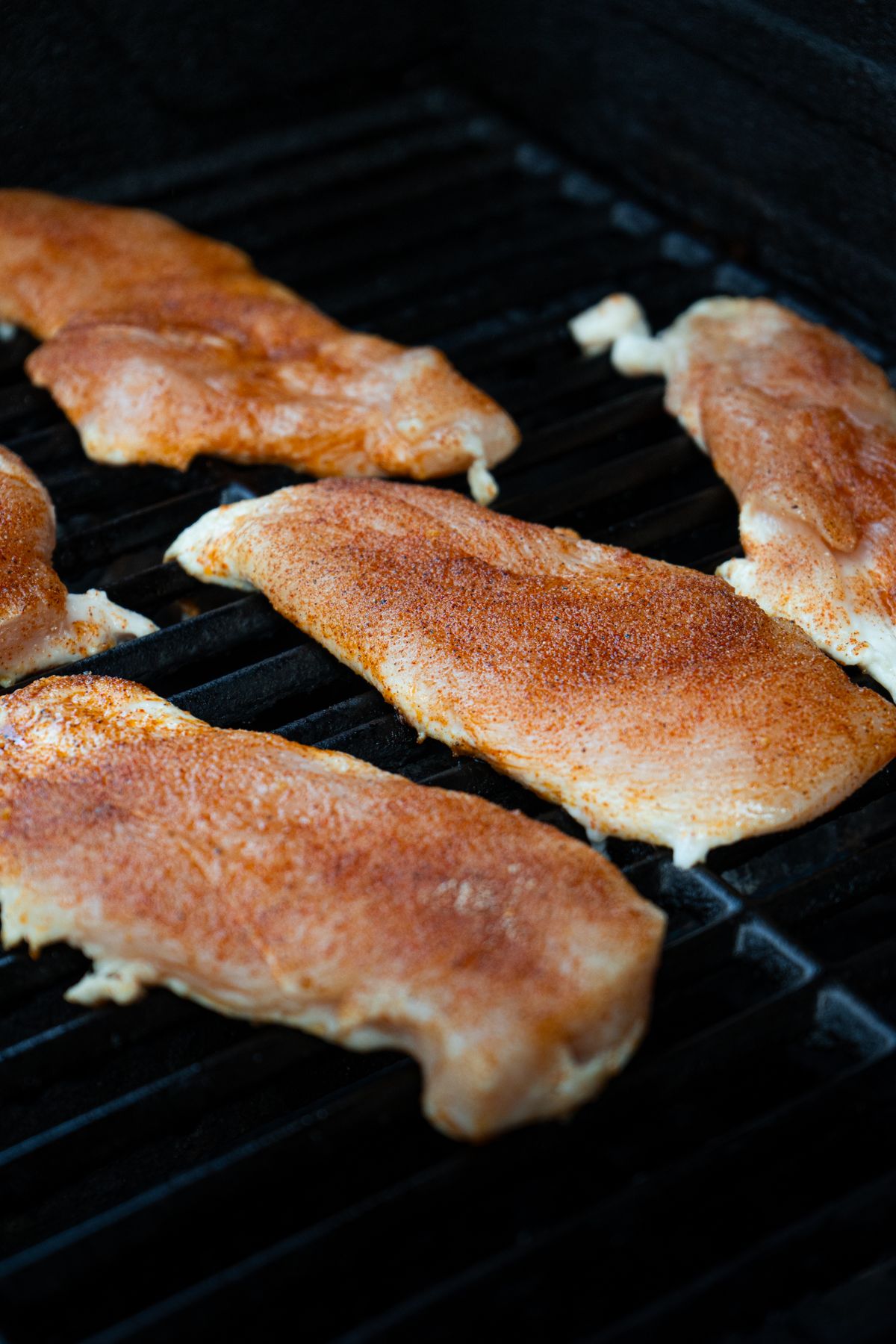
Why Two Zones Beat One
The Smoke Phase
225°F for 20 minutes. Low enough that surface moisture stays put and smoke particles bond to the exterior. This is where flavor happens; internal temp will climb to about 110–120°F.
The Sear Phase
375°F for 8–10 minutes. Fast finish to 160°F internal. The higher heat drives Maillard browning on the surface while the breast is only briefly in the danger window between 150–165°F where fibers contract.
The Rub (30 seconds to mix)
Nothing fancy. Every ingredient here has a job:
- 2 tbsp brown sugar — the sugar caramelizes during Zone 2 and darkens the crust
- 1 tbsp smoked paprika — doubles the smoke perception without extending pellet time
- 1 tsp garlic powder + 1 tsp onion powder — savory backbone
- 1 tsp kosher salt — draws surface moisture out first, then reabsorbs it as brine
- ½ tsp black pepper + ½ tsp cumin — depth and warmth
- ¼ tsp cayenne (optional) — heat, undetectable at this dose but wakes up the palate
Multiply by 4 for a two-pound tray of breasts. Store the extra dry mix in a jar for up to a month.
Cook Times by Breast Weight
Chicken breasts vary wildly in size — a “boneless skinless breast” at the grocery store can weigh anywhere from 6 to 14 ounces. Use this as your reference, always confirmed with a probe thermometer:
| Breast size | Smoke @ 225°F | Finish @ 375°F | Pull temp |
|---|---|---|---|
| Small (6–8 oz) | 15 min | 6–8 min | 160°F / 71°C |
| Medium (8–10 oz) | 20 min | 8–10 min | 160°F / 71°C |
| Large (10–12 oz) | 25 min | 10–12 min | 160°F / 71°C |
| XL / Costco-size (12–14 oz) | 30 min | 12–15 min | 160°F / 71°C |
| Pounded flat (½-inch) | 10 min | 5–6 min | 160°F / 71°C |
Best Pellets for Chicken Breast, Ranked
Not every wood belongs on a lean cut. Strong smoke woods (mesquite, hickory in large amounts) overpower breast in minutes because there’s no fat to buffer the phenolic compounds. From experience running side-by-side tests, fruit and mild woods win every time:
Skip: mesquite (too aggressive), and any “competition blend” containing more than 30% hickory. Whole white oak also runs too hot for a 30-minute cook.
The Method, Start to Finish
- Dry, rub, wait. Pat breasts dry with paper towels. Coat lightly in oil, then press the rub on all sides. Rest at room temperature 10 minutes while the grill preheats. Wet skin equals no bark.
- Preheat to 225°F. Load the hopper with apple or cherry pellets. Place a small foil pan of water on the grates below the meat position — it evens out chamber humidity and slows moisture loss.
- Zone 1: smoke. Lay breasts directly on grates, thick end pointing toward the heat source. Close the lid and don’t open it for the first 20 minutes. Lift the lid too early and you lose 5–7 minutes to temperature recovery.
- Whisk the baste. While Zone 1 runs, combine ¼ cup apple juice, 2 tbsp melted butter, and 1 tbsp Worcestershire. This gets brushed on during the transition.
- Zone 2: crank and baste. Push the pellet grill to 375°F. Baste breasts once as the temp climbs. Cook 8–10 minutes, basting once more halfway through.
- Pull at 160°F. Rest 5 minutes. Tent loosely with foil. Carryover heat brings the internal temp to 165°F — the USDA safe threshold — while the fibers relax and reabsorb juices.
Watch the Method on a Pellet Smoker
Quick visual of the exact two-phase sequence — start at 225°F, finish hot:
Why Breast Fights You Harder Than Thigh
This is why pellet grill recipes copied from thigh-based methods fail. The physics changed. Any technique for breast has to shorten total time at high internal temperature and lean on carryover heat for the last 5°F — the same physics that drives our crispy chicken breast stovetop method, where a short high-heat finish does the same work Zone 2 does here.
What Trips People Up
- Uneven thickness. A breast that’s 1½ inches at one end and ½ inch at the other cannot cook evenly. Pound the thick end down or butterfly it. Thirty seconds with a mallet fixes 90% of dryness problems.
- No water pan. Pellet grills run drier than most smokers because the auger fire dehumidifies the chamber. A foil pan of water below the meat undoes that. Skip it and you’re cooking in an oven.
- Opening the lid in Zone 1. Every peek costs 5–7 minutes of recovery time and lets accumulated smoke escape. If you must check, do it during the transition to Zone 2, not before.
- Smoking past 30 minutes total. Longer smoke exposure on a lean cut turns flavor from savory to acrid. If you want deeper smoke, use a stronger pellet — don’t extend the clock.
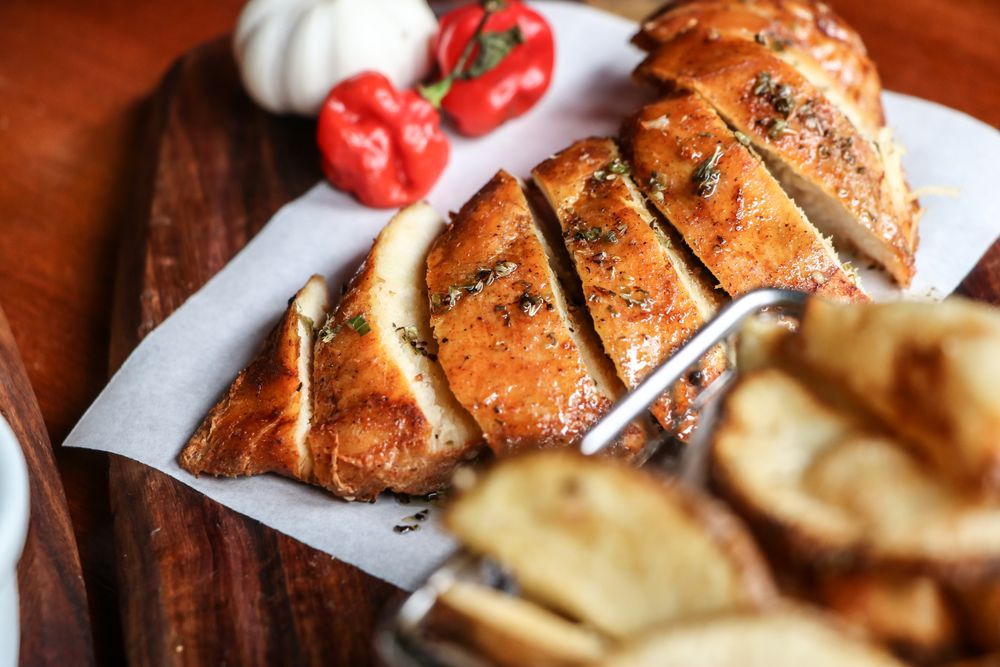
- Slicing with the grain. Cut across the muscle fibers at ½-inch angles. Slicing along the grain leaves long fibers that read as chewy no matter how well you cooked it.
Serving & Storage
Sliced pellet grill chicken breast plays well with anything acidic — pickled onions, citrus vinaigrette, a squeeze of lemon over the plate. Best sides: creamy polenta, charred broccolini, or a bright grain salad that offsets the smoke.
Fridge: 4 days in an airtight container, ideally with a spoonful of the baste over the top. Freezer: 3 months, sliced and layered between parchment. Reheat: 325°F oven with 1 tbsp broth in the dish, covered, for 8 minutes. Microwaving cooked breast is where texture goes to die.
Common Questions About Pellet Grill Chicken Breast
Do I need to brine chicken breast before pellet grilling?
If you’re using the two-zone method, no. Brining helps single-temperature cooks where the breast sits at 225°F for two hours. In a 30-minute grill cook with a proper Zone 2 pull at 160°F, the moisture loss is small enough that a brine adds effort without meaningful payoff.
What temperature is safest for chicken breast?
The USDA lists 165°F / 74°C as the safe internal temperature for poultry. Pull at 160°F and rest under foil — carryover heat carries the meat past 165°F in 3–5 minutes without overshooting on the plate.
Can I use bone-in, skin-on breasts instead?
Yes, and the method changes slightly. Skip Zone 2 and hold at 225°F for the full cook — total time runs 60–75 minutes because bone and skin insulate the meat. Pull at 160°F in the thickest part, away from the bone. If you’re smoking a whole bird instead, our whole chicken pellet smoker guide uses the same 225°F approach at a larger scale.
Why does my pellet grill chicken breast taste bitter?
Too much smoke, wrong wood, or both. Chicken breast is so lean that heavy smoke woods (mesquite, unblended hickory) deposit phenolic compounds faster than the meat can absorb them, and the surface reads as acrid. Switch to apple or cherry pellets and cap total smoke exposure at 20–25 minutes.
Can I do this on a Traeger, Pit Boss, or Camp Chef?
Yes — the two-zone method works on any pellet grill that can hold 225°F and reach 375°F, which is essentially every pellet grill sold in the last decade. Traeger, Pit Boss, Camp Chef, Weber SmokeFire, Recteq. The pellet flavor matters more than the brand.
Made this on your pellet grill? Pin the two-zone method so it’s there next time you fire up.
Did You Try Our Recipe ?
Scrumptious
My husband (who is extremely picky) loved the liver & onions so much!! I didn’t have any beef broth or Sherry so I used about a tbl of Worcestershire and 1/4 c of white wine …..it was scrumptious
Response from MeatRecipesBox
Oh wow, I’m so happy to hear that!! 😍 I love that you made it work with what you had on hand — Worcestershire and white wine sound like a delicious twist. So glad your husband enjoyed it, especially being picky! Thank you for sharing your version, it makes me smile knowing it turned out scrumptious!
This was amazing
This recipe turned out really amazing! It’s juicy and spiced deliciously. I definitely would use less of the spicy pepper next time, but it really was delicious and I don’t think I’ll make chicken legs any other way from now on.!
Response from MeatRecipesBox
Thank you for taking the time to leave such a thoughtful review. I’m really glad to hear the recipe turned out juicy and full of flavor for you. That’s exactly what I was hoping for when putting it together. Good call on the spicy pepper as well. Adjusting the heat level to your own taste is always the best approach, and using a little less next time should make it just right for you. I really appreciate you trying the recipe and sharing your experience. It’s great to know it worked so well for you.
I Didn’t Expect This Cornbeef Hash Recipe to Taste This Good!!
One skillet. A handful of simple ingredients. Thirty minutes on the clock. And somehow… I ended up with the crispiest, most comforting cornbeef hash recipe I’ve made in years.
I wasn’t expecting much—just a quick, no-fuss meal. But that first bite? Crispy edges, tender potatoes, smoky corned beef, a little kick of pepper. It tasted like something straight off a cozy diner griddle.
Honestly, it caught me off guard—in the best way. Here’s why this simple skillet completely won me over.
Juicy Pellet Grill Chicken Breast Recipe (Tender & Never Dry)
A two-zone method for cooking chicken breast on a pellet grill, resulting in juicy and flavorful meat
- 4 breasts boneless, skinless chicken breast
- 2 tbsp brown sugar
- 1 tbsp smoked paprika
- 1 tsp garlic powder
- 1 tsp onion powder
- 1 tsp kosher salt
- 0.5 tsp black pepper
- 0.5 tsp cumin
- 0.25 tsp cayenne pepper optional
- 0.25 cup apple juice
- 2 tbsp melted butter
- 1 tbsp Worcestershire sauce
Preparation
Pat the chicken breasts dry with paper towels
Coat the chicken breasts lightly with oil
Press the rub onto all sides of the chicken breasts
Zone 1: Smoke
Preheat the pellet grill to 225°F
Load the hopper with apple or cherry pellets
Place a small foil pan of water on the grates below the meat position
Lay the chicken breasts directly on the grates, thick end pointing toward the heat source
Close the lid and do not open it for the first 20 minutes
Zone 2: Sear
Push the pellet grill to 375°F
Baste the chicken breasts once as the temperature climbs
Cook for 8-10 minutes, basting once more halfway through
Resting and Serving
Pull the chicken breasts at 160°F
Rest the chicken breasts for 5 minutes, tented loosely with foil
Slice the chicken breasts against the grain and serve
- Pellet Grill
- Meat Thermometer
Use a meat thermometer to ensure the chicken reaches a safe internal temperature of 165°F


