

Recipe at a glance
- Prep15 min
- Cook20 min
- Rest10 min
- Total45 min
- Serves4
- Calories~540 / serving
What Is Picanha, and Why Do Brazilian Steakhouses Bet Everything on It?
Picanha — pronounced pee-KAN-ya — sits on top of the rump between the sirloin and the round. In the US it’s sold as sirloin cap, rump cover, coulotte, or (rarely) culotte. It’s a triangular muscle weighing 1.5–3 lb (700 g–1.4 kg) with a fat cap thick enough to keep the meat basted the entire cook.
At Fogo de Chão, Texas de Brazil, and every other churrascaria from São Paulo to Miami, picanha is the star of the tableside rotisserie — servers walk the room slicing it directly onto your plate. If you enjoy this style of primal-cut, low-effort cooking, our tomahawk steak guide covers the same “let the meat do the work” philosophy for a different cut.
Picanha vs other steaks — where does it sit?
| Picanha | Ribeye | Flank | |
|---|---|---|---|
| Cut location | Top of rump (sirloin cap) | Rib primal | Abdominal |
| Fat cap | Thick, external (½ in) | Marbled through | Very lean |
| Best method | Skewer or high-heat sear | Reverse-sear | Fast, hot, sliced thin |
| Grain | Runs one direction | Multi-directional | Long parallel |
| Price (2026, US) | ~$12–16/lb | ~$22–28/lb | ~$10–14/lb |
Ingredients — 4 Servings

The essentials
- 1 whole picanha, 1.2–1.5 kg / 2.5–3 lb, fat cap intact (½ inch minimum)
- 2–3 tbsp coarse rock salt — the real thing (sal grosso), not table salt. Kosher salt works.
- Freshly cracked black pepper (optional — purists skip it)
- 2 metal skewers (35 cm / 14 in) if grilling churrasco-style
That’s it. No marinade, no rub, no butter. The fat cap and salt do all the work.
To serve (pick any 2–3)
- Chimichurri or vinagrete (Brazilian tomato-onion salsa)
- Farofa (toasted cassava flour with butter)
- Pão de queijo (cheese rolls)
- Grilled pineapple with cinnamon
- Rice + black beans (the traditional plate)
- Malbec, Cabernet, or ice-cold caipirinha
How to Cook Picanha — The Churrasco Method
Traditional skewer + charcoal method
- Bring to room temperature. Take the picanha out 45 minutes before cooking. Cold meat sears unevenly. This is non-negotiable for thick cuts.
- Score the fat cap. With a sharp knife, cut a shallow crosshatch pattern through the fat, ~1 cm apart, without cutting into the meat. The scoring lets the fat render and crisp instead of curling up.
- Slice with the grain. Yes, with the grain — this is the counter-intuitive step everyone gets wrong. Lay the picanha fat-up, identify which way the muscle fibers run, and cut 2.5 cm / 1-inch steaks parallel to those fibers. You’ll get 4–5 steaks from a 3-lb picanha.
- Salt heavily. Coat every surface with coarse rock salt. Don’t be shy — most falls off during cooking. Rest 10 minutes so the salt starts to draw moisture.
- Skewer into a “C”. Bend each steak fat-side out into a C-shape and pierce with a metal skewer, so the fat cap is on the outside of the curve. 3–4 steaks per skewer, packed tight.
- Sear over direct high heat. Grill at 230 °C / 450 °F, fat-side down first for 4 minutes to render. Flip every 4 minutes for a total of 15–20 minutes, until the thickest part reads 54 °C / 130 °F for medium-rare on an instant-read thermometer.
- Rest 10 minutes loosely tented with foil. Slide off the skewer, brush loose salt off the surface.
- Slice against the grain. Now cut across the fibers — perpendicular to how you sliced in step 3 — into thin strips (5 mm / ¼ inch). This gives you tender bites. Sliced with the grain, picanha eats like leather.
Doneness Chart — Pull Temperatures
⭐ Recommended for picanha. Pull 3 °C / 5 °F below your target — carry-over cooking finishes the job during the rest. The USDA-safe minimum for whole cuts of beef is 63 °C / 145 °F, so medium and above pass conventional food-safety guidance; rare and medium-rare require quality sourcing.
Cast Iron or Oven — When You Don’t Have a Grill
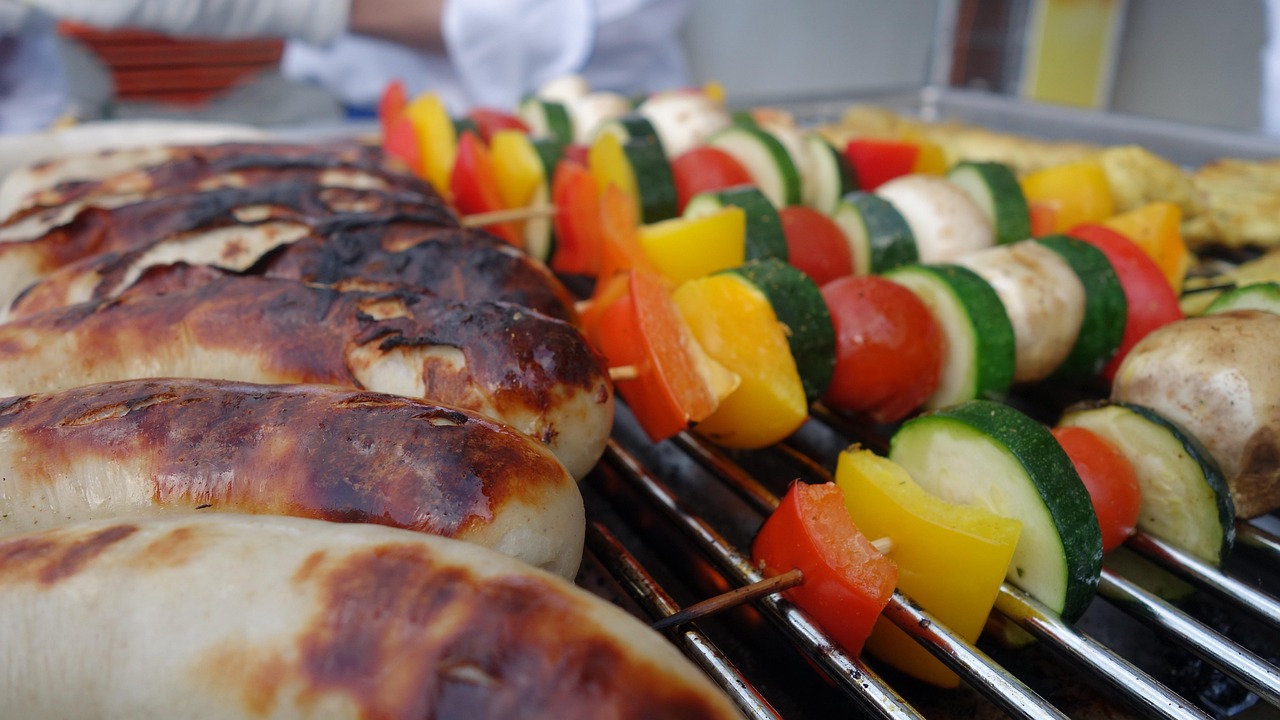
No grill? Two workable alternatives, both used by home cooks and even some steakhouses on winter nights:
Cast-iron skillet (for 1-inch steaks)
- Heat cast iron over medium-high until smoking (~230 °C).
- Place steaks fat-side down, hold with tongs for 90 seconds to render.
- Lay flat: 3 minutes per side for medium-rare (½ inch thick), 4 minutes per side (1 inch thick).
- Rest 8 minutes on a warm plate before slicing.
Reverse-sear in the oven (for whole picanha)
- Roast whole picanha fat-side up at 120 °C / 250 °F for 45–60 minutes until internal reads 49 °C / 120 °F.
- Rest 10 minutes. Heat cast iron ripping hot.
- Sear all sides, 60 seconds each, ending fat-side down for 90 seconds.
- Final internal: 54 °C / 130 °F. Slice and serve.
Watch It Made (Fogo de Chão Style)
The full C-skewer technique demonstrated end-to-end — from scoring the fat to the final tableside slice. Notice how the pitmaster salts twice: once before the skewer, once again after searing. That second salt is what makes restaurant picanha taste different from your first try at home.
The Five Mistakes That Ruin Picanha
1. Trimming the fat cap
Every American butcher will offer to do this. Say no. The fat cap is the whole point — it self-bastes the lean meat below, and it renders into a crackling top layer that Brazilians fight over. Leave a full ½ inch minimum.
2. Slicing the raw meat the wrong direction
Cut with the grain when portioning raw steaks (step 3 above), then against the grain when serving (step 8). Get this reversed and even a perfectly cooked picanha eats like a rubber sole.
3. Using fine salt or seasoning heavy
Coarse rock salt is the Brazilian rule for a reason — the crystals pull surface moisture, form a dry salt crust, then most fall off during flipping. Fine salt over-salts the interior. Skip garlic powder, skip pepper if you want the traditional plate.
4. Overcooking past medium
Picanha is leaner than ribeye once you get past the fat cap. Past medium (60 °C / 140 °F), it dries out fast. Buy a $15 instant-read thermometer and pull at 51 °C / 125 °F for carry-over to land at 54 °C.
5. Skipping the rest
Slice it hot and you’ll watch pink juice pool on the board while the meat turns gray on the plate. Ten minutes tented with foil isn’t optional — it’s the difference between a steak and a wet steak.
What to Serve With Picanha

The classic Brazilian steakhouse plate is picanha + arroz e feijão (rice and black beans) + farofa + vinagrete + a green salad. Build any of these on the side:
- Chimichurri — the Argentine parsley-garlic-vinegar sauce that also works with Brazilian beef
- Vinagrete — diced tomato, red onion, green bell pepper, red wine vinegar, olive oil, parsley
- Farofa — toasted cassava flour with butter, onion, sometimes bacon (adds texture)
- Grilled pineapple with cinnamon and brown sugar — the churrascaria classic, cuts the richness
- Pão de queijo — cheese-and-cassava rolls, gluten-free by accident
- Malbec, Tannat, or a very cold caipirinha — big red or big citrus, both work
If you want to build a full churrasco night, add our grilled beef short ribs and grilled chorizo to the coals — that’s how they do it in Rio Grande do Sul.
Storing, Reheating and Leftovers

Fridge: Cooked picanha keeps 3 days sealed. Slice cold for sandwiches, salads, or steak-and-eggs the next morning.
Reheat: Never microwave — you’ll ruin the medium-rare. Sear cold slices in a hot pan for 30 seconds per side, or warm gently in a 90 °C / 200 °F oven for 8 minutes.
Freeze: Raw picanha freezes beautifully vacuum-sealed for 6 months. Thaw slowly in the fridge for 24 hours before cooking — never rush-thaw on the counter.
Best leftover use: Chop into cubes and toss with olive oil, garlic, and parsley for a Brazilian-style steak salad on top of arugula and shaved Parmigiano.
Quick Answers
Where do I buy picanha in the US?
Costco carries it under the label “beef sirloin cap” (2026 average $12/lb), and most Brazilian grocery stores stock it as “picanha” (~$15/lb). Whole Foods, H-E-B, and Wegmans will special-order it if your butcher counter looks confused — the correct IMPS spec is 184D. Online, Snake River Farms and Porter & York both ship it frozen.
Do I marinate picanha?
No. This is the biggest debate online and the Brazilian answer is unanimous — coarse salt only, applied 10–30 minutes before cooking. The fat cap provides all the flavor a marinade would add. If you must, a garlic-and-olive-oil rub 30 minutes ahead is the maximum accepted deviation.
What temperature is picanha done?
Pull the picanha at 51 °C / 125 °F for medium-rare — it will carry-over cook to 54 °C / 130 °F during the 10-minute rest. This is the temperature every Brazilian steakhouse targets. Above 60 °C / 140 °F the fibers seize and the meat dries out because picanha is leaner than ribeye once you’re past the fat cap.
Why do you slice with the grain, then against it?
Slicing with the grain first gives you steaks tall enough to skewer and cook evenly. Slicing against the grain at serving time shortens the muscle fibers so each bite is tender. Both cuts are structural — miss either and you’ll waste a beautiful steak.
What’s the difference between picanha and coulotte?
Coulotte is the American butcher name for the same muscle (biceps femoris cap) — but American butchers usually trim the fat down to ¼ inch or less, which strips the picanha of what makes it picanha. Ask specifically for it “with the fat cap on” or shop at a Brazilian butcher.
The One-Line Version
Leave the fat cap, salt heavily, slice with the grain, skewer into a “C”, grill hot, pull at 130 °F, rest 10 minutes, slice against the grain. That’s the whole game. Hungry for more? Browse our full beef recipe collection.


