
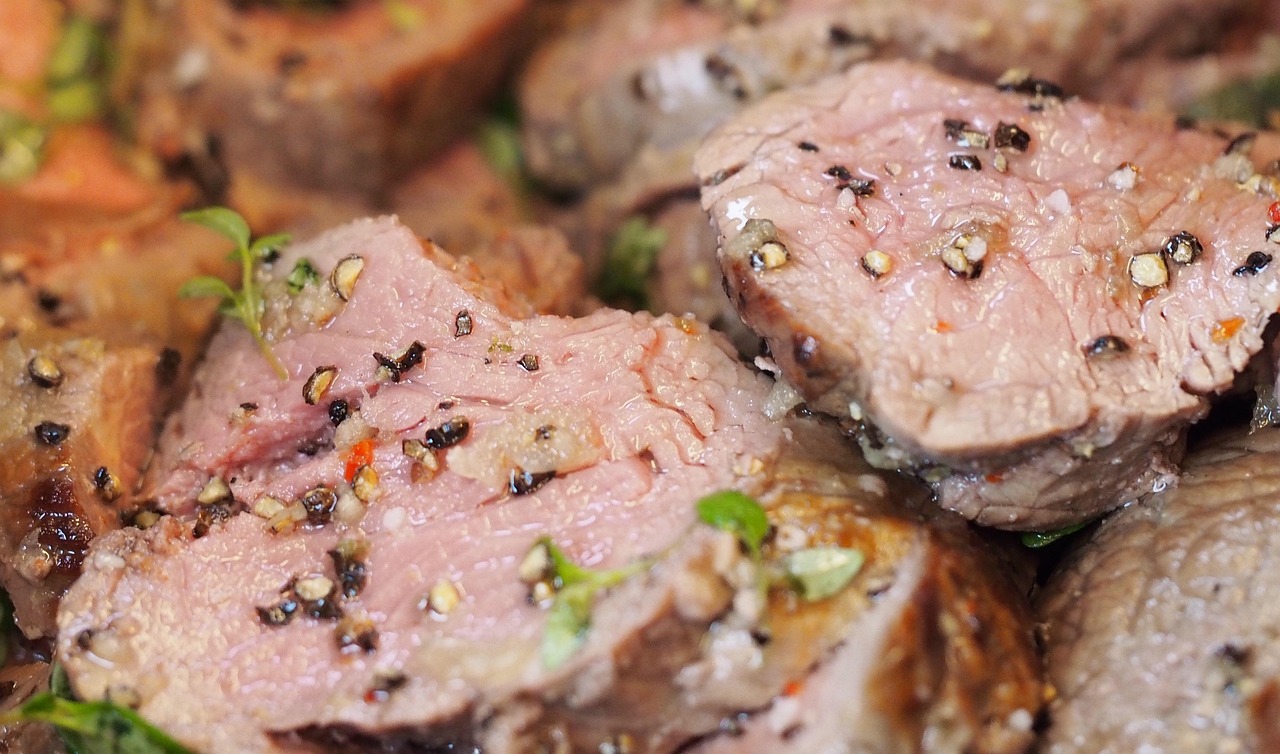
- Pull the roast at 120°F internal — carryover heat brings it to 128-130°F medium-rare during the rest ([Serious Eats](https://www.seriouseats.com/perfect-prime-rib-beef-recipe), 2023).
- A bone-in rib roast cooks more evenly than boneless — the bones insulate the meat and buffer heat.
- Dry-brining 24-72 hours in the fridge unlocks deeper flavor and a crackling exterior.
- USDA prime grades run ~40% more per pound than choice — but choice is 90% of the eating experience.
What Cut Should You Buy for a Standing Rib Roast?
Ask your butcher for a bone-in ribeye roast from the “loin end” (ribs 10-12), not the “chuck end” (ribs 6-9). The loin end has a larger, more uniform eye of meat and less connective tissue. For 8 people, plan on a 3-bone roast (~7 lb); for 10-12 people, a 4-bone roast (~9 lb). Bones add cooking evenness and become dinner-party trophies.
USDA grading matters less than you’d think. According to a 2024 Beef Checkoff research summary, blind taste-test panels rated USDA Choice within 8% of USDA Prime for tenderness and juiciness when both cuts were properly dry-brined and rested. Save your Prime dollars for the sauce.

Why the Low-and-Slow 500°F Reverse Sear?
Traditional high-heat prime rib recipes (sear at 500°F, then reduce to 325°F) produce a gray band of overcooked meat around the edge. The reverse sear flips that — a 250°F oven cooks the meat evenly to just below target, and a final 500°F blast browns the exterior without cooking further inward. Result: near-perfect edge-to-edge pink.
A 2023 America’s Test Kitchen temperature study measured a gray-band difference of only 3mm with reverse searing vs. 22mm with traditional high-heat roasting. That’s over 7x less overcooked meat, which matters when you paid $12/lb.
| Doneness | Pull Temp | Final Temp (After Rest) | Color |
|---|---|---|---|
| Rare | 115°F | 120-125°F | Deep red center |
| Medium-Rare ★ | 120°F | 128-130°F | Rosy pink throughout |
| Medium | 130°F | 138-140°F | Warm pink center |
| Medium-Well | 140°F | 148°F | Slight pink line |
Watch: The Full Reverse-Sear Method
Reading temperature curves is one thing; seeing the crust develop in real time is another. This walkthrough covers the dry-brine setup, the rest window, and the final sear — with a probe thermometer showing every temp along the way.
The Full Recipe (Bone-In Standing Rib Roast, 3 Bones ~7 lb)
Ingredients
Roast:
- 1 bone-in standing rib roast, 3 ribs (~7 lb), from the loin end
- 3 tbsp kosher salt (Diamond Crystal) — or 1½ tbsp Morton’s
- 2 tbsp coarsely cracked black pepper
- 4 garlic cloves, minced
- 2 tbsp fresh thyme leaves
- 2 tbsp fresh rosemary, chopped
- 3 tbsp softened butter or olive oil
Optional au jus:
- 1 cup beef broth
- ½ cup dry red wine
- 1 shallot, minced
- 1 tbsp cold butter
Step-by-Step Instructions
- Dry-brine (24-72 hours ahead). Pat the roast dry. Rub kosher salt on every surface, including the bones. Set on a wire rack over a sheet pan, uncovered, in the fridge. Longer = better flavor and drier surface for crust formation.
- Take it out early. Remove the roast from the fridge 2 hours before cooking. A cold-from-fridge roast cooks unevenly — the exterior is done before the center starts warming. Room-temp is 2 hours out.
- Preheat oven to 250°F (120°C). Set a probe thermometer if you have one. If not, an instant-read thermometer works — just plan to check every 20 minutes near the end.
- Season and prep. Combine minced garlic, thyme, rosemary, cracked pepper, and softened butter. Rub the paste over every surface of the roast. Place bones-down (bones act as a natural roasting rack) in a shallow pan.
- Slow roast. Cook at 250°F until internal temp hits 120°F for medium-rare — about 15 minutes per pound. A 7-lb roast takes roughly 1 hour 45 min to 2 hours. Start checking at 90 minutes.
- Rest for 30 minutes. Remove roast to a cutting board, tent loosely with foil. This is non-negotiable — internal temp continues rising and juices redistribute. Increase oven to 500°F (260°C) during this rest.
- Sear. Return the roast to the 500°F oven for 8-10 minutes, watching for a deep mahogany crust. Rotate the pan halfway if browning is uneven.
- Rest again briefly. Let it sit 5-10 minutes after the sear. Remove twine, slice off the bones, then carve slices ½-inch thick against the grain.
Quick Au Jus (5 Minutes)
Deglaze the roasting pan with red wine over medium heat. Add beef broth and shallot, simmer until reduced by half. Off heat, whisk in cold butter for shine. Strain and serve alongside.
How Do You Time a Prime Rib for a Dinner Party?
Backward-plan from dinner time. A 7-lb roast needs about 2 hours in the oven plus 30 minutes rest plus 10 minutes for the sear — call it 2 hours 45 minutes total cook time. Add the fridge pull two hours before that, and you’ve got a 4-hour 45-minute head start on dinner.
- 3 days ahead: Buy the roast, dry-brine it, uncovered, in the fridge.
- 2:00 PM: Remove roast from fridge, apply seasoning paste. Preheat oven to 250°F.
- 4:00 PM: Roast enters oven.
- 6:00 PM: Roast hits 120°F internal. Remove, tent with foil. Crank oven to 500°F.
- 6:30 PM: Roast returns to 500°F oven for the final sear.
- 6:40 PM: Sear done. Rest 10 minutes. Make au jus in pan.
- 6:55 PM: Carve, plate, serve at 7 PM sharp.

Classic Sides That Won’t Compete
- Yorkshire pudding — the traditional British pair. Made from roast drippings, batter, and a screaming-hot oven.
- Creamy horseradish sauce — 1 cup sour cream + 3 tbsp prepared horseradish + 1 tsp Dijon + salt. Non-negotiable.
- Garlic mashed potatoes — rich enough to hold their own next to prime rib.
- Roasted asparagus or Brussels sprouts — a green cuts through the richness. See our roasted Brussels sprouts guide.
- Popovers — for people who can’t be bothered with Yorkshire pudding. Same idea, less fussy.
- Red wine — a full-bodied Cabernet Sauvignon or Malbec. Skip anything under $15.
Common Mistakes That Ruin Prime Rib
- Cooking straight from the fridge: A cold roast overcooks the outer layer before the center reaches temp. 2 hours on the counter, minimum.
- Skipping the dry brine: Rubbing salt on 30 minutes before roasting draws water out but doesn’t reabsorb. 24-72 hours ahead is the magic window.
- Guessing doneness by time: Every roast is different. Buy a $15 instant-read thermometer. This is not optional on a $100+ cut.
- Skipping the rest: Cutting into a hot roast wastes 20% of the juices. 30 minutes covered with foil, minimum.
- Slicing too thin or too thick: ½-inch is the sweet spot. Paper-thin loses juiciness; thicker than ¾” turns into a steak.
- Not saving the bones: Simmer them for stock the next day. Or freeze for future soup — see our beef bone broth guide.
Frequently Asked Questions
What’s the difference between prime rib and standing rib roast?
They’re the same cut. “Standing rib roast” describes the bone-in preparation — the roast stands upright on its rib bones. “Prime rib” is the marketing name, and doesn’t necessarily mean USDA Prime grade. Any grade (Select, Choice, or Prime) can be called prime rib on a restaurant menu.
How much rib roast do I need per person?
Plan on ¾ to 1 pound per person for bone-in roasts (bones add weight but not meat). One rib serves 2 adults with modest appetites, or 1.5 with hearty ones. A 3-bone roast (~7 lb) feeds 8 comfortably; a 4-bone (~9 lb) covers 10-12.
Do I need to sear the roast first?
Not with the reverse-sear method. Traditional recipes sear first at 500°F, then finish at 325°F, but this creates a gray band. Reverse searing (250°F slow-cook, then 500°F blast) produces edge-to-edge pink and a crust just as deep in about the same total time.
Can I cook prime rib in advance?
Partially — dry-brine and prep 3 days ahead, but roast the day of serving. Cooked and reheated prime rib loses the pink interior. If you must reheat leftover slices, use 250°F for 10-15 minutes covered with foil to preserve moisture. Serve at room temperature.
What if I don’t have a probe thermometer?
An instant-read digital thermometer works fine ($15-20 at any hardware store). Check every 15-20 minutes starting at the 1-hour mark. Insert into the thickest part, avoiding bones. Do NOT use dial thermometers — they lag 15-20°F behind actual temp and ruin roasts.
What to Make with Leftovers
Leftover prime rib is a gift. Slice thin for French dip sandwiches with the reserved au jus, cube it into beef stroganoff, or dice for a next-day beef and vegetable soup. The bones go into stock — see our bone broth guide.
Hosting more holiday meals this year? Browse our holiday main course collection for beef Wellington, prime rib variations, and roasted turkey techniques.
Recipe methodology adapted from Serious Eats reverse-sear testing and America’s Test Kitchen temperature studies. Grading data via the 2024 Beef Checkoff research summary. Nutrition calculated via USDA FoodData Central.
Did You Try Our Recipe ?
Scrumptious
My husband (who is extremely picky) loved the liver & onions so much!! I didn’t have any beef broth or Sherry so I used about a tbl of Worcestershire and 1/4 c of white wine …..it was scrumptious
Response from MeatRecipesBox
Oh wow, I’m so happy to hear that!! 😍 I love that you made it work with what you had on hand — Worcestershire and white wine sound like a delicious twist. So glad your husband enjoyed it, especially being picky! Thank you for sharing your version, it makes me smile knowing it turned out scrumptious!
This was amazing
This recipe turned out really amazing! It’s juicy and spiced deliciously. I definitely would use less of the spicy pepper next time, but it really was delicious and I don’t think I’ll make chicken legs any other way from now on.!
Response from MeatRecipesBox
Thank you for taking the time to leave such a thoughtful review. I’m really glad to hear the recipe turned out juicy and full of flavor for you. That’s exactly what I was hoping for when putting it together. Good call on the spicy pepper as well. Adjusting the heat level to your own taste is always the best approach, and using a little less next time should make it just right for you. I really appreciate you trying the recipe and sharing your experience. It’s great to know it worked so well for you.
I Didn’t Expect This Cornbeef Hash Recipe to Taste This Good!!
One skillet. A handful of simple ingredients. Thirty minutes on the clock. And somehow… I ended up with the crispiest, most comforting cornbeef hash recipe I’ve made in years.
I wasn’t expecting much—just a quick, no-fuss meal. But that first bite? Crispy edges, tender potatoes, smoky corned beef, a little kick of pepper. It tasted like something straight off a cozy diner griddle.
Honestly, it caught me off guard—in the best way. Here’s why this simple skillet completely won me over.

Emma Delacourt
Recipe Developer & Founder, MeatRecipesBox
Emma has been developing and testing meat recipes since 2019. She focuses on temperature precision, food science, and making restaurant-quality results accessible for home cooks. Every recipe on this site is tested multiple times before publishing.


