
An aesthetic kawaii bento box is Japanese lunch as visual art. Rice balls become bear faces, sausages turn into little octopuses, and every color on the plate lands on purpose. The style comes from kyaraben, a Japanese word that mashes “character” and “bento”, and it took off in the 2000s when parents began sculpting food to convince picky kids to eat. If you want the grown-up version instead, our adult meal-prep bento box guide covers the four-compartment formula for portion-sized lunches. Below is the exact toolkit, the color rule that makes a box feel kawaii instead of chaotic, and six easy techniques you can pull off with a bear-mold and a pair of scissors.
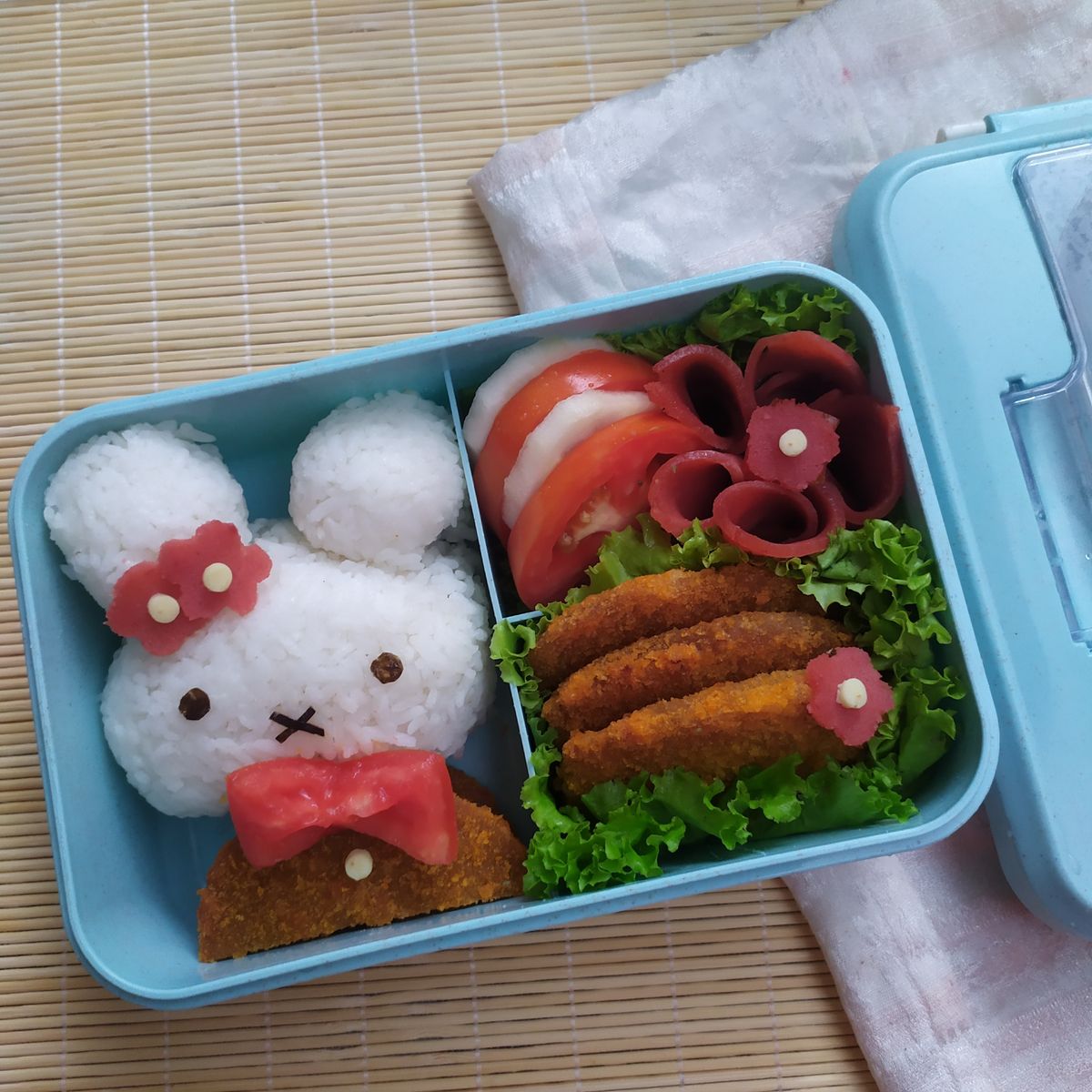
An aesthetic kawaii bento box is a Japanese-style lunch built on kyaraben (character bento) techniques: rice balls shaped into animals or faces, vegetables cut into stars and flowers, and food arranged in three colors or more. The look leans on a soft pastel palette (peach, mint, butter-yellow) with one saturated accent (red cherry tomato or pink pickled ginger), and it typically takes 30 to 45 minutes for a single box.
Jump to a section
What Makes a Bento Box Kawaii, Not Just Cute
Kawaii translates roughly to “adorable” in Japanese, but the aesthetic is stricter than it sounds. Round shapes read as friendly, symmetrical faces read as safe, and pastel colors read as gentle. A kawaii bento hits all three.
Kyaraben boxes emerged in the 1990s and hit mass popularity in the 2000s, when parents began sculpting rice into Totoro, Rilakkuma, and Pokemon to coax picky eaters. The category is now its own subculture: bento contests, character molds, and thousands of Instagram accounts dedicated to lunches that look too pretty to eat.
The Color Palette Rule Behind Every Aesthetic Bento
Follow one rule and 80 percent of the aesthetic problem solves itself. Aim for three to five colors in each box, with a pastel majority and one saturated pop. Anything more starts to feel like clown food, anything less looks flat.
| Palette slot | Ingredient examples | Purpose |
|---|---|---|
| Base pastel (white or cream) | Rice, mashed potato, boiled egg white | Neutral canvas for other colors |
| Soft green | Edamame, cucumber, broccoli florets | Fresh, calming secondary |
| Warm accent | Cherry tomato, red bell pepper, salmon | The single saturated pop |
| Yellow (optional) | Corn, tamagoyaki (egg roll), cheese | Sunshine notes, breaks up green |
| Dark contrast | Nori seaweed, black sesame, olives | Outlines faces, defines shapes |
Six Kawaii Elements Every Aesthetic Bento Needs
These six pieces show up in almost every viral kyaraben. Learn them and you can build a fresh design every day without a template.
Character onigiri
A rice ball shaped into a bear, cat, panda, or Totoro face. Use a mold or plastic wrap and your palms.
Nori faces
Tiny eyes, mouths, and eyebrows cut from a sheet of nori seaweed with a hole punch or scissors.
Sausage octopus
A mini cocktail sausage sliced halfway down at 8 points, then pan-seared so the legs curl outward.
Vegetable stars
Carrot and cucumber slices punched with mini cookie cutters into stars, flowers, and hearts.
Tamagoyaki roll
Japanese sweet rolled omelet, sliced into pinwheel discs that stack neatly along one edge.
Cheese detail
Sliced cheddar or American cheese cut into ears, bows, or cheek circles to layer on onigiri.
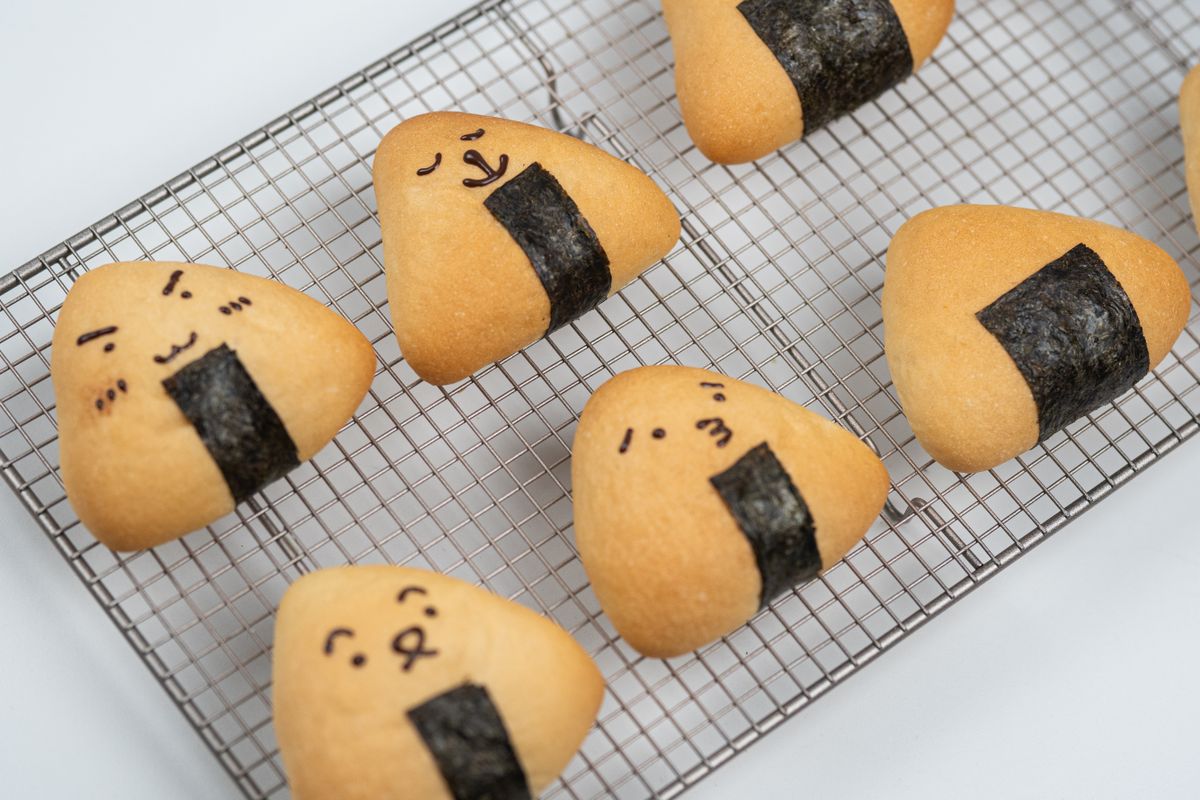
How to Shape Character Onigiri
Character onigiri is the anchor of any kawaii bento. Nail this one skill and the rest of the box is just decoration. Pair it with a savory protein like our teriyaki chicken for a full lunch that tastes as good as it looks.
Rice base
- 1 cup cooked short-grain Japanese rice, warm
- 1/4 tsp fine salt
- 1 tsp rice vinegar (optional, adds shine)
Face parts
- 1 sheet toasted nori seaweed
- 1 slice American cheese or cheddar
- 1 tiny piece cooked ham (for cheeks)
Tools
- Plastic wrap or a bear-face onigiri mold
- Small round hole punch or scissors
- Toothpick (for placing tiny pieces)
- Shape the rice ball.Place 3/4 cup warm salted rice in the center of a plastic wrap square, gather the corners, and twist to form a firm round ball. Or press the rice into a bear-face onigiri mold for a shortcut.
- Cut the ears.Slice two small circles of cheese or nori and press them onto the top of the ball. Ears sell the character faster than any other detail.
- Punch the eyes and nose.Use a small hole punch on a folded nori sheet to make two round eyes. Cut a tiny oval for the nose with scissors.
- Place the face parts.Wet the tip of a toothpick and use it to lift each nori piece onto the rice. The moisture holds the shape until you close the lid.
- Add the cheeks.Punch two tiny pink circles from ham or a slice of pickled radish and set them below the eyes. This is what pushes the look from cute to kawaii.
Cute Food Cutouts With Nori and Cheese
The second visual layer of a kawaii bento is precision-cut nori and cheese. Both materials hold their edges cleanly and can be shaped with a $6 set of mini cookie cutters or a craft hole punch dedicated to food use.
Vegetables work the same way. Blanched carrot, cucumber, and yellow bell pepper each punch out clean shapes with a small metal cutter and dry off after 30 seconds on a paper towel. Star, heart, and flower shapes read as kawaii the fastest.
The Best Aesthetic Bento Box Containers
A kawaii box needs a container that reads kawaii on its own. Wood-grain wappa boxes give a warm, natural look; pastel plastic with a rounded window lid is the Instagram default; and stainless steel with silicone gaskets is the sturdiest travel option.
For an aesthetic single-tier build, target a capacity of 500 to 700 ml. Bigger boxes make a kid-scale character look lost in negative space, and the composition falls apart. Two-tier boxes (upper 350 ml, lower 400 ml) work well if you want rice on the bottom and character face on the top.
Mistakes That Kill the Cute
Storage and Food-Safety Notes
A kawaii bento is a lunch first and an aesthetic project second. The food-safety window still applies, even when the box is too cute to eat quickly.
Questions People Keep Asking
What does kawaii mean in bento culture?
Kawaii translates to “adorable” in Japanese, and in bento culture it describes lunches decorated with cute faces, animal shapes, and pastel palettes. The specific style of character-decorated bento is called kyaraben, short for “character bento”, and became mainstream in the 2000s.
How long does it take to make a kawaii bento?
Plan for 30 to 45 minutes for a single-character bento if you are a beginner. Once you learn the six core elements (character onigiri, nori faces, sausage octopus, veggie stars, tamagoyaki, cheese details), a repeat build drops to 20 minutes.
Do I need special tools for kawaii bento?
Six tools cover 95 percent of designs: a bear-face onigiri mold, a mini nori punch, small metal vegetable cutters (star, heart, flower), scissors, tweezers, and a toothpick. A starter kit runs about $20 to $30.
Is kawaii bento just for kids?
No. Adult kyaraben culture is huge on Instagram, TikTok, and Pinterest, where the aesthetic itself is the draw. Adult boxes tend to feature Studio Ghibli or Sanrio characters and land larger portions of 700 to 1000 ml.
Will the nori face still look good by lunchtime?
Yes if you cool the rice first and add nori details last. Nori absorbs moisture within about 90 minutes at room temperature, so decorate right before packing, or seal the face pieces on a small square of parchment inside the box.
What is the easiest kawaii character to make first?
A bear face. Round rice ball, two small cheese ear circles, two nori dots for eyes, one small oval for the nose, done. It reads instantly as a bear and forgives shaky punch cuts.
Where do I find character molds and nori punches?
Etsy and Amazon carry starter sets under $20, and Japanese specialty shops like Bento&co and The Japan Box sell curated kyaraben kits. Look for BPA-free plastic molds and food-grade metal cutters for a durable investment.
Save this kawaii bento playbook
Pin the color rule and the six kawaii elements so your next lunch build starts with a plan, not a blank rice ball.
Pin to PinterestAesthetic Kawaii Bento Box: 6 Elements + Color Rule
A Japanese-style lunch built on kyaraben techniques, featuring character-shaped rice, vegetables, and food arranged in a soft pastel palette with one saturated accent
- 1 cup cup cooked short-grain Japanese rice warm
- 1/4 tsp tsp fine salt
- 1 tsp tsp rice vinegar optional, adds shine
- 1 sheet sheet toasted nori seaweed
- 1 slice slice American cheese or cheddar
- 1 tiny piece piece cooked ham for cheeks
Shape the rice ball
Place 3/4 cup warm salted rice in the center of a plastic wrap square, gather the corners, and twist to form a firm round ball.
Cut the ears
Slice two small circles of cheese or nori and press them onto the top of the ball.
Punch the eyes and nose
Use a small hole punch on a folded nori sheet to make two round eyes. Cut a tiny oval for the nose with scissors.
- Plastic wrap or bear-face onigiri mold
- Small round hole punch or scissors
- Toothpick
Cool onigiri before adding nori details, and decorate right before packing to keep the face crisp
Did You Try Our Recipe ?
Scrumptious
My husband (who is extremely picky) loved the liver & onions so much!! I didn’t have any beef broth or Sherry so I used about a tbl of Worcestershire and 1/4 c of white wine …..it was scrumptious
Response from MeatRecipesBox
Oh wow, I’m so happy to hear that!! 😍 I love that you made it work with what you had on hand — Worcestershire and white wine sound like a delicious twist. So glad your husband enjoyed it, especially being picky! Thank you for sharing your version, it makes me smile knowing it turned out scrumptious!
This was amazing
This recipe turned out really amazing! It’s juicy and spiced deliciously. I definitely would use less of the spicy pepper next time, but it really was delicious and I don’t think I’ll make chicken legs any other way from now on.!
Response from MeatRecipesBox
Thank you for taking the time to leave such a thoughtful review. I’m really glad to hear the recipe turned out juicy and full of flavor for you. That’s exactly what I was hoping for when putting it together. Good call on the spicy pepper as well. Adjusting the heat level to your own taste is always the best approach, and using a little less next time should make it just right for you. I really appreciate you trying the recipe and sharing your experience. It’s great to know it worked so well for you.
I Didn’t Expect This Cornbeef Hash Recipe to Taste This Good!!
One skillet. A handful of simple ingredients. Thirty minutes on the clock. And somehow… I ended up with the crispiest, most comforting cornbeef hash recipe I’ve made in years.
I wasn’t expecting much—just a quick, no-fuss meal. But that first bite? Crispy edges, tender potatoes, smoky corned beef, a little kick of pepper. It tasted like something straight off a cozy diner griddle.
Honestly, it caught me off guard—in the best way. Here’s why this simple skillet completely won me over.

