

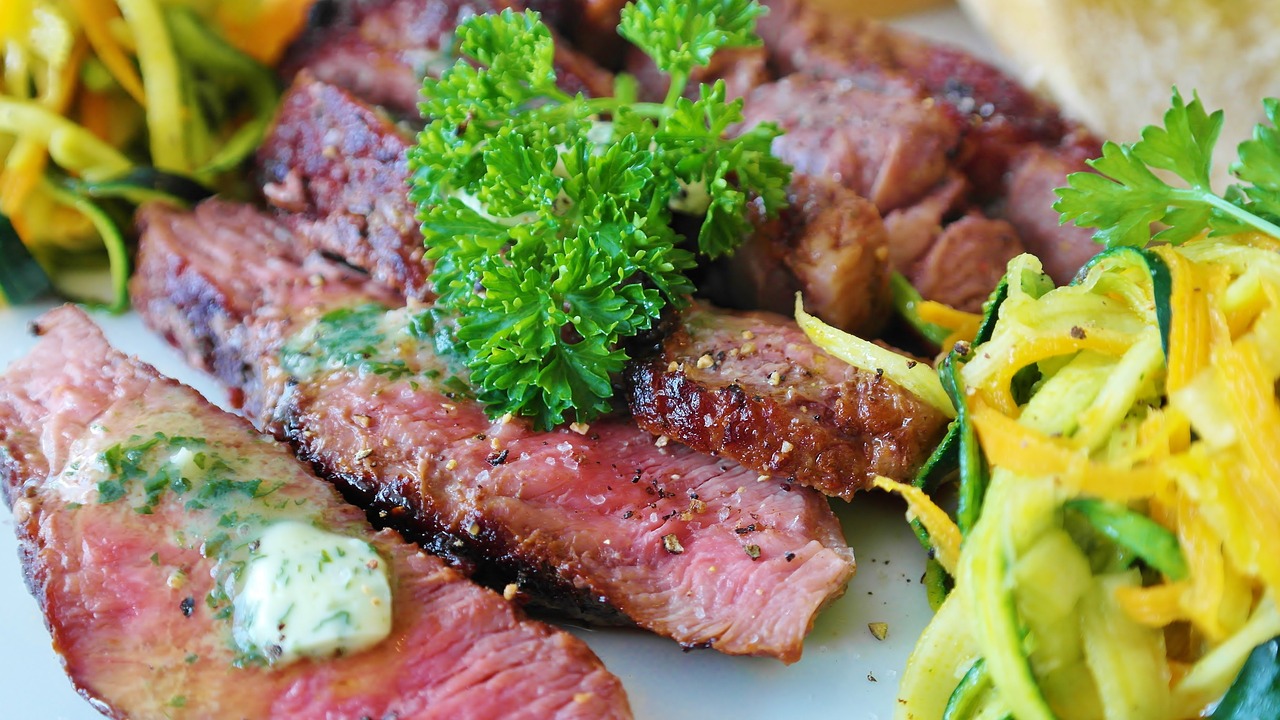
Short answer: Cook hanger steak (French: onglet) hot and fast — 3 to 4 minutes per side in a smoking cast-iron pan — then rest 8 minutes and slice thinly across the grain. Pull it at 52 °C / 125 °F for medium-rare. Trim the tough central membrane first (this is the step every home cook skips). One classic pairing: bordelaise or shallot-red-wine pan sauce, salt-crusted fries, watercress. No marinade required — the cut carries its own flavor.
Hanger is the steak French butchers used to keep for themselves before food writers ruined the secret. It’s the single richest, most beefy-tasting cheap cut you can buy — one per animal, hung from the diaphragm, richer than flank, more tender than skirt, and half the price of a filet. Cook it correctly and it turns any Wednesday into a Parisian brasserie. Cook it wrong and it’s the toughest lesson of your week. The difference is one membrane and 30 seconds of technique.
What hanger steak actually is
Hanger is a single, thick, V-shaped muscle that literally hangs off the diaphragm inside the cow — hence the name. Because it doesn’t work hard during the animal’s life, it stays tender. Because it’s attached to the diaphragm and organs, it soaks up rich, mineral flavor. There is exactly one per cow, which is why it’s harder to find than flank or skirt.
You’ll also see it labeled: onglet (French bistros), butcher’s steak (English-speaking butchers, because they used to keep it for themselves), bistro steak (US restaurants), or hanging tender (American butcher counters). All the same cut. Ask your butcher for hanger and expect them to smile.
🥩 Hanger Steak — the 15-minute bistro method
The steak
- 1 whole hanger steak (about 500 g / 1 lb), central membrane removed
- 1 tsp flaky salt (extra to finish)
- ½ tsp freshly cracked black pepper
- 1 tbsp neutral oil (grapeseed or sunflower)
- 2 tbsp unsalted butter
- 2 sprigs fresh thyme
- 2 garlic cloves, crushed but whole
For the shallot pan sauce (classic bistro)
- 2 shallots, finely chopped
- ½ cup / 120 ml beef stock
- 1 tbsp Dijon mustard
- 1 tbsp red wine vinegar (or 2 tbsp red wine)
- 2 tbsp cold unsalted butter, cubed
- 1 tbsp chopped fresh parsley
To serve
- Crispy oven fries or pommes frites
- Watercress or arugula, dressed with lemon and olive oil
- Flaky salt and cracked pepper
Trim the membrane first (the step that changes everything)
Hanger steak has a thick, silvery membrane running down its center — the same one that connected it to the diaphragm. It will not soften, no matter how long you cook. Home cooks who skip this step end up chewing rubber and blaming the meat. It takes 45 seconds with a sharp knife.
Lay the steak flat. Find the central seam (a whitish stripe of connective tissue). Slide a boning knife along one side, then the other, freeing two long muscles from the central membrane. Discard the membrane. Cut each of the two long muscles in half crosswise to get four manageable pieces that fit any pan.
The 15-minute method, step by step
This is the bistro version — a hard sear in a smoking pan, butter-basted at the end, rested on a board, sliced across the grain. The pan sauce comes together in the same skillet while the steak rests. Total time on the burner: under ten minutes.
- Trim. Remove the central membrane as described above. Cut into four panels. Pat every side bone-dry with paper towels.
- Bring to room temperature. Let the trimmed pieces sit uncovered on a plate for 30 minutes. Cold steak from the fridge over-cooks outside before the inside warms.
- Season. Sprinkle flaky salt and cracked pepper on all sides. Press the seasoning in.
- Get the pan smoking. Cast iron over high heat, 5 minutes, until the surface shimmers. Add the neutral oil and swirl. Turn on your extractor fan first.
- Sear 3–4 minutes per side. Lay pieces away from you, don’t crowd the pan, don’t move them. Flip once when they release easily.
- Butter-baste the last 60 seconds. Drop the butter, thyme sprigs, and crushed garlic into the pan. Tilt the pan and spoon the foaming butter over the tops of the steaks. This is the bistro move.
- Pull at 52 °C / 125 °F. Instant-read thermometer into the thickest piece. Carries to 54 °C during rest.
- Rest 8 minutes. On a warm cutting board, tented loosely with foil. Meanwhile build the pan sauce.
- Build the sauce. Pour off most of the fat. Add shallots to the same pan, sauté 2 minutes until soft. Pour in beef stock, vinegar and Dijon. Simmer, scraping the fond, until reduced by half. Off heat, whisk in cold butter cubes one at a time. Add parsley.
- Slice and serve. Slice each piece thinly across the grain (short-way fibers, cut perpendicular). Fan on warm plates, spoon sauce alongside (not over — keeps the crust crisp), add fries and dressed greens.
Why butter-basting matters here. The butter foam carries thyme and garlic aromatics straight into the meat surface while the fat — hotter than water can be — pushes the crust past “seared” to “deeply caramelized”. Sixty seconds of basting is the visible difference between home steak and bistro steak.
Watch a proper hanger cook
Kenji López-Alt does a fifteen-minute walk-through — trim, sear, baste, rest, slice. He’s obsessive about temperature and honest about the membrane trimming that saves the steak. Watch it once and the technique locks in.
Doneness chart (pull temperatures)
Hanger past medium is a criminal waste of a great cut. Pull 5 °C before target and let carryover finish it during the rest. The USDA-safe minimum for whole beef is 63 °C / 145 °F with a 3-minute rest.
| Doneness | Pull temp | Final temp | Notes |
|---|---|---|---|
| Rare | 46 °C / 115 °F | 49 °C / 120 °F | Cool red center, very tender |
| Medium-rare (bistro standard) | 52 °C / 125 °F | 54 °C / 130 °F | Warm red, juicy, mineral |
| Medium | 57 °C / 135 °F | 60 °C / 140 °F | Pink center, firmer bite |
| Above medium | — | — | The mineral flavor turns liver-y. Don’t. |
Hanger vs skirt vs flank — the butcher-counter cheat sheet
Three cuts, same treatment, different personalities. Standing at the counter with a specific dinner in mind, here’s the quick logic that saves the wrong purchase.

Hanger — the plated dinner
Richest, most mineral, most tender of the three. One per animal, so more expensive and harder to find. Best for a knife-and-fork dinner with a pan sauce, fries, and a glass of red. Doesn’t need marinade.
Skirt — the taco cut
Thinnest, most marbled, cooks in half the time. Best for fajitas, tacos, steak salads — anything sliced and folded into something else. Benefits from a citrus marinade if you go for inside skirt.
Flank — the versatile middle
Wider, leaner, cheapest. Works for both a plated dinner and thin-sliced applications. Slightly longer sear (4–5 min per side). Full method in our flank steak guide.
Bistro pairings that turn steak into dinner
The classic French plate is deliberately simple — meat, one starch, one green, one sauce. Piling on sides is an American impulse that dilutes the point. Pick one from each column and stop.
- Sauces: shallot-red-wine (above), bordelaise (with bone marrow), béarnaise (tarragon and butter), or a steak au poivre-style cream sauce — our alcohol-free steak au poivre pan sauce transfers directly.
- Starches: pommes frites, gratin dauphinois, buttery mashed potatoes, or a wedge of crusty bread.
- Greens: watercress or arugula with lemon and olive oil, grilled asparagus, or a simple salade verte with mustard vinaigrette.
- Wine: a côtes du rhône, a young Bordeaux, a Loire cabernet franc. Nothing heavy — you want the wine to lift the mineral flavor, not compete with it.
Storage, reheating, and leftovers
Cooked hanger keeps beautifully — the fat and connective tissue actually improve overnight. The steak-frites plate does not reheat, but sliced hanger becomes tomorrow’s best salad or sandwich filler.
- Refrigerator: up to 4 days whole, 2 days sliced, in an airtight container.
- Reheating: gentle only. Warm slices in a low oven (120 °C / 250 °F) covered for 6–8 minutes. Never microwave.
- Sauce: reheats fine in a small saucepan over low heat with a splash of stock to loosen.
- Leftovers: steak salad with mustard vinaigrette, bahn mi with pickled carrots, or shredded into a ropa vieja-style pepper-tomato sauté.
Common questions before you cook
Where can I buy hanger steak?
Real butcher counters, farmers’ markets, and specialty meat shops. Rarely at supermarkets because there’s only one per animal. If your butcher doesn’t stock it, they can usually order it — ask by both names (hanger and onglet). Expect to pay less than ribeye, more than flank.
Do I need to marinate hanger steak?
No. Hanger has enough natural flavor and tenderness that a marinade actually hides what makes the cut special. Salt it 40 minutes ahead as a dry brine if you want to intensify the crust. Save the marinade for skirt or flank.
Why does my hanger steak taste like liver?
Overcooked. Hanger has more myoglobin and mineral compounds than other cuts — delicious at medium-rare, off-putting past medium. If you’ve gone past 60 °C, the iron notes turn liver-y. Pull earlier next time and it disappears.
What’s the difference between onglet and hanger?
Nothing. Onglet is the French name for the exact same cut — the hanging tender that dangles off the diaphragm. Same muscle, same technique, same doneness rules. In French bistros it’s often served with a shallot pan sauce (onglet aux échalotes) — the recipe above.
Cast iron or grill for hanger steak?
Cast iron for the pan-sauce version (this recipe) because you need the fond for the sauce. Grill for a summer plate with chimichurri or salsa verde. Either works — the doneness rules don’t change. Broiler works too if you have neither.
The bistro secret hiding in a €12 steak
Hanger steak is the reason French cooks smile at the “expensive American steak” conversation. For less than half the price of a filet, you get more flavor, more texture, and a plate that reads “restaurant” without a single fancy ingredient. Trim the membrane, sear it hard, rest it, slice it sideways — the whole technique fits on a napkin. Do it once and your Wednesday dinner just moved a category up.
For the wider, cheaper cousin, see our flank steak method. For the same fast-sear logic on a thicker cut, our top sirloin cast-iron recipe follows the same pan and the same rest rules. And for the French pan-sauce family, our alcohol-free steak au poivre lives in the same bistro universe as hanger with shallot sauce.
Did You Try Our Recipe ?
Chicken hears and gizzards
I would love you to send me the recipe please. I have no printer to print it off. [email protected]
Response from MeatRecipesBox
Hi Sharon, thank you so much for your kind words! I’ve just sent the full recipe to your inbox. Enjoy, and let me know how it turns out! 😊
Scrumptious
My husband (who is extremely picky) loved the liver & onions so much!! I didn’t have any beef broth or Sherry so I used about a tbl of Worcestershire and 1/4 c of white wine …..it was scrumptious
Response from MeatRecipesBox
Oh wow, I’m so happy to hear that!! 😍 I love that you made it work with what you had on hand — Worcestershire and white wine sound like a delicious twist. So glad your husband enjoyed it, especially being picky! Thank you for sharing your version, it makes me smile knowing it turned out scrumptious!
This was amazing
This recipe turned out really amazing! It’s juicy and spiced deliciously. I definitely would use less of the spicy pepper next time, but it really was delicious and I don’t think I’ll make chicken legs any other way from now on.!
Response from MeatRecipesBox
Thank you for taking the time to leave such a thoughtful review. I’m really glad to hear the recipe turned out juicy and full of flavor for you. That’s exactly what I was hoping for when putting it together. Good call on the spicy pepper as well. Adjusting the heat level to your own taste is always the best approach, and using a little less next time should make it just right for you. I really appreciate you trying the recipe and sharing your experience. It’s great to know it worked so well for you.
I Didn’t Expect This Cornbeef Hash Recipe to Taste This Good!!
One skillet. A handful of simple ingredients. Thirty minutes on the clock. And somehow… I ended up with the crispiest, most comforting cornbeef hash recipe I’ve made in years.
I wasn’t expecting much—just a quick, no-fuss meal. But that first bite? Crispy edges, tender potatoes, smoky corned beef, a little kick of pepper. It tasted like something straight off a cozy diner griddle.
Honestly, it caught me off guard—in the best way. Here’s why this simple skillet completely won me over.


