

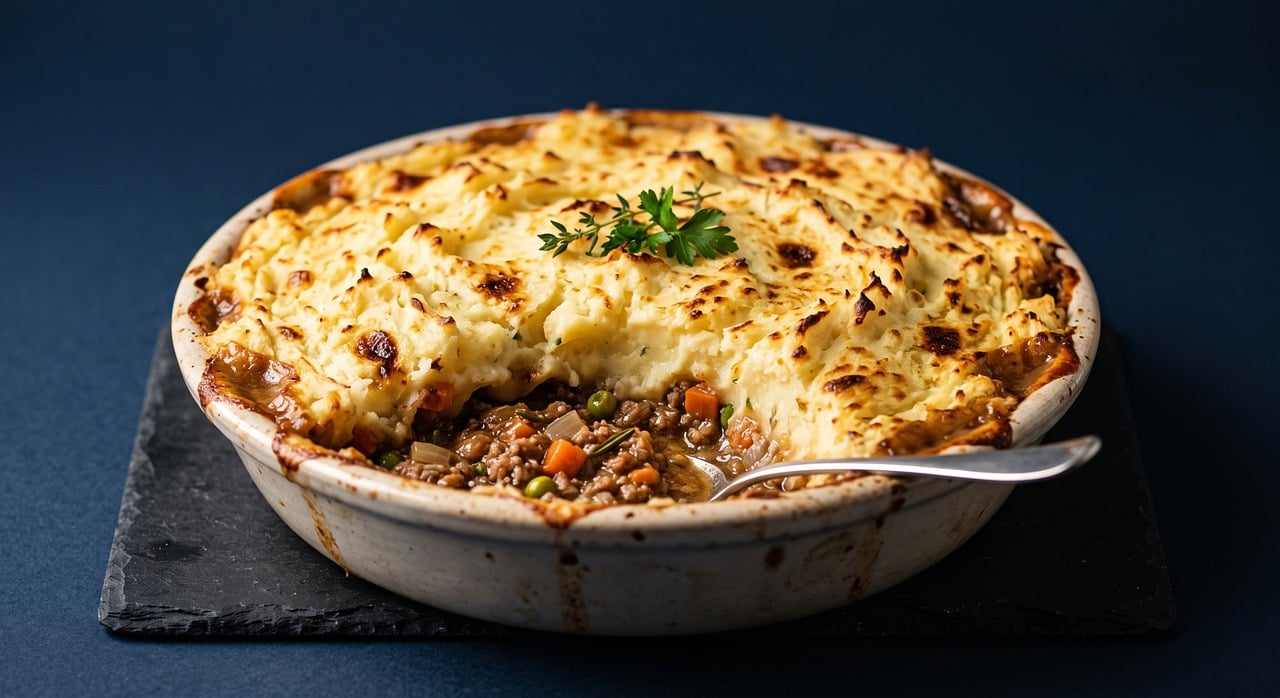
Cottage pie was working-class ingenuity before it was pub-menu classic. Potatoes hit British markets cheaply in the late 1700s, and cooks in country cottages discovered that a mashed-potato crown could stretch a small amount of minced beef into a full meal for a family of six. Two and a half centuries later, the formula hasn’t budged much — and it doesn’t need to. The genius is in the layering.
This is the recipe I make on a Sunday when it’s raining and I want the whole house to smell like beef gravy for three hours. If you like this kind of hands-off oven comfort food, our creamy chicken and dressing casserole works the same magic on the poultry side.
Key Takeaways
- Cottage = beef, shepherd’s = lamb. Same technique, one ingredient swap.
- Sear the mince hard — brown crust on the meat is where 70% of the flavor lives.
- Yukon Gold or russet for the mash — waxy potatoes turn gluey when whipped.
- Bake at 400°F for 25–30 min, then broil 3–4 minutes for the golden top.
- Freezes 3 months, refrigerates 4 days per FoodSafety.gov.
Cottage Pie vs Shepherd’s Pie: Settling It in One Table
These two dishes get mixed up daily, including on some pub menus that should know better. The distinction is exactly one ingredient — the meat — and it’s been that way in British cookbooks since the mid-1800s.
| Feature | Cottage Pie | Shepherd’s Pie |
|---|---|---|
| Meat | Ground beef | Ground lamb |
| Origin | Late 1700s, working-class England | Mid-1800s Scotland/Ireland |
| Name logic | Made in “cottages” — small workers’ homes | Made by shepherds — who tended sheep |
| Common herbs | Thyme, rosemary, bay | Rosemary, mint, thyme |
| Topping | Mashed potatoes | Mashed potatoes (sometimes cheese-topped) |
| Wine pairing | Cabernet Sauvignon, Malbec | Syrah, Pinot Noir |
Everything else — the mirepoix base, the Worcestershire, the gravy, the fork-scored potato crust — is identical. If a menu says “shepherd’s pie” and delivers beef, that’s a cottage pie under a wrong name.

The Recipe
Classic British Cottage Pie
For the beef filling
- 2 tbsp olive oil, divided
- 1½ lb (680 g) ground beef, 80/20 chuck
- 1 large yellow onion, finely diced
- 2 medium carrots, finely diced (or grated per Ramsay’s tip)
- 2 celery ribs, finely diced
- 4 garlic cloves, minced
- 2 tbsp tomato paste
- 2 tbsp all-purpose flour
- 1½ cups beef broth (low-sodium)
- 2 tbsp Worcestershire sauce
- 1 tsp fresh thyme leaves (or ½ tsp dried)
- 1 tsp fresh rosemary, chopped (or ½ tsp dried)
- 1 bay leaf
- ¾ cup frozen peas
- Salt and black pepper
For the mashed potato topping
- 2½ lb (1.1 kg) Yukon Gold or russet potatoes, peeled, cut into 1-inch chunks
- 1 tbsp kosher salt (for cooking water)
- 6 tbsp unsalted butter
- ½ cup whole milk, warm
- ¼ cup heavy cream (optional but recommended)
- ½ cup grated sharp cheddar (optional — for the top)
- Salt and white pepper
Instructions
- Boil the potatoes. Cover potato chunks with cold water in a large pot. Add 1 tbsp salt. Bring to a boil, then simmer 15–18 minutes until a knife slides through with no resistance. Drain, return to the pot, let steam-dry 2 minutes.
- Sear the beef. Heat 1 tbsp oil in a large skillet or Dutch oven over medium-high heat until shimmering. Add ground beef in one flat layer. Do not stir for 4 minutes — this is where you build browning. Then break up and stir, cooking 3 more minutes until deeply browned. Transfer to a plate with a slotted spoon, leaving the fat behind.
- Build the base. Add remaining 1 tbsp oil to the pan. Add onion, carrot, celery. Cook 6–8 minutes until softened and lightly browned at the edges. Stir in garlic, thyme, rosemary — 30 seconds.
- Deepen the gravy. Push vegetables aside, add tomato paste to the empty spot. Toast 60 seconds until it darkens. Sprinkle flour over everything, stir constantly for 1 minute. Pour in broth and Worcestershire, whisking to smooth out any lumps. Add bay leaf.
- Simmer. Return the beef to the pan. Reduce to medium-low. Simmer uncovered 15–20 minutes until the gravy is thick enough to coat a spoon. Stir in peas, cook 2 minutes. Taste, adjust salt and pepper. Discard bay leaf.
- Mash the potatoes. Add butter to the drained potatoes, mash roughly with a masher. Pour in warm milk and cream, whisk with a fork or masher until smooth-ish (some texture is welcome). Season with 1 tsp salt and a pinch of white pepper.
- Assemble. Preheat oven to 400°F (200°C). Transfer beef filling to a 9×13 inch baking dish (or 2-quart casserole). Spoon mashed potato over the top, spreading to the edges to seal — this prevents bubble-through. Drag a fork across the surface in long lines to create ridges (they crisp into peaks). Sprinkle with cheddar if using.
- Bake. 25–30 minutes until the top is golden and the filling bubbles around the edges. For extra color, broil 3–4 minutes at the end — watch it, it turns fast. Rest 10 minutes before serving so the filling sets.
Watch: Gordon Ramsay’s Cottage Pie Technique in 12 Minutes
If you want to see the mince-searing and grated-carrot moves in real time, this is the classic Gordon Ramsay walkthrough — same base architecture as the recipe above, with his additional trick of pressing extra herb butter into the mashed potato before it goes into the oven:
The Four Moves That Separate Good Cottage Pie from Great
1. Sear the beef in one hard flat layer
Home cooks stir constantly out of habit. That’s how you get gray, steamed meat. Spread it flat, leave it alone for 4 minutes, and let the Maillard reaction do its work — you’ll see a mahogany crust build. That crust is where cottage-pie gravy gets its depth. Stirring too early is the number-one mistake.
2. Toast the tomato paste
Raw tomato paste tastes tinny. Pushed against the hot pan for 60 seconds until it darkens from red to brick, it turns sweet-savory and umami-rich. This 60-second move is the difference between a decent gravy and a restaurant-level one.
3. Bake dry potatoes, not wet ones
After draining, return the potatoes to the hot pot for 2 minutes with the lid off. Steam evaporates, cell walls loosen, and butter and milk absorb better instead of pooling. This is a genuine McGee-approved cooking-science move — waterlogged mash is glue.
4. Seal the potato to the dish walls
Push the mashed potato all the way to the sides of the baking dish so it kisses the walls. This creates a seal that traps the filling underneath. Skip it and the gravy bubbles up through gaps, drying out the meat and coating the potato crust in beige. Seal well and everything cooks in its own layer.

Best Potatoes for the Topping
Storage, Freezing, and Reheating
Refrigerator (3–4 days)
Cool completely, cover tightly with foil or a lid, refrigerate. Reheat individual portions in a 350°F oven, covered with foil, for 20–25 minutes. Microwave works but the top loses its crisp.
Freezer (3 months)
Two ways. Fully baked: cool completely, wrap tightly in two layers of foil, freeze. Thaw overnight in fridge, reheat covered at 350°F for 40 minutes. Unbaked (my preference): assemble in a foil pan, wrap tightly, freeze. Bake straight from frozen at 375°F for 60–75 minutes, uncovered the last 15. This is the gold-standard freezer meal.
Reheating leftovers on the plate
Cold cottage pie the next day is a legitimate cold lunch — it firms up like a terrine. If reheating, hit it with a hot skillet on the bottom to re-crisp the potato edges. Ten seconds under the broiler at the end wakes it back up.
Serving: What Actually Goes on the Side
Cottage pie is a one-dish meal — potatoes, meat, and vegetables are already in the pan. The classic British sides are minimal on purpose:
- Wilted greens — buttered kale, savoy cabbage, or spring greens with garlic
- Pickled red cabbage — the acid cuts the richness
- HP Sauce or brown sauce at the table (deeply British move)
- A pint of stout or a glass of Cabernet
Skip the extra starch. No rolls, no rice, no pasta salad — the pie is doing that work. A crisp green salad with a mustard vinaigrette is fine if you need something bright on the plate.
Common Cottage Pie Mistakes
Watery filling
The gravy needs to reduce until it coats a spoon before it goes under the potato. If it’s still soupy, simmer another 5 minutes. Watery filling = soggy bottom + potato slide.
Using lean ground beef
90/10 or 93/7 ground beef makes a dry cottage pie. 80/20 chuck is the right choice — the fat renders into the gravy and carries flavor. If lean is all you have, add 1 extra tbsp butter to the filling.
Overworking the mash
Whipping potatoes in a stand mixer or food processor breaks their starch cells and turns them gluey. A hand masher or a ricer is the right tool. Twelve seconds of overwork is enough to ruin the batch.
Skipping the rest
Cottage pie right out of the oven is molten. Ten minutes on the counter lets the filling set enough to spoon out clean squares. Cut too soon and you’ll serve a puddle.
Variations Worth Making
Cheddar-topped
Sharp cheddar sprinkled on the potato before baking browns into a lacy crust. Very British-pub, very good.
Sweet potato cottage pie
Swap half the Yukon Gold for orange-flesh sweet potato. Sweeter, cozier, a little Thanksgiving-adjacent.
Guinness cottage pie
Replace ½ cup of the beef broth with 1 bottle of stout. Bake as usual. The bitter roasted note plays beautifully with the browned beef — this is the pub-version everyone remembers from Dublin.
Mushroom-boosted
Add 8 oz finely chopped cremini mushrooms with the mirepoix. Mushrooms bring meaty depth (glutamates) and stretch the beef further.
Related Recipes to Cook Next
Cottage pie is one of the great cold-weather anchor dinners. For the same slow-comfort-food energy on the poultry side, our slow cooker chicken and cream cheese is a Tuesday-night workhorse, and the Montreal steak marinade covers the opposite end of the beef spectrum when you want a quick sear instead of an hour on the stove.
Did You Try Our Recipe ?
Chicken hears and gizzards
I would love you to send me the recipe please. I have no printer to print it off. [email protected]
Response from MeatRecipesBox
Hi Sharon, thank you so much for your kind words! I’ve just sent the full recipe to your inbox. Enjoy, and let me know how it turns out! 😊
Scrumptious
My husband (who is extremely picky) loved the liver & onions so much!! I didn’t have any beef broth or Sherry so I used about a tbl of Worcestershire and 1/4 c of white wine …..it was scrumptious
Response from MeatRecipesBox
Oh wow, I’m so happy to hear that!! 😍 I love that you made it work with what you had on hand — Worcestershire and white wine sound like a delicious twist. So glad your husband enjoyed it, especially being picky! Thank you for sharing your version, it makes me smile knowing it turned out scrumptious!
This was amazing
This recipe turned out really amazing! It’s juicy and spiced deliciously. I definitely would use less of the spicy pepper next time, but it really was delicious and I don’t think I’ll make chicken legs any other way from now on.!
Response from MeatRecipesBox
Thank you for taking the time to leave such a thoughtful review. I’m really glad to hear the recipe turned out juicy and full of flavor for you. That’s exactly what I was hoping for when putting it together. Good call on the spicy pepper as well. Adjusting the heat level to your own taste is always the best approach, and using a little less next time should make it just right for you. I really appreciate you trying the recipe and sharing your experience. It’s great to know it worked so well for you.
I Didn’t Expect This Cornbeef Hash Recipe to Taste This Good!!
One skillet. A handful of simple ingredients. Thirty minutes on the clock. And somehow… I ended up with the crispiest, most comforting cornbeef hash recipe I’ve made in years.
I wasn’t expecting much—just a quick, no-fuss meal. But that first bite? Crispy edges, tender potatoes, smoky corned beef, a little kick of pepper. It tasted like something straight off a cozy diner griddle.
Honestly, it caught me off guard—in the best way. Here’s why this simple skillet completely won me over.


