

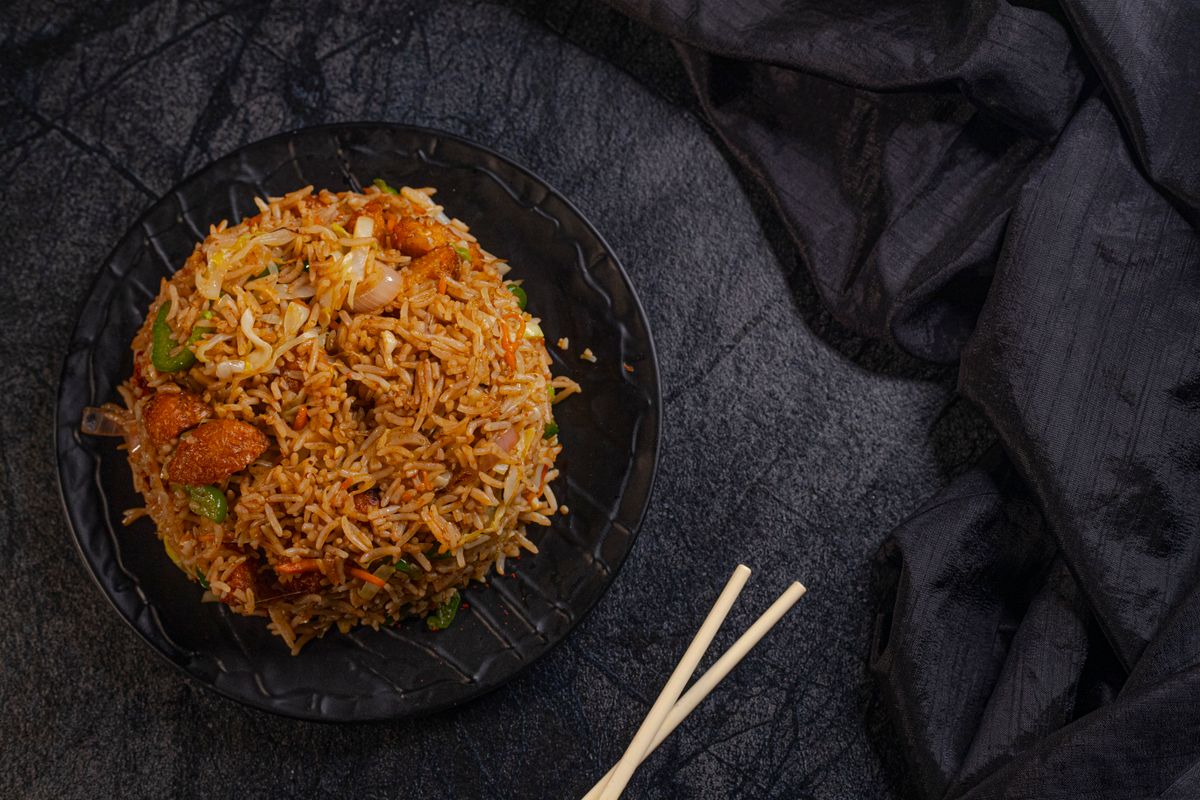
Why homemade beats takeout every time
Takeout fried rice suffers from three fixable problems: too much oil to keep it from sticking to industrial woks, MSG masking under-seasoned rice, and pale chicken that’s been sitting since lunch service. At home you control every one of those. A hot 12-inch nonstick or carbon-steel pan hits 400°F easily on a home burner, which is all you actually need for the toasty edges people call wok hei — Serious Eats breaks down the wok-hei chemistry in their stir-fry guide.
The trick nobody at the takeout counter is going to tell you: fried rice was invented as a leftovers dish. Fresh rice steams instead of frying because the grains are still swollen with water. Day-old rice from the fridge has lost that surface moisture, so it browns instead. If you want the same weeknight speed on another Asian-inspired protein, our 15-minute beef teriyaki with real Japanese sauce uses the same hot-pan logic.
Ingredients (serves 4)
| Ingredient | Amount | Notes |
|---|---|---|
| Cold day-old jasmine rice | 4 cups cooked (~1½ cups dry) | Must be chilled — 8+ hours in the fridge |
| Boneless chicken thigh | 1 lb | Diced ½-inch; breast works but drier |
| Large eggs | 2 | Beaten with a pinch of salt |
| Frozen peas and carrots | 1 cup | No thawing needed |
| Scallions | 3, chopped (whites + greens separated) | Whites cook in, greens finish on top |
| Garlic | 3 cloves, minced | Added with the whites |
| Neutral oil (avocado or peanut) | 2 tbsp, divided | High smoke point matters |
| Soy sauce | 3 tbsp | Regular; not low-sodium |
| Oyster sauce | 1 tsp | The secret takeout depth |
| Toasted sesame oil | 1 tsp | Off-heat, at the end only |
| White pepper | ¼ tsp | Not black — different flavor |
Step-by-step (10 minutes active)
- Scramble the egg (1 min). Heat 1 tsp oil in a 12-inch nonstick over medium-high. Pour in the beaten egg, scramble soft — 30 to 40 seconds. Slide onto a plate. Wipe the pan.
- Sear the chicken (4 min). Turn heat to high. Add 1 tbsp oil, then the chicken in a single layer. Do not stir for 90 seconds. Toss and cook 2 more minutes to a USDA-safe 165°F internal. Push to one side.
- Cook the aromatics (30 sec). Add the remaining 1 tsp oil to the empty side. Toss in scallion whites and garlic, stir 30 seconds until fragrant. Add the frozen peas and carrots straight from the freezer — they’ll cool the pan slightly, which is fine.
- Fry the rice (3 min). Add the cold rice. Break clumps with the back of the spatula for 30 seconds, then leave it in contact with the pan for 60 seconds — this is where the browning happens. Toss and repeat once more.
- Sauce it (1 min). Drizzle soy sauce and oyster sauce around the perimeter of the pan (not on top of the rice) so it sizzles on contact. Toss to coat. The rice should darken evenly and look glossy, not wet.
- Finish (30 sec). Kill the heat. Fold in the reserved egg, scallion greens, sesame oil and white pepper. Serve immediately — fried rice loses its texture as it sits.

Watch the technique in real time
The day-old rice rule (and how to fake it)
Fried rice needs rice grains with a dry, firm surface. Fresh rice releases starch when it hits hot oil and turns to porridge. Refrigerated rice has undergone a bit of starch retrogradation — the same reason day-old bread toasts better than fresh — which is why every real fried rice recipe from The Woks of Life to any Cantonese chef starts here.
No leftover rice? Cook 1½ cups jasmine with 2¼ cups water and 1 tsp neutral oil (the oil coats each grain). Spread it in a single layer on a sheet pan, uncover, and freeze 15 minutes. It comes out cold, dry and clumped just like day-old — good enough that nobody will notice.
The three mistakes that ruin fried rice
Storage, reheating and meal prep
Leftovers keep 3 days in the fridge. Reheat in a hot pan with 1 tsp oil for 3 minutes, tossing — the microwave turns it gummy. Fried rice actually meal-preps well because the second reheat gets even crisper edges; portion into single containers and it’s a legitimate lunch for the week.
Freezing works if you’re organized about it. Spread cooled rice on a sheet pan, freeze 30 minutes, then bag it flat — that way it thaws in a hot pan straight from frozen. Consume within 2 months. Rice frozen in a lumped ball never thaws evenly and turns out mushy.
Real swaps and upgrades
Rotisserie chicken saves 4 minutes — skip step 2, add 2 cups shredded meat at step 5 with the sauce. Ground chicken works but crumble it thin. Shrimp needs 90 seconds max at step 2 or it turns rubbery. Vegetarian? Skip the chicken and add 8 oz crumbled firm tofu that’s been pressed for 10 minutes — it soaks up the soy sauce like the meat would.
For heat, add 1 tsp chili crisp with the sesame oil at the end. For a richer version, brown 4 oz diced crispy bacon before the chicken and use half the oil — bacon fat carries the rice beautifully. Skip the peas and use finely diced broccoli stems, kimchi, or leftover roasted vegetables. Fried rice is the great cleanup dish; anything crisp-tender goes in.
Common questions
Can I use freshly cooked rice?
Only with the sheet-pan-and-freezer trick above. Freshly cooked rice straight from the pot has too much surface moisture and will steam instead of fry. If you’re in a real pinch, use minute rice or a shelf-stable jasmine pouch and skip the freezer step — those come out drier by design.
What kind of rice is best?
Long-grain jasmine is the standard. Basmati works but stays fluffier and less sticky. Short-grain sushi rice is too sticky and clumps into rice cakes in the pan. Brown rice is fine but adds 8 minutes to the cook time on the pot side; use it if you’re meal-prepping for macros.
Why do restaurants’ fried rice taste different?
Three things: wok hei from 800°F commercial burners, MSG (about ¼ tsp per serving), and the ratio of oil to rice — takeout runs closer to 3 tbsp per portion. You can approximate the flavor with a splash of extra oyster sauce and a pinch of chicken bouillon powder if you don’t want to keep MSG in the pantry.
Can I make it gluten-free?
Yes. Substitute tamari for soy sauce (1:1) and check the oyster sauce label — most brands contain wheat, but Kikkoman and Lee Kum Kee both make gluten-free versions now. Sesame oil, rice and eggs are naturally gluten-free.
Is chicken fried rice actually Chinese?
The dish exists in every East Asian cuisine — Chinese chao fan, Thai khao pad, Japanese chahan, Indonesian nasi goreng — each with different aromatics. American Chinese-restaurant chicken fried rice is closest to Cantonese-style, adapted with soy sauce, peas and carrots. If you want to see the same clean-out-the-fridge philosophy applied to noodles, try our 15-minute chicken noodles.
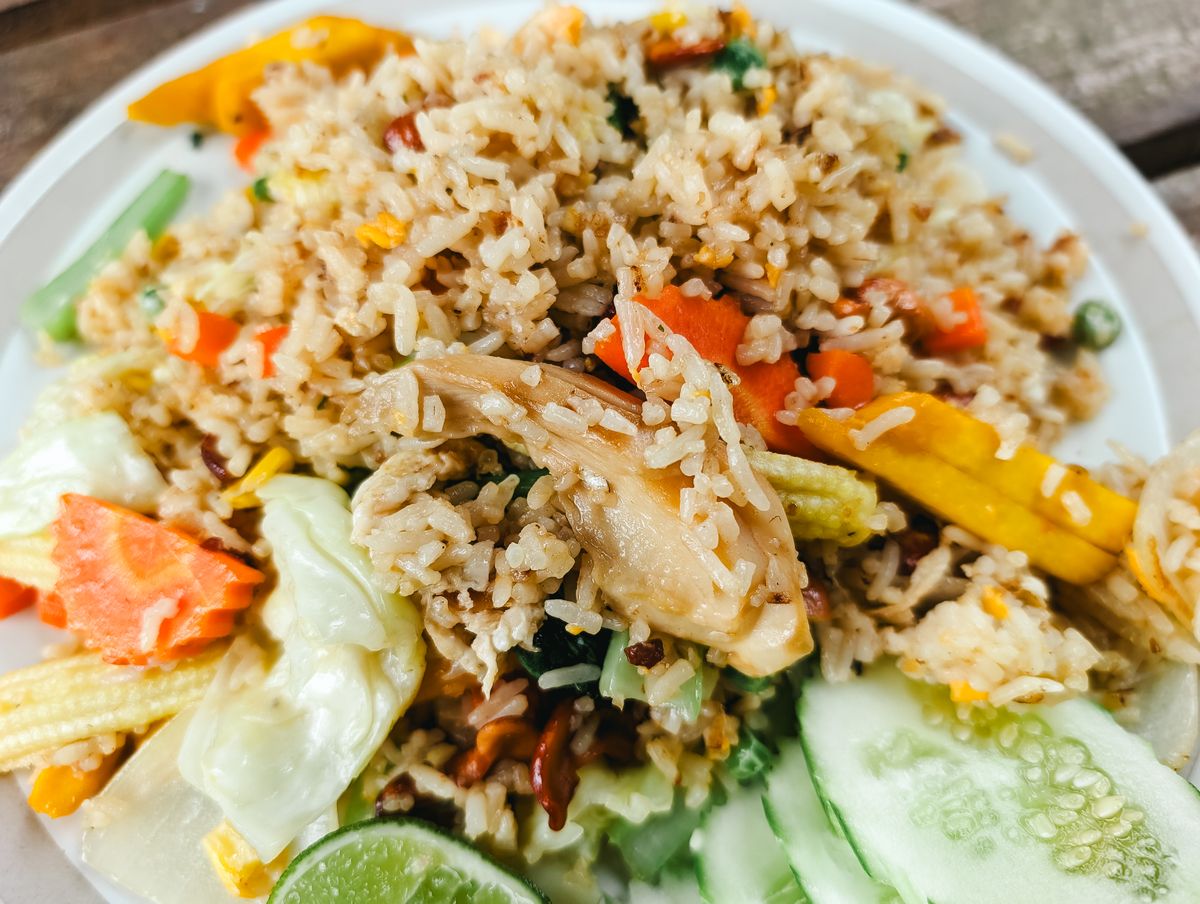
The bottom line
Fifteen minutes, one pan, five real techniques doing the work: cold rice for texture, high heat for browning, aromatics blooming in fat, sauce hitting metal not rice, and sesame oil off the heat. Skip any one of these and you’ve made stir-fried rice pilaf, not fried rice. Do them all and there’s no reason to ever open a takeout menu for this again — pair it with crispy air fryer chicken thighs and dinner is finished.
Did You Try Our Recipe ?
Chicken hears and gizzards
I would love you to send me the recipe please. I have no printer to print it off. [email protected]
Response from MeatRecipesBox
Hi Sharon, thank you so much for your kind words! I’ve just sent the full recipe to your inbox. Enjoy, and let me know how it turns out! 😊
Scrumptious
My husband (who is extremely picky) loved the liver & onions so much!! I didn’t have any beef broth or Sherry so I used about a tbl of Worcestershire and 1/4 c of white wine …..it was scrumptious
Response from MeatRecipesBox
Oh wow, I’m so happy to hear that!! 😍 I love that you made it work with what you had on hand — Worcestershire and white wine sound like a delicious twist. So glad your husband enjoyed it, especially being picky! Thank you for sharing your version, it makes me smile knowing it turned out scrumptious!
This was amazing
This recipe turned out really amazing! It’s juicy and spiced deliciously. I definitely would use less of the spicy pepper next time, but it really was delicious and I don’t think I’ll make chicken legs any other way from now on.!
Response from MeatRecipesBox
Thank you for taking the time to leave such a thoughtful review. I’m really glad to hear the recipe turned out juicy and full of flavor for you. That’s exactly what I was hoping for when putting it together. Good call on the spicy pepper as well. Adjusting the heat level to your own taste is always the best approach, and using a little less next time should make it just right for you. I really appreciate you trying the recipe and sharing your experience. It’s great to know it worked so well for you.
I Didn’t Expect This Cornbeef Hash Recipe to Taste This Good!!
One skillet. A handful of simple ingredients. Thirty minutes on the clock. And somehow… I ended up with the crispiest, most comforting cornbeef hash recipe I’ve made in years.
I wasn’t expecting much—just a quick, no-fuss meal. But that first bite? Crispy edges, tender potatoes, smoky corned beef, a little kick of pepper. It tasted like something straight off a cozy diner griddle.
Honestly, it caught me off guard—in the best way. Here’s why this simple skillet completely won me over.


