
NEW The BBQ grilling guide 2026 is live Read it →
Beef Teriyaki with Real Japanese Sauce (15 Minutes) Jump to recipe
HOME BEEF BEEF TERIYAKI WITH REAL
RECIPE · BEEF

Beef Teriyaki with Real Japanese Sauce (15 Minutes)

E
By Emma Delacourt · August 27, 2026 · 12 min read
Beef Teriyaki with Real Japanese Sauce (15 Minutes) Shine-glazed beef, four-ingredient sauce, over hot rice. No garlic, no ginger — that's not teriyaki. Quick answer: Real Japanese teriyaki sauce is 4 ingredients only — soy sauce, sake, mirin, sugar, mixed 2:2:2:1. Simmer 8 minutes until it coats a spoon. Sear thinly sliced beef in a hot pan 60 seconds per side, add sliced onion and the sauce, glaze 90 seconds. Serve over rice with sesame and sliced scallion. Fifteen minutes start to bowl. No garlic, no ginger — that's the American takeout version. Prep5 min Cook10 min Total15 min Serves2 StyleJapanese (teriyaki-yaki) What Real Teriyaki Sauce Actually Is Teri (照り) means shine or glaze; yaki (焼き) means grill. Together: shine-grilled. The whole point is the glossy caramelized coating you get from reducing a specific 4-ingredient sauce over hot meat — nothing else. Real Japanese teriyaki has no garlic, no ginger, no honey, no cornstarch. As Namiko Chen at Just One Cookbook writes, "westernized versions are sweetened with honey and flavored with garlic and ginger" — that's a different sauce with the same name slapped on it. The 4 ingredients are soy sauce (salt + umami), sake (depth + tenderizer), mirin (sweetness + shine), sugar (extra body). Mix 2:2:2:1, simmer, done. The Ingredients (Beef + Real Sauce) For the sauce (makes ¾ cup, enough for 3–4 dinners) ¼ cup soy sauce — Japanese-style like Kikkoman, not Chinese light soy ¼ cup sake — Japanese rice wine, not cooking wine; dry sherry works if desperate ¼ cup mirin — sweet rice wine; the "hon-mirin" bottles are the real thing, "aji-mirin" is the mass-market fake 2 tbsp granulated sugar — regular white sugar; not honey, not brown For the beef teriyaki (serves 2) ¾ lb (12 oz) beef sirloin or ribeye, sliced ¼-inch thick across the grain — freezer-firm meat is easier to slice thin (see our how to slice beef thin guide) 1 yellow onion, halved and sliced ½-inch thick with the grain (they hold shape) 1 tbsp neutral oil — vegetable, avocado, or grapeseed. Not olive. 1 tsp toasted sesame seeds for finishing 2 scallions, thinly sliced on the bias Kosher salt, freshly ground pepper Serve over short-grain Japanese rice — walk through our how to cook Japanese rice guide if you've only ever done long-grain. How Do You Make Real Teriyaki Sauce? Combine the four ingredients in a small saucepan. Bring to a boil over medium heat, whisking until the sugar dissolves. Drop to medium-low and simmer 8–10 minutes until reduced by a third. You want it to coat the back of a spoon and hold a line when you drag your finger through — like maple syrup, not motor oil. The sake burns off alcohol in the first 2 minutes; the mirin caramelizes; the soy concentrates. When you smell that toasty-sweet aroma, kill the heat. It thickens more as it cools. Store the extra in a sealed jar in the fridge — it keeps 2–3 weeks and works on chicken, salmon, tofu, and grilled vegetables. How to Make Beef Teriyaki, Step by Step Make the sauce first. Whisk soy, sake, mirin, and sugar in a small saucepan. Simmer 8 minutes over medium-low until it coats a spoon. Set aside — it needs to cool slightly so it doesn't scorch when it hits the hot pan. Slice the beef thin. Firm the beef in the freezer for 15 minutes if it's not already cold. Slice across the grain into ¼-inch strips. Pat dry with paper towels — surface moisture equals steam, and steam is the enemy of the sear you need to build that glaze. Season and heat. Salt and pepper the beef right before it hits the pan (not earlier — salt draws out water). Heat 1 tbsp neutral oil in a heavy 12-inch skillet or wok over high heat until it shimmers and just starts to smoke. Sear the beef 60 seconds per side. Lay the slices in a single layer — don't crowd, work in two batches if you need to. Sear 60 seconds untouched, flip, another 60. You want browned edges, not gray. Transfer to a plate. Cook the onions. Same pan, no extra oil. Toss the sliced onion in the beef fond, cook 3 minutes over medium-high until edges are charred and centers still have crunch. Onions in real Japanese teriyaki are structure, not garnish. Return the beef and glaze. Slide the beef back into the pan with any juices from the plate. Pour ⅓ cup of the sauce over the top — the pan should sizzle hard. Toss constantly for 60–90 seconds until every piece is coated in glossy amber sauce. It should reduce and cling to the beef in the pan, not pool. If it pools, keep tossing. Plate over rice. Scoop hot rice into two bowls, mound the beef and onions on top, drizzle any remaining pan sauce, finish with sesame seeds and scallions. Eat while hot — the glaze goes tacky as it cools. Glaze clings, doesn't pool. If it's swimming, keep the heat on and toss. The Sauce Ratio Table (Scale as Needed) BatchSoySakeMirinSugarSimmer Single dinner (2 people)¼ cup¼ cup¼ cup2 tbsp8 min Family (4 people)½ cup½ cup½ cup¼ cup12 min Big batch (jar for the fridge)1 cup1 cup1 cup½ cup15 min Sweeter (western palate)samesamesame+1 tbsp per ¼ cup soysame Keep the ratio as 2 : 2 : 2 : 1 (soy : sake : mirin : sugar). Every mL you shift makes a noticeable difference. This is the ratio chef Marc Matsumoto documents at No Recipes as the classic Japanese proportions — the same one taught in professional Japanese kitchens. Watch the Method (2 Minutes) The Three Mistakes That Kill the Glaze 1. Adding garlic and ginger. American takeout swaps in garlic and ginger because it makes cheap beef taste like something. Real teriyaki relies on the sake-mirin-soy backbone alone — those aromatics muddy the shine. If you want stir-fry, make stir-fry. 2. Using cornstarch to thicken. Chinese-American teriyaki sauce uses cornstarch slurry, which is why it goes gloopy and gray. Real Japanese teriyaki thickens from sugar caramelization and soy reduction alone. Give it the full 8 minutes of simmer. 3. Adding sauce too early. Pour teriyaki sauce onto raw beef and the sugar burns before the meat cooks through. Sear the beef first, add sauce only in the last 90 seconds. The sauce is finishing, not marinating. What About Marinating? Skip it. Traditional Japanese beef teriyaki is not marinated — the technique is called yaki, which is a fast, high-heat sear. Marinating thin slices makes them steam instead of sear, and you lose that crisp glaze. Save marinating for the western fusion version with chicken thighs and honey. If you want a stronger flavor imprint, brush the seared beef with sauce and torch it for 10 seconds, or throw the pan under a broiler for 30 seconds after glazing. The controlled caramelization is what "shine-grilled" actually means. Broccoli is a Western addition — the classic Japanese plate is beef, onion, rice. Both work. What to Serve With Beef Teriyaki The traditional plate: short-grain rice, a small pile of quick-pickled cucumber (sunomono), a bowl of miso soup, and shredded green cabbage on the side. Total meal in under 20 minutes if the rice is going in parallel. For a bigger spread, add gyoza dumplings, a bowl of edamame, or our quick pickled cucumber recipe that finishes in 10 minutes. Cold Sapporo or a dry sake pairs; a light Riesling works if you're anti-beer. For similar 15-minute dinners built on the same speed-cooking logic, our Asian recipes collection is the next stop. Common Questions Can I use mirin substitute? Yes, but it changes the sauce. Standard sub: 1 tbsp dry sake + 1 tsp sugar per 1 tbsp mirin. Sweet white wine works in a pinch. What you can't sub for is the shine — mirin has a specific low-alcohol high-sugar profile that produces that unique glaze. Real mirin gives real teriyaki. What's the best beef cut for teriyaki? Ribeye is the best for flavor; sirloin is the best value. Both slice thin without going stringy. Avoid tenderloin (too lean, no fat to render), skirt steak (too fibrous unless perfectly cut), and pre-sliced "stir-fry meat" from the freezer aisle (usually low grade with excess connective tissue). Can I make teriyaki sauce without sake? You can, but call it something else. Sake carries specific umami compounds — glutamates and amino acids — that soy and mirin alone don't provide. If you must, substitute dry sherry or Chinese Shaoxing wine. Skip the alcohol entirely and you get a flat, one-dimensional sweet-salty glaze. How long does homemade teriyaki sauce keep? 2 to 3 weeks in the fridge in a sealed jar. The high sugar and salt content preserves it. It's also freezer-friendly — pour into ice cube trays, freeze, and pop out cubes as needed. One cube (2 tbsp) glazes one portion of beef, chicken, or salmon. Can I use this sauce on other proteins? Yes — that's the whole point of making a batch. Salmon teriyaki is the second-most-common dish in Japan (probably first, actually). Chicken thigh yakitori, tofu steaks, grilled shrimp, even glazed vegetables all use the same 4-ingredient reduction. See our Japanese pantry basics guide for the ingredients that unlock the whole cuisine. The Short Version Simmer soy + sake + mirin + sugar (2:2:2:1) for 8 minutes. Sear thin-sliced beef 60 seconds per side in a hot oiled pan. Add onions, cook 3 minutes. Return beef, add sauce, toss 90 seconds until glaze clings. Plate over hot short-grain rice, top with sesame and scallions. Real Japanese teriyaki, 15 minutes, four ingredients that matter. For more single-pan weeknight dinners on the same 15-minute timeline, browse our quick dinners collection — same discipline, different plate.
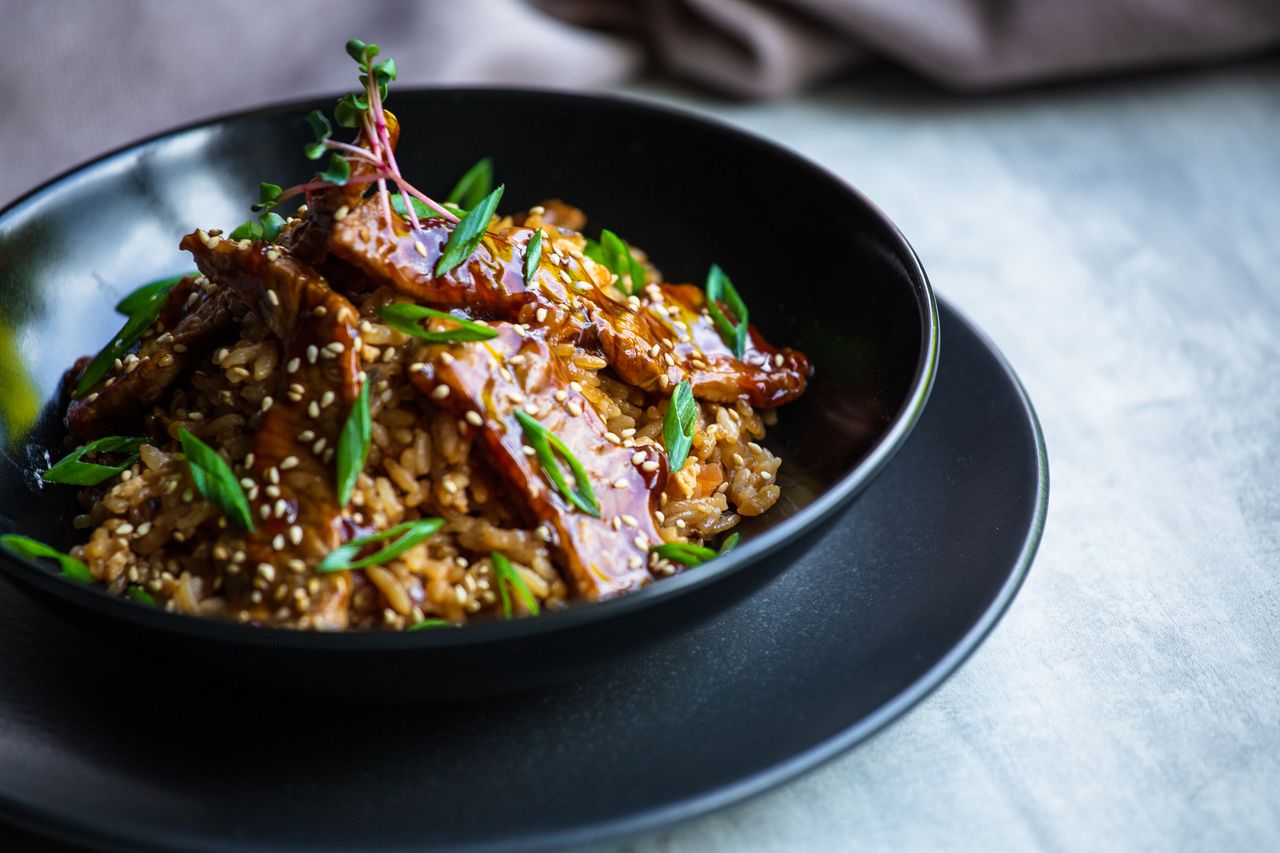
Beef teriyaki over white rice topped with sesame seeds and sliced green onions
Shine-glazed beef, four-ingredient sauce, over hot rice. No garlic, no ginger — that’s not teriyaki.
Quick answer: Real Japanese teriyaki sauce is 4 ingredients only — soy sauce, sake, mirin, sugar, mixed 2:2:2:1. Simmer 8 minutes until it coats a spoon. Sear thinly sliced beef in a hot pan 60 seconds per side, add sliced onion and the sauce, glaze 90 seconds. Serve over rice with sesame and sliced scallion. Fifteen minutes start to bowl. No garlic, no ginger — that’s the American takeout version.
Prep5 min
Cook10 min
Total15 min
Serves2
StyleJapanese (teriyaki-yaki)

What Real Teriyaki Sauce Actually Is

Teri (照り) means shine or glaze; yaki (焼き) means grill. Together: shine-grilled. The whole point is the glossy caramelized coating you get from reducing a specific 4-ingredient sauce over hot meat — nothing else. Real Japanese teriyaki has no garlic, no ginger, no honey, no cornstarch. As Namiko Chen at Just One Cookbook writes, “westernized versions are sweetened with honey and flavored with garlic and ginger” — that’s a different sauce with the same name slapped on it.

The 4 ingredients are soy sauce (salt + umami), sake (depth + tenderizer), mirin (sweetness + shine), sugar (extra body). Mix 2:2:2:1, simmer, done.

The Ingredients (Beef + Real Sauce)

For the sauce (makes ¾ cup, enough for 3–4 dinners)

  • ¼ cup soy sauce — Japanese-style like Kikkoman, not Chinese light soy
  • ¼ cup sake — Japanese rice wine, not cooking wine; dry sherry works if desperate
  • ¼ cup mirin — sweet rice wine; the “hon-mirin” bottles are the real thing, “aji-mirin” is the mass-market fake
  • 2 tbsp granulated sugar — regular white sugar; not honey, not brown

For the beef teriyaki (serves 2)

  • ¾ lb (12 oz) beef sirloin or ribeye, sliced ¼-inch thick across the grain — freezer-firm meat is easier to slice thin (see our how to slice beef thin guide)
  • 1 yellow onion, halved and sliced ½-inch thick with the grain (they hold shape)
  • 1 tbsp neutral oil — vegetable, avocado, or grapeseed. Not olive.
  • 1 tsp toasted sesame seeds for finishing
  • 2 scallions, thinly sliced on the bias
  • Kosher salt, freshly ground pepper

Serve over short-grain Japanese rice — walk through our how to cook Japanese rice guide if you’ve only ever done long-grain.

How Do You Make Real Teriyaki Sauce?

Combine the four ingredients in a small saucepan. Bring to a boil over medium heat, whisking until the sugar dissolves. Drop to medium-low and simmer 8–10 minutes until reduced by a third. You want it to coat the back of a spoon and hold a line when you drag your finger through — like maple syrup, not motor oil.

The sake burns off alcohol in the first 2 minutes; the mirin caramelizes; the soy concentrates. When you smell that toasty-sweet aroma, kill the heat. It thickens more as it cools. Store the extra in a sealed jar in the fridge — it keeps 2–3 weeks and works on chicken, salmon, tofu, and grilled vegetables.

How to Make Beef Teriyaki, Step by Step

  1. Make the sauce first. Whisk soy, sake, mirin, and sugar in a small saucepan. Simmer 8 minutes over medium-low until it coats a spoon. Set aside — it needs to cool slightly so it doesn’t scorch when it hits the hot pan.
  2. Slice the beef thin. Firm the beef in the freezer for 15 minutes if it’s not already cold. Slice across the grain into ¼-inch strips. Pat dry with paper towels — surface moisture equals steam, and steam is the enemy of the sear you need to build that glaze.
  3. Season and heat. Salt and pepper the beef right before it hits the pan (not earlier — salt draws out water). Heat 1 tbsp neutral oil in a heavy 12-inch skillet or wok over high heat until it shimmers and just starts to smoke.
  4. Sear the beef 60 seconds per side. Lay the slices in a single layer — don’t crowd, work in two batches if you need to. Sear 60 seconds untouched, flip, another 60. You want browned edges, not gray. Transfer to a plate.
  5. Cook the onions. Same pan, no extra oil. Toss the sliced onion in the beef fond, cook 3 minutes over medium-high until edges are charred and centers still have crunch. Onions in real Japanese teriyaki are structure, not garnish.
  6. Return the beef and glaze. Slide the beef back into the pan with any juices from the plate. Pour ⅓ cup of the sauce over the top — the pan should sizzle hard. Toss constantly for 60–90 seconds until every piece is coated in glossy amber sauce. It should reduce and cling to the beef in the pan, not pool. If it pools, keep tossing.
  7. Plate over rice. Scoop hot rice into two bowls, mound the beef and onions on top, drizzle any remaining pan sauce, finish with sesame seeds and scallions. Eat while hot — the glaze goes tacky as it cools.
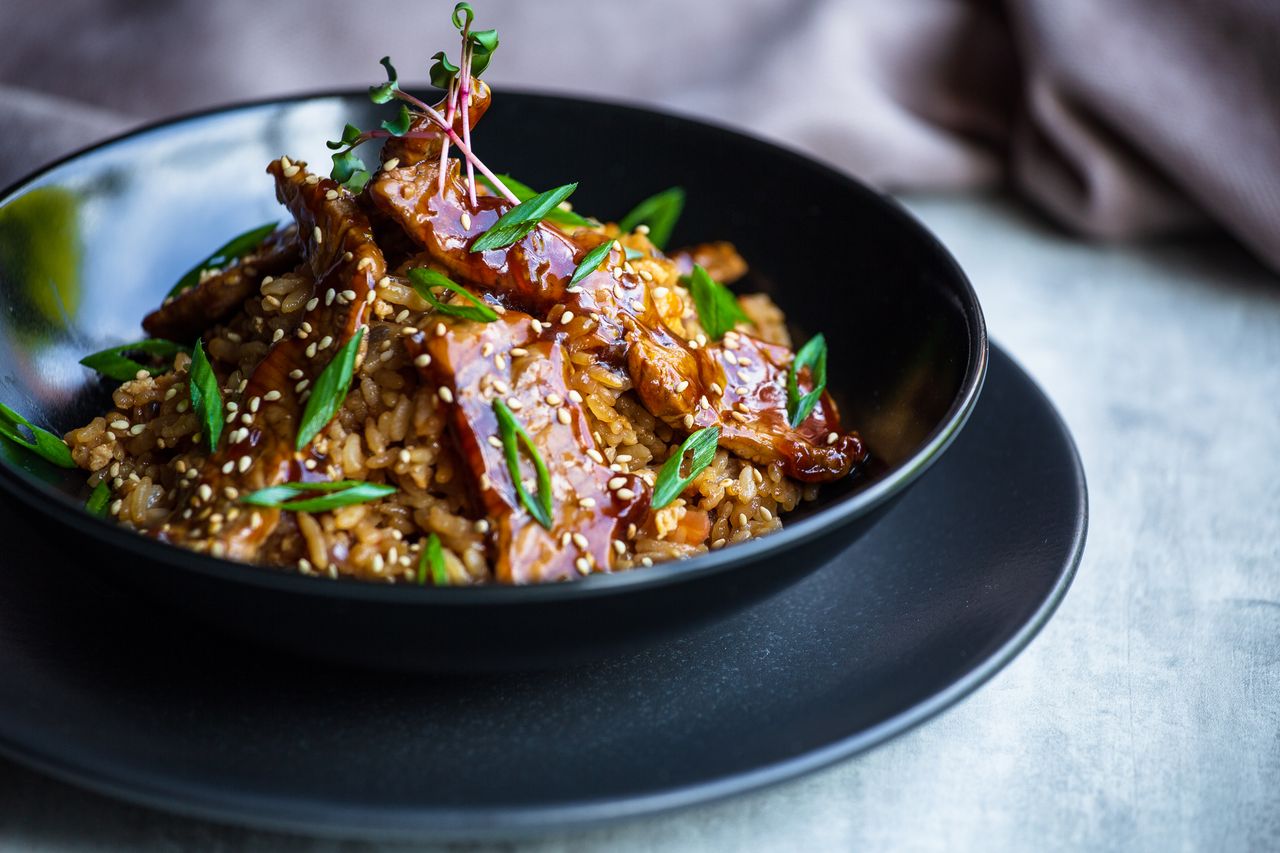
Teriyaki glazed beef and rice bowl with sesame seeds and fresh vegetables
Glaze clings, doesn’t pool. If it’s swimming, keep the heat on and toss.

The Sauce Ratio Table (Scale as Needed)

BatchSoySakeMirinSugarSimmer
Single dinner (2 people)¼ cup¼ cup¼ cup2 tbsp8 min
Family (4 people)½ cup½ cup½ cup¼ cup12 min
Big batch (jar for the fridge)1 cup1 cup1 cup½ cup15 min
Sweeter (western palate)samesamesame+1 tbsp per ¼ cup soysame

Keep the ratio as 2 : 2 : 2 : 1 (soy : sake : mirin : sugar). Every mL you shift makes a noticeable difference. This is the ratio chef Marc Matsumoto documents at No Recipes as the classic Japanese proportions — the same one taught in professional Japanese kitchens.

Watch the Method (2 Minutes)

The Three Mistakes That Kill the Glaze

1. Adding garlic and ginger. American takeout swaps in garlic and ginger because it makes cheap beef taste like something. Real teriyaki relies on the sake-mirin-soy backbone alone — those aromatics muddy the shine. If you want stir-fry, make stir-fry.
2. Using cornstarch to thicken. Chinese-American teriyaki sauce uses cornstarch slurry, which is why it goes gloopy and gray. Real Japanese teriyaki thickens from sugar caramelization and soy reduction alone. Give it the full 8 minutes of simmer.
3. Adding sauce too early. Pour teriyaki sauce onto raw beef and the sugar burns before the meat cooks through. Sear the beef first, add sauce only in the last 90 seconds. The sauce is finishing, not marinating.

What About Marinating?

Skip it. Traditional Japanese beef teriyaki is not marinated — the technique is called yaki, which is a fast, high-heat sear. Marinating thin slices makes them steam instead of sear, and you lose that crisp glaze. Save marinating for the western fusion version with chicken thighs and honey.

If you want a stronger flavor imprint, brush the seared beef with sauce and torch it for 10 seconds, or throw the pan under a broiler for 30 seconds after glazing. The controlled caramelization is what “shine-grilled” actually means.
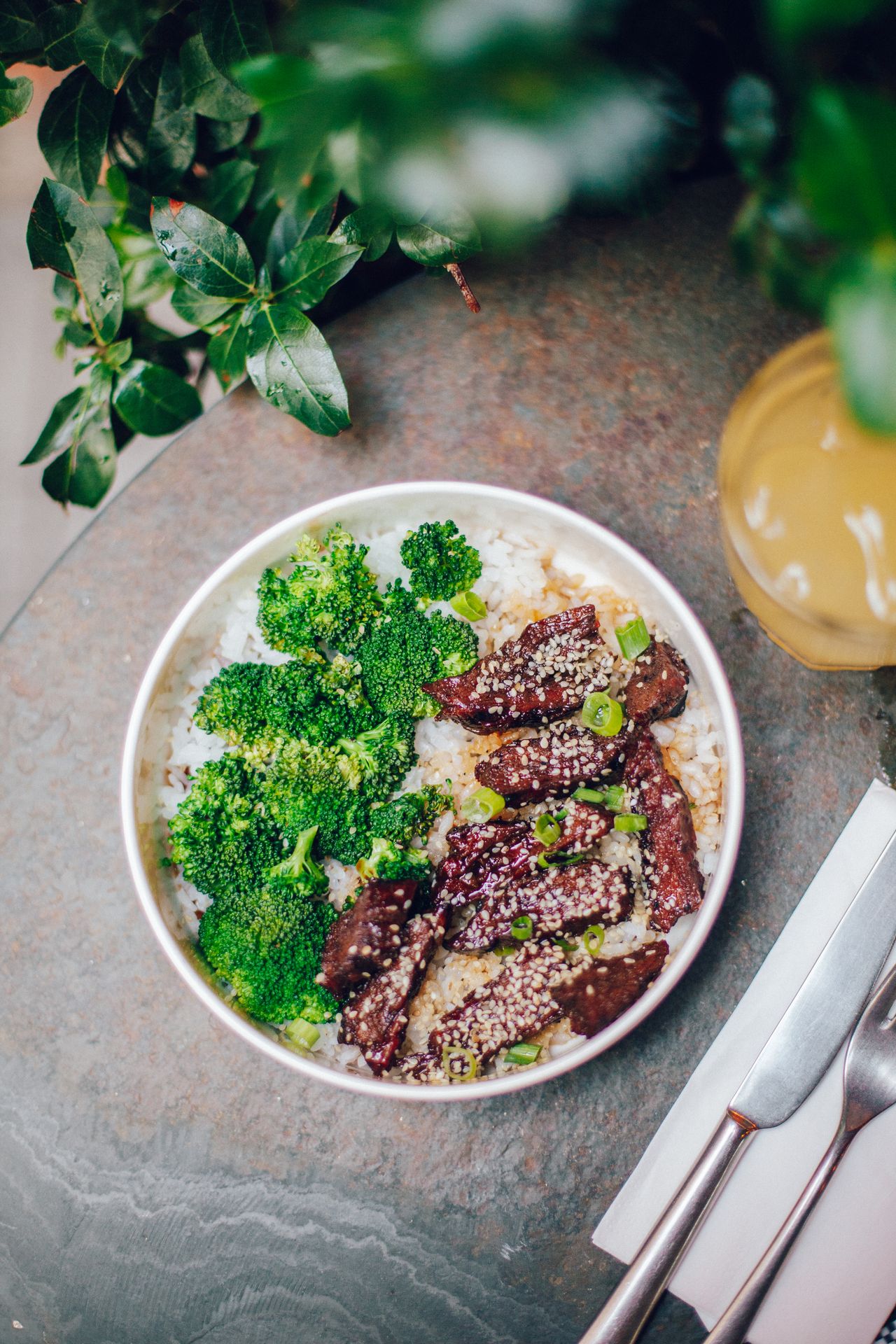
Bowl of glazed beef and vegetables served over rice, Japanese style
Broccoli is a Western addition — the classic Japanese plate is beef, onion, rice. Both work.

What to Serve With Beef Teriyaki

The traditional plate: short-grain rice, a small pile of quick-pickled cucumber (sunomono), a bowl of miso soup, and shredded green cabbage on the side. Total meal in under 20 minutes if the rice is going in parallel.

For a bigger spread, add gyoza dumplings, a bowl of edamame, or our quick pickled cucumber recipe that finishes in 10 minutes. Cold Sapporo or a dry sake pairs; a light Riesling works if you’re anti-beer. For similar 15-minute dinners built on the same speed-cooking logic, our Asian recipes collection is the next stop.

Common Questions

Can I use mirin substitute?

Yes, but it changes the sauce. Standard sub: 1 tbsp dry sake + 1 tsp sugar per 1 tbsp mirin. Sweet white wine works in a pinch. What you can’t sub for is the shine — mirin has a specific low-alcohol high-sugar profile that produces that unique glaze. Real mirin gives real teriyaki.

What’s the best beef cut for teriyaki?

Ribeye is the best for flavor; sirloin is the best value. Both slice thin without going stringy. Avoid tenderloin (too lean, no fat to render), skirt steak (too fibrous unless perfectly cut), and pre-sliced “stir-fry meat” from the freezer aisle (usually low grade with excess connective tissue).

Can I make teriyaki sauce without sake?

You can, but call it something else. Sake carries specific umami compounds — glutamates and amino acids — that soy and mirin alone don’t provide. If you must, substitute dry sherry or Chinese Shaoxing wine. Skip the alcohol entirely and you get a flat, one-dimensional sweet-salty glaze.

How long does homemade teriyaki sauce keep?

2 to 3 weeks in the fridge in a sealed jar. The high sugar and salt content preserves it. It’s also freezer-friendly — pour into ice cube trays, freeze, and pop out cubes as needed. One cube (2 tbsp) glazes one portion of beef, chicken, or salmon.

Can I use this sauce on other proteins?

Yes — that’s the whole point of making a batch. Salmon teriyaki is the second-most-common dish in Japan (probably first, actually). Chicken thigh yakitori, tofu steaks, grilled shrimp, even glazed vegetables all use the same 4-ingredient reduction. See our Japanese pantry basics guide for the ingredients that unlock the whole cuisine.

The Short Version

Simmer soy + sake + mirin + sugar (2:2:2:1) for 8 minutes. Sear thin-sliced beef 60 seconds per side in a hot oiled pan. Add onions, cook 3 minutes. Return beef, add sauce, toss 90 seconds until glaze clings. Plate over hot short-grain rice, top with sesame and scallions. Real Japanese teriyaki, 15 minutes, four ingredients that matter.

For more single-pan weeknight dinners on the same 15-minute timeline, browse our quick dinners collection — same discipline, different plate.

Did You Try Our Recipe ?

0
0 out of 5 stars (based on 0 reviews)
Excellent
Very good
Average
Poor
Terrible

Scrumptious

March 25, 2026

My husband (who is extremely picky) loved the liver & onions so much!! I didn’t have any beef broth or Sherry so I used about a tbl of Worcestershire and 1/4 c of white wine …..it was scrumptious

Camille

Response from MeatRecipesBox

Oh wow, I’m so happy to hear that!! 😍 I love that you made it work with what you had on hand — Worcestershire and white wine sound like a delicious twist. So glad your husband enjoyed it, especially being picky! Thank you for sharing your version, it makes me smile knowing it turned out scrumptious!

This was amazing

March 6, 2026

This recipe turned out really amazing! It’s juicy and spiced deliciously. I definitely would use less of the spicy pepper next time, but it really was delicious and I don’t think I’ll make chicken legs any other way from now on.!

Emily

Response from MeatRecipesBox

Thank you for taking the time to leave such a thoughtful review. I’m really glad to hear the recipe turned out juicy and full of flavor for you. That’s exactly what I was hoping for when putting it together. Good call on the spicy pepper as well. Adjusting the heat level to your own taste is always the best approach, and using a little less next time should make it just right for you. I really appreciate you trying the recipe and sharing your experience. It’s great to know it worked so well for you.

I Didn’t Expect This Cornbeef Hash Recipe to Taste This Good!!

February 20, 2026

One skillet. A handful of simple ingredients. Thirty minutes on the clock. And somehow… I ended up with the crispiest, most comforting cornbeef hash recipe I’ve made in years.

I wasn’t expecting much—just a quick, no-fuss meal. But that first bite? Crispy edges, tender potatoes, smoky corned beef, a little kick of pepper. It tasted like something straight off a cozy diner griddle.

Honestly, it caught me off guard—in the best way. Here’s why this simple skillet completely won me over.

Georgiana
Emma Delacourt

Emma Delacourt

Recipe Developer & Founder, MeatRecipesBox

Emma has been developing and testing meat recipes since 2019. She focuses on temperature precision, food science, and making restaurant-quality results accessible for home cooks. Every recipe on this site is tested multiple times before publishing.

Read full bio →

Some links may be affiliate links. As an Amazon Associate, we earn from qualifying purchases.

More beef recipes

View all →
THE SUNDAY EMAIL

Get the Sunday email

One tested recipe every Sunday. No junk.