

Quick answer — the numbers you came for:
Medium-rare (the sweet spot for ribeye, strip, sirloin): pull the steak from the heat at 125 °F / 52 °C, rest it 5–10 minutes under loose foil, and it finishes at 130 °F / 54 °C. Carryover cooking adds about 5 °F during the rest — always pull 5 °F below your target.
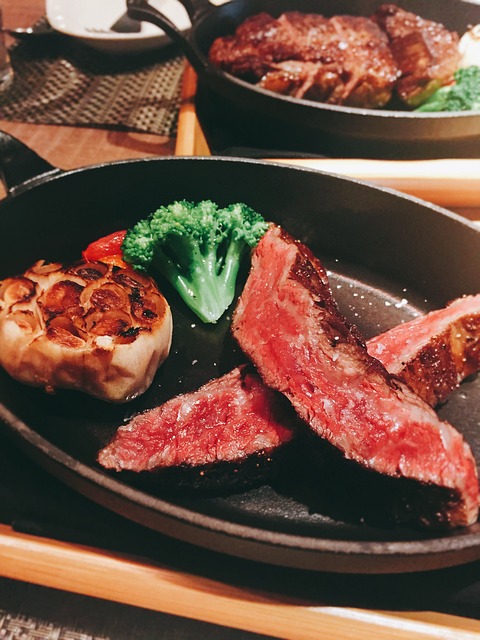
Steak temperature is the one variable that separates a $60 dinner from a $6 hockey puck. Guessing gets you close, sometimes. A $15 instant-read thermometer, plus the chart below, gets you exactly right every single time. This is the reference I use in my own kitchen — pull temps, rest times, cook minutes by thickness, and the mistakes to avoid.
The Master Steak Doneness Chart
Every temperature below assumes a whole-muscle beef steak (ribeye, NY strip, sirloin, filet, T-bone, flank, skirt). Grinds and mechanically tenderized cuts have a different USDA minimum — see the safety note further down.
| Doneness | Pull temp (off heat) | Final temp (after rest) | Rest time | Appearance |
|---|---|---|---|---|
| Blue rare | 110 °F / 43 °C | 115 °F / 46 °C | 3 min | Cool, purple-red center; barely warmed through |
| Rare | 120 °F / 49 °C | 125 °F / 52 °C | 5 min | Cool-to-warm red center, soft feel |
| Medium-rare (recommended) | 125 °F / 52 °C | 130 °F / 54 °C | 5–10 min | Warm red-pink center, tender spring |
| Medium | 135 °F / 57 °C | 140 °F / 60 °C | 5–10 min | Hot pink center, firmer bite |
| Medium-well | 145 °F / 63 °C | 150 °F / 66 °C | 5 min | Mostly brown, faint pink line |
| Well-done | 155 °F / 68 °C | 160+ °F / 71+ °C | 5 min | No pink, firm, drier |
Why You Pull the Steak 5 °F Early: Carryover Cooking
When you pull a steak off the heat, the outside is dramatically hotter than the center. That heat keeps moving inward while the steak rests — the “carryover” effect. On a 1-inch steak it adds about 5 °F. On a 2-inch tomahawk or a thick roast it can add 8–12 °F. Pull at your target and you’ll overshoot every time.
The Meat Stick’s cooking team put this on paper: pull about 5 °F below your target, then rest 5–10 minutes and let carryover close the gap (The Meat Stick, Steak Internal Temperature guide). That’s the entire trick. It’s the same principle every steakhouse line cook works from — they’re not psychic, they’re just watching a probe.
Cook Times by Thickness (Pan-Sear + Grill)
These are guideline minutes for reaching medium-rare pull temp (125 °F). Add ~1 minute per side for medium, subtract ~1 minute per side for rare. Assumes a screaming-hot cast-iron pan or a grill at 500 °F+ direct heat.
| Steak thickness | Pan-sear (per side) | Grill direct (per side) | Finish in oven? |
|---|---|---|---|
| ½ inch (skirt, flank) | 90 seconds | 90 seconds | No |
| ¾ inch | 2 minutes | 2 minutes | No |
| 1 inch | 3 minutes | 3 minutes | No |
| 1½ inch | 3½ minutes + finish 4 min at 400 °F | 3 minutes indirect side + probe | Yes |
| 2 inch / tomahawk | Reverse-sear: bake 250 °F to 110 °F, then sear 90 sec/side | Reverse-sear on grill | Yes |
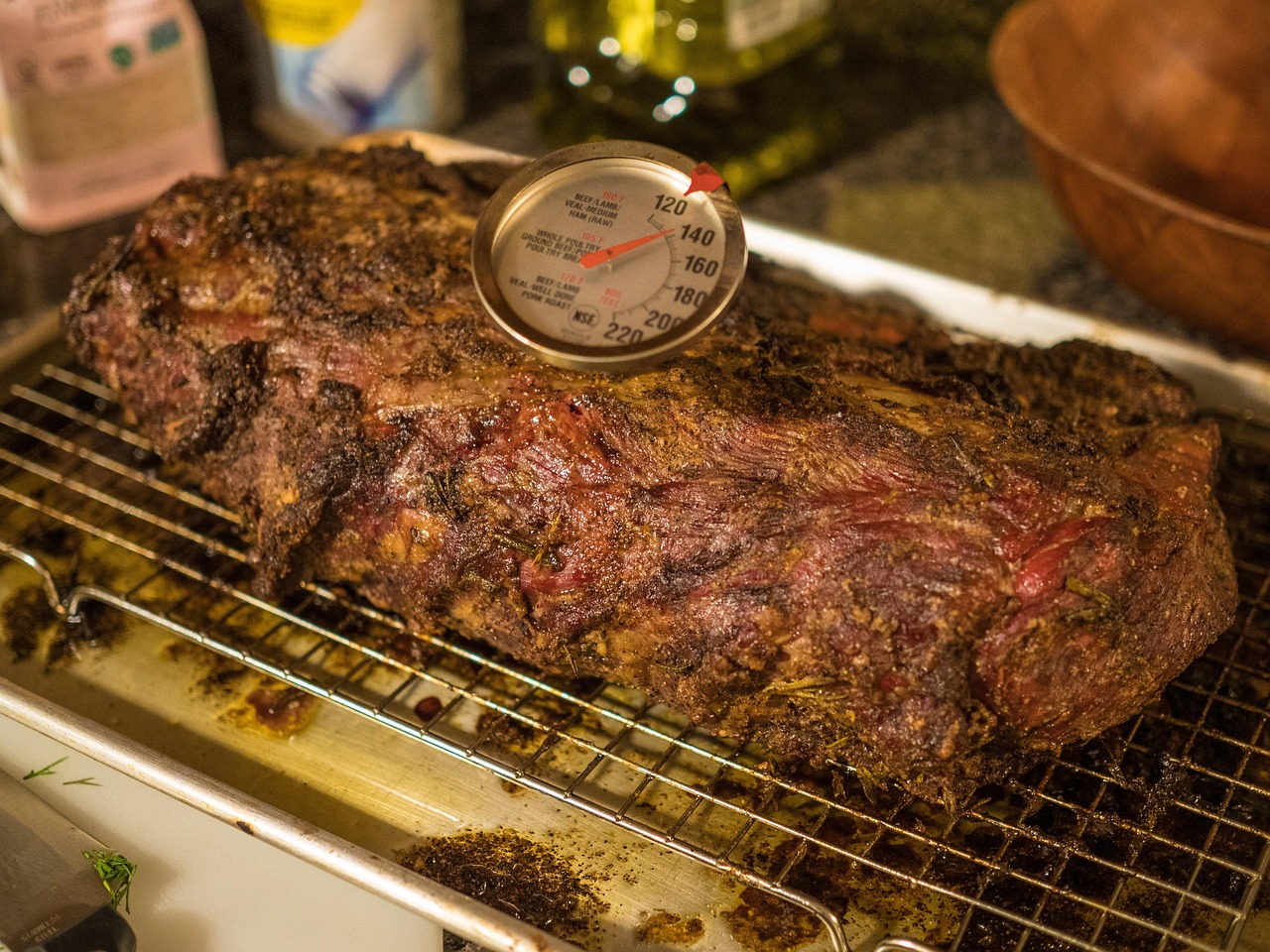
Where to Insert the Thermometer (This Is Where Most People Blow It)
The single most common mistake I see: probing near the edge. The edge of a steak is 30–40 °F hotter than the center at pull time. You’ll read “done” and serve a rare mess. Do this instead:
- Insert horizontally through the side, not from the top. This gets the tip into the geometric center of a flat steak.
- Aim for the thickest muscle. On a T-bone, that’s the strip side, not the tenderloin side.
- Avoid bone, fat pockets, and gristle. Bone conducts heat faster; fat is cooler; gristle gives false low reads.
- Take two readings. Pull the probe out slightly and reinsert 1 cm deeper — take the lower number.
An instant-read like a Thermapen ($100+) reads in 2 seconds. A budget ThermoPro ($25) reads in 4–6. Both work. What doesn’t work: the pop-up thermometer that came in your Thanksgiving turkey — those are calibrated for well-done and will always overshoot on steak.
Watch: A Visual Reference for Every Doneness Level
If you’re a visual learner, watching cross-sections at each temperature is worth ten thermometer readings. The color shift from red at 125 °F to gray at 160 °F is dramatic — once you’ve seen it, you’ll never mistake medium for medium-rare again.
How Long Should a Steak Actually Rest?
Rest time scales with thickness, not doneness. A steak that doesn’t rest loses moisture on your cutting board instead of holding it in the muscle fibers. The published research from serious meat scientists lands on about 5 minutes per 1 inch of thickness, capped at 15 for the biggest cuts.
| Thickness | Ideal rest time | Under foil? |
|---|---|---|
| ½–¾ inch | 3 minutes | No (foil traps steam, softens crust) |
| 1 inch | 5 minutes | Loose foil tent optional |
| 1½ inch | 7–8 minutes | Loose tent |
| 2 inch / tomahawk / roast | 10–15 minutes | Loose tent |
Yes, the steak keeps cooking during the rest — that’s the carryover we planned for. And yes, a room-temperature-served steak tastes better than a piping-hot one. If you want deeper reading on why resting works, the guide at Certified Angus Beef — Degree of Doneness covers the muscle-fiber science.

Different Cuts Cook Differently — Adjust Accordingly
Not every cut is happy at the same doneness. Lean cuts turn to shoe leather past medium; well-marbled cuts hold up better as they cook. Match the temperature to the cut:
- Filet mignon — medium-rare (130 °F). Very lean; overcook and you lose all the tenderness that justified the price.
- Ribeye / NY strip — medium-rare to medium (130–140 °F). Enough marbling to survive medium without drying.
- Sirloin — medium-rare (130 °F). Lean, but firm-textured, gets chewy above 135 °F.
- Flank / skirt — medium-rare max (130 °F), and slice thin against the grain or it goes stringy.
- Hanger / flat iron — medium-rare, same as flank.
- T-bone / porterhouse — medium-rare (probe the strip side, since the tenderloin cooks 5–10 °F faster).
- Tri-tip / picanha — medium (135–140 °F). The fat cap needs time to render.
For a deeper breakdown of picking the right cut in the first place, our guide on choosing the best steak cut pairs cut, cook method, and target doneness in one table.
Common Questions
What is the safest temperature for steak?
USDA’s minimum for whole-muscle beef is 145 °F followed by a 3-minute rest. Restaurants and home cooks routinely serve steak at 130 °F (medium-rare) because the surface sear kills bacteria on the outside of an intact cut. This does not apply to ground beef, which must hit 160 °F.
Why is my steak overcooked even when I pulled it at the right temp?
Two likely culprits: you didn’t account for carryover (pull 5 °F below target on 1-inch cuts, 8–12 °F below on thicker), or your thermometer was reading a hot spot near the edge. Insert horizontally through the side, dead center, away from bone.
Do I really need a thermometer, or can I use the “finger test”?
The finger test (comparing steak firmness to the flesh under your thumb) is a party trick — it’s within about 15 °F on a good day, which is the entire distance between medium-rare and medium-well. A $15 probe is the difference between guessing and knowing.
Does resting really matter that much?
Yes. A steak sliced immediately loses roughly 40% more juice to the cutting board than one rested 5 minutes. That juice is flavor and moisture you paid for. Rest it.
Can I re-heat a leftover steak without ruining it?
Sous-vide at 130 °F for 45 minutes brings a medium-rare leftover back to serving temperature without cooking it further. Failing that, warm at 250 °F in the oven to an internal 110 °F, then hit the sear side in a hot pan for 30 seconds. Never microwave.
Screenshot the Chart, Pin It to the Fridge
The whole reason home cooks overcook steak is that they trust time-based recipes instead of temperature-based ones. A 1-inch ribeye on grill A cooks in 6 minutes; on grill B it needs 9. The internal temperature is the only signal that doesn’t lie. Get a thermometer, use the pull temps in the chart above, respect the rest, and you’ll never send another steak back to the pan.
Ready to put the chart to work? Try our reverse-sear ribeye method for a 2-inch showstopper, or the 10-minute cast-iron steak guide for a weeknight version. Same numbers, different execution.
Did You Try Our Recipe ?
Chicken hears and gizzards
I would love you to send me the recipe please. I have no printer to print it off. [email protected]
Response from MeatRecipesBox
Hi Sharon, thank you so much for your kind words! I’ve just sent the full recipe to your inbox. Enjoy, and let me know how it turns out! 😊
Scrumptious
My husband (who is extremely picky) loved the liver & onions so much!! I didn’t have any beef broth or Sherry so I used about a tbl of Worcestershire and 1/4 c of white wine …..it was scrumptious
Response from MeatRecipesBox
Oh wow, I’m so happy to hear that!! 😍 I love that you made it work with what you had on hand — Worcestershire and white wine sound like a delicious twist. So glad your husband enjoyed it, especially being picky! Thank you for sharing your version, it makes me smile knowing it turned out scrumptious!
This was amazing
This recipe turned out really amazing! It’s juicy and spiced deliciously. I definitely would use less of the spicy pepper next time, but it really was delicious and I don’t think I’ll make chicken legs any other way from now on.!
Response from MeatRecipesBox
Thank you for taking the time to leave such a thoughtful review. I’m really glad to hear the recipe turned out juicy and full of flavor for you. That’s exactly what I was hoping for when putting it together. Good call on the spicy pepper as well. Adjusting the heat level to your own taste is always the best approach, and using a little less next time should make it just right for you. I really appreciate you trying the recipe and sharing your experience. It’s great to know it worked so well for you.
I Didn’t Expect This Cornbeef Hash Recipe to Taste This Good!!
One skillet. A handful of simple ingredients. Thirty minutes on the clock. And somehow… I ended up with the crispiest, most comforting cornbeef hash recipe I’ve made in years.
I wasn’t expecting much—just a quick, no-fuss meal. But that first bite? Crispy edges, tender potatoes, smoky corned beef, a little kick of pepper. It tasted like something straight off a cozy diner griddle.
Honestly, it caught me off guard—in the best way. Here’s why this simple skillet completely won me over.


