


The 30-second answer
A cow is divided into 8 primal cuts. The rule that decides how to cook every one is muscle work: cuts from the middle of the back (rib, short loin, sirloin) barely move, so they stay tender and take fast, dry heat — grill, sear, broil. Cuts from the shoulder, leg, and belly (chuck, round, brisket, plate, flank, shank) do the work of moving the animal, so they need slow, moist heat — braise, smoke, stew — to break the connective tissue down. Match the cut to that rule and you cannot cook beef badly.
The complete beef cuts chart (bookmark this)
This is the reference table you actually need at the meat counter. Every primal cut, the popular sub-cuts inside it, its tenderness rank, and the one cooking method that gets the best result. The Beef Checkoff cut chart lists 60+ retail cuts, but 90% of home cooking works from these.
| Primal cut | Popular sub-cuts | Tenderness | Best method | Target internal temp |
|---|---|---|---|---|
| Chuck (shoulder) | Chuck roast, chuck eye steak, flat iron, short ribs, ground chuck | Tough | Braise, smoke, slow-cook | 195–205°F (pot roast) · 130°F (flat iron) |
| Rib | Ribeye, prime rib, tomahawk, back ribs | Very tender | Grill, reverse-sear, roast | 130–135°F (medium-rare) |
| Short Loin | Filet mignon, T-bone, porterhouse, strip steak (NY strip) | Most tender | Grill, pan-sear, broil | 130–135°F |
| Sirloin | Top sirloin, tri-tip, sirloin steak, culotte (picanha) | Tender | Grill, roast, reverse-sear | 130–140°F |
| Round (rear leg) | Top round, bottom round, eye of round, rump roast, London broil | Tough & lean | Roast rare + slice thin · braise | 130°F (roast) · 200°F (braise) |
| Brisket (breast) | Point (fatty), flat (lean), whole packer | Very tough | Smoke low & slow, braise | 203°F probe-tender |
| Plate (belly) | Skirt steak, plate short ribs, hanger steak | Chewy but flavorful | Fast hot grill (skirt) · smoke (ribs) | 130°F (skirt) · 203°F (ribs) |
| Flank | Flank steak | Lean, moderately tough | Marinate → grill hot & fast → slice across grain | 130–135°F |
| Shank (leg) | Cross-cut shank, osso buco | Toughest | Braise (only method that works) | 200–205°F |
Grain rule: for every cut on this chart except the ultra-tender loin cuts, slice across the visible muscle fibers, not with them. A perfectly cooked flank steak sliced the wrong way eats tougher than a badly cooked one sliced correctly.
Where every cut comes from on the cow
A steer weighs around 1,300 lb live, and a butcher divides the carcass into 8 large sections called primals. Those primals get broken down into sub-primals, then into the retail cuts you see at the counter. The position on the animal is what tells you how to cook the meat — no exception.

Reading the diagram, front to back
Cooking method → best beef cut (reverse lookup)
Most cooks think the other way around: you have a grill lit, or a Dutch oven ready, and you need to know what to buy. Read this table left-to-right.
| Method | Buy these cuts | Why it works |
|---|---|---|
| Grill / pan-sear (high heat, 5–15 min) | Ribeye, NY strip, filet mignon, top sirloin, flat iron, tri-tip, flank, skirt, hanger, picanha | Tender or well-marbled cuts hit doneness before the outside overcooks. Cheaper cuts (flank, skirt, hanger) need a marinade and cross-grain slicing. |
| Reverse-sear / roast (low oven → hot finish) | Prime rib, thick ribeye, whole tenderloin, top sirloin roast, tri-tip, tomahawk | Slow indirect heat pulls the meat to an even temp edge-to-edge; a 60-second sear puts on the crust. |
| Braise / pot roast (250–325°F, 3–5 hrs) | Chuck roast, short ribs, bottom round, rump roast, oxtail, shank, osso buco | Collagen dissolves into gelatin at 160°F+. The meat gets more tender the longer it cooks. |
| Smoke (225–275°F, 6–14 hrs) | Brisket (whole packer), chuck roast, beef ribs, tri-tip, picanha | Same collagen conversion as braising, plus smoke penetration in the first 3 hours before the bark sets. |
| Stir-fry (very high, <3 min) | Flank, skirt, sirloin, flat iron, tenderloin tips | Thin cross-grain slices cook to medium in seconds — no time to seize up. |
| Sous vide (129–133°F, 1–48 hrs) | Any cut. Loin cuts need 1–2 hrs; chuck and brisket run 24–48 hrs to break down collagen at low temp. | The only method that lets you turn a chuck roast into a “steak” texture without going past medium-rare. |
| Grind | Chuck (80/20), sirloin (90/10), brisket + short rib blend (burger blend) | Chuck gives the classic burger fat ratio; sirloin is leaner for meatloaf and meat sauce. |
See it in action
The Bearded Butchers walk through a full side of beef and show, physically, where every retail cut comes off — the fastest way to lock the chart into memory.
Tenderness ranking of every popular beef cut
Tenderness is muscle usage. The National Beef Tenderness Survey (2023 update) ranks retail cuts by Warner-Bratzler shear force — the industry lab measure of how much force it takes to bite through cooked beef. Lower is more tender. Here is that ranking in plain English.
| Rank | Cut | Primal | Cook it like |
|---|---|---|---|
| 1 | Filet mignon (tenderloin) | Short Loin | Quick sear, don’t overcook |
| 2 | Flat iron | Chuck | Grill medium-rare — chuck’s one tender surprise |
| 3 | Ribeye | Rib | Hot grill or reverse-sear |
| 4 | NY strip | Short Loin | Cast iron, 3 min per side |
| 5 | T-bone / porterhouse | Short Loin | Grill bone-in for the two-textures-in-one plate |
| 6 | Top sirloin | Sirloin | Grill or roast — best value tender cut |
| 7 | Tri-tip | Sirloin | Reverse-sear or smoke |
| 8 | Hanger | Plate | Hot grill, cross-grain slice |
| 9 | Skirt | Plate | Marinade + very hot fast grill |
| 10 | Flank | Flank | Marinade + grill + cross-grain slice |
| 11 | Chuck roast | Chuck | Braise 3–4 hrs |
| 12 | Brisket | Brisket | Smoke 10–14 hrs |
| 13 | Bottom round | Round | Braise or roast thin-sliced |
| 14 | Shank | Shank | Braise, nothing else |
Value picks (tender per dollar)
- Flat iron — ranks #2 for tenderness but costs about half the price of ribeye at most butchers.
- Chuck eye steak — the two ribeye-adjacent muscles pulled out of a chuck roll. Same eating experience, roughly 60% of the price.
- Tri-tip — 1.5–2 lb sirloin roast that feeds 4–6 and reverse-sears in under an hour.
- Picanha (culotte) — the top sirloin cap. If you can find it, it out-punches most $30/lb steaks.
The 4 tender cuts (rib & loin)
These are the cuts that came from the middle of the back and did almost no work. They are naturally tender, well-marbled, and cook fast on high dry heat. Overcooking them past medium is the only real way to ruin them.
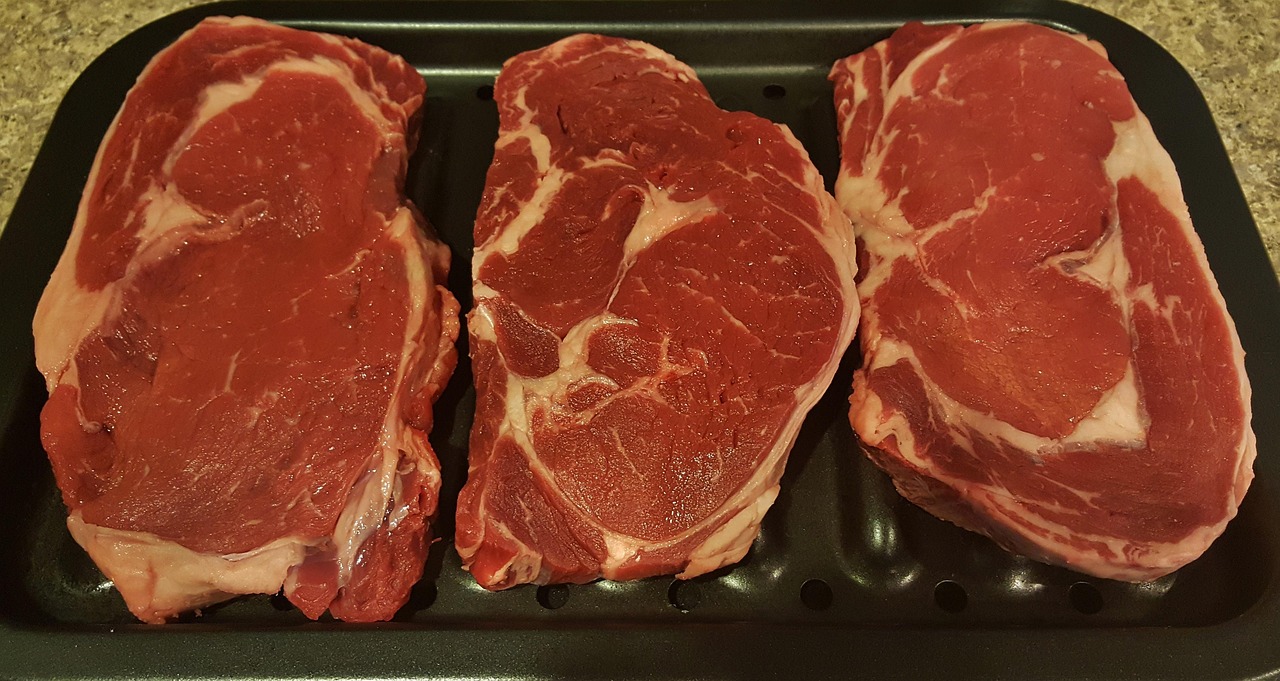
Ribeye
The rib primal (ribs 6 through 12) is the ribeye’s home. Boneless ribeye is called a “ribeye steak”; bone-in is a “rib steak”; a whole roast is “prime rib” or “standing rib roast.” Best cooked reverse-seared to 130°F internal, then finished with a 60-second sear per side in a rippingly hot cast iron. Read our full ribeye vs tomahawk breakdown for the bone-length question.
Filet mignon (tenderloin)
The psoas major — a muscle that only holds the spine steady and never moves the animal. That gives you the most tender beef on the cow but the least flavor, which is why it is almost always wrapped in bacon or paired with a sauce. Cook fast, keep it rare to medium-rare. Never braise a filet.
NY strip
The longissimus muscle continues from the ribeye into the short loin, where it becomes the strip. Slightly less marbled, firmer chew, cleaner beefy flavor. A cast iron pan and 3 minutes per side is the whole recipe. Detailed technique in our pan-seared steak guide.
T-bone and porterhouse
Both are cross-cuts of the short loin, so they give you strip on one side of the bone and tenderloin on the other. The difference is size: the USDA requires porterhouse to have a tenderloin at least 1.25 inches thick at its widest. Anything less is a T-bone. Grill hot, tenderloin side away from the hotter spot so both sides finish together.
The 3 fast-hot cuts that need a marinade (flank, skirt, hanger)
The plate and flank primals give you long, flat, coarse-grained muscles with almost no fat. Left alone and cooked slow, they turn to shoe leather. Given a 30-minute acidic marinade and a fast, very hot grill, they eat as well as far more expensive cuts — provided you slice them across the grain, thin.

Skirt steak comes from the plate — specifically the diaphragm. It has the deepest beef flavor of any cut but a loose, easy-to-overcook texture. Marinate 30 minutes, grill 90 seconds per side. Hanger steak (“butcher’s cut”) hangs from the diaphragm and is the tenderest of this group — one hanger per animal, so it is often hard to find. Flank is leaner and larger than skirt, with a bolder grain; it is the classic pick for fajitas and stir-fry. Our flank steak marinade guide gives you three that work.
The 4 tough cuts that need low & slow (chuck, brisket, round, shank)
These primals are packed with collagen — the tough sheath that holds muscle fibers together. Below 160°F, collagen shrinks and squeezes the meat. Held between 190°F and 205°F for hours, it dissolves into gelatin. That is what makes brisket, pot roast, and osso buco eat the way they do.
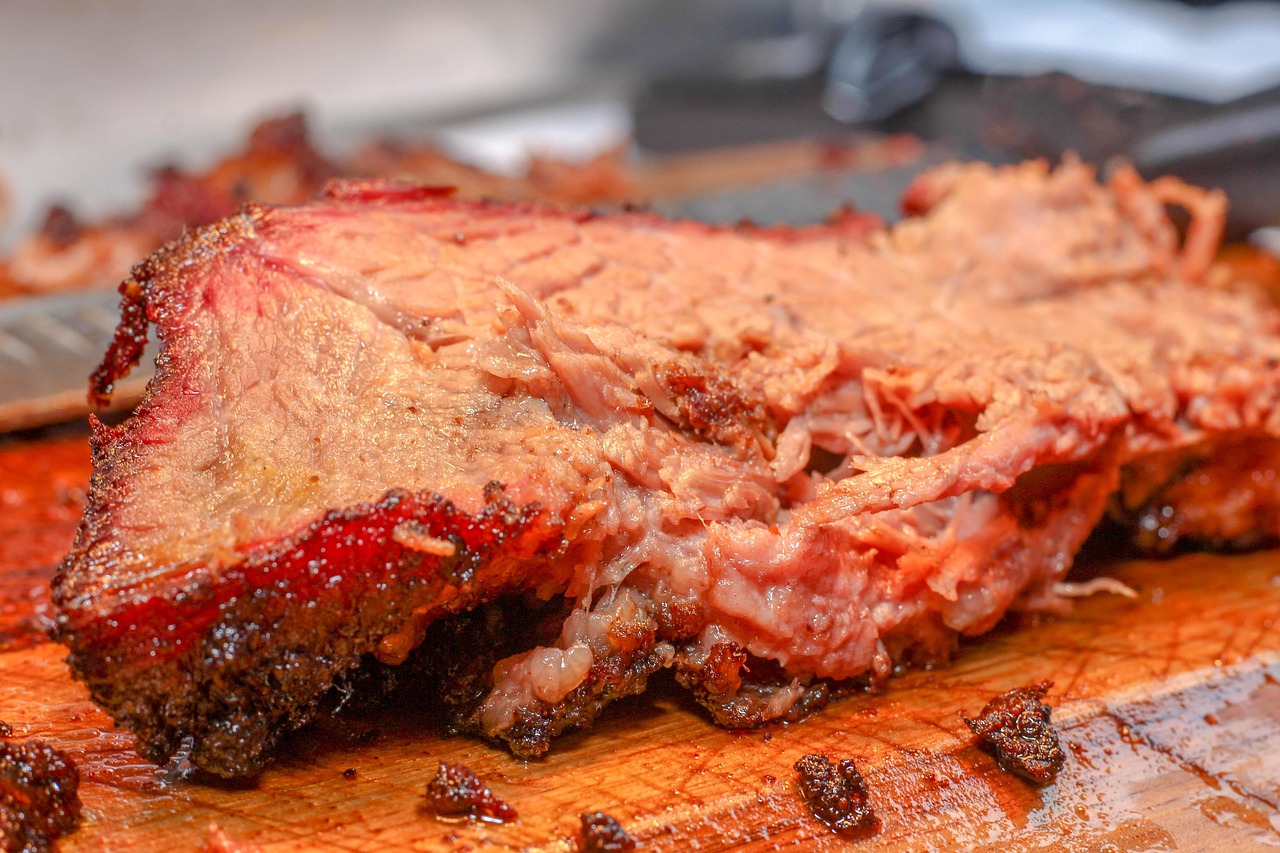
Chuck
The shoulder gives you chuck roast (pot roast), short ribs, and — since 2002, when butchers learned to isolate them — the flat iron and Denver steaks. Everything except the flat iron and Denver needs braising. Full walk-through: Dutch oven pot roast.
Brisket
Two muscles fused with fat: the point (fatty, marbled, the source of burnt ends) and the flat (lean, uniform, best for slicing). A whole packer weighs 12–16 lb. Smoke at 225°F, wrap in butcher paper at 165°F internal, pull at 203°F probe-tender, rest 1 hour. Detailed timing in how to cook brisket step by step.
Round
The whole rear leg. Very lean, very worked. Two ways it eats well: roasted rare to 130°F then sliced paper-thin (roast beef, sandwiches), or braised for hours (bottom round pot roast, sauerbraten). Anything between those two extremes is dry.
Shank
The lower leg — the only cut on the cow that cannot be cooked any way except braising. Cross-cut shank with the marrow bone in the center is Italian osso buco. Three to four hours in wine and stock and it falls off the bone. Our classic osso buco recipe uses this cut.
Grades: how USDA Prime, Choice, and Select change the chart
A cut’s tenderness is set by anatomy. A cut’s marbling — the intramuscular fat that makes beef taste like beef — is set by grade. The USDA grades are:
- Prime — top 3% of beef, heaviest marbling. Steakhouse standard.
- Choice — most supermarket beef. Solid marbling; good grilling steaks.
- Select — leaner, less marbling. Fine for braising cuts; risky for grilling steaks.
For any cut you plan to grill or reverse-sear (rib, loin, sirloin), buy Choice or Prime. For braising cuts (chuck, brisket, shank), Select works just as well because collagen conversion, not marbling, drives the result.
How to actually use this chart at the store
Two-step decision.
- Pick your method first — grill, oven, Dutch oven, smoker, stir-fry. Not the meat first.
- Read the reverse-lookup table above, pick the cut in your budget from the “buy these” column, then check the grade.
The single most common mistake home cooks make is buying by name recognition (“I’ll grab a chuck roast, that sounds nice”) and then trying to grill it. Chuck roast on a grill is a $22 lesson. Chuck roast in a Dutch oven for 3 hours is a Sunday.
Frequently asked questions
What are the 8 primal cuts of beef?
Chuck (shoulder), rib, short loin, sirloin, round (rear leg), brisket (chest), plate (belly), and flank (side/abdomen). Shank is often listed as a 9th “extra” primal but the USDA groups it under the front and rear quarter. Every retail cut comes from one of these sections.
What is the most tender cut of beef?
Filet mignon, cut from the tenderloin inside the short loin primal. It has almost no marbling — its tenderness comes from the muscle (psoas major) doing zero locomotion. For flavor and tenderness, most butchers pick the ribeye instead.
What is the toughest beef cut and can it be cooked well?
The shank. It’s the leg muscle that walks the animal around for years and is packed with connective tissue. Braised for 3+ hours in liquid at 190–205°F, the collagen dissolves into gelatin and you get osso buco — one of the richest beef dishes there is. Any other method fails.
What cut of beef is best for slow cooker?
Chuck roast is the go-to — enough intramuscular fat to stay moist over 8 hours on low, and plenty of collagen to keep the sauce silky. Bottom round and brisket flat also work. Skip anything from the loin or rib; they turn dry and stringy in a slow cooker.
What is the best beef cut for grilling?
Ribeye if you want flavor from marbling, NY strip if you want cleaner beefiness, filet if you want maximum tenderness, top sirloin if you want the best value. All four cook in 8–12 minutes on a hot grill to medium-rare.
Can I substitute one cut for another?
Only within the same tenderness tier. Filet ↔ NY strip works. Chuck ↔ brisket works (both braising cuts). Substituting flank for ribeye, or ribeye for chuck, does not work — the cook time and method are different by an order of magnitude.
Why is my grocery store’s chart different from this one?
Retail names vary by region and by store — a “London broil” in one shop is a flank steak, in another it is a top round roast. The USDA’s Institutional Meat Purchase Specifications (IMPS) assigns each cut a number; that is the only fully standardized reference. Ask the butcher for the IMPS number if you need to be sure.
Print this chart
Save the top table to your phone, or print it and stick it to the inside of a cabinet door. Once you have used it for a month, you stop needing it — the map of the cow lives in your head, and every beef recipe you read afterward makes sense on the first read.
Read next on Meat Recipes Box
- How to cook brisket: the full smoker timeline
- The reverse-sear method for any thick steak
- Dutch oven pot roast — chuck the right way
- Santa Maria tri-tip on the grill
- Osso buco: shank turned into Sunday dinner
- Steak doneness chart with target temps
- The beef marinade guide (flank, skirt, hanger)
- Picanha: the sirloin cap, Brazilian style


