
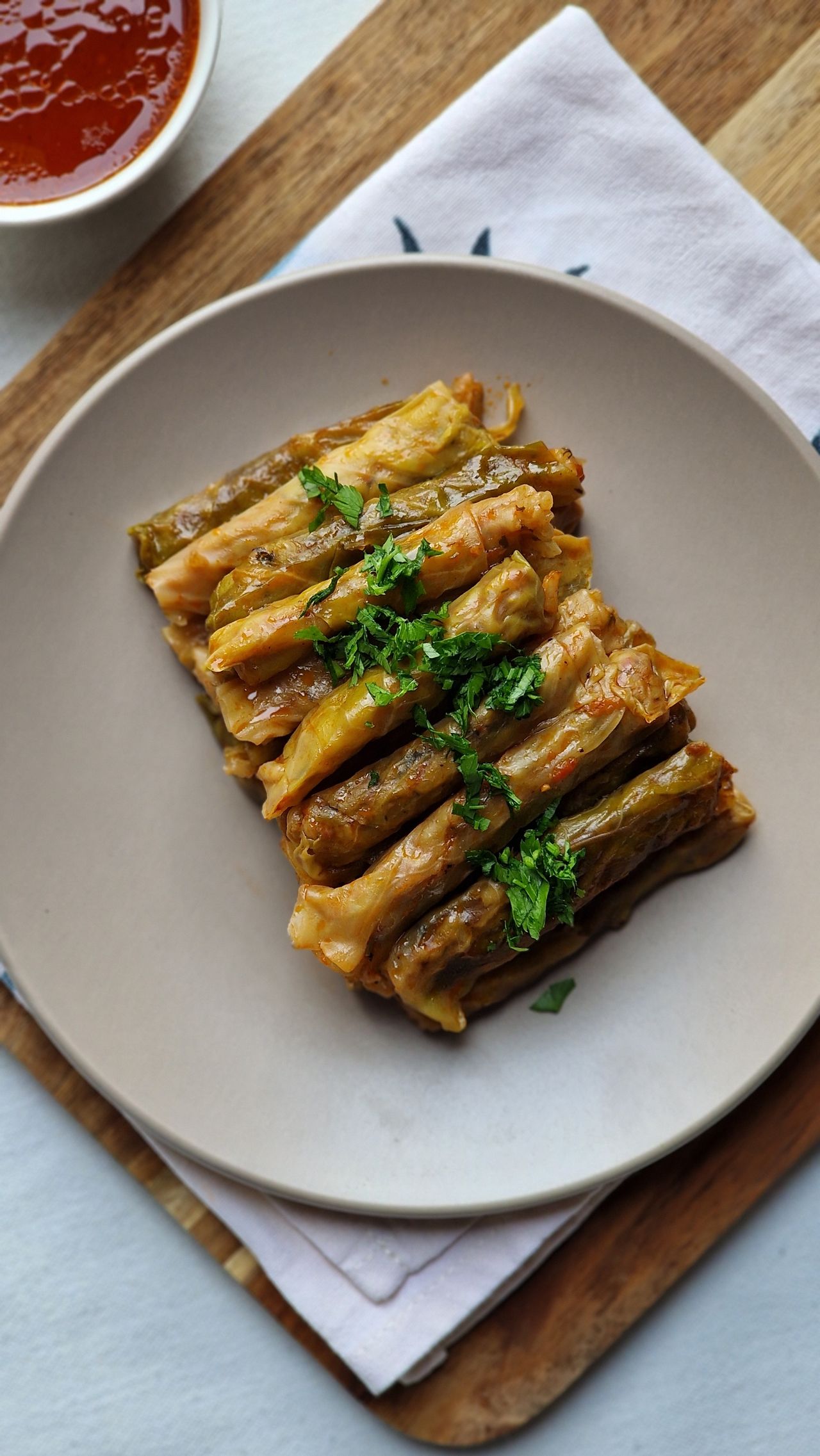
The name gołąbki means “little pigeons” in Polish — the shape of the finished rolls, tucked and plump, evidently reminded someone of a bird nesting. Every Polish grandma has a version. The technique is the same across Ukraine (holubtsi), Romania (sarmale), and Hungary (töltött káposzta): blanch the cabbage, mix the filling, wrap, simmer. Where they diverge is the filling and the sauce — Polish gołąbki use tomato, Ukrainian versions often use sour cream, Romanian sarmale use sauerkraut leaves. This is the tomato version.
What are gołąbki, exactly?
Whole cabbage leaves, softened by blanching, wrapped around a raw filling of ground meat and half-cooked rice, then packed tight in a Dutch oven and simmered in tomato sauce. The magic is the two-way exchange: the meat juices leach into the rice and cabbage, and the tomato sauce reduces onto the outside. Three hours later, everything tastes like the same dish — but with distinct textures. Cabbage soft, filling firm, sauce concentrated.
| Regional version | Filling | Sauce |
|---|---|---|
| Polish gołąbki | Beef + rice (traditional adds pork) | Tomato-based |
| Ukrainian holubtsi | Meat + rice, or just buckwheat | Tomato + sour cream |
| Romanian sarmale | Pork + rice (this version: beef) | Sauerkraut brine |
| Hungarian töltött káposzta | Beef + rice + paprika | Tomato + smoked paprika |
Ingredients (makes 12–14 rolls, serves 6)
For the cabbage
- 1 large green cabbage (about 3 lb / 1.4 kg) — the flatter, wider heads are easier to roll
- 1 tbsp salt for the blanching water
For the filling
- 1½ lb (680 g) ground beef — 80/20 chuck for flavour
- ¾ cup (150 g) long-grain white rice, half-cooked (see step 2)
- 1 large yellow onion, finely diced
- 3 garlic cloves, minced
- 1 large egg — the binder
- 1½ tsp kosher salt
- 1 tsp black pepper
- 1 tsp sweet paprika
- ½ tsp dried marjoram — the Polish signature herb; sub thyme if unavailable
- 2 tbsp fresh dill, chopped (optional but classic)
- 2 tbsp neutral oil for sautéing the onion
For the tomato sauce
- 1 (28 oz / 800 g) can crushed tomatoes
- 1 cup (240 ml) beef broth
- 1 tbsp tomato paste
- 2 tbsp butter
- 1 bay leaf
- 1 tsp brown sugar — cuts the acidity
- Salt and black pepper to taste
How to make gołąbki step by step
Polish Gołąbki (Beef and Rice Cabbage Rolls)
Method
- Core and blanch the cabbage. Cut the core out of the cabbage in a deep cone. Bring a large pot of salted water to a boil. Submerge the whole head, core-side down, for 3–4 minutes. Peel off the outer leaves as they soften and become pliable. Continue peeling and blanching until you have 14–16 usable leaves. Cool them flat on a towel.
- Half-cook the rice. Simmer rice in 1½ cups salted water for exactly 8 minutes (about half the normal cook time). Drain, spread on a plate to cool. Fully-cooked rice makes mushy filling — half-cooked absorbs juices during the braise.
- Sauté the onion. Heat oil in a skillet over medium. Add onion and cook 6–7 minutes until translucent. Add garlic, cook 30 seconds. Cool completely.
- Mix the filling. In a large bowl, combine ground beef, half-cooked rice, cooled onion mixture, egg, salt, pepper, paprika, marjoram, and dill. Mix with your hands until just combined — don’t overwork or the filling turns dense.
- Trim the tough vein. On each cabbage leaf, shave down the thick central stem with a paring knife so it lies flat. This is the single biggest reason home rolls unravel.
- Roll them up. Place a leaf flat, stem-end toward you. Scoop 3 tablespoons of filling (about the size of a golf ball, shaped into a log) near the stem end. Fold the sides inward, then roll away from you into a tight cylinder. Repeat.
- Build the sauce. In a Dutch oven, melt butter. Add tomato paste and cook 1 minute. Pour in crushed tomatoes, broth, bay leaf, and brown sugar. Taste, adjust salt.
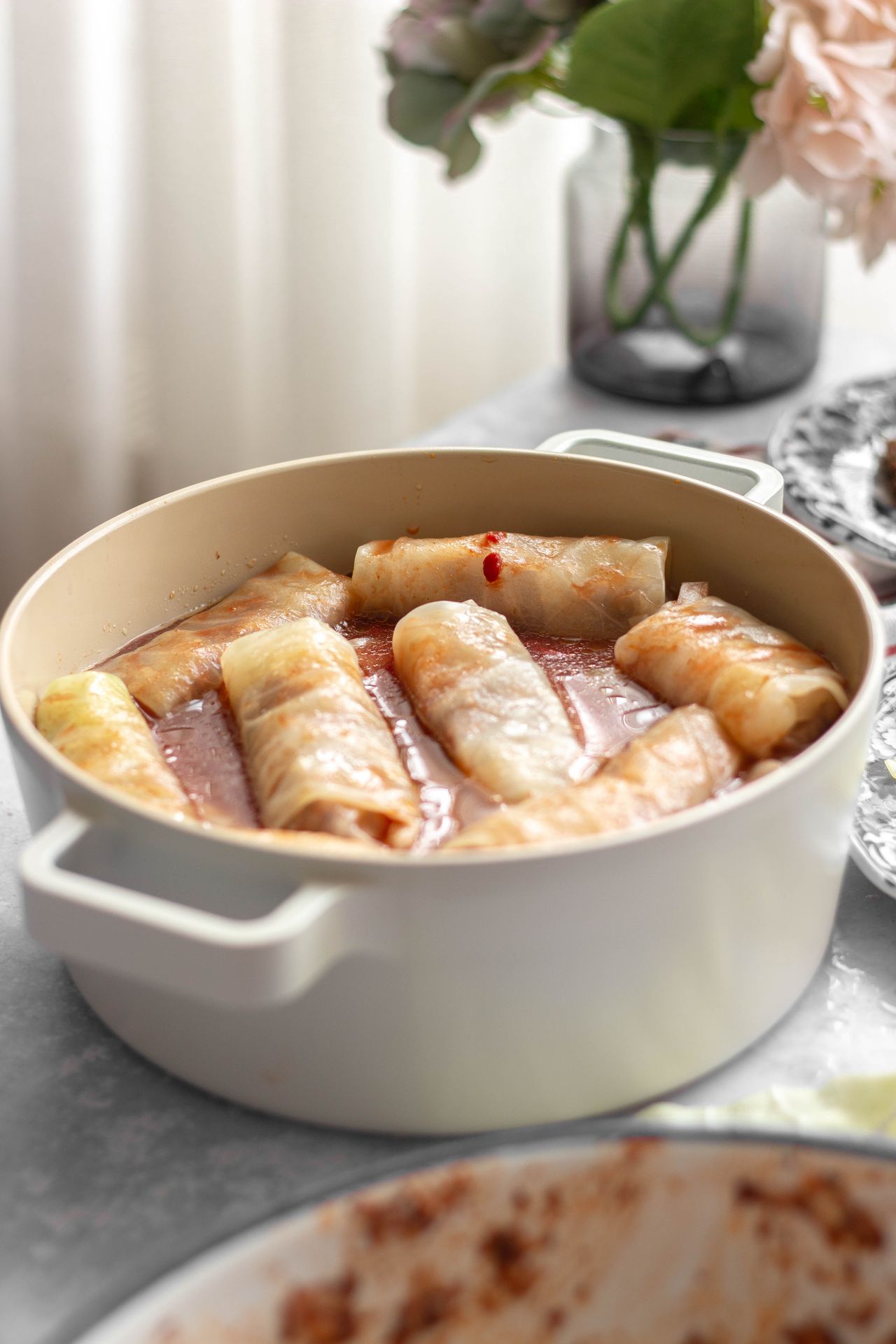
- Layer. Line the bottom of the Dutch oven with any leftover cabbage leaves — this prevents the rolls from sticking. Pack the rolls seam-side down in a snug single or double layer. Pour more sauce over top until they’re 80% submerged.
- Simmer. Cover, bring to a low simmer over medium-low heat, then reduce to low. Cook 90 minutes. Do not stir — the rolls will fall apart. Peek at 60 minutes to check the sauce level; add ¼ cup water if it’s tightening too fast.
- Rest and serve. Kill the heat. Let them sit uncovered 15 minutes — the rice keeps absorbing sauce and the rolls firm up. Serve with sauce spooned over.
Watch it come together
The three moves that separate great gołąbki from soggy ones
1. Freeze the cabbage instead of blanching
This is the Polish grandma cheat code. Freeze the whole head of cabbage 24 hours ahead, then thaw at room temperature the morning you cook. The freeze breaks down the cell walls the same way blanching does — leaves peel off soft and pliable with zero effort. No blanching pot, no boiling burns, no wilted leaves torn in transit. If you plan ahead, this beats blanching every time.
2. Half-cook the rice, don’t skip it
Raw rice under-cooks in a 90-minute braise and stays crunchy in the finished rolls. Fully-cooked rice over-cooks and turns to paste. The half-cook — 8 minutes in boiling water, drained — is the sweet spot. It absorbs the meat juices and tomato sauce during the simmer and finishes tender-firm.
3. Line the pot with spare cabbage leaves
Rolls placed directly on the metal of a Dutch oven scorch on the bottom, especially in the last 30 minutes. Line the pot with 2–3 flat spare leaves before layering the rolls. They act as a heat buffer and add a bit more cabbage flavour to the sauce. Toss them out (or eat them — they’re the cook’s snack).
Cross-section: what’s inside
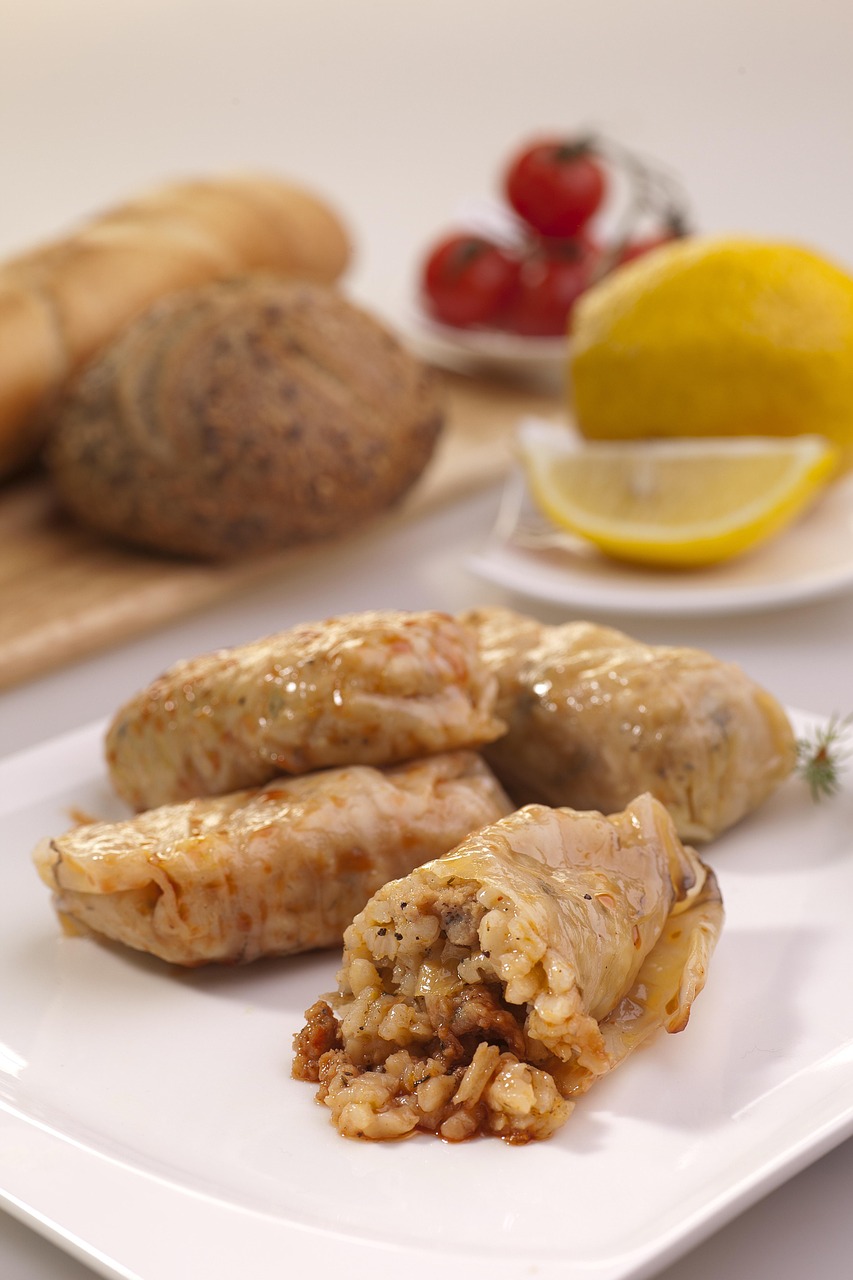
The best test for done gołąbki is to cut one open. You want to see individual grains of rice (not a mush), ground meat still holding shape (not weeping fat), and the tomato sauce having penetrated the outer cabbage but not the filling. If the interior is dry, they needed more sauce or a shorter cook. If it’s soupy, they cooked too fast at too high a heat.
What to serve with gołąbki
Mashed potatoes are the Polish default — they catch the tomato sauce and balance the acidity. Buttered kluski noodles or wide egg noodles work if you want something faster. A slice of good rye bread is standard for mopping. On the side: surówka (Polish shredded cabbage-carrot salad), pickled beets, or simple sautéed spinach with garlic. Skip anything with cream — the tomato sauce already carries enough weight. For a bigger Polish spread, pair with our Polish-style beef goulash as a second main.
Variations and adjustments
- Sweet-and-sour tomato sauce. Add 1 tbsp lemon juice and 1 tbsp brown sugar to the sauce. Southern Polish variation, especially popular around Kraków.
- Beef and turkey blend. Sub half the beef for ground turkey thigh. Lighter but still juicy. Some Polish-American families use this ratio year-round.
- Sauerkraut version. Substitute half the crushed tomatoes with 1½ cups sauerkraut and its brine. Turns the dish into Polish “kwaśne gołąbki” — the tangy variant. See our sauerkraut recipes collection for other uses.
- Slow cooker method. Layer rolls and sauce in the slow cooker. Cook on low 6 hours or high 3–4 hours. Same result, less monitoring.
- Baked in the oven. Layer rolls and sauce in a Dutch oven, cover, bake at 325°F (165°C) for 90 minutes. Marginally better browning on the top layer.
- Gluten-free. Sub cauliflower rice for regular rice — you’ll lose the toothsome bite but gain a lower-carb version. Cook time drops to 60 minutes.
Storing, reheating, and freezing
Gołąbki keep 4 days in the fridge in an airtight container with plenty of sauce. Reheat covered on low in a skillet for 10 minutes with 2 tbsp of water. Microwave works — 90 seconds per roll at 70% power, covered. Freeze for up to 3 months: line a container with parchment, layer rolls with sauce between each, freeze. Thaw overnight in the fridge before reheating. This is one of the best batch-cook meals in the Eastern European canon — Sunday cook, Wednesday dinner, no quality loss.
Quick answers
How do you pronounce gołąbki?
“Go-WUMP-key” — three syllables, stress on the middle. The ą is a nasal vowel that sounds close to “om.” Americans of Polish descent often anglicize it as “golumpki” or “gowumpki.” Whichever way you say it, you’ll get the same dish. In Polish delis and old family cookbooks you’ll also see the singular gołąbek, which just means “one roll.”
Do you have to use ground pork?
No — the traditional 50/50 pork-and-beef ratio is common in Poland, but a 100% beef version is equally authentic in Polish-American households and better for keeping the dish halal. Ground beef alone can dry out slightly; the workaround is using 80/20 chuck (not 90/10 lean), which brings enough fat for silkiness through a 90-minute simmer.
Why did my cabbage rolls fall apart?
Three usual causes. The vein wasn’t trimmed flat (rolls unravel where the stem lump pushes back). The rolls weren’t packed tight enough in the pot (they need to hold each other in place). Or you stirred them mid-cook — never stir cabbage rolls; shake the pot gently if you must move things around. Fixing all three fixes 95% of unraveling issues.
Are these gołąbki halal-friendly?
Yes — this version uses 100% ground beef (no pork), no wine, and no gelatin. Use halal-certified beef. Check the beef broth label; most canned broths are pure beef, salt, and vegetables, but a few store brands add pork-derived “natural flavourings” — read the label. Otherwise, this is a straight-swap for the traditional Polish recipe.
Can I make gołąbki ahead for a party?
Better than most dishes for advance prep. Roll them up to a full day ahead and refrigerate uncooked in the Dutch oven with sauce poured over. The braise can happen the day of. Or cook fully, refrigerate, and reheat covered in a low oven (325°F / 165°C) for 30 minutes. The flavours deepen overnight — day-two gołąbki is genuinely better than day-one.
References and further reading
Cross-referenced technique against Polish Foodies’ authentic gołąbki, Nana’s Golabki at The Crumby Kitchen, and Grandma’s Golumpki at Food Folks and Fun. For ground beef cooking-temperature safety, see USDA FSIS beef guidance.
Next up: try our Polish beef goulash for another Sunday-dinner classic, or the beef and cabbage skillet for a weeknight shortcut version of these flavours.
Did You Try Our Recipe ?
Scrumptious
My husband (who is extremely picky) loved the liver & onions so much!! I didn’t have any beef broth or Sherry so I used about a tbl of Worcestershire and 1/4 c of white wine …..it was scrumptious
Response from MeatRecipesBox
Oh wow, I’m so happy to hear that!! 😍 I love that you made it work with what you had on hand — Worcestershire and white wine sound like a delicious twist. So glad your husband enjoyed it, especially being picky! Thank you for sharing your version, it makes me smile knowing it turned out scrumptious!
This was amazing
This recipe turned out really amazing! It’s juicy and spiced deliciously. I definitely would use less of the spicy pepper next time, but it really was delicious and I don’t think I’ll make chicken legs any other way from now on.!
Response from MeatRecipesBox
Thank you for taking the time to leave such a thoughtful review. I’m really glad to hear the recipe turned out juicy and full of flavor for you. That’s exactly what I was hoping for when putting it together. Good call on the spicy pepper as well. Adjusting the heat level to your own taste is always the best approach, and using a little less next time should make it just right for you. I really appreciate you trying the recipe and sharing your experience. It’s great to know it worked so well for you.
I Didn’t Expect This Cornbeef Hash Recipe to Taste This Good!!
One skillet. A handful of simple ingredients. Thirty minutes on the clock. And somehow… I ended up with the crispiest, most comforting cornbeef hash recipe I’ve made in years.
I wasn’t expecting much—just a quick, no-fuss meal. But that first bite? Crispy edges, tender potatoes, smoky corned beef, a little kick of pepper. It tasted like something straight off a cozy diner griddle.
Honestly, it caught me off guard—in the best way. Here’s why this simple skillet completely won me over.


