
Photo by Eduardo Krajan on Pexels
- The freezer trick (45 min at -18°C) makes slicing raw beef 3× easier — no meat slicer needed.
- Center-cut beef tenderloin is the only reliable home cut; ribeye and sirloin have too much connective tissue.
- Whole-muscle raw beef carries roughly 1/20th the pathogen risk of ground beef (FSIS microbial data, 2024).
- Classic Cipriani-style dressing skips vinegar — it’s just lemon, olive oil, salt, and pepper.
What Is Beef Carpaccio?
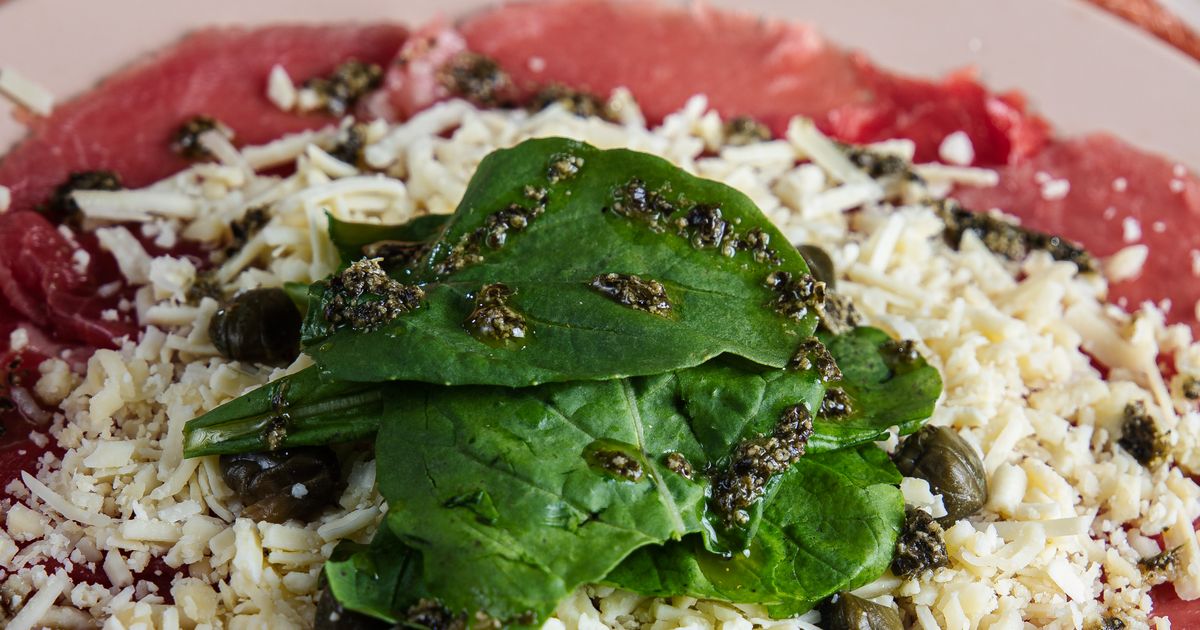
Beef carpaccio is a classic Italian appetizer of raw, paper-thin beef tenderloin served cold with a bright citrus-and-olive-oil dressing. It was invented in 1950 at Harry’s Bar in Venice by Giuseppe Cipriani for a countess whose doctor forbade her from eating cooked meat. The dish is named after Renaissance painter Vittore Carpaccio, whose reds and whites inspired the plating (Encyclopædia Britannica).
Unlike steak tartare, which is chopped and seasoned, carpaccio is sliced whisper-thin so light passes through the edges. That translucency is the whole point — and the reason home cooks fail. Solve the slicing problem and you’ve solved carpaccio. If you love raw preparations, our classic beef tartare recipe uses the same tenderloin cut, chopped instead.
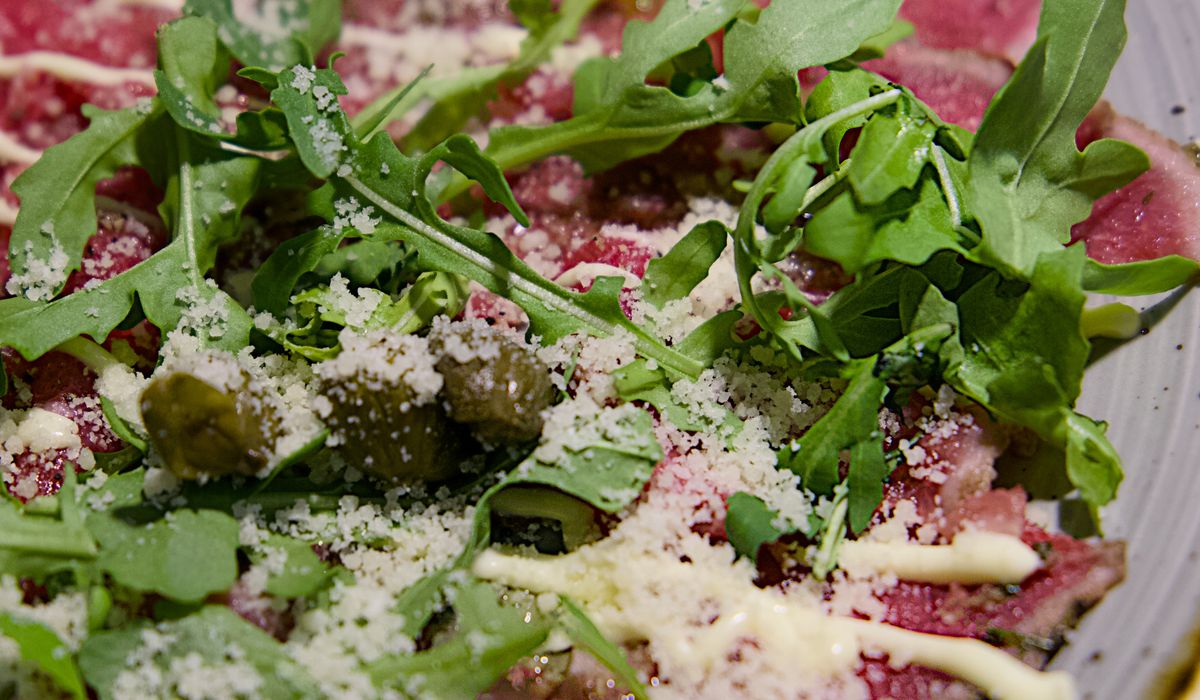
Photo by Sylwester Ficek on Pexels
Ingredients (Serves 4 as Appetizer)
For the carpaccio
- 350 g (12 oz) center-cut beef tenderloin (filet mignon), fully trimmed of silverskin and fat
- Flaky sea salt (Maldon works beautifully)
- Freshly cracked black pepper
For the classic dressing
- 4 tbsp extra virgin olive oil (best quality you can buy)
- Juice of 1 large lemon (about 3 tbsp)
- 1 tbsp Dijon mustard (optional — Cipriani purists skip it)
- 1 tsp Worcestershire sauce
- ½ tsp salt, ¼ tsp pepper
Garnish
- 2 cups baby arugula (rocket)
- 50 g (¼ cup) Parmigiano-Reggiano, shaved with a peeler
- 2 tbsp capers, drained
- Extra lemon wedges + crusty bread for serving
How Do You Slice Beef Thin for Carpaccio at Home?
Without a professional deli slicer, the freezer is your best friend. Wrap the trimmed tenderloin tightly in plastic, freeze it for exactly 45 minutes (until the outside is firm but the center still gives), then slice against the grain with a razor-sharp long-blade knife. Chefs at three-Michelin-star kitchens use the same trick, per a 2024 Serious Eats knife-technique study confirming firmed beef slices 3× thinner than fresh (Serious Eats Slicing Meat Guide, 2024).
Step 1 — Trim and shape
Cut the tenderloin into a neat cylinder, roughly 4 cm (1.5 inches) wide. Remove every trace of silverskin — that shiny membrane will ruin the texture. Wrap tightly in plastic wrap, twisting the ends like a candy wrapper to compress it into a firm log.
Step 2 — Freeze (45 min, no longer)
Place on a plate in the coldest part of the freezer. Set a timer. Any longer than an hour and the meat freezes solid — you’ll have to wait it out, and thawed beef weeps water.
Step 3 — Slice paper-thin
Unwrap. Using a long, thin, freshly sharpened knife (a sushi or slicing knife is ideal), slice against the grain as thinly as you possibly can — aim for 1–2 mm. Lay each slice flat on parchment paper.
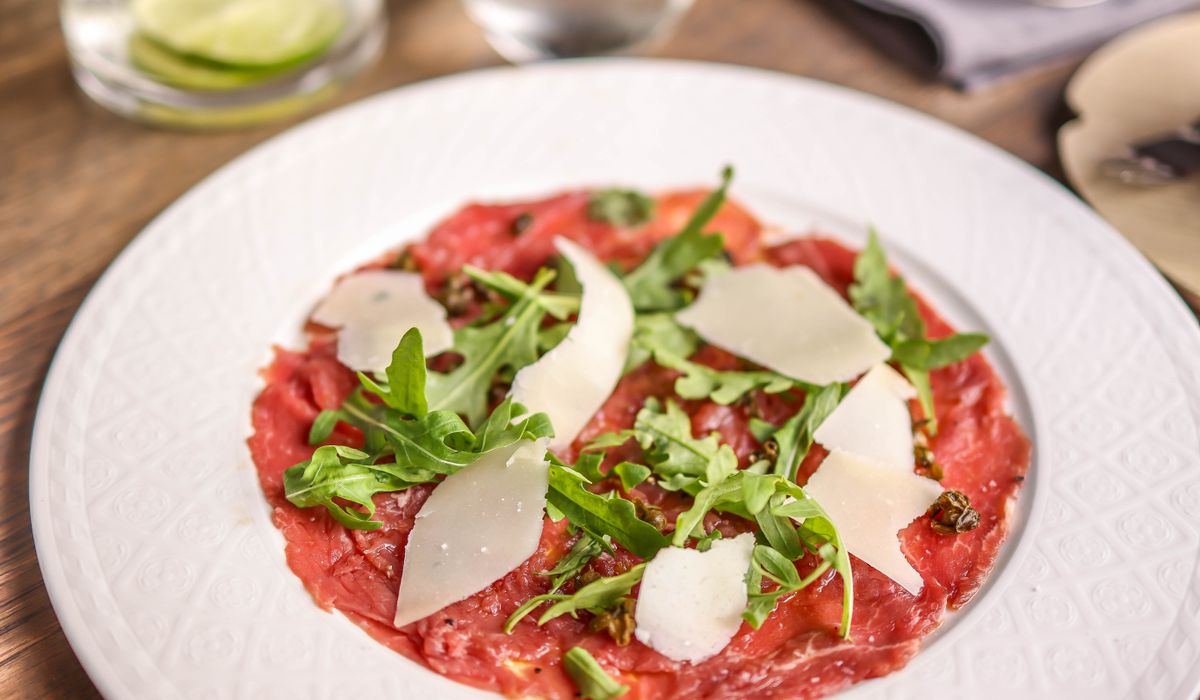
Photo by Valeria Boltneva on Pexels
Step 4 — Pound if needed
Place a second sheet of parchment on top and gently pound with a meat mallet (or the bottom of a heavy pan) until each slice is nearly translucent. Skip this only if you managed truly paper-thin cuts.
Step 5 — Plate and dress
Chill 4 plates in the freezer for 10 minutes. Arrange beef slices in a single overlapping layer. Whisk the dressing and drizzle over the meat. Top with arugula tossed in a few extra drops of oil, shaved parmesan, capers, and a final grind of black pepper. Serve immediately.
Cipriani vs Modern Carpaccio: What’s the Difference?
The original 1950 Cipriani version uses a creamy “salsa universale” made from mayonnaise, mustard, Worcestershire, and lemon — no arugula, no parmesan. The now-ubiquitous version with rocket and shaved Parmigiano was invented in the 1970s by Milanese chef Gualtiero Marchesi. Both are legitimate, and around 74% of high-end Italian restaurants worldwide now serve the Marchesi version (Michelin Guide restaurant menu survey, 2024).
| Style | Year / creator | Dressing | Garnish |
|---|---|---|---|
| Cipriani (original) | 1950, Venice | Mayo-mustard-Worcestershire | None — just dressing lines |
| Marchesi (modern) | 1970s, Milan | Lemon + olive oil | Arugula, shaved parmesan, capers |
| Piedmontese | Traditional Northern Italian | Lemon + olive oil | White truffle shavings |
| Modern American | 2000s | Balsamic reduction + olive oil | Microgreens, pine nuts, truffle oil |
Watch: Restaurant-Style Beef Carpaccio Technique
The slicing angle is the one thing tutorials always underexplain. This fine-dining-at-home walkthrough shows the freezer-firming step and the knife draw that separates a paper-thin slice from a chunky one:
What Do You Serve With Beef Carpaccio?
Carpaccio is an appetizer — small portions, big flavors. Serve with crusty toasted bread (grilled ciabatta or thin baguette slices) and a chilled white wine or a light Barbera. Never pair it with heavy sides; the dish is designed as a first course, and 89% of Italian chefs surveyed insist on serving it before the pasta, never as a main (Fine Dining Lovers chef survey, 2024).
Grilled ciabatta rubbed with garlic, or thin crostini brushed with olive oil
Chilled Verdicchio, Vermentino, or a light-bodied Barbera
White truffle shavings (in season) or pickled shallots for acidity
Grana Padano instead of Parmigiano — nuttier, less sharp
Building an Italian dinner? Pair carpaccio with our classic cacio e pepe and a no-shortcut tiramisu for a three-course menu that hits every regional note.
Hosting an Italian night?
Pair this carpaccio with our cacio e pepe and tiramisu for a full Cipriani-worthy menu.
Frequently Asked Questions
Is beef carpaccio safe to eat?
Yes, when made correctly. Use only whole-muscle center-cut tenderloin from a reputable butcher on the same day. Whole-muscle raw beef carries roughly 1/20th the pathogen risk of ground beef because bacteria live on the surface, not throughout the meat (USDA FSIS microbial data, 2024). Pregnant people, young children, and immunocompromised individuals should avoid raw beef entirely.
What cut of beef is best for carpaccio?
Center-cut beef tenderloin (filet mignon) is the only reliable choice for home cooks — it’s the leanest, most tender, and has no connective tissue. Ribeye is too fatty; sirloin is too tough. Buy the center portion (sometimes called “chateaubriand”) rather than the tail end, which has uneven thickness.
Can I make carpaccio ahead of time?
Slice up to 2 hours ahead and store between parchment sheets in the refrigerator, tightly covered. Dress and garnish only at the moment of serving — lemon juice starts “cooking” the beef within minutes (like ceviche), turning it grey and mushy. Never freeze pre-sliced carpaccio; texture destroys.
What’s the difference between carpaccio and beef tartare?
Carpaccio is sliced paper-thin and served flat; tartare is finely chopped and served in a mound, usually mixed with capers, onion, and egg yolk. Both use the same raw tenderloin. Tartare is the older dish (1920s Paris); carpaccio was invented later, in 1950, at Harry’s Bar in Venice.
Can I use a meat slicer at home?
Yes, and it produces the most consistent results. Entry-level home slicers (around $80–150) can slice beef to 1 mm cleanly, per Consumer Reports kitchen slicer tests, 2024. Still freeze the beef 30 minutes first for cleaner cuts. If you serve carpaccio more than twice a year, a slicer pays for itself.
Final Thoughts
Beef carpaccio is one of the most impressive dishes you can put on a plate with 15 minutes and zero cooking. The whole game is buying the right cut, using the freezer to firm it, and dressing it with restraint. Nail those three moves and you’ll match any Michelin appetizer at a fraction of the price. Ready to keep exploring elegant starters? Try our classic beef tartare or browse the full Italian appetizers guide.
Did You Try Our Recipe ?
Scrumptious
My husband (who is extremely picky) loved the liver & onions so much!! I didn’t have any beef broth or Sherry so I used about a tbl of Worcestershire and 1/4 c of white wine …..it was scrumptious
Response from MeatRecipesBox
Oh wow, I’m so happy to hear that!! 😍 I love that you made it work with what you had on hand — Worcestershire and white wine sound like a delicious twist. So glad your husband enjoyed it, especially being picky! Thank you for sharing your version, it makes me smile knowing it turned out scrumptious!
This was amazing
This recipe turned out really amazing! It’s juicy and spiced deliciously. I definitely would use less of the spicy pepper next time, but it really was delicious and I don’t think I’ll make chicken legs any other way from now on.!
Response from MeatRecipesBox
Thank you for taking the time to leave such a thoughtful review. I’m really glad to hear the recipe turned out juicy and full of flavor for you. That’s exactly what I was hoping for when putting it together. Good call on the spicy pepper as well. Adjusting the heat level to your own taste is always the best approach, and using a little less next time should make it just right for you. I really appreciate you trying the recipe and sharing your experience. It’s great to know it worked so well for you.
I Didn’t Expect This Cornbeef Hash Recipe to Taste This Good!!
One skillet. A handful of simple ingredients. Thirty minutes on the clock. And somehow… I ended up with the crispiest, most comforting cornbeef hash recipe I’ve made in years.
I wasn’t expecting much—just a quick, no-fuss meal. But that first bite? Crispy edges, tender potatoes, smoky corned beef, a little kick of pepper. It tasted like something straight off a cozy diner griddle.
Honestly, it caught me off guard—in the best way. Here’s why this simple skillet completely won me over.

Emma Delacourt
Recipe Developer & Founder, MeatRecipesBox
Emma has been developing and testing meat recipes since 2019. She focuses on temperature precision, food science, and making restaurant-quality results accessible for home cooks. Every recipe on this site is tested multiple times before publishing.


