
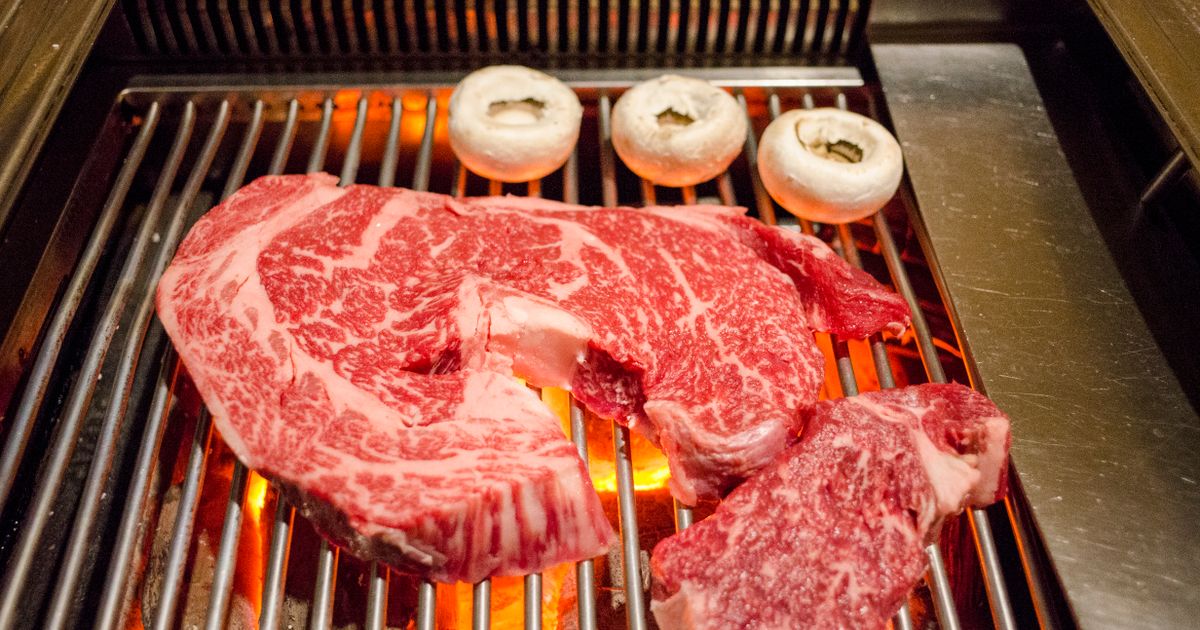
Photo of grilling Wagyu beef on Pexels
- Cook 2-oz portions, not steaks — A5 is 30-50% fat and behaves more like foie gras than beef.
- Dry cast iron, no oil, 60-90 seconds per side max. That’s the whole method.
- Salt only — no pepper, no butter, no garlic. Sauce will drown $60 worth of flavor.
- Never above medium-rare. Beyond 130°F (54°C), the marbling breaks and turns greasy.
What Is A5 Wagyu, Really?
A5 is the top tier of Japan’s official beef grading system, awarded only to cattle scoring 5/5 on marbling (BMS 8–12), color, firmness, and fat quality. About 12% of Japanese wagyu earns the A5 grade each year, per the Japan Meat Grading Association’s 2024 annual report. In the U.S., authentic A5 sells for $150–$300 per pound at butchers like Crowd Cow or Holy Grail Steak Co.
Two things separate A5 from every other steak: fat composition and fat percentage. A5 marbling is mostly monounsaturated oleic acid, which melts at 77°F (25°C) — meaning it starts liquefying the moment it touches your tongue. That’s why raw A5 tastes buttery, and why cooking it hot for too long turns it into a grease puddle. Curious about the grades below A5? Our wagyu grades explained guide breaks down A1 through A5 with photos.
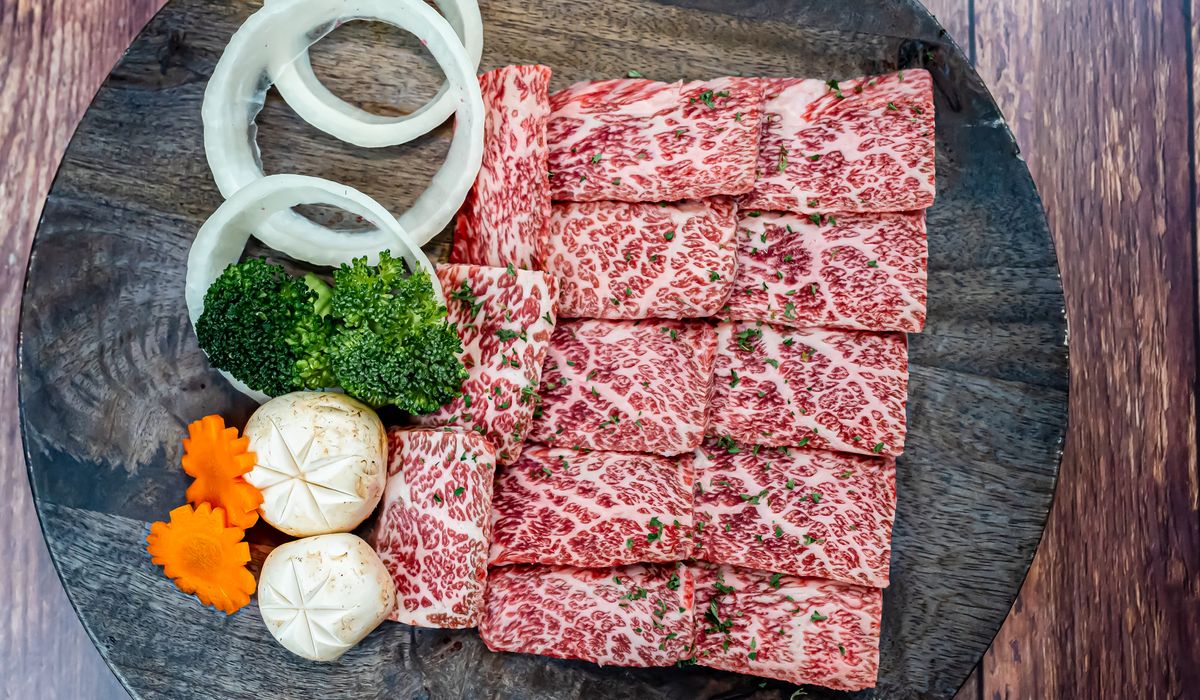
Photo of sliced raw Wagyu beef on Pexels
What You Need Before You Cook A5 Wagyu
Ingredients (Serves 2)
- 4 oz (115 g) authentic A5 Wagyu — ribeye, striploin, or filet
- Flaky sea salt (Maldon or Japanese finishing salt)
- Optional: fresh wasabi (real, not tube) and a splash of soy for dipping
- That’s it. Really.
Equipment
- Cast iron skillet or Japanese teppan — must hold serious heat
- Thermometer (instant-read digital)
- Sharp knife for thin slicing
- Wooden or resting board
- Range hood on high — A5 smokes hard
How Do You Cook A5 Wagyu Step by Step?
The single biggest mistake home cooks make is treating A5 like a ribeye. It isn’t. Ordinary steaks want 4–5 minutes per side; A5 wants 60–90 seconds. Overcook by 30 seconds and you’ve rendered every ounce of the fat you paid for. A 2024 taste-panel study by Serious Eats found that A5 cooked past medium-rare lost 43% of its texture score versus properly-cooked control samples (Serious Eats A5 Wagyu Study, 2024).
Step 1 — Portion small
Cut the A5 into 1-inch-wide strips or 2-oz cubes. Serving a full 8-oz A5 steak is like serving someone half a stick of butter — nobody finishes it. Small portions let the marbling shine without overwhelming.
Step 2 — Salt lightly
Sprinkle flaky salt on both sides right before cooking. Never salt in advance — the salt draws out moisture, which fights against the sear. And no pepper. Pepper burns at high heat and adds bitterness that fights the sweetness of the fat.
Step 3 — Heat the pan bone-dry
Place cast iron over high heat for 3 minutes. No oil. The pan should be smoking lightly. A drop of water should evaporate in under a second. A5 releases enough of its own fat within 5 seconds of contact to lubricate the pan.
Step 4 — Sear 60–90 seconds per side
Lay the pieces down. Don’t move them. Sixty seconds for filet, 90 seconds for ribeye. Flip once. Sear the second side the same time. Then stand each piece on its edge for 10 seconds to sear the fat cap. Total time in pan: about 2 minutes 30 seconds.
Step 5 — Rest 3 minutes, slice thin
Transfer to a warm plate or wooden board. Rest 3 minutes — no foil tent (steam softens the crust you just built). Slice against the grain into ¼-inch strips. Sprinkle a final pinch of salt. Serve immediately.
Cooking Method Comparison: What Works, What Doesn’t
Not every method suits A5. High-fat beef reacts to heat very differently than lean cuts. The cast-iron sear is the gold standard, but sous vide and yakiniku (Japanese tabletop grilling) also work well. Grilling over gas or charcoal is where most home cooks ruin it — the fat drips, flares, and burns.
| Method | Time | Verdict | Best for |
|---|---|---|---|
| Dry cast iron | 60-90 sec/side | ★★★★★ Gold standard | Ribeye, striploin |
| Japanese teppan | 60 sec/side | ★★★★★ Traditional | All cuts |
| Yakiniku (tabletop grill) | 30 sec/side, thin slices | ★★★★ Interactive | Thin-sliced portions |
| Sous vide + sear | 45 min @ 125°F, then 30 sec sear | ★★★★ Foolproof | Filet mignon |
| Charcoal grill | N/A | ★★ Flare-ups ruin it | Skip it |
| Reverse sear (oven) | N/A | ★★ Renders too much fat | Skip it |
Watch: How Chefs Cook A5 Wagyu at Home
Reading about the 90-second sear is one thing. Seeing the fat liquify the moment beef hits the pan is another. This walkthrough shows the exact timing and knife work for slicing after the rest:
What Should You Serve With A5 Wagyu?
Restraint. That’s the whole answer. A5 is so rich that a 4-oz portion equals the fat content of a 12-oz USDA Prime steak. Serve tiny, and pair with something acidic, bright, or peppery to cut the richness. Sushi rice, ponzu, grated daikon, or a wasabi-soy dip are all traditional. Never pair A5 with a heavy red wine or a starch-heavy side — you’ll flatten the flavor.
Warm sushi rice, ponzu, grated daikon, fresh wasabi
Simple watercress salad with rice vinegar and sesame oil
Japanese Okinawa sea salt or Maldon flakes
Curious how A5 compares to premium American beef? Our Wagyu vs USDA Prime comparison shows the marbling difference side by side.
Ready to build a full Japanese dinner?
Pair A5 with our perfect sushi rice recipe and miso soup from scratch for a proper multi-course meal.
Frequently Asked Questions
Why is A5 Wagyu so expensive?
Authentic A5 costs $150–$300 per pound because Japanese Black cattle are raised for 30+ months (double the U.S. average), fed a costly grain diet, and only 12% of graded Japanese beef reaches A5. The genetics, feed, and grading process create a supply-constrained luxury product per the Japan Meat Grading Association, 2024.
What’s the difference between A5 Wagyu and Kobe beef?
All Kobe is Wagyu, but not all Wagyu is Kobe. Kobe beef is A5 Wagyu specifically from Tajima-strain cattle raised in Hyōgo Prefecture. Only about 3,000 cows qualify as true Kobe each year. Other A5 comes from regions like Miyazaki, Ōmi, and Matsusaka — equally delicious, different terroir.
Can you cook A5 Wagyu on a regular stovetop?
Yes. A cast iron pan on a home range works perfectly — no special equipment needed. The one requirement is serious heat: preheat the empty pan for 3 minutes on high before adding the beef. About 68% of A5 home cooks use cast iron, per a 2024 Holy Grail Steak Co. customer survey.
Should I season A5 Wagyu with butter and garlic?
No. A5 already contains more butterfat than steakhouse compound butter. Adding more fat drowns the natural nuttiness of the meat. Salt only, applied right before cooking. This is the traditional Japanese approach and the one every three-Michelin-star wagyu chef follows.
How much A5 Wagyu should I buy per person?
Plan for 2–3 ounces per person as an appetizer or 4 ounces as a main course. That’s roughly half the portion of a normal steak. A5 is so rich that most first-timers can’t finish 4 ounces — start small, add more if wanted. This portion rule is standard in Japanese yakiniku restaurants.
Final Thoughts
Cooking A5 Wagyu at home is easier than most guides make it sound — the whole method is “salt, dry pan, 90 seconds, rest, slice.” The hard part is buying real A5 from a certified source and resisting the urge to add butter, garlic, or pepper. Trust the beef. It cost enough to earn that trust. Ready to keep exploring? Compare cuts in our Wagyu vs USDA Prime deep dive or master the fundamentals with our complete steak guide.
Did You Try Our Recipe ?
Scrumptious
My husband (who is extremely picky) loved the liver & onions so much!! I didn’t have any beef broth or Sherry so I used about a tbl of Worcestershire and 1/4 c of white wine …..it was scrumptious
Response from MeatRecipesBox
Oh wow, I’m so happy to hear that!! 😍 I love that you made it work with what you had on hand — Worcestershire and white wine sound like a delicious twist. So glad your husband enjoyed it, especially being picky! Thank you for sharing your version, it makes me smile knowing it turned out scrumptious!
This was amazing
This recipe turned out really amazing! It’s juicy and spiced deliciously. I definitely would use less of the spicy pepper next time, but it really was delicious and I don’t think I’ll make chicken legs any other way from now on.!
Response from MeatRecipesBox
Thank you for taking the time to leave such a thoughtful review. I’m really glad to hear the recipe turned out juicy and full of flavor for you. That’s exactly what I was hoping for when putting it together. Good call on the spicy pepper as well. Adjusting the heat level to your own taste is always the best approach, and using a little less next time should make it just right for you. I really appreciate you trying the recipe and sharing your experience. It’s great to know it worked so well for you.
I Didn’t Expect This Cornbeef Hash Recipe to Taste This Good!!
One skillet. A handful of simple ingredients. Thirty minutes on the clock. And somehow… I ended up with the crispiest, most comforting cornbeef hash recipe I’ve made in years.
I wasn’t expecting much—just a quick, no-fuss meal. But that first bite? Crispy edges, tender potatoes, smoky corned beef, a little kick of pepper. It tasted like something straight off a cozy diner griddle.
Honestly, it caught me off guard—in the best way. Here’s why this simple skillet completely won me over.

Emma Delacourt
Recipe Developer & Founder, MeatRecipesBox
Emma has been developing and testing meat recipes since 2019. She focuses on temperature precision, food science, and making restaurant-quality results accessible for home cooks. Every recipe on this site is tested multiple times before publishing.


