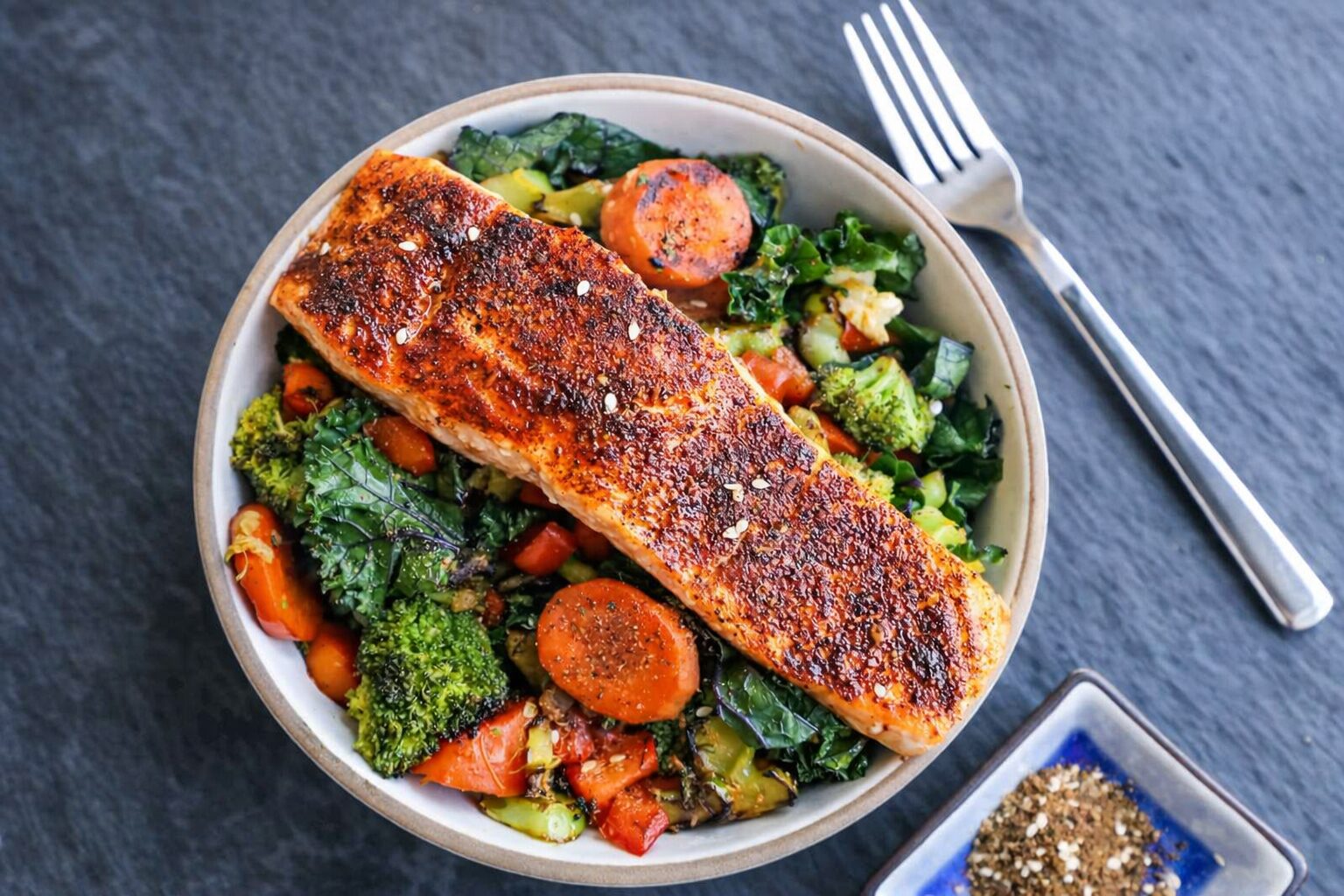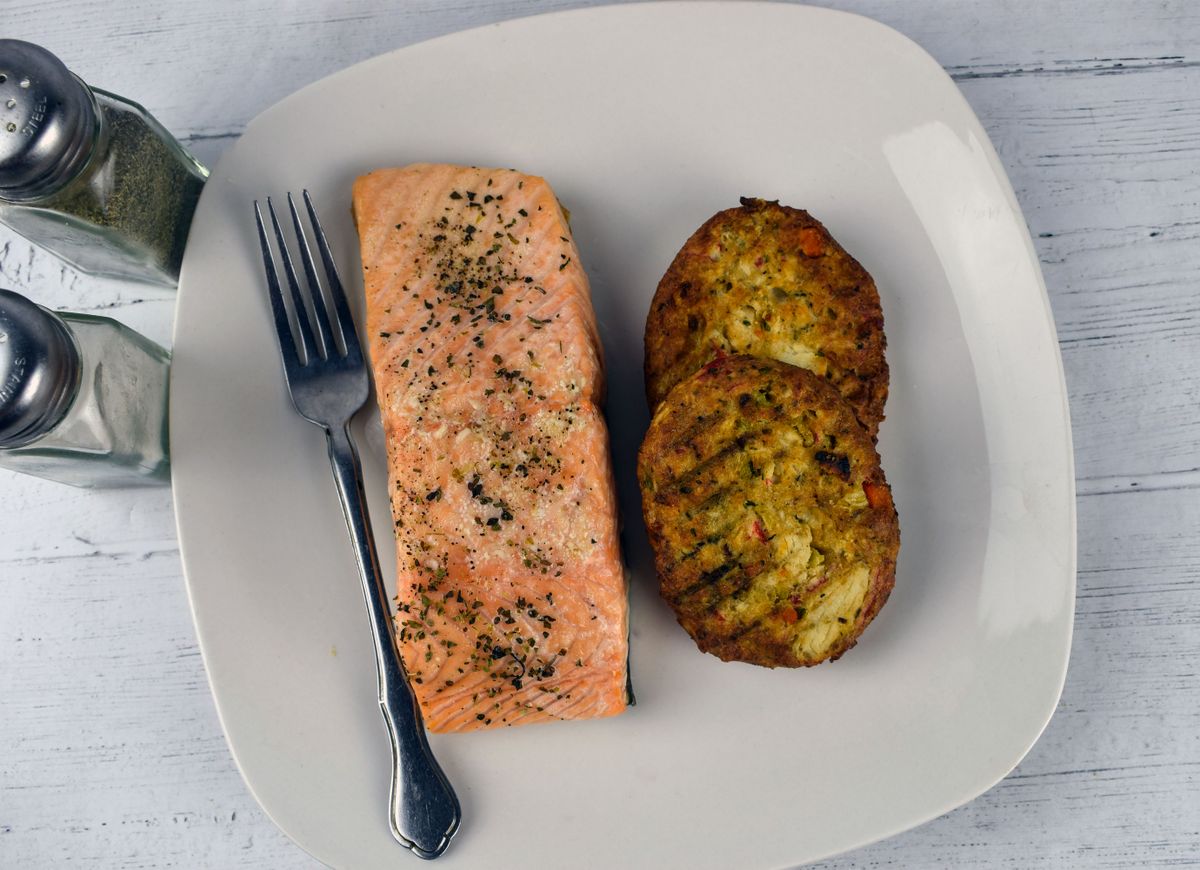
“Red salmon” means sockeye — but at the grocery store it splits into two very different products: fresh sockeye fillets (in the seafood case) and canned red salmon (in the shelf-stable aisle). Both bake beautifully; the technique for each is completely different. Below are both, plus a quick comparison so you can decide which one your recipe needs.
If you have fresh fillets
- Bake 425°F, 10 min, pull at 125–130°F
- Skin-on, skin-side down
- Rest 3 min before serving
- Lean flesh (6% fat) — dries fast
If you have a can of red salmon
- Drain, flake, mix with egg + breadcrumbs
- Form patties, chill 15 min
- Bake 425°F, 15 min, flip, 5 more min
- Look for “wild Alaskan” on the label
What “red salmon” actually means
Red salmon is the North American retail name for Oncorhynchus nerka, better known as sockeye. The name comes from the deep red flesh, which is deeper than any other Pacific salmon and holds its colour after cooking. Two forms dominate the market: fresh (or flash-frozen) fillets sold in the seafood section, and canned red salmon sold shelf-stable in the pantry aisle.
The canned version is almost always wild-caught Alaskan sockeye. It’s caught during the June–August run, cooked once in the can, and needs no refrigeration until opened. Brands like Bumble Bee, Rubinstein’s, and Wild Planet dominate US shelves. The colour is deep pink to true red depending on the pack.
Fresh red salmon vs canned: which one do you want?
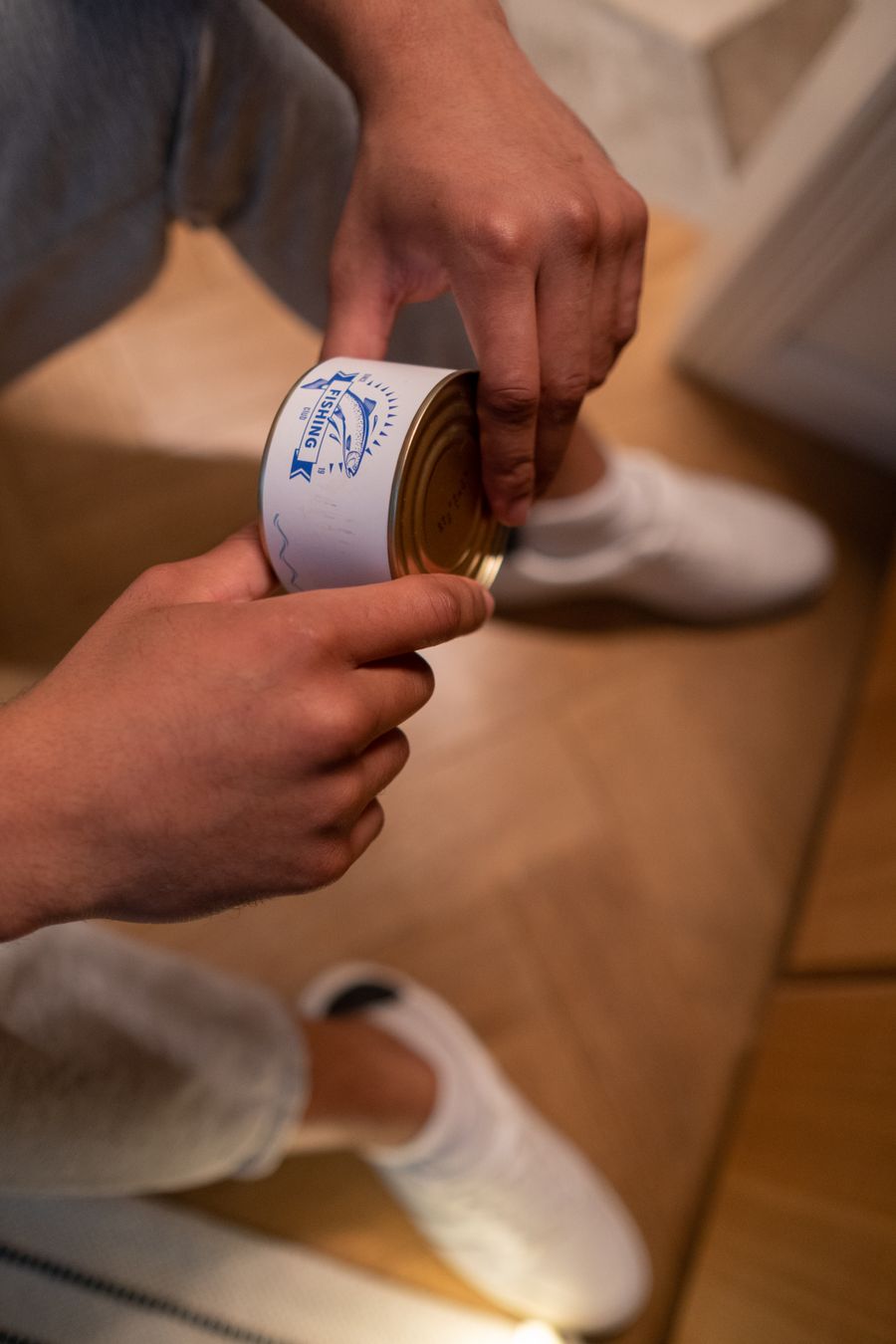
Fresh sockeye fillet
The premium version. Restaurant-plate texture, delicate flesh, needs careful timing.
- Best for pan-seared, baked, or grilled fillet plates
- Pull at 125–130°F to avoid drying
- Around $18–28/lb depending on season
- Cook and eat within 2 days of purchase
Canned red salmon
The pantry hero. Already cooked, mixes into patties, cakes, salads, dips, or loaves.
- Best for patties, casseroles, salmon salad, chowder
- Bones are edible (soft, calcium-rich) — mash in
- Around $4–7 per 14.75 oz can
- Stores 3–5 years unopened
| Metric | Fresh red salmon fillet | Canned red salmon |
|---|---|---|
| Typical serving | 6 oz (170 g) fillet | ½ can (~7 oz drained) |
| Calories per serving | ~285 kcal | ~180 kcal |
| Protein per serving | 34 g | 25 g |
| Omega-3 (EPA + DHA) | ~1.5 g | ~1.1 g |
| Sodium | ~75 mg | ~420 mg |
| Best cooking method | Bake, sear, grill (whole fillet) | Patties, cakes, casserole, salad |
| Shelf life | 2 days fridge, 3 mo. freezer | 3–5 years pantry |
Nutritional values based on typical 6 oz sockeye fillet and Bumble Bee/Rubinstein’s 14.75 oz cans, drained. Actual values vary by brand.
Recipe 1: Baked canned red salmon patties
The pantry recipe. A can of red salmon, an egg, breadcrumbs, a couple of aromatics. From closed can to plated dinner in 30 minutes.
Ingredients
- 1 can (14.75 oz / 418 g) wild Alaskan red salmon, drained
- 1 large egg, lightly beaten
- ½ cup (30 g) panko breadcrumbs
- ¼ cup finely minced yellow onion
- 2 tbsp mayonnaise (optional binder)
- 1 tbsp fresh dill, chopped (or 1 tsp dried)
- 1 tsp lemon zest
- 1 tsp Dijon mustard
- ½ tsp fine sea salt, ¼ tsp black pepper
- 1 tbsp olive oil, for the sheet pan
- Lemon wedges, to serve
Method
- Preheat the oven to 425°F / 220°C. Brush a rimmed sheet pan generously with olive oil.
- Drain and flake. Empty the can into a fine sieve. Press gently to remove excess liquid. Transfer to a bowl and flake with a fork. Leave the soft bones in — they’re calcium-rich and disappear when mashed.
- Mix and bind. Add egg, panko, onion, mayo, dill, lemon zest, mustard, salt, and pepper. Stir until just combined. The mixture should hold when squeezed; if it crumbles, add a spoonful more mayo.
- Form and chill. Shape into 6 patties, roughly ½ inch thick. Chill on a plate for 15 minutes. This step is not optional — warm patties fall apart in the oven.
- Bake. Arrange on the oiled sheet pan. Bake 15 minutes. Flip carefully with a thin spatula. Bake another 5 minutes until the tops are golden brown and the internal temperature reads 165°F (74°C).
- Serve. Squeeze lemon over each patty. Pair with a dill-yogurt sauce or a spoonful of tartare.
Recipe 2: Baked fresh red salmon fillet (short version)
The 10-minute fillet method
For a fresh 6 oz sockeye fillet at 1 inch thick.
- Preheat oven to 425°F. Pat the fillet dry.
- Rub with olive oil, salt, pepper, minced garlic, and lemon zest. Skin-side down on parchment.
- Bake 10 minutes. Pull at 125°F / 52°C internal.
- Rest 3 minutes. Carryover heat brings it to the ideal 130°F.
The fresh fillet method has its own dedicated deep-dive with a doneness chart, comparison across salmon species, and 5 troubleshooting FAQs.
Full baked sockeye salmon guide →Common mistakes with baked canned red salmon
- Skipping the chill step. Warm patties spread and fall apart the moment they hit the sheet pan. 15 minutes in the fridge is what turns a wet mixture into a patty that flips cleanly.
- Rinsing the salmon. The can liquid holds most of the omega-3s and adds richness. Drain, don’t rinse.
- Removing the bones. Canned salmon bones are soft, edible, and calcium-rich. Removing them wastes the biggest nutritional bonus of buying canned over fresh.
- Overbaking to 180°F+. Canned salmon is already cooked once inside the can. You only need to reach 165°F to warm through and set the binder. Higher = dry.
- Buying pink salmon and expecting red flavour. “Pink salmon” is a different species (Oncorhynchus gorbuscha) and much milder. If a recipe calls for red salmon, look for “sockeye” or “red” on the label.
Frequently asked questions
Is canned red salmon the same as canned sockeye?
Yes. “Red salmon” and “sockeye” refer to the same species (Oncorhynchus nerka). US canning laws let brands use either name. If the can says “wild Alaskan red” or “wild Alaskan sockeye”, it’s the same fish.
Can I eat the bones and skin in canned red salmon?
Yes to both. Canning at high pressure softens the bones completely — they mash into the flesh without any texture and deliver about 200 mg of calcium per serving. Skin is safe to eat; remove it if the texture bothers you.
Why is canned red salmon more expensive than pink?
Sockeye runs are smaller and shorter than pink salmon runs, and the fish is prized for its deeper colour and flavour. A can of pink salmon runs $2–3; a can of red salmon runs $4–7. Same size can, different fish.
Can I bake canned salmon straight from the can without making patties?
Yes — spread the drained salmon in a small oven-safe dish, top with breadcrumbs and lemon zest, drizzle olive oil, and bake at 400°F for 12 minutes. It’s essentially a mini salmon casserole. Not as pretty as patties, faster to make.
How long does an open can of red salmon last?
Transfer any leftover salmon out of the can to a sealed container. Refrigerate up to 3 days. The salmon in metal will pick up a tinny flavour if left in the open can, and the metal can start to corrode from the acidic liquid.
Save both baked red salmon recipes to Pinterest — patties for pantry nights, fillet for special dinners.
📌 Pin the collectionDid You Try Our Recipe ?
Scrumptious
My husband (who is extremely picky) loved the liver & onions so much!! I didn’t have any beef broth or Sherry so I used about a tbl of Worcestershire and 1/4 c of white wine …..it was scrumptious
Response from MeatRecipesBox
Oh wow, I’m so happy to hear that!! 😍 I love that you made it work with what you had on hand — Worcestershire and white wine sound like a delicious twist. So glad your husband enjoyed it, especially being picky! Thank you for sharing your version, it makes me smile knowing it turned out scrumptious!
This was amazing
This recipe turned out really amazing! It’s juicy and spiced deliciously. I definitely would use less of the spicy pepper next time, but it really was delicious and I don’t think I’ll make chicken legs any other way from now on.!
Response from MeatRecipesBox
Thank you for taking the time to leave such a thoughtful review. I’m really glad to hear the recipe turned out juicy and full of flavor for you. That’s exactly what I was hoping for when putting it together. Good call on the spicy pepper as well. Adjusting the heat level to your own taste is always the best approach, and using a little less next time should make it just right for you. I really appreciate you trying the recipe and sharing your experience. It’s great to know it worked so well for you.
I Didn’t Expect This Cornbeef Hash Recipe to Taste This Good!!
One skillet. A handful of simple ingredients. Thirty minutes on the clock. And somehow… I ended up with the crispiest, most comforting cornbeef hash recipe I’ve made in years.
I wasn’t expecting much—just a quick, no-fuss meal. But that first bite? Crispy edges, tender potatoes, smoky corned beef, a little kick of pepper. It tasted like something straight off a cozy diner griddle.
Honestly, it caught me off guard—in the best way. Here’s why this simple skillet completely won me over.
Did You Try Our Recipe ?
Scrumptious
My husband (who is extremely picky) loved the liver & onions so much!! I didn’t have any beef broth or Sherry so I used about a tbl of Worcestershire and 1/4 c of white wine …..it was scrumptious
Response from MeatRecipesBox
Oh wow, I’m so happy to hear that!! 😍 I love that you made it work with what you had on hand — Worcestershire and white wine sound like a delicious twist. So glad your husband enjoyed it, especially being picky! Thank you for sharing your version, it makes me smile knowing it turned out scrumptious!
This was amazing
This recipe turned out really amazing! It’s juicy and spiced deliciously. I definitely would use less of the spicy pepper next time, but it really was delicious and I don’t think I’ll make chicken legs any other way from now on.!
Response from MeatRecipesBox
Thank you for taking the time to leave such a thoughtful review. I’m really glad to hear the recipe turned out juicy and full of flavor for you. That’s exactly what I was hoping for when putting it together. Good call on the spicy pepper as well. Adjusting the heat level to your own taste is always the best approach, and using a little less next time should make it just right for you. I really appreciate you trying the recipe and sharing your experience. It’s great to know it worked so well for you.
I Didn’t Expect This Cornbeef Hash Recipe to Taste This Good!!
One skillet. A handful of simple ingredients. Thirty minutes on the clock. And somehow… I ended up with the crispiest, most comforting cornbeef hash recipe I’ve made in years.
I wasn’t expecting much—just a quick, no-fuss meal. But that first bite? Crispy edges, tender potatoes, smoky corned beef, a little kick of pepper. It tasted like something straight off a cozy diner griddle.
Honestly, it caught me off guard—in the best way. Here’s why this simple skillet completely won me over.