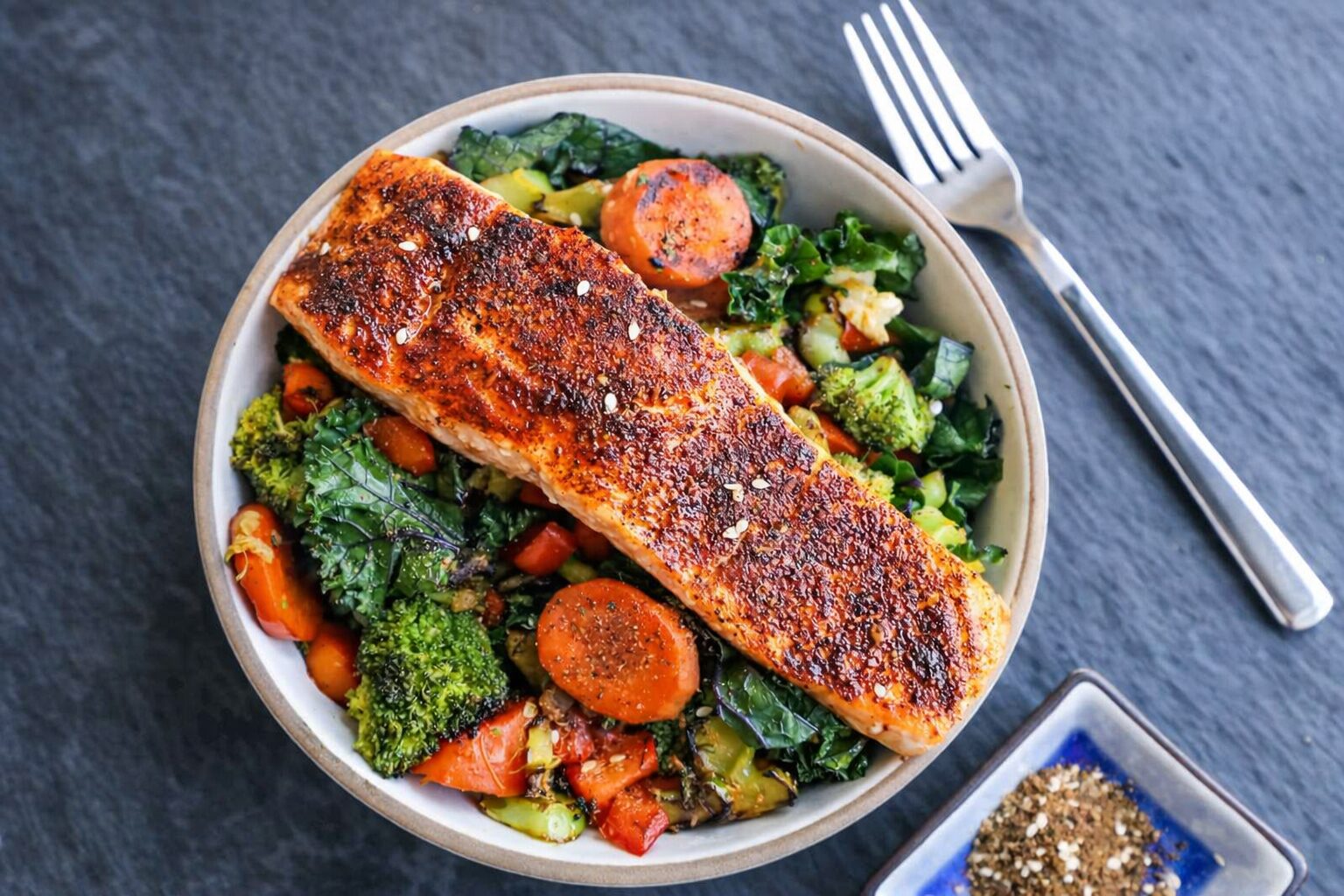

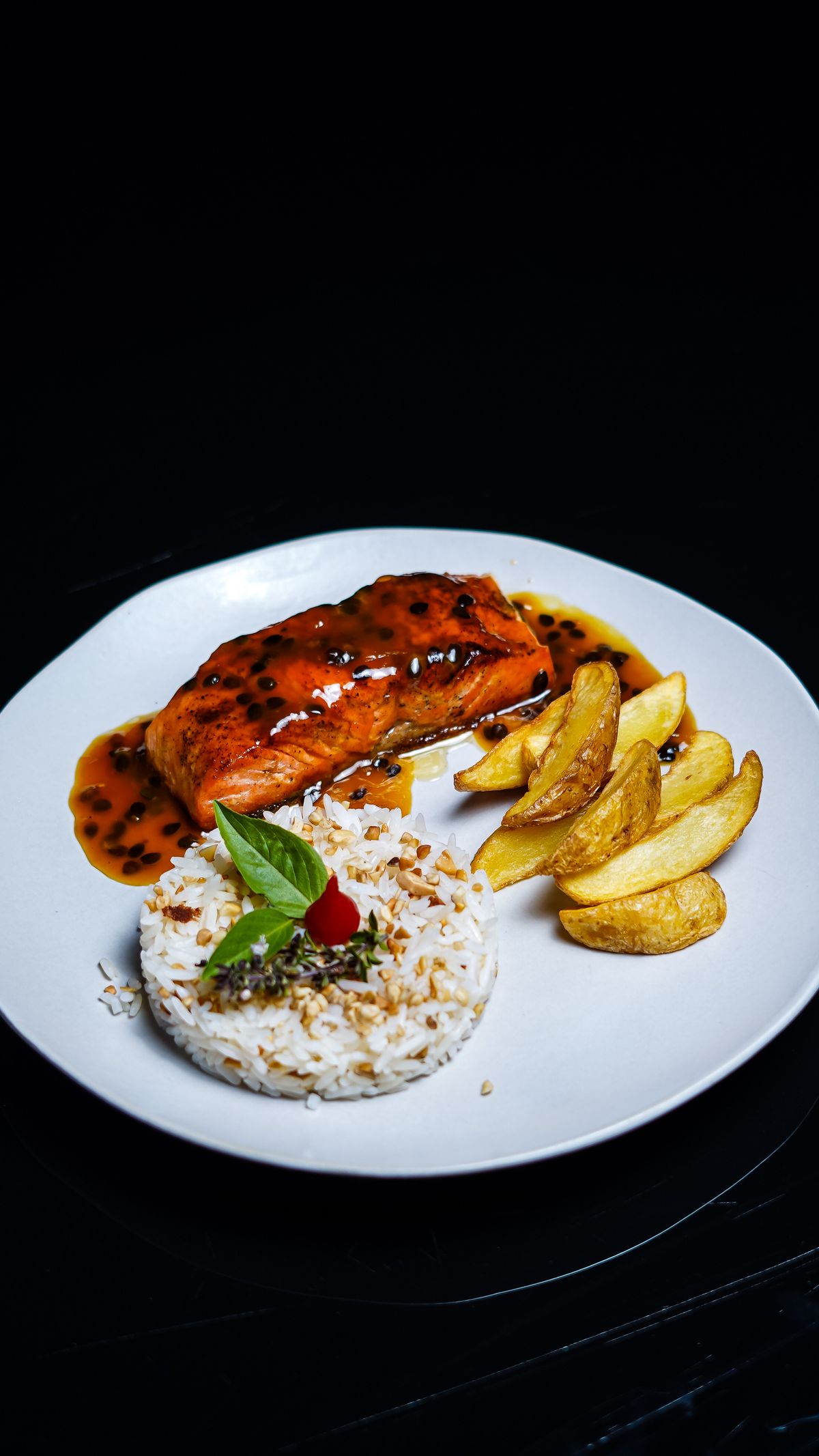
The best salmon glaze recipe depends on one question: sweet, savory, or spicy? Below are 7 tested glazes, each with full ingredients, cooking method, and the exact pull-temperature that produces a caramelized, lacquered fillet at home. Every glaze finishes salmon at 125–130°F (52–54°C) internal — the range where the flesh stays silky and the sugars set into a mahogany crust.
Salmon is fatty (18–22% fat in Chinook, 12% in Atlantic, 6% in Sockeye), which means the glaze does 80% of the flavor work. All 7 recipes below feed 4, take under 25 minutes total, and use pantry staples plus one salmon fillet per person.
Honey Garlic Salmon Glaze
The classic. Sweet, sticky, and irresistibly caramelized — the gateway glaze for a reason.

- 4 salmon fillets (6 oz each, skin-on)
- 3 tbsp raw honey
- 4 garlic cloves, minced
- 2 tbsp soy sauce (low-sodium)
- 1 tbsp unsalted butter
- 1 tbsp olive oil
- ½ tsp red pepper flakes (optional)
- Salt & black pepper
- Fresh parsley or thyme to garnish
Instructions
- Prep the salmon. Pat fillets completely dry with paper towels. Season lightly with salt and pepper on both sides. Dry skin = crispy skin.
- Make the glaze. In a small bowl, whisk together honey, minced garlic, and soy sauce. Set aside.
- Sear skin-side first. Heat olive oil and butter in a cast-iron or stainless skillet over medium-high. Place salmon skin-side down. Press gently for 10 seconds to prevent curling. Cook 4 minutes without moving.
- Flip and glaze. Flip the salmon. Immediately pour the honey garlic glaze over each fillet. It will bubble vigorously — that’s caramelization happening. Spoon the thickening glaze over the salmon continuously. Cook 3–4 more minutes.
- Check doneness. Target: Salmon 125–130°F / 52–54°C for medium (ideal — the center will be silky and slightly translucent). Remove from heat when the glaze is mahogany brown and clings to the fish.
Soy Brown Sugar Salmon Glaze
Deep, umami-forward, and lacquered to perfection. The one that converts salmon skeptics.
- 4 salmon fillets (6 oz each)
- 3 tbsp low-sodium soy sauce
- 2 tbsp packed light brown sugar
- 2 tbsp rice wine vinegar
- 1 tbsp sesame oil
- 3 garlic cloves, minced
- 1 tsp fresh ginger, grated
- 1 tbsp olive oil for pan
- Sesame seeds & green onion to garnish
Instructions
- Marinate (optional but recommended). Combine soy sauce, brown sugar, rice vinegar, sesame oil, garlic, and ginger. Reserve 2 tbsp for finishing. Pour the rest over salmon and marinate 15–30 minutes in the fridge.
- Sear in a hot pan. Heat olive oil over medium-high. Remove salmon from marinade and pat lightly — don’t remove all the marinade. Sear skin-side down 4 minutes.
- Flip and reduce the glaze. Flip the salmon. Pour the reserved glaze directly into the pan around the fish (not on top yet). Let it reduce 60 seconds, then spoon over the salmon.
- Finish and glaze repeatedly. Continue basting for 3–4 minutes until the sauce thickens to a syrupy consistency and clings. Target: Salmon 125–130°F / 52–54°C
- Rest and garnish. Let rest 2 minutes. Top with toasted sesame seeds and thinly sliced green onions.
Lemon Herb Butter Glaze
Bright, clean, and elegant. The glaze that makes salmon taste most like itself — elevated.
- 4 salmon fillets (6 oz each)
- 4 tbsp unsalted butter
- Zest and juice of 1 large lemon
- 3 garlic cloves, minced
- 1 tbsp fresh dill, chopped
- 1 tbsp fresh parsley, chopped
- ½ tsp dried thyme
- Salt, white pepper
- Lemon slices to serve
Instructions
- Make the herb butter glaze. In a small saucepan over low, melt butter. Add garlic, cook 1 minute until fragrant (not brown). Add lemon zest, juice, dill, parsley, and thyme. Remove from heat. Season with salt and white pepper.
- Oven method for this glaze. Preheat oven to 400°F (200°C). Line a baking sheet with foil. Place salmon on the sheet, brush generously with the herb butter glaze.
- Bake and baste. Bake 8–10 minutes. At the 5-minute mark, spoon more glaze over each fillet. Return to oven for final 3–5 minutes.
- Finish under the broiler. Broil 2 minutes for a lightly golden top. Target: Salmon 125–130°F / 52–54°C
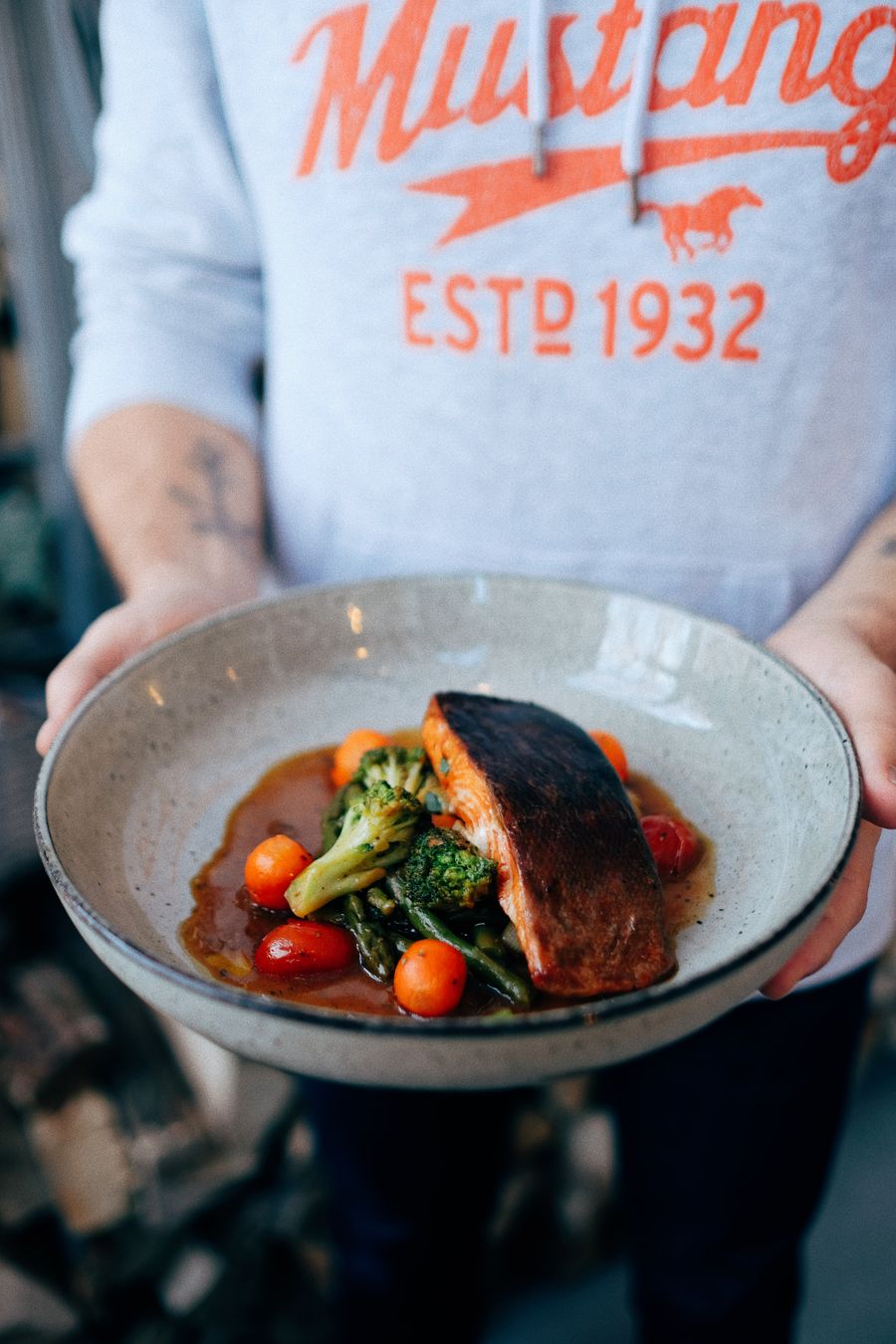
Miso Ginger Glaze
Deeply savory, fermented, and complex. The glaze that makes guests ask for the recipe.
- 4 salmon fillets (6 oz each)
- 2 tbsp white miso paste
- 2 tbsp mirin
- 1 tbsp sake (or dry sherry)
- 1 tbsp honey
- 1 tsp fresh ginger, finely grated
- 1 tsp sesame oil
- 1 tbsp olive oil for pan
- Sliced scallions to garnish
Instructions
- Make the miso glaze. Whisk miso, mirin, sake, honey, ginger, and sesame oil together until the miso is fully dissolved and smooth. Divide: half for marinating, half for finishing.
- Marinate the salmon. Coat the flesh side of the salmon with half the glaze. Marinate at least 20 minutes (up to 2 hours in the fridge). The miso enzymes will begin to cure the fish surface slightly.
- Broil method (traditional for miso salmon). Preheat broiler to high. Line a baking sheet with foil, brush lightly with oil. Place salmon skin-side down. Broil 5–6 minutes until the glaze caramelizes and the edges darken. Watch closely — miso burns quickly.
- Brush and finish. At the 4-minute mark, brush remaining glaze over each fillet. Continue broiling until the surface is bubbling and deeply caramelized. Target: Salmon 125–130°F / 52–54°C
Spicy Sriracha Honey Glaze
Heat-seekers, this one’s yours. Sweet, fiery, and sticky in the best possible way.
- 4 salmon fillets (6 oz each)
- 2 tbsp raw honey
- 1.5 tbsp sriracha (adjust to heat preference)
- 2 tbsp soy sauce
- 1 tbsp rice vinegar
- 2 garlic cloves, minced
- 1 tsp sesame oil
- 1 tbsp olive oil for pan
- Lime wedges & cilantro to garnish
Instructions
- Whisk the glaze. Combine honey, sriracha, soy sauce, rice vinegar, garlic, and sesame oil. Taste and adjust heat — add more sriracha for fire, more honey for sweetness.
- Pan-sear skin-side down. Heat olive oil in a cast-iron pan over medium-high. Place salmon skin-side down, press flat for 10 seconds. Cook 4 minutes undisturbed.
- Flip and glaze aggressively. Flip. Pour the sriracha honey glaze over the fillets. The sugars will bubble and caramelize rapidly. Baste continuously with a spoon for 3–4 minutes.
- Finish and serve. Target: Salmon 125–130°F / 52–54°C. The glaze should be sticky, slightly charred at the edges, and clinging thickly to the fish. Serve with a lime wedge — the acid is essential to balance the heat.
Maple Dijon Glaze
Sharp mustard tang against pure maple sweetness. An autumn dinner table staple.
- 4 salmon fillets (6 oz each)
- 3 tbsp pure maple syrup (Grade A dark)
- 2 tbsp Dijon mustard
- 1 tbsp whole grain mustard
- 1 tbsp apple cider vinegar
- 2 garlic cloves, minced
- ½ tsp dried thyme
- Salt & cracked black pepper
- Fresh thyme to garnish
Instructions
- Make the maple Dijon glaze. Whisk maple syrup, both mustards, apple cider vinegar, garlic, and thyme until smooth and emulsified. The whole grain mustard adds texture — don’t substitute with regular mustard only.
- Coat the salmon. Place fillets on a foil-lined baking sheet. Spoon the glaze generously over the flesh side of each fillet, spreading to coat completely.
- Bake at 400°F (200°C). Bake 10–12 minutes, brushing with additional glaze at the 7-minute mark. The maple’s sugars will create a golden-amber crust.
- Broil to finish. Broil 2–3 minutes until the glaze is bubbling and lightly charred at the edges. Target: Salmon 125–130°F / 52–54°C
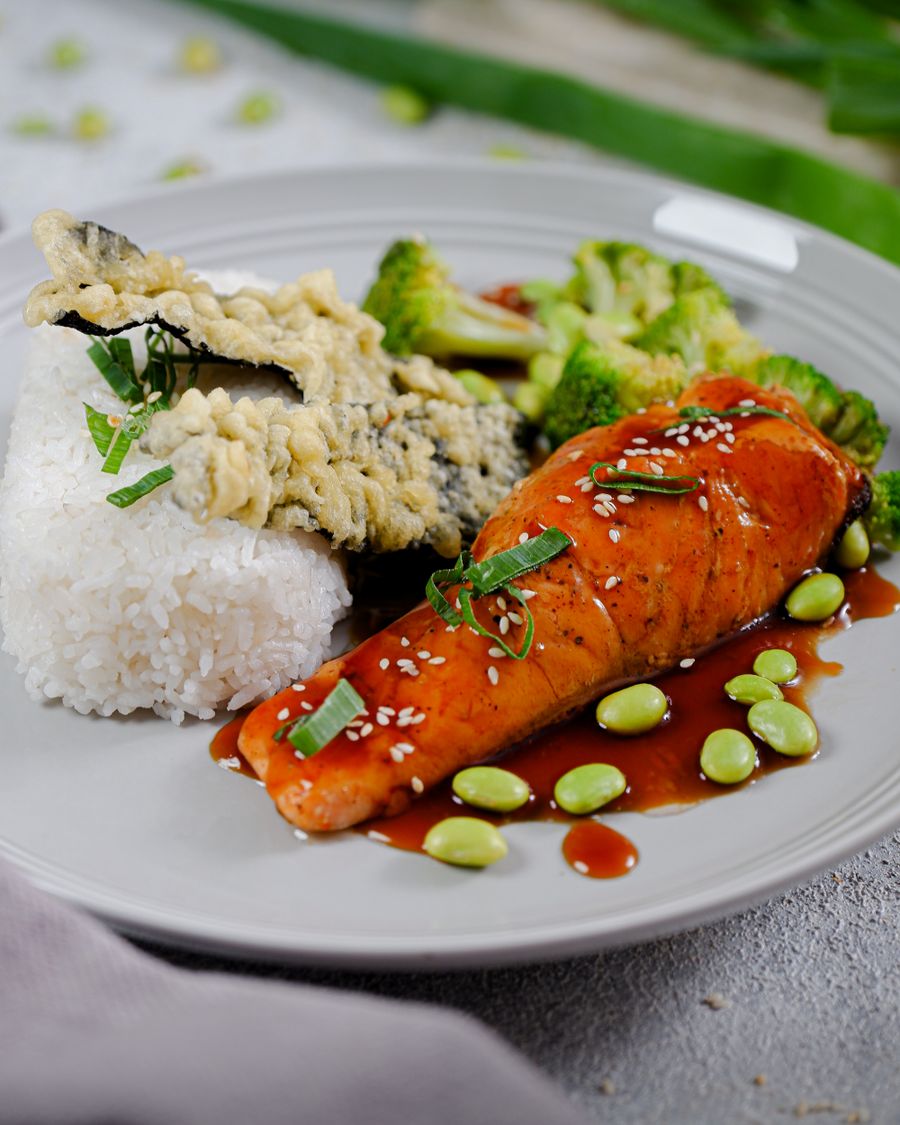
Teriyaki Salmon Glaze
The Japanese-American classic — glossy, sweet-savory perfection. A crowd-pleaser every single time.
- 4 salmon fillets (6 oz each)
- 3 tbsp low-sodium soy sauce
- 2 tbsp mirin
- 1 tbsp sake
- 1 tbsp honey
- ½ tsp cornstarch + 1 tbsp water
- 1 tbsp sesame oil
- 1 tbsp neutral oil for pan
- Toasted sesame seeds & green onion
Instructions
- Make homemade teriyaki glaze. In a small saucepan, combine soy sauce, mirin, sake, and honey. Bring to a gentle simmer over medium. Mix cornstarch with water, stir into the sauce. Cook 2–3 minutes until thickened and glossy. Stir in sesame oil. Cool slightly.
- Sear the salmon. Heat oil in a cast-iron pan over medium-high. Sear salmon skin-side down 4 minutes. Flip. Cook 2 minutes on the flesh side.
- Glaze generously. Spoon the teriyaki glaze over each fillet. Baste continuously as it reduces and caramelizes on the fish surface. Cook 2–3 more minutes, basting every 30 seconds.
- Finish and serve. Target: Salmon 125–130°F / 52–54°C. The glaze should be thick, glossy, and mirror-like on the surface. Serve over steamed rice, garnished with sesame seeds and green onion.
How to Apply a Salmon Glaze Perfectly
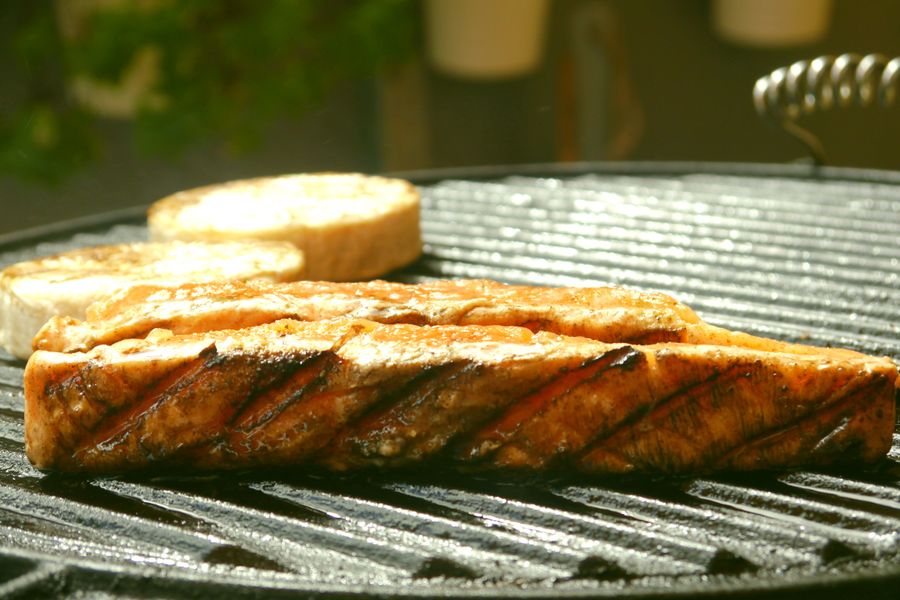
The glaze method matters as much as the glaze itself. In my kitchen tests, these four techniques produce consistently excellent results regardless of which glaze you choose:
Pan-Sear + Baste
Best for honey, soy, and sriracha glazes. High heat caramelizes the sugars rapidly. Baste continuously after flipping for a lacquered finish.
Broil Method
Best for miso and maple Dijon glazes. The intense top-heat creates a deeply caramelized surface without overcooking the interior.
Bake + Broil Finish
Best for herb butter and teriyaki glazes. Baking ensures even cooking; the final broil delivers the caramelized crust at the end.
Marinate + Cook
Best for miso and soy brown sugar glazes. Marinating pre-seasons the flesh and the miso enzymes begin to tenderize the surface before heat is applied.
For additional regional glaze inspirations worth exploring, this salmon glaze collection from Pan Mastery covers Mediterranean and Nordic variations that pair well with the techniques above.
Storage & Meal Prep
Glazed salmon keeps up to 2 days in an airtight container. The glaze will congeal when cold — this is normal. It liquefies again when the fish is gently reheated.
All 7 glazes can be made up to 5 days ahead and refrigerated. Honey and soy glazes keep 2 weeks. Miso glaze keeps 1 week. Herb butter keeps 3 days.
Reheat glazed salmon at 275°F (135°C) for 10–12 minutes covered loosely with foil. Never microwave — it dries the fish and makes the glaze gummy.
Common Mistakes to Avoid
Applying the glaze too early in cooking. Sweet glazes burn at high temperatures before the salmon finishes cooking. Always apply in the last half of cooking time, not at the start.
Using cold salmon straight from the fridge. Cold fillets cook unevenly — the outside overcooks before the center reaches temperature. Let salmon rest 10 minutes at room temperature before cooking.
Not patting the salmon dry. Surface moisture prevents the glaze from adhering and causes steaming rather than caramelization. Always dry thoroughly before applying any glaze or placing in the pan.
Overcooking to 145°F internal. USDA recommends 145°F for salmon, but at that temperature the fish is dry and chalky. For superior texture, pull at 125–130°F — the residual heat carries it the rest of the way. Safe for healthy adults.
Frequently Asked Questions
- Q: What’s the best salmon for glazing?King (Chinook) salmon has the highest fat content (18–22%) and caramelizes most beautifully with any glaze. Atlantic salmon is widely available and works well for all 7 glazes. Sockeye is leaner — ideal for lighter glazes like the lemon herb butter or miso versions.
- Q: Can I use frozen salmon for these recipes?Yes — thaw completely overnight in the refrigerator. Pat very dry after thawing, as frozen salmon releases significantly more moisture than fresh. This extra drying step is critical for glaze adhesion.
- Q: How do I know when salmon is done?An instant-read thermometer is the most reliable method. Target 125–130°F at the thickest point. Visual cues: the flesh turns from translucent deep pink to an opaque lighter pink, and it flakes easily when pressed gently with a fork.
- Q: Which glaze is best for meal prep?The soy brown sugar glaze reheats best because it doesn’t lose its shine or break down as much as butter-based glazes. It also tastes excellent cold, making it ideal for salmon grain bowls or salads throughout the week.
- Q: Can I grill glazed salmon?Yes, with caution. Use a well-oiled grill over medium heat. Apply the glaze only in the last 2–3 minutes of cooking — direct flame on sugar-heavy glazes causes rapid burning. The miso ginger and lemon herb butter glazes grill best.
Pin this complete collection of honey glazed salmon and savory salmon glaze recipes so every weeknight dinner is effortlessly restaurant-worthy.
📌 Save to PinterestDid You Try Our Recipe ?
Chicken hears and gizzards
I would love you to send me the recipe please. I have no printer to print it off. [email protected]
Response from MeatRecipesBox
Hi Sharon, thank you so much for your kind words! I’ve just sent the full recipe to your inbox. Enjoy, and let me know how it turns out! 😊
Scrumptious
My husband (who is extremely picky) loved the liver & onions so much!! I didn’t have any beef broth or Sherry so I used about a tbl of Worcestershire and 1/4 c of white wine …..it was scrumptious
Response from MeatRecipesBox
Oh wow, I’m so happy to hear that!! 😍 I love that you made it work with what you had on hand — Worcestershire and white wine sound like a delicious twist. So glad your husband enjoyed it, especially being picky! Thank you for sharing your version, it makes me smile knowing it turned out scrumptious!
This was amazing
This recipe turned out really amazing! It’s juicy and spiced deliciously. I definitely would use less of the spicy pepper next time, but it really was delicious and I don’t think I’ll make chicken legs any other way from now on.!
Response from MeatRecipesBox
Thank you for taking the time to leave such a thoughtful review. I’m really glad to hear the recipe turned out juicy and full of flavor for you. That’s exactly what I was hoping for when putting it together. Good call on the spicy pepper as well. Adjusting the heat level to your own taste is always the best approach, and using a little less next time should make it just right for you. I really appreciate you trying the recipe and sharing your experience. It’s great to know it worked so well for you.
I Didn’t Expect This Cornbeef Hash Recipe to Taste This Good!!
One skillet. A handful of simple ingredients. Thirty minutes on the clock. And somehow… I ended up with the crispiest, most comforting cornbeef hash recipe I’ve made in years.
I wasn’t expecting much—just a quick, no-fuss meal. But that first bite? Crispy edges, tender potatoes, smoky corned beef, a little kick of pepper. It tasted like something straight off a cozy diner griddle.
Honestly, it caught me off guard—in the best way. Here’s why this simple skillet completely won me over.
Did You Try Our Recipe ?
Chicken hears and gizzards
I would love you to send me the recipe please. I have no printer to print it off. [email protected]
Response from MeatRecipesBox
Hi Sharon, thank you so much for your kind words! I’ve just sent the full recipe to your inbox. Enjoy, and let me know how it turns out! 😊
Scrumptious
My husband (who is extremely picky) loved the liver & onions so much!! I didn’t have any beef broth or Sherry so I used about a tbl of Worcestershire and 1/4 c of white wine …..it was scrumptious
Response from MeatRecipesBox
Oh wow, I’m so happy to hear that!! 😍 I love that you made it work with what you had on hand — Worcestershire and white wine sound like a delicious twist. So glad your husband enjoyed it, especially being picky! Thank you for sharing your version, it makes me smile knowing it turned out scrumptious!
This was amazing
This recipe turned out really amazing! It’s juicy and spiced deliciously. I definitely would use less of the spicy pepper next time, but it really was delicious and I don’t think I’ll make chicken legs any other way from now on.!
Response from MeatRecipesBox
Thank you for taking the time to leave such a thoughtful review. I’m really glad to hear the recipe turned out juicy and full of flavor for you. That’s exactly what I was hoping for when putting it together. Good call on the spicy pepper as well. Adjusting the heat level to your own taste is always the best approach, and using a little less next time should make it just right for you. I really appreciate you trying the recipe and sharing your experience. It’s great to know it worked so well for you.
I Didn’t Expect This Cornbeef Hash Recipe to Taste This Good!!
One skillet. A handful of simple ingredients. Thirty minutes on the clock. And somehow… I ended up with the crispiest, most comforting cornbeef hash recipe I’ve made in years.
I wasn’t expecting much—just a quick, no-fuss meal. But that first bite? Crispy edges, tender potatoes, smoky corned beef, a little kick of pepper. It tasted like something straight off a cozy diner griddle.
Honestly, it caught me off guard—in the best way. Here’s why this simple skillet completely won me over.