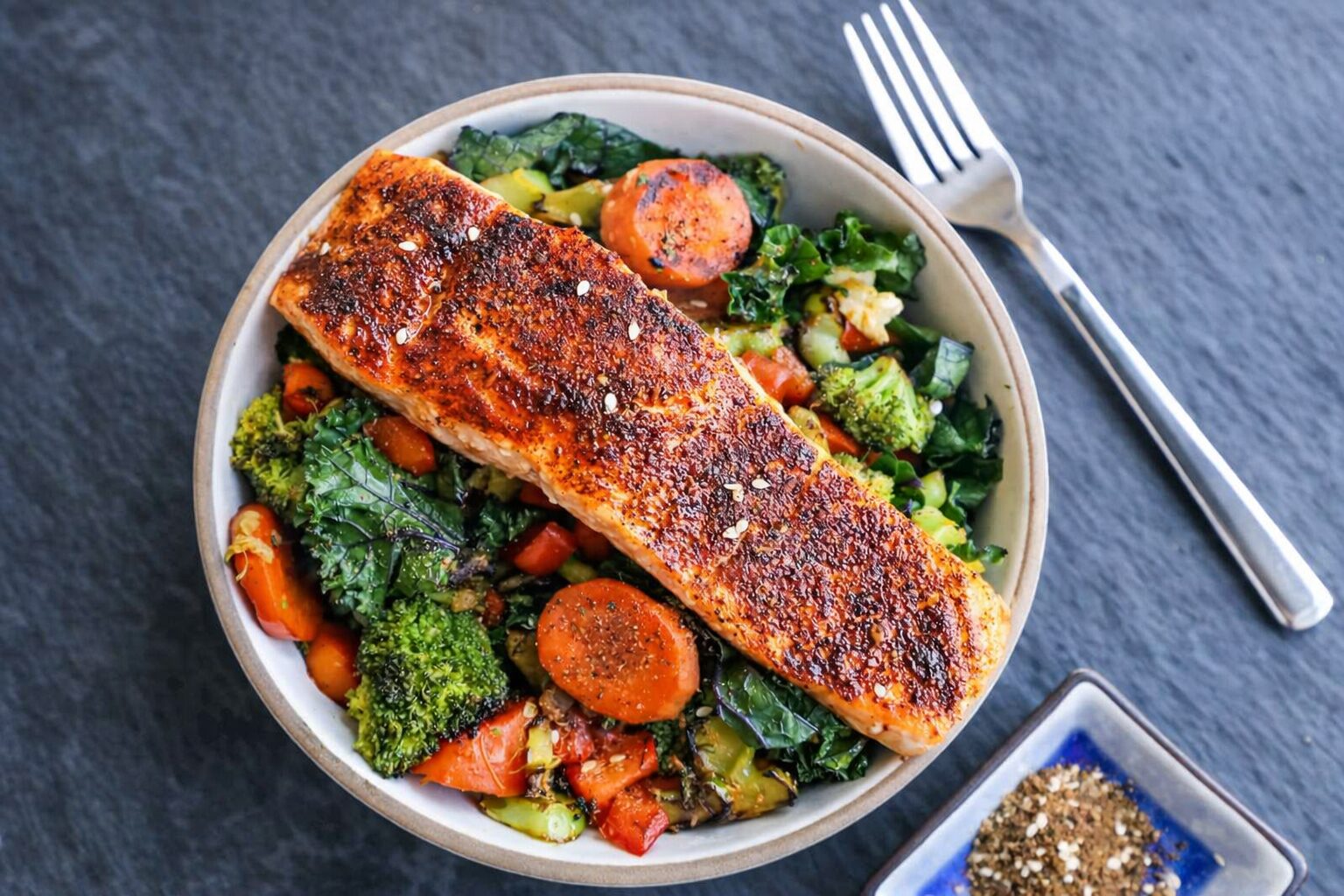

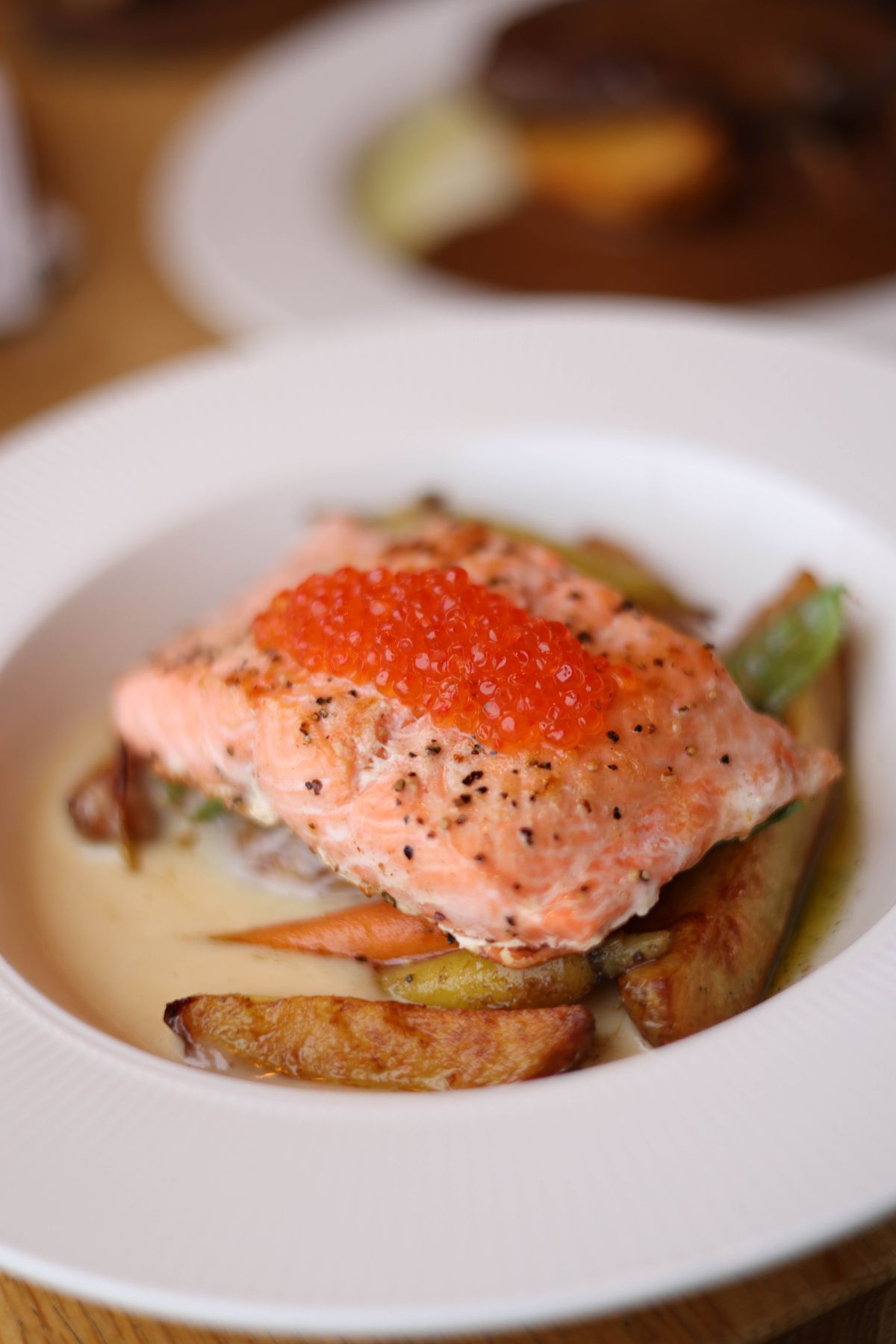
Baked sockeye salmon takes 10 minutes at 425°F (220°C). Pull the fillets from the oven when the flesh reaches 125°F (52°C) internal, then rest 3 minutes. Carryover heat finishes the cook at 130°F (54°C), the range where sockeye stays moist. The full recipe below serves 2, plus the reason sockeye needs a lower pull temperature than fattier salmon like Atlantic or King.
- Bake at 425°F for 10 minutes for a 6 oz (170 g) sockeye fillet, roughly 1 inch thick at the centre.
- Pull at 125°F internal, rest to 130°F. The USDA-recommended 145°F is 15 degrees too high for a lean fish like sockeye.
- Sockeye contains 6% fat — a third of what King (Chinook) carries. That leaner profile is why it dries out fast.
- Skin-on, skin-side down keeps the flesh moist during dry oven heat. Remove after cooking if you prefer.
- Origin matters: the wild Alaska catch runs June–August and freezes at peak. Frozen sockeye out of season beats supermarket “fresh” every time.
The recipe: baked sockeye salmon in 10 minutes
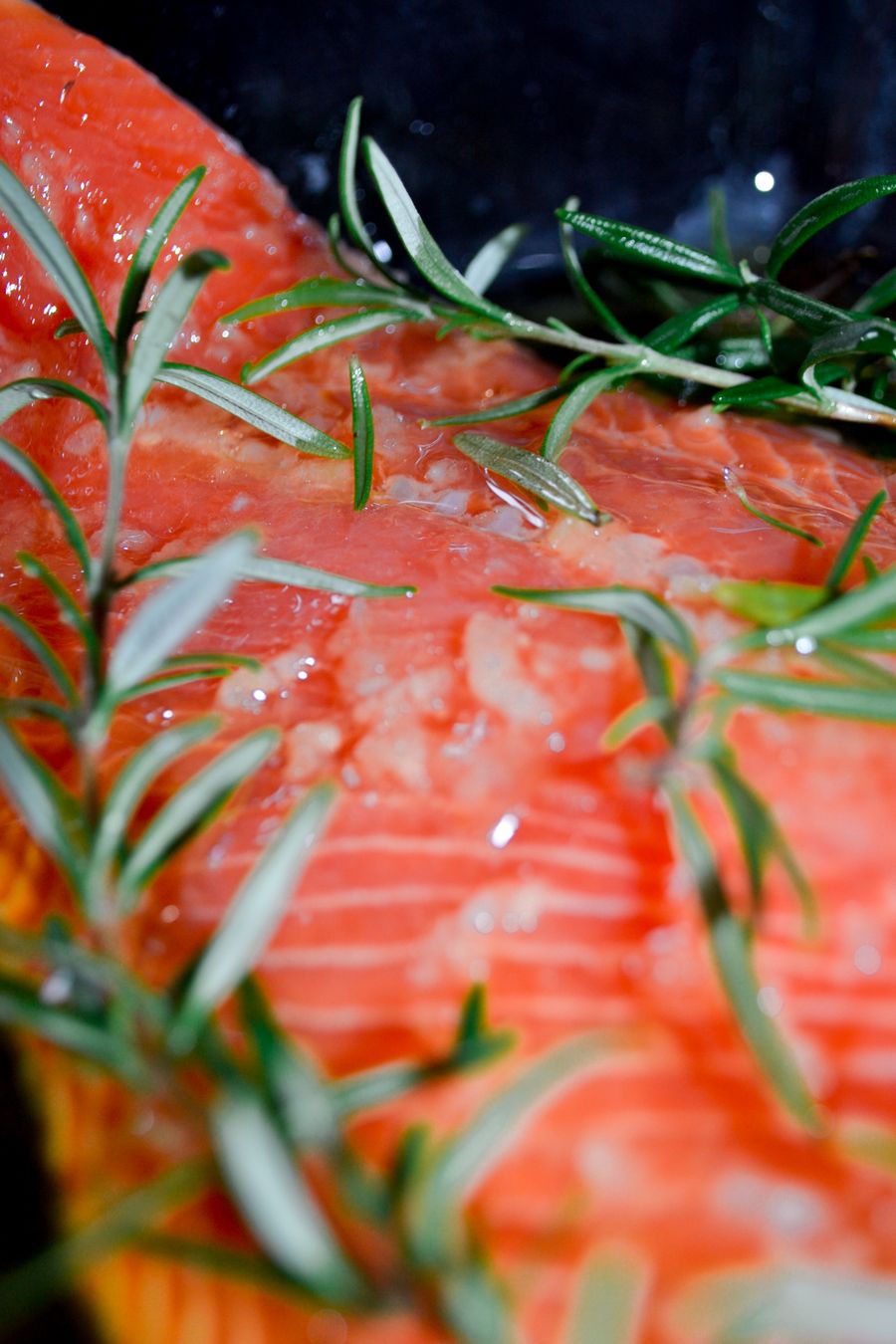
Two fillets, one baking sheet, ten minutes. If your fillet is thicker than 1 inch, add 1 minute per extra quarter inch.
Ingredients (serves 2)
- 2 sockeye salmon fillets (6 oz / 170 g each, skin-on)
- 2 tbsp extra virgin olive oil
- 2 garlic cloves, minced
- 1 tbsp fresh lemon juice + zest of ½ lemon
- 1 tsp smoked paprika
- ½ tsp fine sea salt
- ¼ tsp freshly ground black pepper
- 2 tbsp fresh chopped parsley or chives
- Lemon wedges, to serve
Method
- Preheat the oven to 425°F (220°C) with the rack in the middle. Line a rimmed baking sheet with parchment.
- Dry the fish. Pat both fillets with paper towels. Any surface moisture steams the flesh instead of letting it roast.
- Season. Whisk oil, garlic, lemon juice and zest, paprika, salt, and pepper. Rub over the flesh side and edges. Leave skin bare.
- Bake. Fillets skin-side down. Roast 10 minutes for 1-inch thick fillets. Check the centre with an instant-read thermometer at 8 minutes.
- Pull at 125°F / 52°C, rest 3 minutes. Sprinkle parsley. Serve with lemon wedges.
Why sockeye needs a lower pull temperature
The USDA recommends 145°F (63°C) as the safe internal temperature for all cooked fish. That number is a food-safety floor set for pathogens, not a texture recommendation. At 145°F, sockeye’s proteins fully denature and the flesh releases most of its water — the classic “chalky” mouthfeel. Pulling at 125–130°F still exceeds the safe threshold for most parasites (which die below 120°F on wild-caught salmon that has been flash-frozen), and gives the flesh the texture of a good restaurant plate.
The Alaska Seafood Marketing Institute publishes practical guidance for cooking wild Alaska sockeye that lands close to this range too, if you want a second opinion (Wild Alaska Seafood on salmon species). Beyond that, a simple in-kitchen rule: shorter cook, lower pull, longer rest. Every one of those levers pushes sockeye toward the silky side.
Sockeye vs Atlantic vs King: what changes when you swap
Same technique, three fish. The numbers below cover what actually changes in the oven, not marketing language.
| Metric | Sockeye | Atlantic | King (Chinook) |
|---|---|---|---|
| Fat content | ~6% | ~13% | ~20% |
| Pull temperature | 125°F / 52°C | 128°F / 53°C | 130–132°F / 54–55°C |
| Bake time at 425°F (6 oz fillet) | 10 min | 12–13 min | 13–14 min |
| Colour of flesh | Deep red | Pink-orange | Pale orange to marbled |
| Dry-out risk | High | Medium | Low |
| Best glaze partner | Lemon-herb, miso | Honey garlic, teriyaki | Maple dijon, brown butter |
Looking to build a glaze on top of the baked fillet? Our salmon glaze recipes collection covers seven variations that all finish in the same 125–130°F window.
Serving and storage notes
- Sides that pair well: lemon-butter asparagus, herby quinoa, roasted new potatoes, or a cucumber-dill salad. Sockeye’s deep flavour handles bright acidity better than heavy starches.
- Drink pairings: a dry riesling, an unoaked chardonnay, or a chilled dry rosé. Skip heavy reds — they flatten the fish.
- Refrigerator: cooked sockeye keeps 3 days sealed. The colour deepens slightly overnight.
- Reheating: 275°F (135°C) for 8 minutes, covered with foil, splash of water in the pan. Microwaves toughen the flesh.
- Freezing cooked fish: up to 1 month. Wrap tightly in parchment then foil. Thaw in the fridge overnight.
Frequently asked questions
Is 125°F safe to eat sockeye at?
Yes for wild-caught sockeye that has been flash-frozen at sea (which is 99% of what’s sold outside Alaska). FDA parasite-destruction guidelines require freezing at −20°C for 7 days or −35°C for 15 hours — every commercial wild sockeye undergoes one of the two. Once frozen, pulling at 125°F is a texture choice, not a safety risk.
Should I remove the skin before baking?
Leave the skin on during baking. It acts as insulation and keeps the flesh moist during dry oven heat. Slide a fish spatula between skin and flesh after cooking if you don’t want to eat it. The skin also crisps nicely under a 90-second broiler finish if you want to serve it that way.
Can I bake sockeye straight from frozen?
Yes, at a lower temperature for longer. 375°F (190°C) for 18–22 minutes gives you the same 125°F pull temperature without cracking the surface. Do not season frozen fish before baking — the seasoning slides off as ice crystals melt.
What’s the difference between sockeye and red salmon?
Nothing — they’re the same fish. “Red salmon” is the retail name in North America for sockeye (Oncorhynchus nerka), a nod to its deep red flesh. Canned salmon labelled “red” is always sockeye; “pink” is a different, leaner species.
What if my fillet is thicker than 1 inch?
Add 1 minute at 425°F for every quarter inch of extra thickness at the centre. A 1.5-inch fillet takes 12 minutes. Regardless of thickness, the internal 125°F pull temperature is the reliable measure — thickness only changes the how-long, not the when-done.
Save this baked sockeye salmon recipe to Pinterest with the doneness chart so you always pull at 125°F.
📌 Pin the recipeDid You Try Our Recipe ?
Chicken hears and gizzards
I would love you to send me the recipe please. I have no printer to print it off. [email protected]
Response from MeatRecipesBox
Hi Sharon, thank you so much for your kind words! I’ve just sent the full recipe to your inbox. Enjoy, and let me know how it turns out! 😊
Scrumptious
My husband (who is extremely picky) loved the liver & onions so much!! I didn’t have any beef broth or Sherry so I used about a tbl of Worcestershire and 1/4 c of white wine …..it was scrumptious
Response from MeatRecipesBox
Oh wow, I’m so happy to hear that!! 😍 I love that you made it work with what you had on hand — Worcestershire and white wine sound like a delicious twist. So glad your husband enjoyed it, especially being picky! Thank you for sharing your version, it makes me smile knowing it turned out scrumptious!
This was amazing
This recipe turned out really amazing! It’s juicy and spiced deliciously. I definitely would use less of the spicy pepper next time, but it really was delicious and I don’t think I’ll make chicken legs any other way from now on.!
Response from MeatRecipesBox
Thank you for taking the time to leave such a thoughtful review. I’m really glad to hear the recipe turned out juicy and full of flavor for you. That’s exactly what I was hoping for when putting it together. Good call on the spicy pepper as well. Adjusting the heat level to your own taste is always the best approach, and using a little less next time should make it just right for you. I really appreciate you trying the recipe and sharing your experience. It’s great to know it worked so well for you.
I Didn’t Expect This Cornbeef Hash Recipe to Taste This Good!!
One skillet. A handful of simple ingredients. Thirty minutes on the clock. And somehow… I ended up with the crispiest, most comforting cornbeef hash recipe I’ve made in years.
I wasn’t expecting much—just a quick, no-fuss meal. But that first bite? Crispy edges, tender potatoes, smoky corned beef, a little kick of pepper. It tasted like something straight off a cozy diner griddle.
Honestly, it caught me off guard—in the best way. Here’s why this simple skillet completely won me over.
Did You Try Our Recipe ?
Chicken hears and gizzards
I would love you to send me the recipe please. I have no printer to print it off. [email protected]
Response from MeatRecipesBox
Hi Sharon, thank you so much for your kind words! I’ve just sent the full recipe to your inbox. Enjoy, and let me know how it turns out! 😊
Scrumptious
My husband (who is extremely picky) loved the liver & onions so much!! I didn’t have any beef broth or Sherry so I used about a tbl of Worcestershire and 1/4 c of white wine …..it was scrumptious
Response from MeatRecipesBox
Oh wow, I’m so happy to hear that!! 😍 I love that you made it work with what you had on hand — Worcestershire and white wine sound like a delicious twist. So glad your husband enjoyed it, especially being picky! Thank you for sharing your version, it makes me smile knowing it turned out scrumptious!
This was amazing
This recipe turned out really amazing! It’s juicy and spiced deliciously. I definitely would use less of the spicy pepper next time, but it really was delicious and I don’t think I’ll make chicken legs any other way from now on.!
Response from MeatRecipesBox
Thank you for taking the time to leave such a thoughtful review. I’m really glad to hear the recipe turned out juicy and full of flavor for you. That’s exactly what I was hoping for when putting it together. Good call on the spicy pepper as well. Adjusting the heat level to your own taste is always the best approach, and using a little less next time should make it just right for you. I really appreciate you trying the recipe and sharing your experience. It’s great to know it worked so well for you.
I Didn’t Expect This Cornbeef Hash Recipe to Taste This Good!!
One skillet. A handful of simple ingredients. Thirty minutes on the clock. And somehow… I ended up with the crispiest, most comforting cornbeef hash recipe I’ve made in years.
I wasn’t expecting much—just a quick, no-fuss meal. But that first bite? Crispy edges, tender potatoes, smoky corned beef, a little kick of pepper. It tasted like something straight off a cozy diner griddle.
Honestly, it caught me off guard—in the best way. Here’s why this simple skillet completely won me over.