

Lobster tails are the steakhouse treat that’s easiest to copy at home. There’s no live lobster to deal with and no giant pot of boiling water. You just need a pair of kitchen shears and about ten minutes of cooking. The bad news is that lobster goes from sweet and tender to tough and rubbery in about 60 seconds. This guide covers the two methods worth knowing. Broiling is fast and gives you the classic steakhouse look. Butter-poaching is gentler and almost impossible to overcook. You’ll also find a cooking-time chart for every tail size, a grilled version for summer, and what to do when the meat won’t come out of the shell.

The short answer
Broiled: thaw the tails, cut down the top of the shell with shears, and lift the meat up so it sits on top of the shell. Brush with garlic butter. Broil on high 5 to 6 inches from the element for about 1 minute per ounce, so a 6-oz tail takes 6 to 7 minutes. Butter-poached: take the meat out of the shell and lay it in butter kept at 160 to 180°F. Poach for 5 to 7 minutes, turning once. Either way, the lobster is done when the meat is opaque and pearly white all the way through. Pull it at 140°F in the thickest part, since it keeps cooking for a minute after it comes off the heat.
Jump to
Which lobster tails should you buy?
If you can find them, buy cold-water tails between 5 and 8 ounces each. Cold-water tails come from the clawed American (Maine) lobster or Canadian lobster. The meat is whiter, sweeter and firmer than warm-water tails, and it holds up better under the broiler. Warm-water tails usually come from Caribbean spiny lobster, which has no claws. They’re often cheaper and bigger. They’re good too, but the meat can be softer and a little less sweet.
You can usually tell them apart at the counter. Cold-water shells are dark greenish-brown to red and fairly smooth. Warm-water shells have yellow or white spots and small spines along the sides. Good labels also tell you where the lobster was caught.
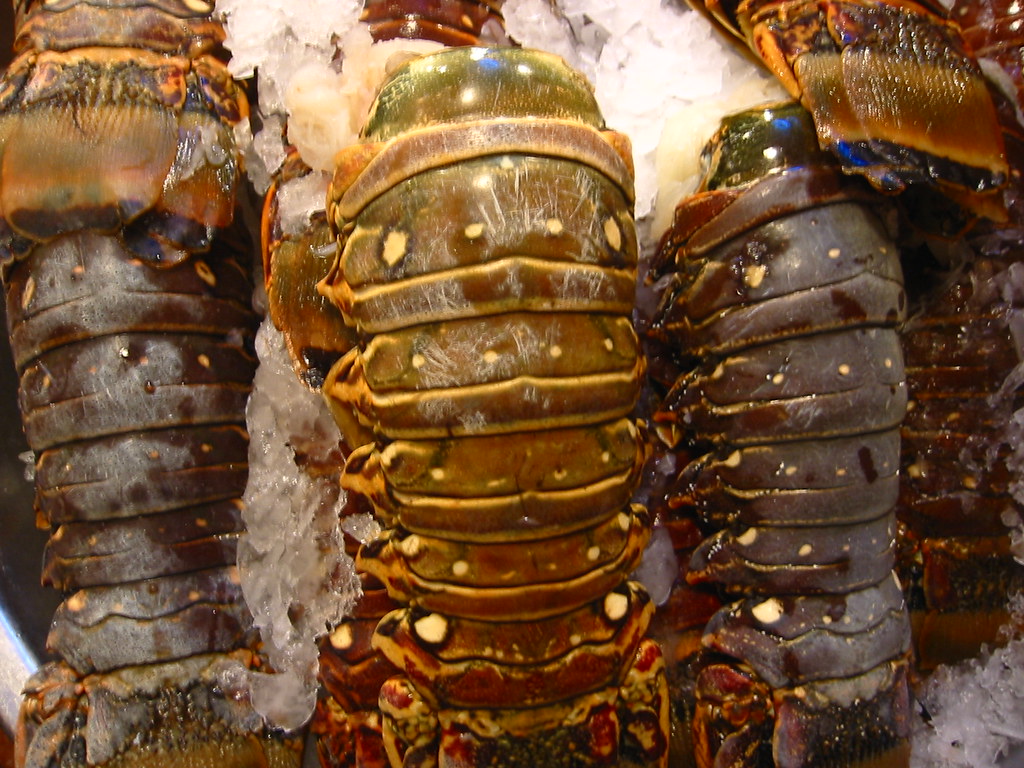
Almost every lobster tail in a supermarket was frozen, even the ones sitting on ice. So buying them frozen and thawing them yourself is usually the fresher choice. The FDA’s seafood guidance says to thaw frozen seafood overnight in the fridge. If you’re short on time, seal the tails in a zip-top bag and keep them under cold water for 30 to 60 minutes. Skip any package with frost or ice crystals inside, because that usually means it thawed and was frozen again. Raw meat should look clear and slightly translucent. It shouldn’t be gray, and it shouldn’t smell of ammonia.
How many lobster tails per person?
Plan on one 6- to 8-oz tail per person for a main course. If you’re serving it as surf and turf, one 4- to 5-oz tail next to a steak is plenty. For a big appetite or a special occasion, give each person two 5-oz tails rather than one huge 12-oz tail. Smaller tails cook more evenly.
How do you butterfly a lobster tail?
For a “piggyback” tail, cut the top of the shell open and lift the meat up so it rests on top of the shell. This is how steakhouses serve it. The meat browns under the broiler, cooks more evenly, and is easy to eat with a fork. It takes about a minute per tail once you’ve done one.
- Cut the shell. Lay the tail with the hard, rounded side facing up. Use kitchen shears to cut straight down the middle of the shell, from the open end to just before the tail fin. Keep the lower blade just under the shell so you don’t cut deep into the meat.
- Loosen the meat. Gently pull the two halves of the shell apart with your thumbs. Slide a finger between the meat and the shell on both sides to free it, but leave it attached at the tail fin.
- Lift it up. Lift the meat up and out through the cut, then squeeze the empty shell closed under it. Set the meat on top of the shell, still joined at the tail end.
- Clean and score. Pull out the dark vein if you see one. Then make a shallow slit along the top of the meat, about ¼ inch deep, so it opens up a little and holds the butter.

Grilling calls for a different cut. Split the tail in half lengthwise, through the shell and meat, so each half lies flat with the meat facing up. For butter-poaching, you take the meat out of the shell completely. That’s covered in the poaching method below.
How long do you cook lobster tails?
The size of the tail decides the cooking time, so check the weight on the package or weigh one before you start. For broiling, a good rule is about 1 minute per ounce. All the times below are for thawed tails. Treat them as a guide and confirm doneness with an instant-read thermometer in the thickest part of the meat.
| Tail size | Broil (high, 5–6 in) | Butter-poach (meat out, 170°F) | Grill (split, medium-high) | Bake (425°F) |
|---|---|---|---|---|
| 3–4 oz | 4–5 min | 4–5 min | 5–6 min | 8–10 min |
| 5–6 oz | 6–7 min | 5–7 min | 6–8 min | 10–12 min |
| 7–8 oz | 8–9 min | 7–9 min | 8–10 min | 12–15 min |
| 10–12 oz | 10–12 min | 9–12 min | 10–12 min | 15–18 min |
How do you know lobster tails are done?
The FDA says most seafood should be cooked to 145°F (63°C). For lobster, it also gives a visual test: the flesh turns firm, pearly and opaque. Raw lobster meat is glossy and see-through. Cooked meat is solid white with red-orange streaks on the surface. Take the tails off the heat at 140°F. They’ll rise to about 145°F while they rest for a minute. Once lobster goes much past 150°F, it starts to tighten and turn chewy.
Ingredients for lobster tails
Broiled lobster tails (serves 4)
- 4 lobster tails, 5 to 6 oz each, thawed
- 4 tbsp (56 g) unsalted butter, melted
- 2 garlic cloves, finely grated or minced
- 1 tsp fresh lemon juice, plus lemon wedges to serve
- ½ tsp smoked or sweet paprika
- ¼ tsp kosher salt
- Small pinch of cayenne (optional)
- 1 tbsp chopped parsley or chives
Butter-poached lobster tails (serves 4)
- 4 lobster tails, 5 to 6 oz each, thawed
- 2 tbsp water
- 1 cup (2 sticks, 227 g) cold unsalted butter, cut into cubes
- ¼ tsp kosher salt
- 1 thyme sprig and 1 strip of lemon peel (optional)
- Finely chopped chives and flaky salt to finish
Drawn butter for dipping
- 4 tbsp unsalted butter, melted slowly, with the white foam spooned off the top
How to make broiled lobster tails
This is the steakhouse version, and it takes less than 10 minutes from the moment the oven is hot. The only thing to keep an eye on is the distance from the heat. Too close and the butter burns before the center cooks. Too far and the meat steams instead of browning.
- Set up the oven. Move an oven rack so the top of the tails will sit 5 to 6 inches below the broiler element. Turn the broiler to high and give it 5 minutes to heat up.
- Butterfly the tails. Piggyback each tail as shown above and set them on a rimmed baking sheet lined with foil.
- Make the garlic butter. Stir the melted butter with the garlic, lemon juice, paprika, salt and cayenne. Brush about half of it all over the lobster meat.
- Broil. Slide the pan under the broiler. Broil 5- to 6-oz tails for 6 to 7 minutes, or about 1 minute per ounce. Halfway through, quickly brush the meat with a little more garlic butter.
- Check doneness. The meat should be opaque all the way through, with light golden spots on top. Check the thickest part near the shell. It should read 140°F, or flake slightly when you press it with a fork. If the top is browning faster than the inside is cooking, move the pan one rack lower for the last 1 to 2 minutes.
- Finish and serve. Brush with the rest of the garlic butter, scatter over the parsley, and serve right away with lemon wedges and a small cup of drawn butter.
Watch the method (video)
Wholesome Yum shows how to butterfly the tail and broil it, and how to adjust the time for different tail sizes, in about five minutes. Watch the shears in the first part to see how close to the meat they go. If the video doesn’t load, watch it on YouTube.
How to make butter-poached lobster tails
Butter-poaching cooks the lobster slowly in an emulsified butter bath kept well below a simmer, so the meat stays tender and evenly cooked. French cooks call the bath beurre monté: butter whisked into a little water so it stays creamy instead of separating. Because the butter never gets hotter than about 180°F, the lobster can’t overcook in seconds. It’s the most forgiving way to cook it, and the texture is silky.
- Take the meat out of the shell. Cut down the middle of the top shell with shears, then cut down the middle of the thin underside. Pull the two halves of the shell apart and lift out the tail meat in one piece. If the meat sticks to the shell, drop the tails into boiling water for 60 to 90 seconds, then put them straight into ice water. The meat will slide out easily, and it will still be raw in the middle.
- Make the butter bath. Bring the water to a simmer in a small saucepan that holds the tails snugly. Lower the heat to low and whisk in the butter a few cubes at a time, letting each batch melt before adding more. You should end up with a thick, creamy, pale yellow sauce. Add the salt, thyme and lemon peel.
- Keep it hot, not boiling. Keep the butter between 160 and 180°F. If it starts to bubble, it will split into clear fat and milky liquid. Use a thermometer and move the pan on and off the heat as needed.
- Poach. Lower in the tail meat. The butter should almost cover it. Poach 5- to 6-oz tails for 5 to 7 minutes, spooning butter over the top and turning them once halfway, until the meat is opaque and reads 140°F in the middle.
- Serve. Lift the lobster out with a slotted spoon and let the excess butter drip off. Slice it into thick medallions or serve it whole. Spoon over a little of the poaching butter and finish with chives and flaky salt.

Broiled or butter-poached: which should you make?
Broil when you’re cooking for a crowd, want the classic look on the plate, or are making surf and turf. You can do six tails on one sheet pan in under ten minutes. Butter-poach for two people, a special dinner, or when you’re nervous about overcooking. It takes a cup of butter and a little more attention, but the lobster comes out evenly tender from edge to center. The poached meat is also perfect for lobster rolls or for slicing over pasta.
How to grill lobster tails
Split the tails in half lengthwise and grill them meat-side down first, then flip and baste them in their shells. The direct heat gives the meat a light char and a smoky flavor you won’t get indoors. Use medium-high heat, around 400 to 450°F at the grate.
Brush the meat with oil or melted butter. Grill meat-side down for 3 to 4 minutes, until you see grill marks. Flip the tails so they sit shell-side down, spoon garlic butter into the meat, and close the lid. Cook for another 3 to 5 minutes for 5- to 6-oz tails, until the meat is opaque and reads 140°F. The shells will char in spots. That’s fine, and it adds flavor to the butter.

Fixing the usual lobster tail problems
The lobster is tough and rubbery
It was overcooked, even if only by a minute or two. Lobster meat tightens fast once it passes 150°F. Next time, start checking 2 minutes before the chart says it’ll be done, and take it off the heat at 140°F. Small tails are especially easy to overcook under a strong broiler.
The meat is mushy or soft
This usually happens to tails that were thawed and refrozen, or that sat thawed for too long before cooking. It can also happen when the lobster wasn’t handled well before it was frozen. Cooking won’t fix it. Buy tails that are frozen solid, thaw them in the fridge, and cook them within a day.
The meat won’t come out of the shell
Raw lobster meat clings to the shell, especially on warm-water tails. Blanch the tails in boiling water for 60 to 90 seconds, then cool them in ice water. The meat will loosen but stay mostly raw, so you can still broil or poach it.
The top burned before the middle cooked
The rack was too close to the broiler, or the garlic was in large pieces. Keep the tails 5 to 6 inches from the element. Grate or mince the garlic finely so it melts into the butter instead of scorching on top. For tails bigger than 8 oz, try baking at 425°F for most of the time, then broil for the last 2 minutes to brown the top.
The tails curled up
Lobster tails curl as the muscle tightens. Butterflying them keeps them mostly flat. For split or whole tails, slide a wooden skewer lengthwise between the meat and the shell before cooking.
What do you serve with lobster tails?
Lobster is rich, so keep the sides simple: something starchy, something green, and lemon. Baked or mashed potatoes, buttered rice, corn on the cob, grilled asparagus, green beans and a crisp Caesar salad all work. Serve drawn butter in small cups so everyone can dip.
For surf and turf, pair one 5-oz tail with a seared filet or ribeye. Our steak doneness chart has pull temperatures and rest times. Cook the steak first and let it rest while the lobster broils. It’s the same timing trick as our bistro steak frites. For a truly special plate, try a few slices of A5 wagyu with a 90-second sear next to a butter-poached tail. For a seafood feast, add garlic butter shrimp scampi or seared scallops, which cook in the time the tails take.
How long does cooked lobster last in the fridge?
Refrigerate cooked lobster within 2 hours and eat it within 3 to 4 days, according to the USDA’s leftovers and food safety guide. Take the meat out of the shell first and store it in an airtight container.
Reheated lobster gets tough quickly, so it’s often better to use it cold. Chop it for lobster rolls with a little mayonnaise, lemon and celery, or stir it into hot pasta or fried rice right at the end. If you want it warm, heat it in a small pan with a spoonful of butter over low heat for 1 to 2 minutes. Don’t use the microwave.
Questions people ask about lobster tails
Is it better to boil or broil lobster tails?
Broiling gives more flavor, because the butter and seasoning cook into the meat and the top browns a little. Boiling is faster for a big batch, but the meat tastes milder and it’s easier to overcook because you can’t see it. If you do boil them, allow about 1 minute per ounce after the water comes back to a boil.
Can you cook lobster tails from frozen?
It’s not a good idea. The outside overcooks before the frozen center is done, so the meat ends up both rubbery and underdone. Thaw them overnight in the fridge, or in a sealed bag under cold water for 30 to 60 minutes.
Do you have to devein lobster tails?
The dark vein that runs along the top is the digestive tract. It’s harmless, but it can be gritty. If you see it after you butterfly the tail, pull it out. Many tails come already cleaned.
What temperature should the oven be for lobster tails?
Use the broiler on high for the fastest, most browned result. To bake them, set the oven to 425°F and allow about 10 to 12 minutes for 5- to 6-oz tails. In both cases, the meat is done at 140°F, and it will reach the FDA’s 145°F while it rests.
Why are cold-water lobster tails more expensive?
Cold-water lobsters grow more slowly in colder water, which gives them firmer, sweeter meat. They also cost more to harvest. Warm-water tails are bigger and cheaper. They’re great for grilling and for dishes with strong sauces, where the difference matters less.
Did You Try Our Recipe ?
Chicken hears and gizzards
I would love you to send me the recipe please. I have no printer to print it off. [email protected]
Response from MeatRecipesBox
Hi Sharon, thank you so much for your kind words! I’ve just sent the full recipe to your inbox. Enjoy, and let me know how it turns out! 😊
Scrumptious
My husband (who is extremely picky) loved the liver & onions so much!! I didn’t have any beef broth or Sherry so I used about a tbl of Worcestershire and 1/4 c of white wine …..it was scrumptious
Response from MeatRecipesBox
Oh wow, I’m so happy to hear that!! 😍 I love that you made it work with what you had on hand — Worcestershire and white wine sound like a delicious twist. So glad your husband enjoyed it, especially being picky! Thank you for sharing your version, it makes me smile knowing it turned out scrumptious!
This was amazing
This recipe turned out really amazing! It’s juicy and spiced deliciously. I definitely would use less of the spicy pepper next time, but it really was delicious and I don’t think I’ll make chicken legs any other way from now on.!
Response from MeatRecipesBox
Thank you for taking the time to leave such a thoughtful review. I’m really glad to hear the recipe turned out juicy and full of flavor for you. That’s exactly what I was hoping for when putting it together. Good call on the spicy pepper as well. Adjusting the heat level to your own taste is always the best approach, and using a little less next time should make it just right for you. I really appreciate you trying the recipe and sharing your experience. It’s great to know it worked so well for you.
I Didn’t Expect This Cornbeef Hash Recipe to Taste This Good!!
One skillet. A handful of simple ingredients. Thirty minutes on the clock. And somehow… I ended up with the crispiest, most comforting cornbeef hash recipe I’ve made in years.
I wasn’t expecting much—just a quick, no-fuss meal. But that first bite? Crispy edges, tender potatoes, smoky corned beef, a little kick of pepper. It tasted like something straight off a cozy diner griddle.
Honestly, it caught me off guard—in the best way. Here’s why this simple skillet completely won me over.


