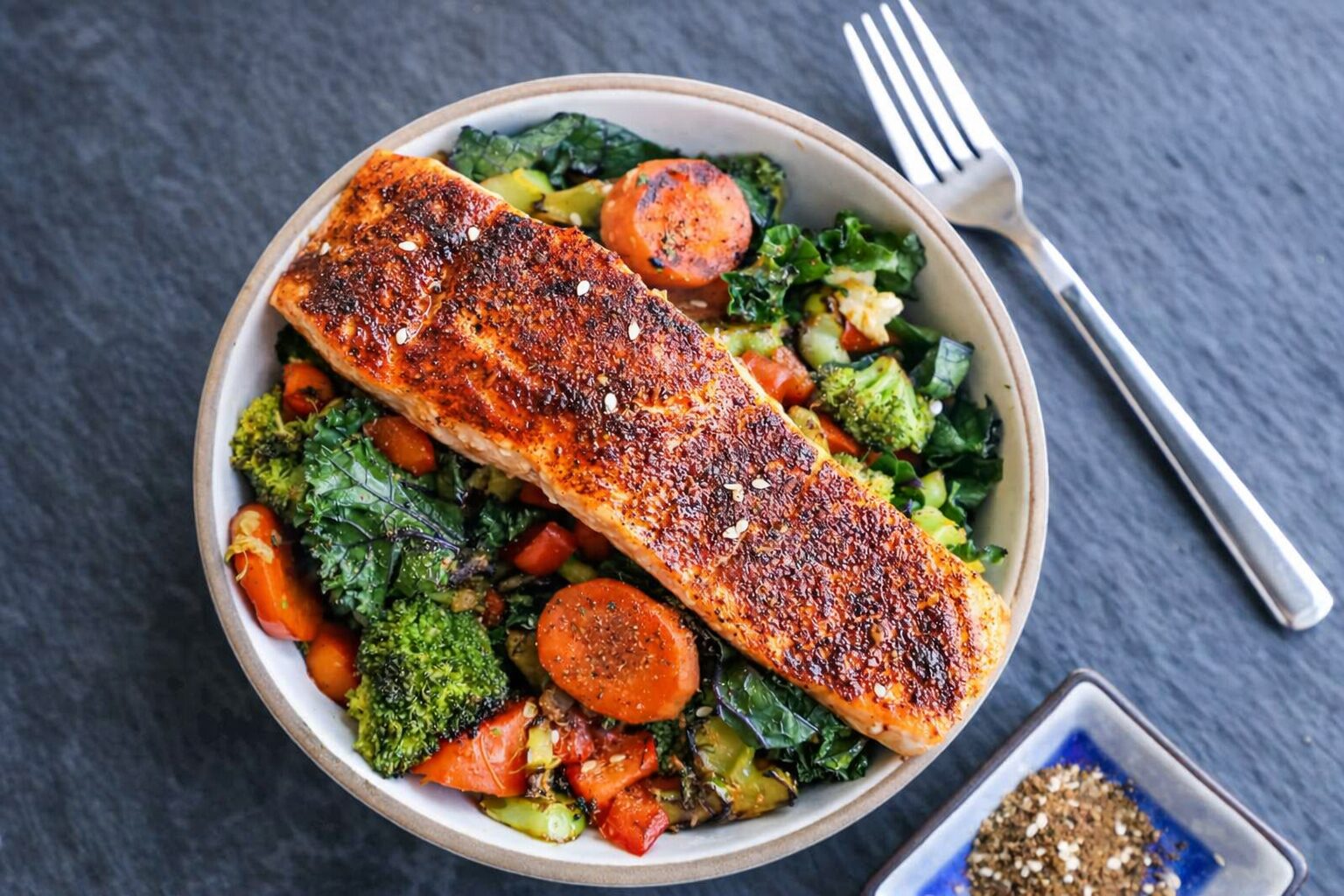

Air fryer salmon bites with honey garlic sauce need two things: evenly cut fish and a glaze that stays out of the basket. Cook the salmon with oil and dry seasonings, then coat it in warm sauce just before serving. You get lightly browned edges, a tender center, and fresh garlic flavor without a long marinade. Start your rice first, because the fish moves quickly.

The short answer
Cut skinless salmon into 1-inch pieces and air fry in a single layer at 400°F (204°C), usually 6 to 9 minutes, checking early. Cook the centers to 145°F (63°C), following the FDA’s seafood guidance. Toss with the separately cooked honey garlic sauce and serve right away.
Jump to
Ingredients for honey garlic salmon bites
Use skinless salmon, a light coating of oil and seasoning, and a separate honey-soy sauce with fresh garlic. A thick center-cut fillet gives you the most even pieces. Fresh or fully thawed frozen salmon both work; pat either one dry before seasoning.
For the salmon
- 1½ lb (680 g) skinless, boneless salmon
- 2 tsp avocado or neutral cooking oil, plus a little for the basket
- ½ tsp sweet paprika
- ½ tsp garlic powder
- ¼ tsp fine salt
- ¼ tsp freshly ground black pepper
For the honey garlic sauce
- 3 tbsp honey
- 2 tbsp reduced-sodium soy sauce
- 2 tbsp water
- 1 tbsp fresh lemon juice
- 3 medium garlic cloves, finely minced
- 1 tsp neutral cooking oil
- ¼ tsp red pepper flakes, optional
To serve
- Cooked rice, sliced cucumber, and steamed broccoli
- 2 sliced scallions
- 1 tsp sesame seeds, optional
Equipment: an air fryer, a sharp knife, a small saucepan, a wide mixing bowl, a thin silicone spatula, and a thin-tip instant-read thermometer. Basket space determines the number of batches. Leave gaps between the pieces instead of squeezing the entire recipe into a small drawer.
The sauce supplies most of the salt, so the fish needs only a light seasoning. If using regular soy sauce, start with 1½ tablespoons and increase to taste. For gluten-free cooking, use a labeled gluten-free tamari and check your other packaged ingredients.
Cut the salmon evenly, including the thin tail
Cut the thick portion into roughly 1-inch cubes and keep the thin tail pieces in a separate group. Equal width does not mean equal thickness. A flat tail piece can finish well before a thick center cube, even when they look the same size from above.
Check for pin bones by running clean fingertips along the flesh, then remove any with fish tweezers. Cut the fillet into strips about 1 inch wide, then crosswise into pieces. Work with cold fish so it holds its shape, and use clean paper towels to blot the cut surfaces.
If your fillet includes a very thin tail, cut that section into wider pieces and place them together where you can reach them. Check those first and remove them individually as they reach the cooking temperature. Avoid folding them into makeshift cubes: folds hide uneven thickness and can open as the fish cooks.
How to check the center of a small salmon bite
Insert a thin thermometer probe horizontally through the side of a thick piece, aiming for its center. Pause the air fryer and use a clean spatula to steady the piece so the probe does not touch the hot basket. Check several pieces from different areas, cleaning the probe as needed, and return underdone pieces to the heat.
A golden outside does not tell you the center temperature. Small pieces also give you little room for an accurate reading, so a thick probe is awkward here. Keep the thermometer handy before you start cooking, rather than searching for it while the fish sits in a hot drawer.
How to make air fryer salmon bites with honey garlic sauce
Air fry the seasoned salmon first, make the sauce while it cooks, and combine them off the heat. Plan on about 25 minutes for one batch, including cutting the fish and preheating. Add another cooking cycle if your basket cannot hold the pieces with space around them.
- Preheat the air fryer. Set it to 400°F (204°C), following your model’s preheating instructions. Lightly brush the basket with oil using a heat-safe brush.
- Dry and season the fish. Pat the salmon dry and cut it as described above. Gently toss with 2 teaspoons oil, paprika, garlic powder, salt, and pepper until lightly coated.
- Arrange one loose layer. Place the bites in the basket with small gaps between them. Keep thinner pieces together so you can check them early. Refrigerate any raw fish waiting for the next batch.
- Start cooking and check early. Air fry for 4 minutes, then inspect the pieces. Turn with a thin spatula if they release easily; leave them briefly if they stick. Start checking thin pieces now and thicker pieces around 6 minutes. Many 1-inch pieces take 6 to 9 minutes total, but thickness and your appliance can shift that range.
- Cook the garlic gently. While the salmon cooks, warm 1 teaspoon oil in a small saucepan over medium-low heat. Add the minced garlic and cook for 30 to 45 seconds, stirring, just until fragrant. Do not let it turn dark brown.
- Reduce the sauce. Add honey, soy sauce, water, lemon juice, and optional pepper flakes. Bring to a gentle simmer and cook for 2 to 4 minutes, stirring, until lightly syrupy. Remove from the heat. If it becomes too thick, stir in water 1 teaspoon at a time.
- Remove the fish at temperature. Check several bites and take them out when their centers reach 145°F (63°C). Transfer cooked pieces to a clean bowl, using clean utensils rather than the bowl or tools that held raw fish.
- Coat and serve. Add about half the warm sauce and fold gently once or twice. Add more as needed, spooning any remaining sauce over the rice. Finish with scallions and optional sesame seeds.
Watch honey garlic salmon bites in the air fryer
Kelvin’s Kitchen demonstrates air-fried salmon bites finished in a honey garlic sauce. His version adds butter and Dijon mustard, so the sauce differs from the lemon-soy glaze above.
If the video does not load, watch it on YouTube.
Add the honey garlic sauce after air frying
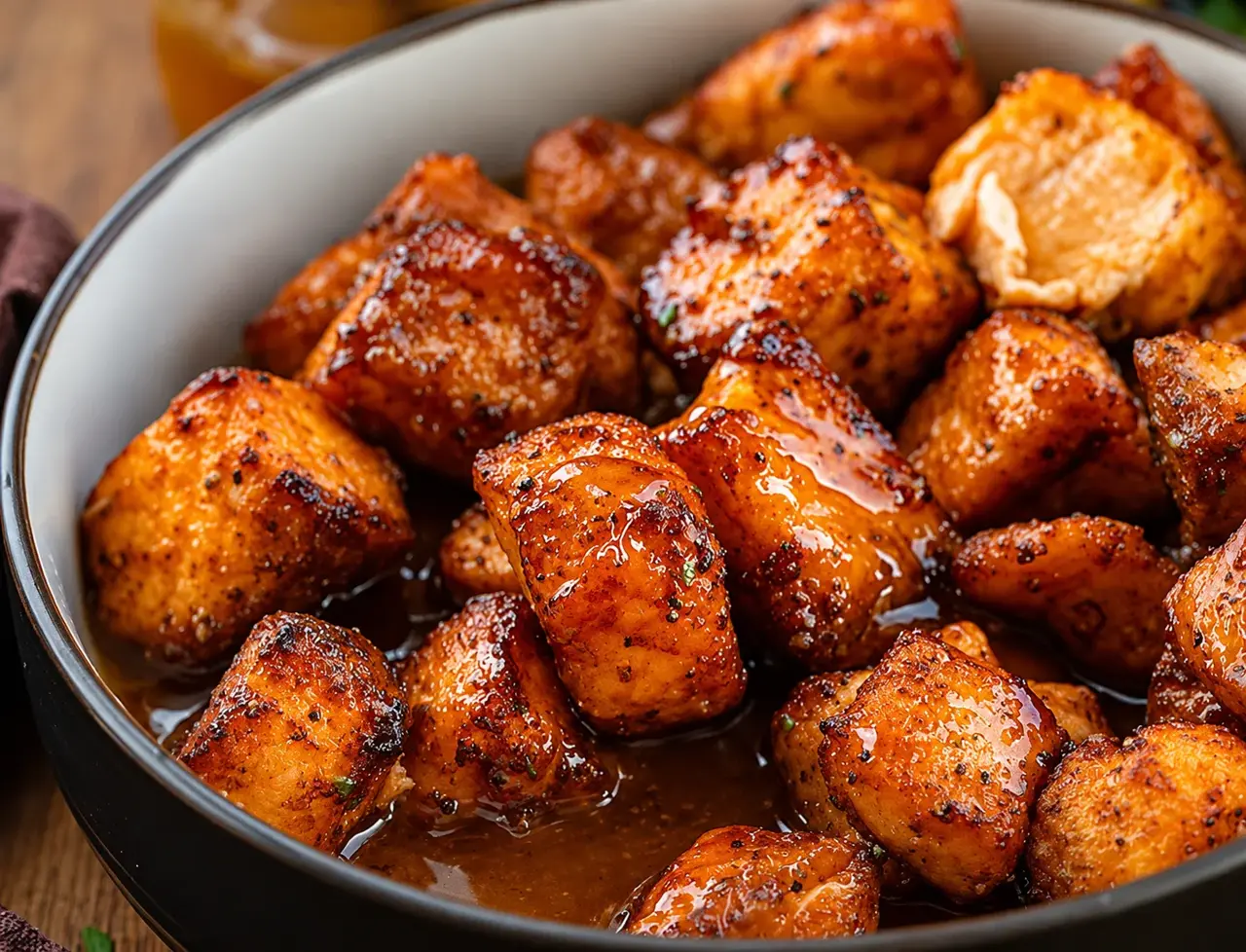
Adding the sauce at the end keeps fresh garlic away from the air fryer’s intense heat and gives you control over the coating. Honey can darken quickly on exposed edges, and small garlic pieces can scorch before thick salmon cubes finish cooking. The saucepan lets you watch both.
Stop reducing when the sauce lightly coats a spoon but still pours in a narrow stream. It thickens as it cools. A sauce that already forms sticky threads in the pan will be difficult to spread over delicate fish; loosen it with a little water before tossing.
For more heat, add extra red pepper flakes to the finished sauce. For more brightness, add a teaspoon of lemon juice after simmering. Avoid reducing it until thick just to make the fish look darker: the flavor becomes sweeter and saltier as water evaporates.
This approach gives the bites browned surfaces with a glossy coating, rather than a breaded crunch. Sauce softens those edges, so coat only when you’re ready to eat. For other sweet-savory combinations, see our salmon glaze recipes.
Build a salmon rice bowl
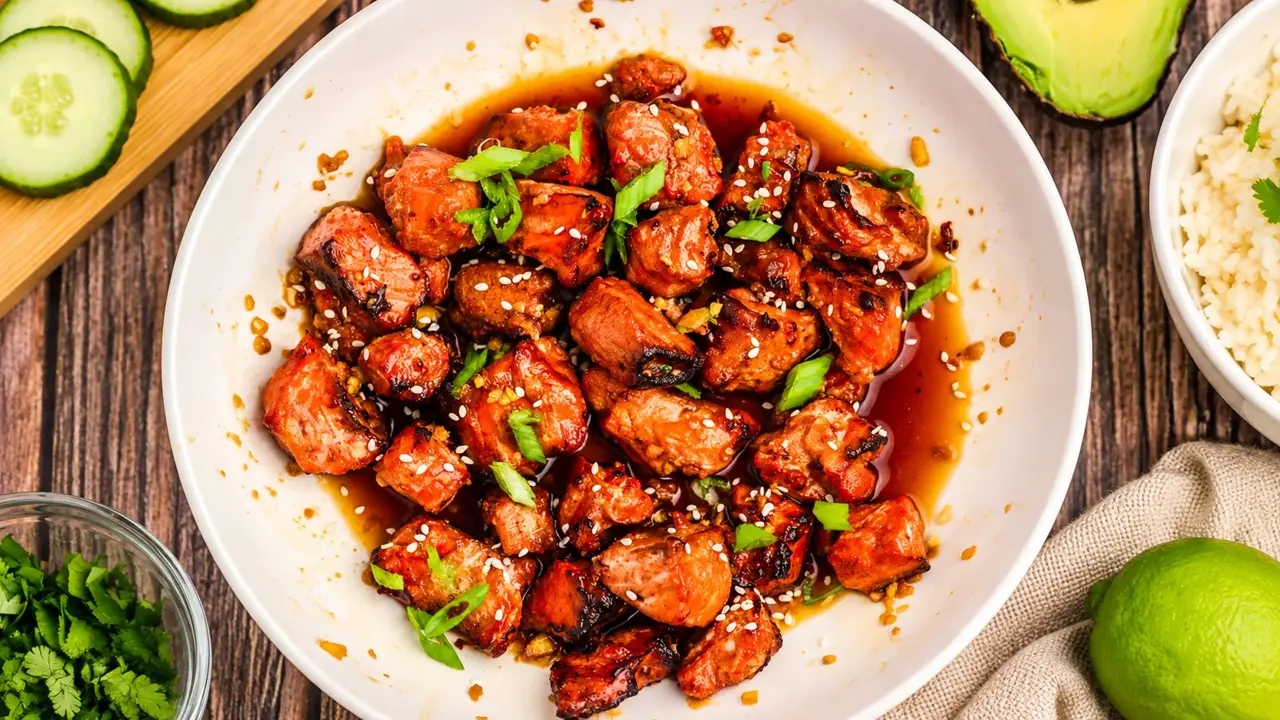
Serve the bites over rice with one crisp vegetable and one cooked vegetable. Cucumber brings a cool contrast to the glaze, while broccoli catches the extra sauce. Keep the garnishes ready before the salmon finishes.
For four bowls, divide about 3 cups cooked rice among the bowls and add the salmon. Spoon over any remaining sauce, then arrange cucumber and broccoli alongside. Scallions and sesame seeds finish the bowl without another dressing.
Start rice on the stove before cutting the salmon, or use microwave rice if dinner needs to move faster. Cook vegetables separately; broccoli and raw fish usually need different handling and timing. A crowded basket full of both makes it harder to remove each ingredient at the right moment.
For an appetizer, serve the bites on a warm platter with a little sauce spooned over them and small forks alongside. If you prefer whole fillets for dinner, our honey and soy salmon offers another format.
Store and reheat without drying out the salmon
Refrigerate leftovers promptly in shallow containers, then reheat only the portion you plan to eat. Keep cucumber and other cold toppings separate so you can warm the fish and rice without softening the vegetables.
The USDA’s leftover storage guidance recommends refrigeration at 40°F (4°C) or below, within 2 hours, or within 1 hour if the surrounding temperature exceeds 90°F (32°C). Use refrigerated leftovers within 3 to 4 days. Do not leave the bowl on the counter waiting for it to reach room temperature.
For reheating, put a portion in a microwave-safe dish with a teaspoon of water and cover loosely with a microwave-safe lid. Heat in short intervals, turning the pieces gently and checking several centers. The USDA recommends reheating leftovers to 165°F (74°C). Stop once that temperature is reached; extended heating firms up the fish.
The covered method helps retain moisture, but reheated salmon will be firmer than freshly cooked fish. For meal prep, portion the sauce separately when possible and cook only as much salmon as you expect to use.
Questions about air fryer salmon bites
Thickness, basket space, and sauce timing matter more than an exact minute count. Use these adjustments for common ingredient and appliance differences.
Can I use frozen salmon?
Yes, but thaw it fully before cutting and use the method above for thawed fish. Follow package directions, including any instruction to remove vacuum packaging before thawing. Refrigerated overnight thawing is convenient, and drying the thawed fish well helps prevent a wet surface.
Do I have to flip salmon bites?
A gentle turn can help expose another surface, but do not force pieces that are still sticking. Use a thin spatula instead of shaking the basket hard, which can break cooked salmon. Check for doneness even if you leave the bites on the same side throughout.
Can I leave the skin on?
You can, but skinless salmon is easier to cut, coat, and eat in a bowl. Skin can stay chewy under the sauce, especially on small pieces. If crisp skin is your priority, try our crispy baked salmon instead.
Why are my salmon bites dry?
Small or thin pieces probably cooked beyond their finishing temperature while larger pieces caught up. Separate thin tail pieces, begin checking early, and remove finished bites individually. Extra glaze coats the outside, but it cannot restore moisture lost from overcooking.
Can I double the recipe?
Yes, but increase the number of batches rather than stacking the salmon. Double the sauce in a saucepan with enough room for gentle bubbling, and judge its consistency instead of automatically doubling the simmer time. Coat each batch shortly before serving.
Cook next on Meat Recipes Box
Did You Try Our Recipe ?
Chicken hears and gizzards
I would love you to send me the recipe please. I have no printer to print it off. [email protected]
Response from MeatRecipesBox
Hi Sharon, thank you so much for your kind words! I’ve just sent the full recipe to your inbox. Enjoy, and let me know how it turns out! 😊
Scrumptious
My husband (who is extremely picky) loved the liver & onions so much!! I didn’t have any beef broth or Sherry so I used about a tbl of Worcestershire and 1/4 c of white wine …..it was scrumptious
Response from MeatRecipesBox
Oh wow, I’m so happy to hear that!! 😍 I love that you made it work with what you had on hand — Worcestershire and white wine sound like a delicious twist. So glad your husband enjoyed it, especially being picky! Thank you for sharing your version, it makes me smile knowing it turned out scrumptious!
This was amazing
This recipe turned out really amazing! It’s juicy and spiced deliciously. I definitely would use less of the spicy pepper next time, but it really was delicious and I don’t think I’ll make chicken legs any other way from now on.!
Response from MeatRecipesBox
Thank you for taking the time to leave such a thoughtful review. I’m really glad to hear the recipe turned out juicy and full of flavor for you. That’s exactly what I was hoping for when putting it together. Good call on the spicy pepper as well. Adjusting the heat level to your own taste is always the best approach, and using a little less next time should make it just right for you. I really appreciate you trying the recipe and sharing your experience. It’s great to know it worked so well for you.
I Didn’t Expect This Cornbeef Hash Recipe to Taste This Good!!
One skillet. A handful of simple ingredients. Thirty minutes on the clock. And somehow… I ended up with the crispiest, most comforting cornbeef hash recipe I’ve made in years.
I wasn’t expecting much—just a quick, no-fuss meal. But that first bite? Crispy edges, tender potatoes, smoky corned beef, a little kick of pepper. It tasted like something straight off a cozy diner griddle.
Honestly, it caught me off guard—in the best way. Here’s why this simple skillet completely won me over.