


Massaman is the Thai curry that pretends to be Indian. It’s the one with cinnamon, cardamom, cloves, and star anise — spices you won’t find in green or red curry paste — because it comes from Muslim-Malay traders who settled Southern Thailand centuries ago. The dish rewards patience: a long, low braise, coconut cream that splits on purpose, and tamarind to keep everything from going flat.
- Use beef chuck (or shin) and braise 2 to 2½ hours. Sirloin will not work — it turns dry.
- The signature move: “crack” the coconut cream until the oil separates, then fry the paste in that oil. Miss this and the curry tastes flat.
- Balance is salty (fish sauce) + sweet (palm sugar) + sour (tamarind). Adjust all three at the end.
- Potatoes, roasted peanuts, and shallots are non-negotiable. Serve over jasmine rice.
What makes a curry “massaman” and not red or green?
The word likely descends from musulman (Muslim), reflecting the dish’s trade-route origin. In 2021 it topped CNN Travel’s reader poll of the world’s 50 best foods, which is the kind of trivia that shows up in every article about it — the more useful point is that massaman is Thailand’s only major curry that reads like a stew. Rich, mellow, low chile-heat, deeply spiced.
If you want the ur-text on why it tastes the way it does, Pailin Chongchitnant’s Hot Thai Kitchen version walks through the Southern-Thai roots without dumbing it down.
Which cut of beef should I use?

Cut the meat into 1½-inch (4 cm) cubes. Any smaller and they fall apart in the sauce; any bigger and the center never absorbs the spices. For 4 servings I buy 1.3 kg (2¾ lb) bone-in chuck, trim to 1 kg (2¼ lb) of usable meat, and freeze the trim for stock.
Do I need to sear it first?
Rasa Malaysia and Hot Thai Kitchen both skip the sear — the paste and cracked coconut cream provide the browning depth. Beyond Kimchee does sear, and the result is a shade darker. My call: skip it. One less pan, and the flavor difference vanishes after 90 minutes of simmering.
Should I make the massaman paste from scratch?
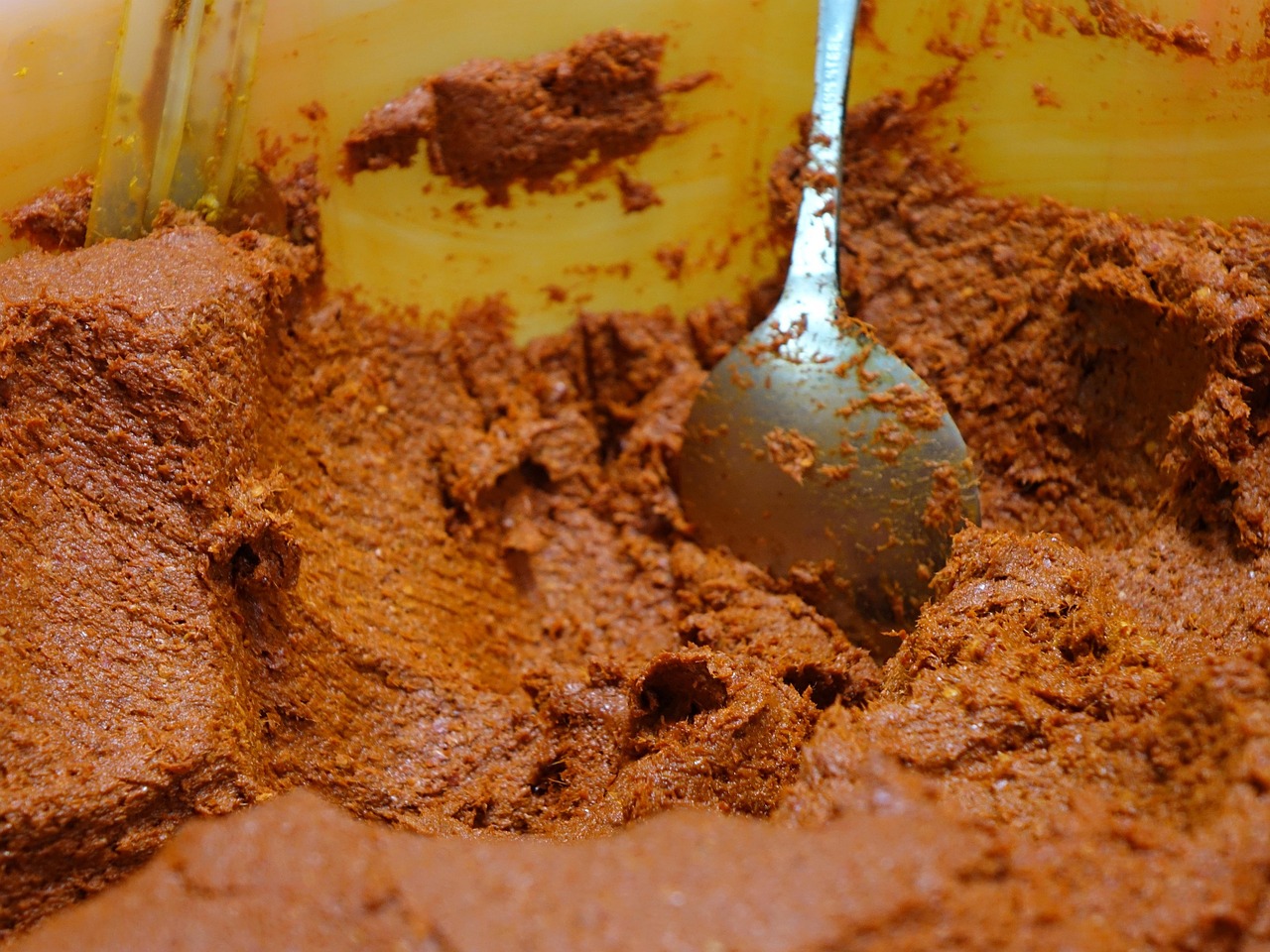
If you do want to make it: dry-roast whole coriander seed, cumin, cardamom, cloves, cinnamon, and star anise until fragrant (about 90 seconds), then pound with dried chiles, lemongrass, galangal, shallot, garlic, shrimp paste, and salt. Pailin’s recipe video shows the exact technique.
How do I actually cook it? (the 2½-hour method)
Ingredients — 4 servings
- 1 kg (2¼ lb) beef chuck, cubed 1½ inch
- 2 × 400 ml (13.5 fl oz) full-fat coconut milk (Aroy-D or Chaokoh)
- 100 g (4 tbsp) massaman curry paste (1 Maesri can + 1 tbsp)
- 2 shallots, quartered · 3 garlic cloves, smashed
- 2 medium waxy potatoes (Yukon Gold), 1½-inch chunks
- ½ cup roasted unsalted peanuts
- 3 tbsp palm sugar (or light brown)
- 2½ tbsp fish sauce (Red Boat or Squid)
- 2 tbsp tamarind concentrate
- 2 bay leaves, 1 cinnamon stick, 3 cardamom pods, 2 star anise
- 1 tbsp neutral oil (only if paste needs help splitting)
- Crack the cream. Skim the thick coconut cream from the top of one can (about ¾ cup) into a heavy Dutch oven. Simmer 5–8 minutes over medium heat until it separates and you see clear oil pooling on the surface. This is the flavor foundation — do not skip.
- Fry the paste. Add the massaman paste to the coconut oil and fry, stirring, for 3–4 minutes until it darkens from brick-red to a deep brown-red and the kitchen smells intense. Add shallots, garlic, and the whole spices; cook 2 more minutes.
- Add beef. Toss the cubes in the paste until coated. Pour in the rest of both coconut-milk cans plus 1 cup water. Stir. Bring to a bare simmer.
- Braise low. Cover with the lid cracked open. Simmer 90 minutes over the lowest heat that keeps bubbles rising. Stir every 20 minutes so nothing catches.
- Add potatoes + peanuts. Drop them in, cover again, simmer 30 minutes until the potatoes are knife-tender and the beef pulls apart with a spoon.
- Balance the finish. Off heat, stir in palm sugar, fish sauce, and tamarind. Taste. You want a curry that reads sweet first, then salty, then a whisper of sour. Adjust by ½ tsp increments.
Watch it done right
Pailin Chongchitnant runs the Bangkok-trained YouTube channel Hot Thai Kitchen. Her massaman video is the one I show anyone who says the dish is “too complicated” — it isn’t, and this walkthrough proves it:
What do I serve with it?
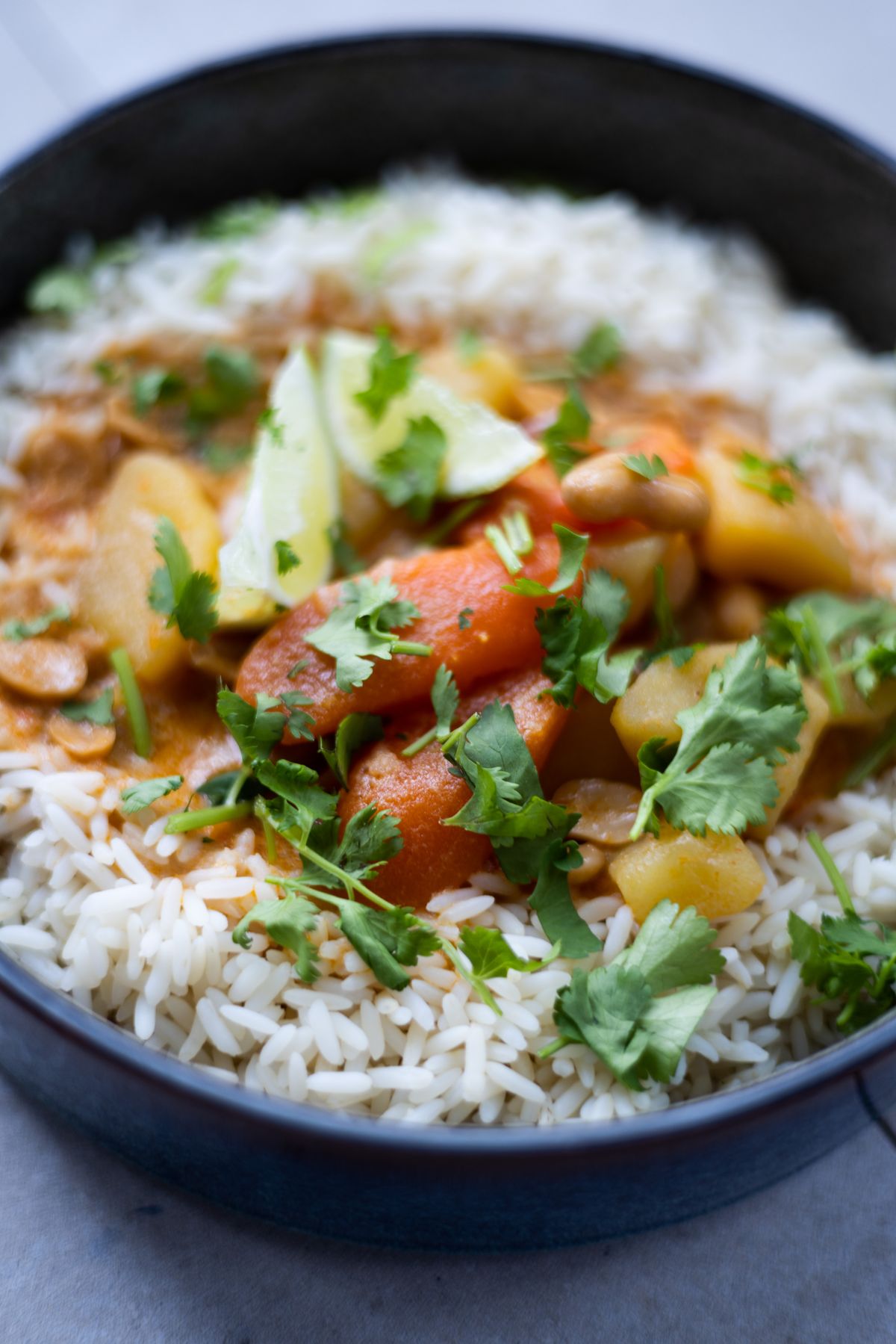
Because the flavor sits on the sweet-warm end, I like a sharp side salad or a plate of beef larb to balance the meal. Skip Western sides — mashed potato, salad greens with vinaigrette — they fight the curry’s coconut base.
Common questions
Can I make this in a slow cooker or Instant Pot?
Yes to both. Slow cooker: complete steps 1–3 on the stove, then transfer everything to the crock, LOW for 6 hours, add potatoes at hour 5. Instant Pot: same stovetop start, then 40 minutes on Manual/High Pressure, quick release, add potatoes and pressure-cook 5 more minutes. Rosa’s Thai has a good stovetop reference to compare timings.
Why did my sauce split into an oily layer?
That’s supposed to happen — the shimmery orange oil on top is the sign the coconut cracked correctly and the paste fried in it. If it looks like a broken vinaigrette rather than a glossy pool, whisk in 2 tbsp warm coconut milk off-heat to bring it back.
How spicy is authentic massaman?
Mild by Thai standards — a 2 out of 5. The heat comes from a small amount of dried red chile in the paste, not fresh bird’s-eye chiles. If you want it hotter, add ½ tsp Thai chile flakes with the paste. Don’t use fresh green chiles; they clash with the warm dry spices.
How long does it keep?
Better on day two. Fully cooked massaman keeps 4 days refrigerated in an airtight container and freezes 3 months. Reheat gently — high heat will separate the coconut permanently. Add a splash of water if it’s tightened up.
Can I substitute the peanuts?
Cashews work and are traditional in some Southern Thai households. Roasted almonds are fine in a pinch. Skipping the nut entirely leaves the curry noticeably one-dimensional — massaman without a nut is not massaman.
My one-line summary
Buy chuck, buy a Maesri can, crack the coconut cream properly, and give it 2½ hours. That’s the whole trick — every step past those four is optional.
Related on Meat Recipes Box: all beef recipes · Asian mains · the braise cheat-sheet
Did You Try Our Recipe ?
Chicken hears and gizzards
I would love you to send me the recipe please. I have no printer to print it off. [email protected]
Response from MeatRecipesBox
Hi Sharon, thank you so much for your kind words! I’ve just sent the full recipe to your inbox. Enjoy, and let me know how it turns out! 😊
Scrumptious
My husband (who is extremely picky) loved the liver & onions so much!! I didn’t have any beef broth or Sherry so I used about a tbl of Worcestershire and 1/4 c of white wine …..it was scrumptious
Response from MeatRecipesBox
Oh wow, I’m so happy to hear that!! 😍 I love that you made it work with what you had on hand — Worcestershire and white wine sound like a delicious twist. So glad your husband enjoyed it, especially being picky! Thank you for sharing your version, it makes me smile knowing it turned out scrumptious!
This was amazing
This recipe turned out really amazing! It’s juicy and spiced deliciously. I definitely would use less of the spicy pepper next time, but it really was delicious and I don’t think I’ll make chicken legs any other way from now on.!
Response from MeatRecipesBox
Thank you for taking the time to leave such a thoughtful review. I’m really glad to hear the recipe turned out juicy and full of flavor for you. That’s exactly what I was hoping for when putting it together. Good call on the spicy pepper as well. Adjusting the heat level to your own taste is always the best approach, and using a little less next time should make it just right for you. I really appreciate you trying the recipe and sharing your experience. It’s great to know it worked so well for you.
I Didn’t Expect This Cornbeef Hash Recipe to Taste This Good!!
One skillet. A handful of simple ingredients. Thirty minutes on the clock. And somehow… I ended up with the crispiest, most comforting cornbeef hash recipe I’ve made in years.
I wasn’t expecting much—just a quick, no-fuss meal. But that first bite? Crispy edges, tender potatoes, smoky corned beef, a little kick of pepper. It tasted like something straight off a cozy diner griddle.
Honestly, it caught me off guard—in the best way. Here’s why this simple skillet completely won me over.


