
- Prep25 min
- Cook2.5–3 hr
- Total~3 hr
- Serves6
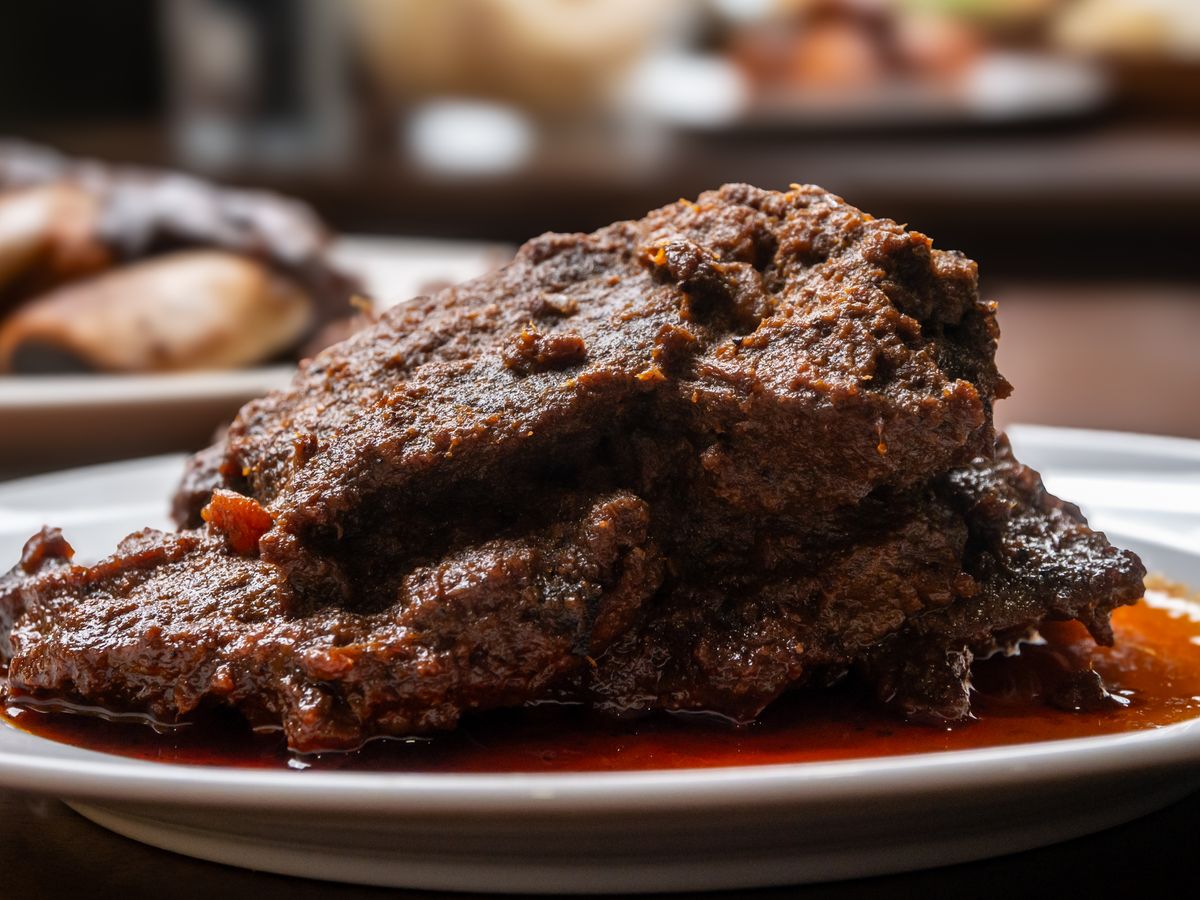
Rendang isn’t a curry you rush. It’s the dish the Minangkabau people of West Sumatra developed for weddings, harvests, and ceremonies — a way to cook beef that could survive tropical heat for days. CNN readers voted it #1 on the “World’s 50 Best Foods” list in 2011 and again in 2017, and for once the internet was right. The magic is in the reduction: coconut milk slowly caramelizes over hours, spices bloom into oil, and by the end the “sauce” is a spice paste that coats every strand of tender beef.
What is beef rendang?
Ingredients
For the beef:
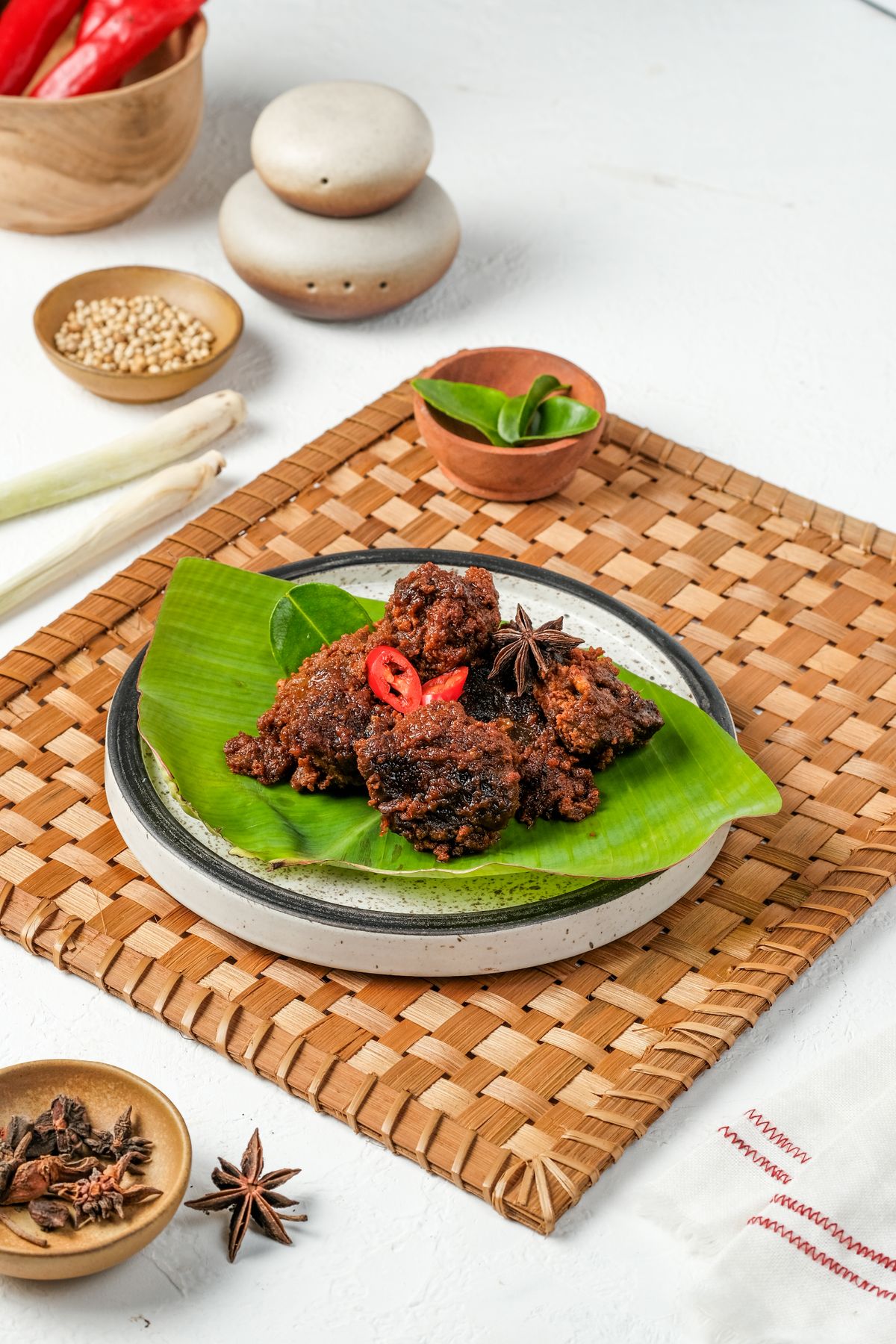
- 2½ lb (1.1 kg) beef chuck, cut into 1½-inch cubes
- 2 stalks lemongrass, white parts bruised
- 4 kaffir lime leaves (or 2 bay leaves)
- 1 cinnamon stick
- 3 star anise pods
- 4 cardamom pods, bruised
- 3 cloves
- 2 cans (14 oz each) full-fat coconut milk
- ½ cup kerisik (toasted grated coconut, ground to paste)
- 2 tbsp palm sugar (or dark brown sugar)
- 1½ tsp salt, plus more to taste
- 3 tbsp vegetable oil
For the spice paste (blend smooth):
- 10 dried red chilies, soaked in hot water 20 min, drained
- 8 shallots (about 5 oz), peeled
- 6 garlic cloves
- 2-inch piece galangal, peeled and chopped
- 2-inch piece fresh ginger, peeled and chopped
- 2-inch piece fresh turmeric (or 1 tsp ground turmeric)
- 2 tbsp coconut milk (from the cans above)
How to make beef rendang
- Make the spice paste. Blend all spice paste ingredients into a smooth, thick paste. Add a splash more coconut milk if needed to keep the blades moving.
- Bloom the paste. Heat oil in a heavy Dutch oven over medium heat. Add the spice paste with lemongrass, lime leaves, cinnamon, star anise, cardamom, and cloves. Fry gently 8–10 minutes, stirring often, until the paste darkens and oil begins to separate — this is where all the flavor lives.
- Sear the beef. Add beef cubes, stirring to coat every piece in the paste. Cook 5 minutes until the beef starts to seize.
- Add coconut milk. Pour in both cans of coconut milk, add sugar and salt. Stir well, bring to a gentle boil, then reduce to a low simmer, uncovered.
- Simmer, stir, wait. Cook uncovered, stirring every 15 minutes to prevent scorching. After about 90 minutes, the sauce will be thick and caramel-brown — this is the kalio stage. Keep going.
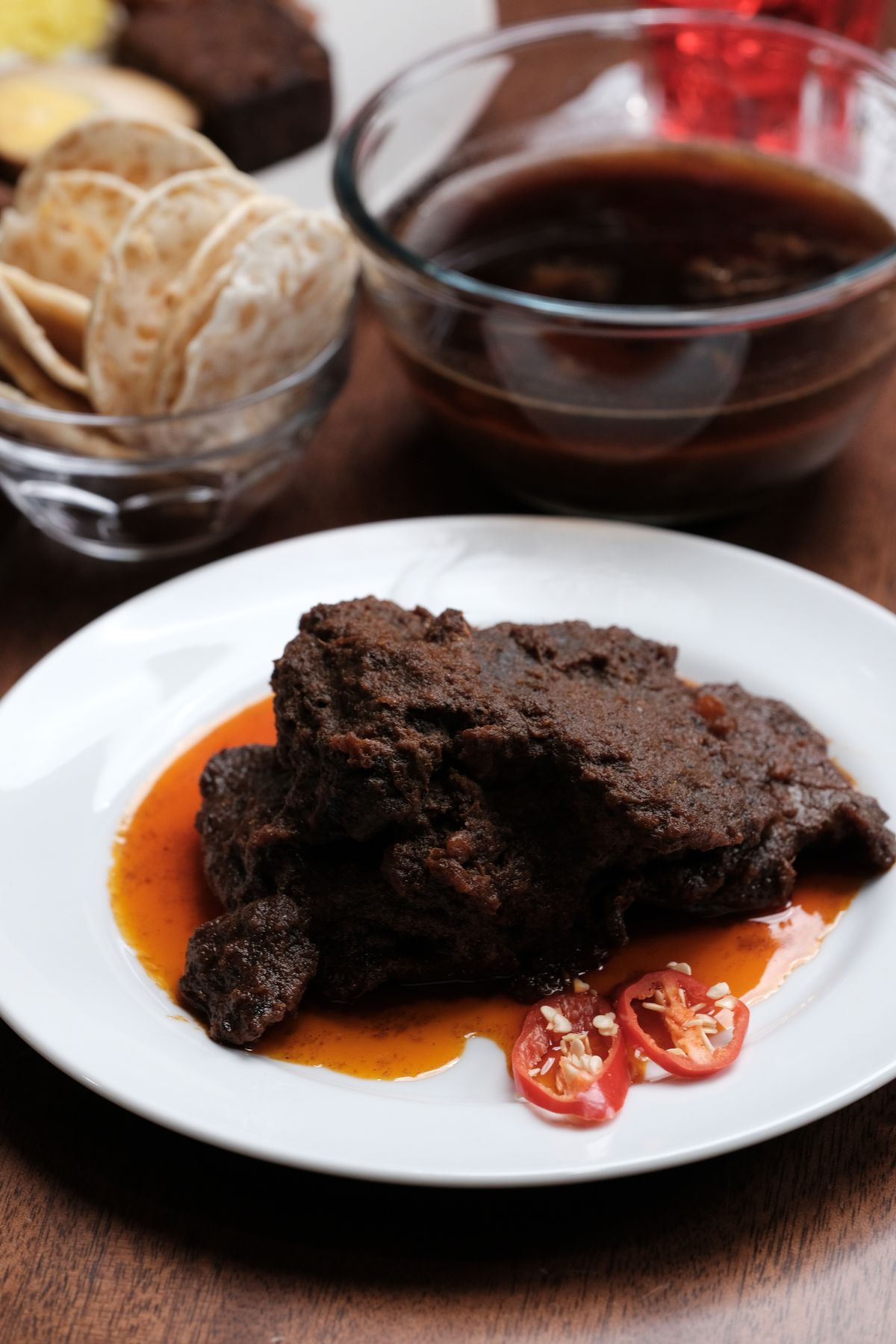
- Reduce to rendang. Stir in the kerisik. Continue cooking 45–60 minutes more, stirring more frequently as the sauce thickens. The rendang is done when the liquid has evaporated, the coconut oil has separated and coats the beef in a dark, glossy paste, and the meat is fork-tender.
- Rest and serve. Remove from heat. Discard lemongrass stalks and cinnamon stick. Taste, adjust salt. Serve hot with steamed jasmine rice.
Watch it made (video)
Marion Grasby’s ultimate guide to authentic Indonesian rendang walks through the West Sumatran technique — spice paste, three cooking stages, kerisik — in about 15 minutes of video. Her method is the closest I’ve seen on YouTube to a traditional Minangkabau kitchen.
Cooking times and temperatures
| Stage | Time | Heat | What it looks like |
|---|---|---|---|
| Bloom spice paste | 8–10 min | Medium | Dark, fragrant, oil separating |
| Sear beef | 5 min | Medium | Fully coated, edges seizing |
| Wet simmer (gulai) | 60 min | Low | Loose, pale caramel liquid |
| Caramelized (kalio) | +30 min | Low | Thick, deep amber, coating beef |
| Add kerisik + reduce | +45–60 min | Low | Dry, dark, oil-slicked |
| Beef doneness | Total ~3 hr | — | Fork-tender, no chew |
Best cut of beef for rendang
Chuck is the traditional choice — enough connective tissue to break down over hours into gelatin, but enough muscle to hold cube shape. Second best: brisket (fattier, richer). Avoid lean cuts like sirloin or eye of round — they turn stringy and dry before the sauce reduces. Bone-in short rib works beautifully if you have the budget and 4 hours.
What to serve with beef rendang
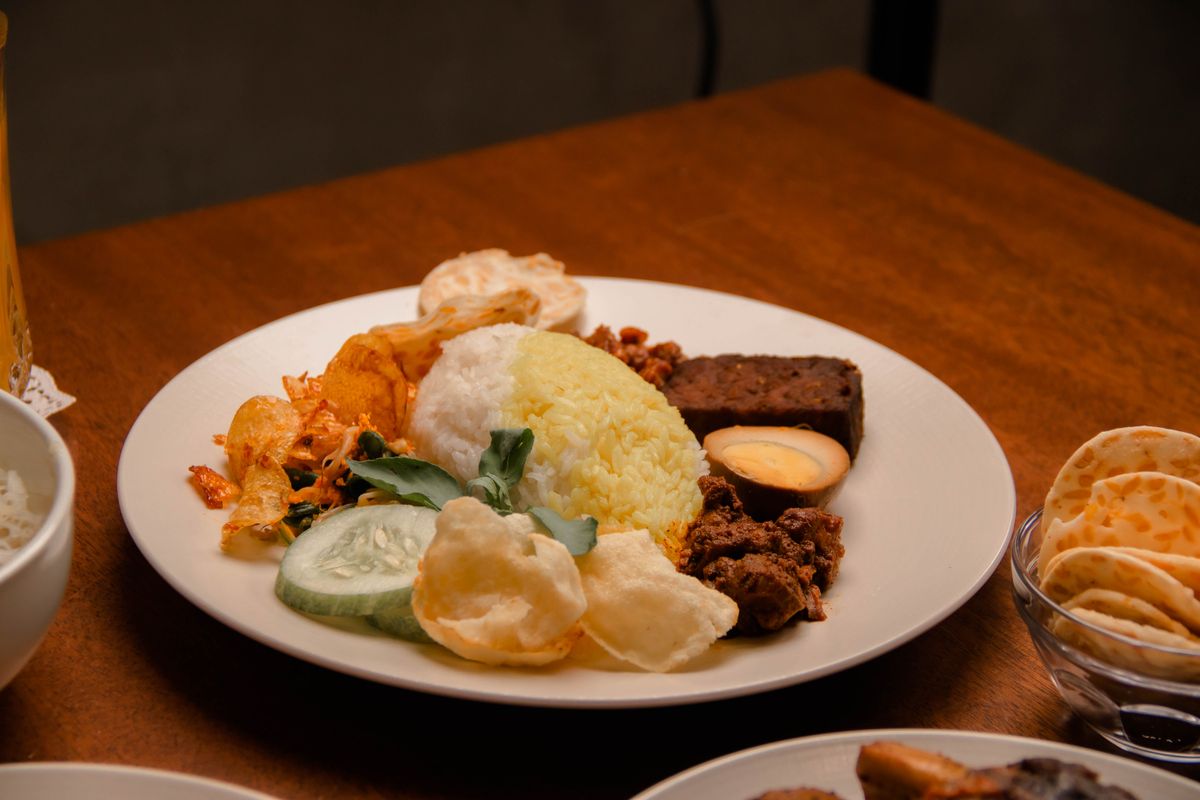
Rendang is served as part of nasi padang — a rice-forward plate with small sides:
- Steamed jasmine rice — the non-negotiable base
- Sambal (chili paste) — for extra heat
- Sayur nangka (young jackfruit curry) or gulai nangka
- Telur balado (hard-boiled egg in chili sauce)
- Fresh cucumber slices — to cool the palate
- Kerupuk (prawn crackers) — for texture
Common questions
Can I make beef rendang faster?
You can make a shortcut version in a pressure cooker in about 90 minutes — sear the paste, add beef and coconut milk, pressure cook 45 minutes, then reduce uncovered 30 minutes with the kerisik. It won’t match a 3-hour simmer for depth, but it’s excellent. Slow cooker: 6 hours on low, then transfer to a skillet to reduce uncovered for 30 minutes.
What’s the difference between Indonesian and Malaysian rendang?
Indonesian (Minangkabau) rendang is drier, darker, and cooked longer — nearly all liquid evaporates. Malaysian rendang is slightly wetter and often includes kaffir lime leaves in larger quantity. Both are legitimate; both are delicious. This recipe follows the Indonesian tradition.
Can I use canned coconut cream instead of milk?
No. Coconut cream is too rich and reduces too fast, scorching before the beef tenderizes. Full-fat coconut milk (13.5 oz cans) is the right ratio of fat to liquid for the 3-hour cook.
Is rendang spicy?
Traditional rendang uses 10–15 dried chilies, giving medium-hot heat with deep flavor rather than searing burn. Reduce to 4–6 chilies for a milder version, or increase to 20 for authentic Padang heat. Removing the seeds before soaking cuts heat further while keeping the color.
How do I store leftovers?
Refrigerate up to 5 days — rendang was originally developed as a preservation method and improves dramatically after 1–2 days. Freeze up to 3 months. Reheat gently in a skillet with a splash of water; microwaving works too since there’s no cream sauce to break.
Emma’s final note
The temptation to rush rendang is real. Every 15 minutes I stand at the stove I think “this is enough.” It never is. The transformation from pale coconut simmer to dark, oil-slicked rendang happens in the last 45 minutes, and if you stop at hour two you’ll have made kalio (also delicious, but not rendang). Set a timer, pour a drink, stir when it beeps. Trust the process.
Did You Try Our Recipe ?
Scrumptious
My husband (who is extremely picky) loved the liver & onions so much!! I didn’t have any beef broth or Sherry so I used about a tbl of Worcestershire and 1/4 c of white wine …..it was scrumptious
Response from MeatRecipesBox
Oh wow, I’m so happy to hear that!! 😍 I love that you made it work with what you had on hand — Worcestershire and white wine sound like a delicious twist. So glad your husband enjoyed it, especially being picky! Thank you for sharing your version, it makes me smile knowing it turned out scrumptious!
This was amazing
This recipe turned out really amazing! It’s juicy and spiced deliciously. I definitely would use less of the spicy pepper next time, but it really was delicious and I don’t think I’ll make chicken legs any other way from now on.!
Response from MeatRecipesBox
Thank you for taking the time to leave such a thoughtful review. I’m really glad to hear the recipe turned out juicy and full of flavor for you. That’s exactly what I was hoping for when putting it together. Good call on the spicy pepper as well. Adjusting the heat level to your own taste is always the best approach, and using a little less next time should make it just right for you. I really appreciate you trying the recipe and sharing your experience. It’s great to know it worked so well for you.
I Didn’t Expect This Cornbeef Hash Recipe to Taste This Good!!
One skillet. A handful of simple ingredients. Thirty minutes on the clock. And somehow… I ended up with the crispiest, most comforting cornbeef hash recipe I’ve made in years.
I wasn’t expecting much—just a quick, no-fuss meal. But that first bite? Crispy edges, tender potatoes, smoky corned beef, a little kick of pepper. It tasted like something straight off a cozy diner griddle.
Honestly, it caught me off guard—in the best way. Here’s why this simple skillet completely won me over.


