
- Prep15 min
- Cook55 min
- Total70 min
- Serves4–6
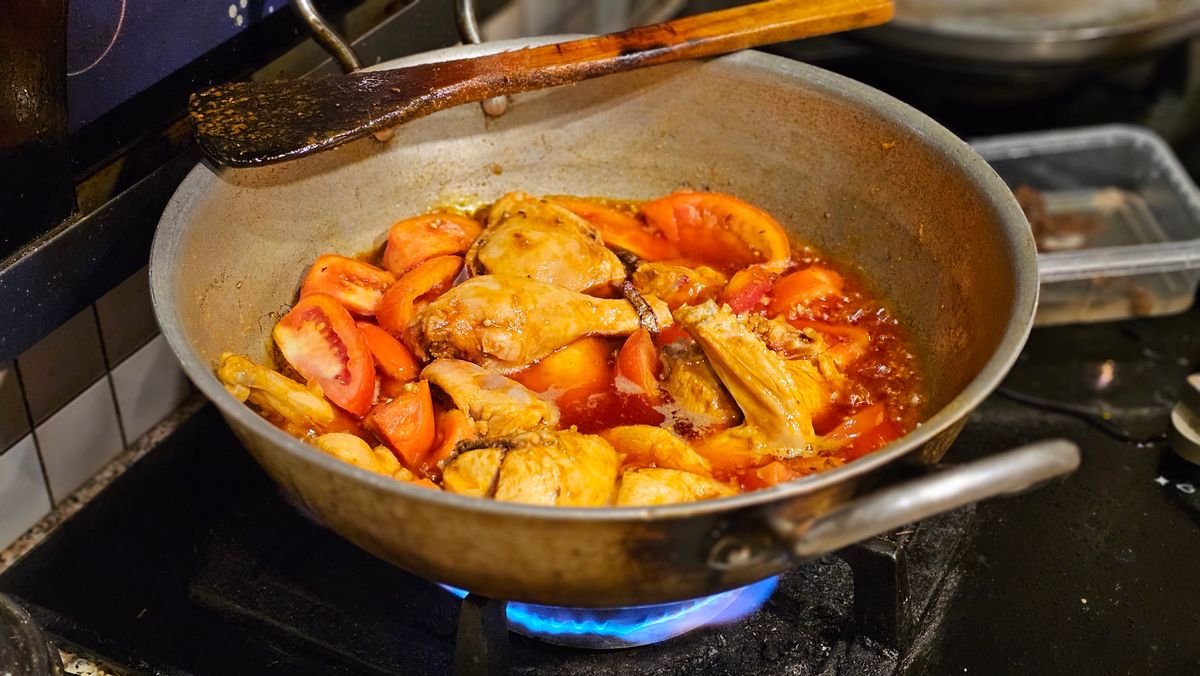
“Cacciatore” means hunter in Italian, and this dish is what a hunter’s family would cook with whatever came home in the bag — chicken (or rabbit), foraged mushrooms, garden tomatoes, and the herbs growing outside the door. It’s rustic, forgiving, and gets better the next day. If you like this style of one-pot Italian cooking, you’ll already know our Italian Sunday gravy and beef braciole — cacciatore is their weeknight sibling.
What is chicken cacciatore?
Ingredients
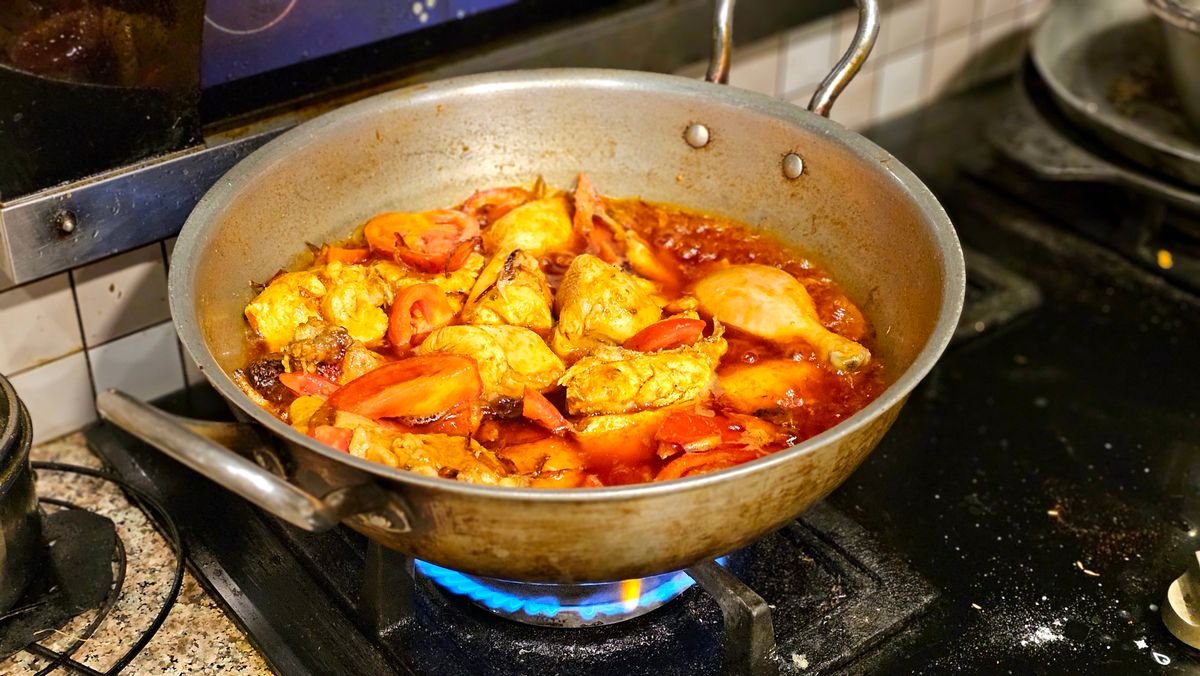
- 4 bone-in, skin-on chicken thighs
- 4 bone-in chicken drumsticks (or 8 thighs total)
- 2 tbsp olive oil
- 1 large yellow onion, sliced
- 2 red bell peppers, sliced
- 8 oz cremini mushrooms, sliced
- 4 garlic cloves, minced
- ⅓ cup tomato paste
- ¾ cup dry red wine (or ½ cup extra stock + 1 tbsp balsamic)
- 2 cups low-sodium chicken stock
- 1 can (14 oz) crushed tomatoes
- 2 rosemary sprigs + 2 bay leaves
- 1 tsp dried oregano
- ½ cup pitted kalamata olives (optional but traditional)
- Salt and freshly cracked black pepper
How to make chicken cacciatore
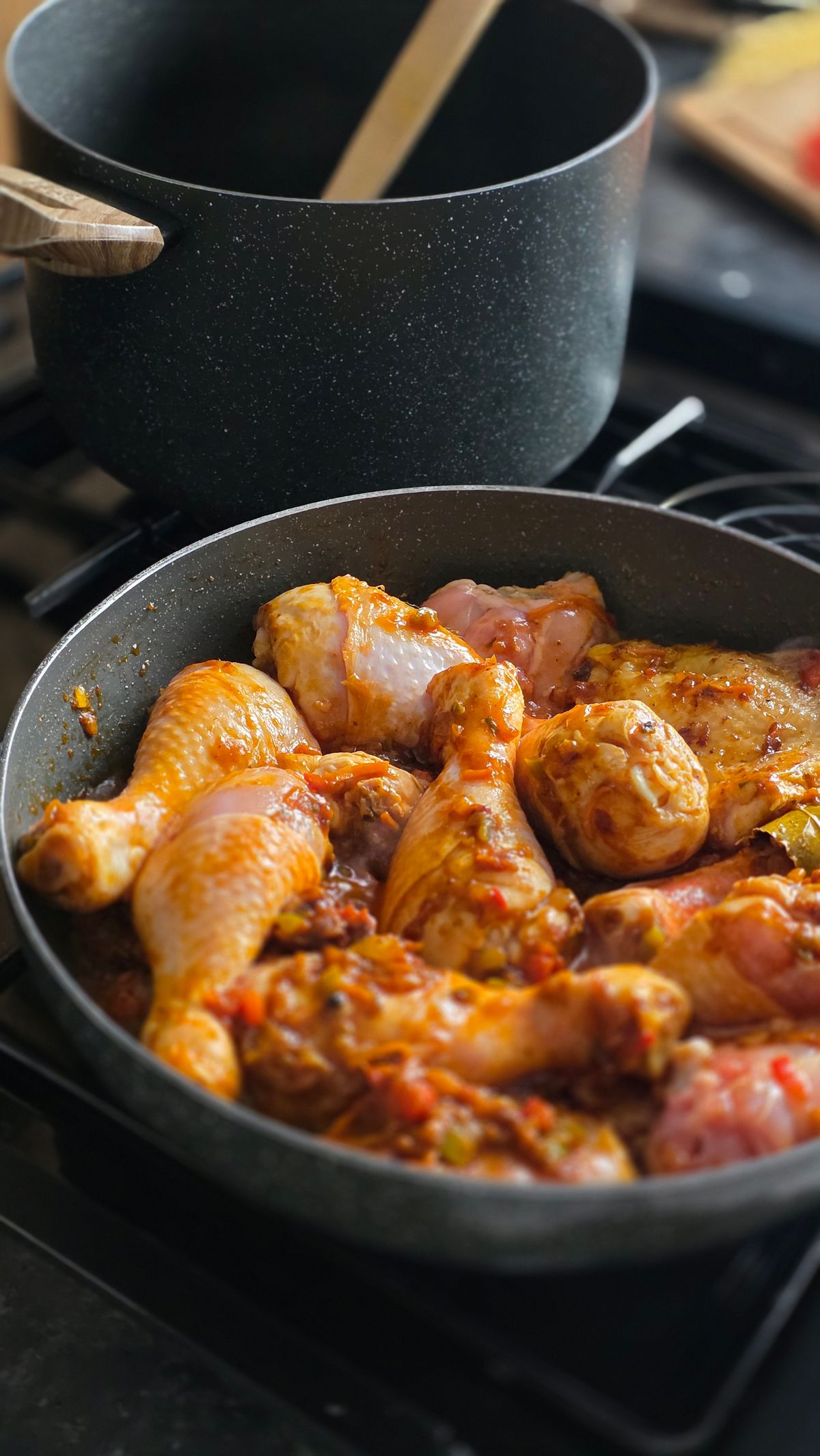
- Season and sear. Pat chicken dry, season generously with salt and pepper. Heat olive oil in a Dutch oven over medium-high. Sear chicken skin-side down 5 minutes until deeply golden, flip 3 minutes more. Work in batches. Transfer to a plate.
- Build the base. Pour off all but 2 tbsp fat. Add onion and cook 4 minutes until soft. Add peppers and mushrooms; cook 6–8 minutes until mushrooms release their liquid and it evaporates. Add garlic, cook 30 seconds.
- Toast the tomato paste. Push vegetables aside, add tomato paste to the empty spot, cook 90 seconds until it darkens — this is where the sauce gets its depth. Stir into vegetables.
- Deglaze and simmer. Add wine, scrape up the browned bits, reduce 2 minutes. Add stock, crushed tomatoes, rosemary, bay leaves, and oregano. Bring to a low boil.
- Braise. Nestle chicken back into the pan (skin above the sauce line to stay crisp). Cover, reduce heat to low, simmer 20 minutes. Uncover, add olives, simmer 10 more minutes until sauce thickens and internal chicken temp hits the USDA safe minimum of 165°F.
- Rest and serve. Discard bay leaves and rosemary stems. Let the pot sit 5 minutes off the heat — the sauce thickens further as it settles. Serve over polenta, pasta, or crusty bread.
Watch it made (video)
Gordon Ramsay’s version keeps to the traditional method — sear, build, braise — in under 10 minutes of video. His technique matches the recipe above almost step for step.
Cooking times and temperatures
| Stage | Time | Heat / Temp | Visual cue |
|---|---|---|---|
| Sear chicken (skin side) | 5 min | Medium-high | Deep mahogany crust |
| Sear second side | 3 min | Medium-high | Golden edges |
| Sauté vegetables | 10 min | Medium | Onions translucent, mushrooms dry |
| Toast tomato paste | 90 sec | Medium | Brick-red, aromatic |
| Covered simmer | 20 min | Low | Barely bubbling |
| Uncovered simmer | 10 min | Low | Sauce coats spoon, chicken 165°F / 74°C |
Regional variations
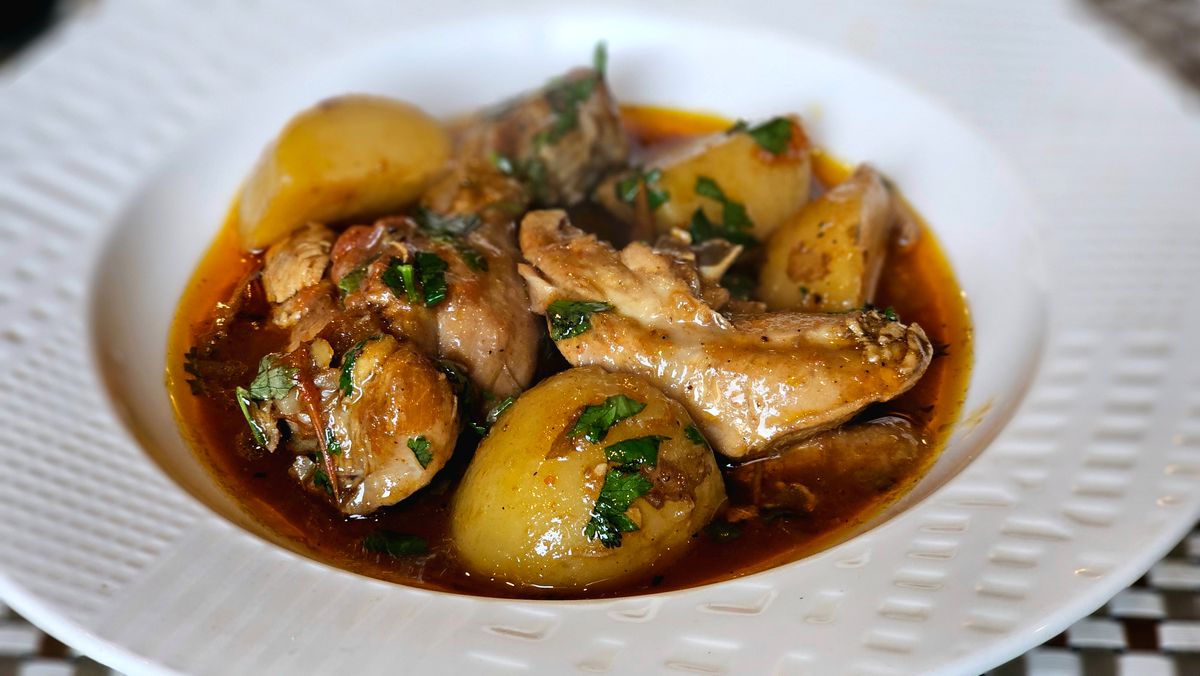
Cacciatore isn’t one dish, it’s a template that shifts across Italy:
- Roman (alla romana) — white wine, no tomato, lots of rosemary and anchovy
- Tuscan — red wine, olives, sometimes capers, minimal tomato
- Southern (Campanian) — full tomato, bell peppers, mushrooms — the American standard
- Marche — vinegar and rosemary, brothy and sharp
What to serve with chicken cacciatore
The dish is sauce-forward and needs a starch that absorbs it:
- Creamy polenta — the traditional pairing
- Wide pasta (pappardelle or rigatoni) — for a full Italian-American meal
- Crusty bread — for mopping the sauce off the bowl
- Mashed potatoes — untraditional but excellent
- Simple arugula salad with lemon — cuts the richness
Common questions
Can I make chicken cacciatore without wine?
Yes. Replace the ¾ cup red wine with ½ cup extra chicken stock plus 1 tbsp balsamic vinegar. The balsamic delivers the acid and depth wine normally would. If you want a similar no-alcohol Italian classic, try our chicken Marsala without wine.
Can I use chicken breasts?
Not recommended. Boneless breasts overcook in a 30-minute braise and turn stringy. If you must, add them for only the last 15 minutes and remove as soon as they hit 165°F internal. Bone-in thighs and drumsticks are the traditional choice for a reason.
Can I make it in a slow cooker?
Yes. Sear the chicken and sauté the vegetables in a skillet first (this step is non-negotiable for flavor), then transfer everything to a slow cooker with the stock and tomatoes. Cook on low 4–5 hours or high 2–3 hours. Add olives in the last 30 minutes.
How is cacciatore different from other Italian chicken dishes?
Cacciatore is a slow braise with tomato and vegetables. Compare it to lighter skillet cousins like chicken francese (egg-battered, lemon-butter), chicken piccata (capers, lemon), or chicken saltimbocca (prosciutto, sage). Cacciatore is the rustic one — the one you make for Sunday.
How do I store leftovers?
Refrigerate in an airtight container up to 4 days — the flavor actually improves overnight. Freeze up to 3 months. Reheat gently on the stove with a splash of stock; microwaving toughens the chicken.
Emma’s final note
I’ve made cacciatore in five different pots — Dutch oven, braiser, slow cooker, pressure cooker, and a beat-up stockpot — and the Dutch oven still wins. The heavy cast iron holds a steady low simmer without scorching, and the wide surface gets you a proper sear on the skin. If you’re going to buy one pot for Italian cooking, buy that one.
Did You Try Our Recipe ?
Scrumptious
My husband (who is extremely picky) loved the liver & onions so much!! I didn’t have any beef broth or Sherry so I used about a tbl of Worcestershire and 1/4 c of white wine …..it was scrumptious
Response from MeatRecipesBox
Oh wow, I’m so happy to hear that!! 😍 I love that you made it work with what you had on hand — Worcestershire and white wine sound like a delicious twist. So glad your husband enjoyed it, especially being picky! Thank you for sharing your version, it makes me smile knowing it turned out scrumptious!
This was amazing
This recipe turned out really amazing! It’s juicy and spiced deliciously. I definitely would use less of the spicy pepper next time, but it really was delicious and I don’t think I’ll make chicken legs any other way from now on.!
Response from MeatRecipesBox
Thank you for taking the time to leave such a thoughtful review. I’m really glad to hear the recipe turned out juicy and full of flavor for you. That’s exactly what I was hoping for when putting it together. Good call on the spicy pepper as well. Adjusting the heat level to your own taste is always the best approach, and using a little less next time should make it just right for you. I really appreciate you trying the recipe and sharing your experience. It’s great to know it worked so well for you.
I Didn’t Expect This Cornbeef Hash Recipe to Taste This Good!!
One skillet. A handful of simple ingredients. Thirty minutes on the clock. And somehow… I ended up with the crispiest, most comforting cornbeef hash recipe I’ve made in years.
I wasn’t expecting much—just a quick, no-fuss meal. But that first bite? Crispy edges, tender potatoes, smoky corned beef, a little kick of pepper. It tasted like something straight off a cozy diner griddle.
Honestly, it caught me off guard—in the best way. Here’s why this simple skillet completely won me over.


