

Jalfrezi lives at the intersection of Indian curry and Indo-Chinese stir-fry. The masala is Indian — tomato, ginger, garlic, ground spice — but the technique is a wok-flip: high heat, short time, vegetables that keep their bite. Get it right and the peppers still snap when you cut them, the chicken is glossy and coated, and there’s just enough gravy to spoon over rice. Get it wrong and you’ve made a soft, watery tomato curry. The line is heat and timing.
What makes jalfrezi different from other Indian curries?
The technique. Most Indian curries stew low and slow. Jalfrezi is stir-fried: high heat, short cook, semi-dry finish. Vegetables go in near the end so they retain their crunch, and a final splash of vinegar gives it the tangy edge that reminds people of Indo-Chinese cooking. It’s the Bengali cousin of a stir-fry, not a braise.
| Dish | Gravy | Heat | Signature |
|---|---|---|---|
| Jalfrezi | Semi-dry, glossy | Medium-hot | Bell peppers, tomato, tang |
| Tikka masala | Creamy, thick | Mild | Cream + tomato + fenugreek |
| Vindaloo | Thin, saucy | Hot | Vinegar + Kashmiri chili |
| Karahi/Kadhai | Dry to semi-dry | Medium | Whole coriander seed |
Ingredients (serves 4)
Nothing hard to find. Boneless thighs are the pro move — breast dries out in a 12-minute stir-fry. Use whatever colour peppers you like; the classic Indian restaurant version uses green + red for contrast.
For the chicken marinade
- 1½ lb (680 g) boneless chicken thighs, cut into 1-inch pieces
- 1 tsp Kashmiri chili powder (or paprika + a pinch of cayenne)
- ½ tsp turmeric
- 1 tsp ginger-garlic paste
- ½ tsp salt
- 1 tbsp lemon juice
For the masala
- 3 tbsp neutral oil or ghee
- 1 tsp cumin seeds
- 1 large red onion, one half sliced (for masala), one half diced 1-inch (for stir-fry)
- 1 tbsp ginger-garlic paste
- 3 medium tomatoes, chopped fine (or 1 cup canned crushed)
- 1 tsp Kashmiri chili powder
- 1 tsp ground coriander
- ½ tsp garam masala
- 1 green bell pepper, cut into 1-inch squares
- 1 red bell pepper, cut into 1-inch squares
- 2 green chilies, slit lengthwise
- 1-inch ginger, julienned
- 1 tsp white vinegar (the signature tang)
- Fresh coriander and kasuri methi (dried fenugreek), crushed, to finish
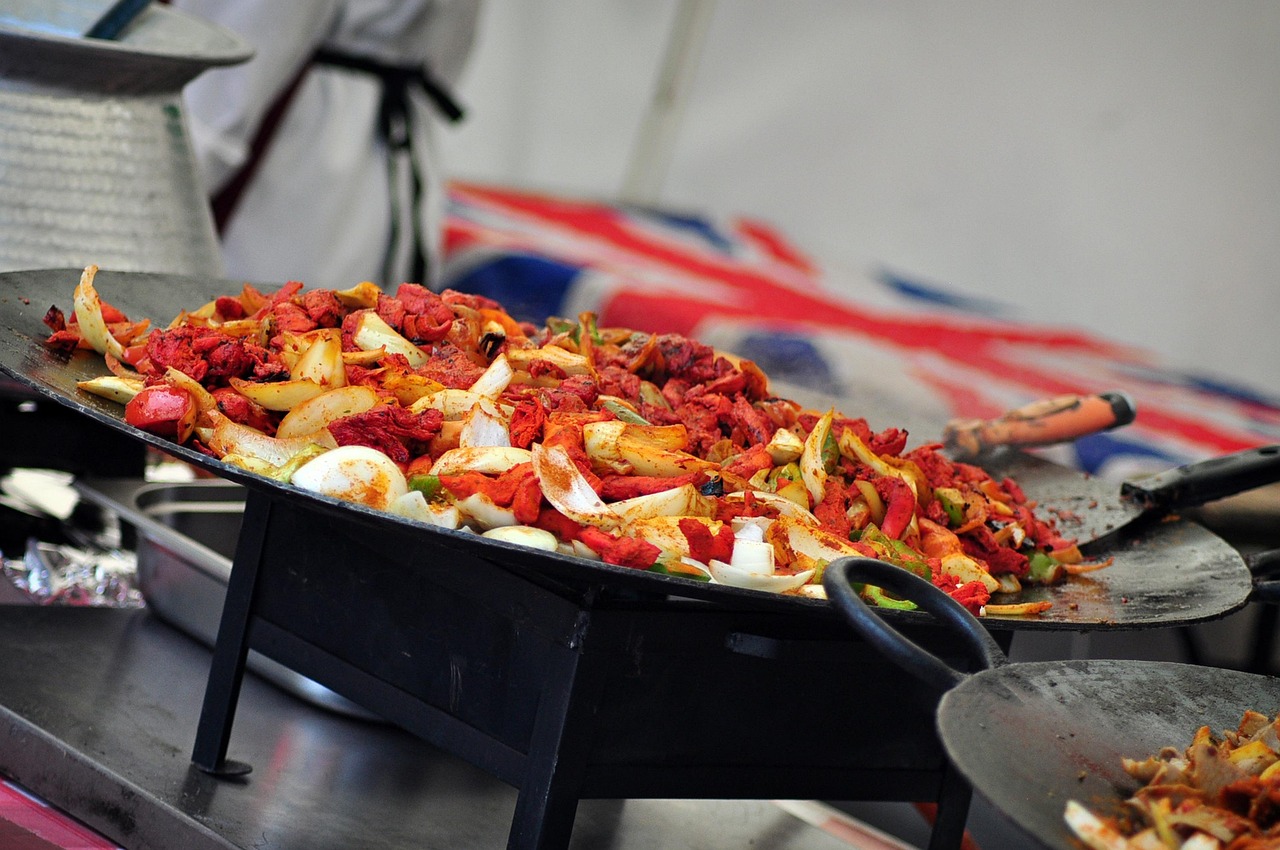
How to make chicken jalfrezi step by step
Restaurant-Style Chicken Jalfrezi
Method
- Marinate the chicken. Toss chicken with Kashmiri chili powder, turmeric, ginger-garlic paste, salt, and lemon juice. Rest 15 minutes at room temperature while you prep the rest.
- Sear the chicken. Heat 2 tablespoons of oil in a wide pan or kadhai over high heat until shimmering. Add chicken in a single layer. Don’t stir for 90 seconds — let it sear. Toss and cook 4 more minutes until 80% done. Remove and set aside. The chicken should still be slightly underdone; it finishes in the masala.
- Bloom the cumin. Add the remaining tablespoon of oil to the same pan. Drop in cumin seeds and let them sizzle 15 seconds.
- Build the masala. Add sliced (not diced) onions and ginger-garlic paste. Cook 4 minutes on high, stirring, until edges brown. Add chopped tomatoes, chili powder, and ground coriander. Cook 5–6 minutes until the tomatoes break down and oil separates at the edges. Mash any lumps with the back of the spoon.
- Add peppers and diced onion. Turn heat back to high. Toss in the diced onion, bell peppers, and green chilies. Stir-fry 2 minutes — you want colour to darken but crunch to stay.
- Return the chicken. Add chicken back with any accumulated juices. Toss for 2 minutes to coat. Sprinkle garam masala, crushed kasuri methi, and vinegar. Toss one more minute.
- Finish. Kill the heat. Top with ginger julienne and fresh coriander. Serve immediately — jalfrezi loses its texture within 20 minutes as the peppers soften from residual heat.
Watch it come together
The three moves that separate real jalfrezi from a soggy tomato curry
1. High heat, no lid
Jalfrezi is stir-fried, not simmered. A covered pan traps steam, and steam wilts the peppers into limp strips within minutes. Keep the flame on high the entire time you’re building the masala and finishing the dish. If your pan smokes, you’re doing it right.
2. Peppers go in last, whole
Cut bell peppers into 1-inch squares — not thin strips. Big pieces retain their crunch through the final toss. Add them in step 5, not earlier. Ninety seconds is enough for the outside to blister and the inside to stay al dente. Cook them alongside the tomatoes and they collapse.
3. The vinegar goes at the end
A teaspoon of white vinegar (or lemon juice) added in the last minute is the flavour you can’t quite place at Indian restaurants. It’s what makes jalfrezi read as “stir-fry” and not “curry.” Vinegar cooked longer loses its edge and just tastes like sourness in the background — added at the end, it stays bright.
What to serve with chicken jalfrezi

Because jalfrezi is semi-dry, it wants a starchy soaker on the side. Basmati rice is the default; jeera rice (cumin-tempered) is the upgrade. Roti, naan, or laccha paratha all work — soft breads suit the tangy masala better than crisp. Skip biryani (too much for one plate). If you’re serving a spread, pair jalfrezi with a creamy counterpart from our Indian chicken curry collection — the contrast reads as a proper table.
Variations and adjustments
- Milder jalfrezi. Halve the chili powder, drop the green chilies, and skip the vinegar. The dish becomes sweet-tangy and 1/5 on the heat scale. Good for kids.
- Jalfrezi with paneer. Swap chicken 1:1 for cubed paneer, marinate the same way, sear in step 2 for 90 seconds per side. Ready in 20 minutes total.
- Extra saucy version. Add ½ cup water with the tomatoes in step 4 and simmer 2 extra minutes. This mimics the UK curry-house jalfrezi that has more gravy — useful if you’re serving with rice only.
- Egg jalfrezi. A weeknight shortcut: skip the marinate, add whisked eggs with the peppers in step 5. Bhurji-style, done in 15 minutes.
- Boneless breast version. If breast is what you have, cut smaller (½-inch cubes) and reduce sear time in step 2 to 3 minutes total. See our thighs vs breasts breakdown for the trade-off.
Storing and reheating
Jalfrezi keeps 3 days in the fridge in an airtight container. Peppers lose their crunch overnight — that’s the trade-off with any stir-fry. Reheat in a hot pan, not the microwave, with 2 tablespoons of water: 3 minutes on high, tossing constantly, revives the masala without turning it mushy. Freeze only if you must; the pepper texture doesn’t survive the thaw. Better plan: prep the marinated chicken and pre-cut vegetables ahead, then stir-fry fresh in 15 minutes when you want to eat.
Quick answers
How spicy is chicken jalfrezi?
Medium-hot as written — around 3/5 on a heat scale, similar to a spicy Thai basil chicken. The name literally means “spicy stir-fry” in Bengali, so it’s not meant to be timid. UK takeaway jalfrezi tends to run hotter (green chilies and chili powder both amped up). Dial the green chilies down to zero for a mild version that still tastes like jalfrezi.
Can I use a slow cooker for jalfrezi?
Not really — jalfrezi is defined by high-heat stir-frying, and slow cookers can’t produce the char on peppers or the sear on chicken that makes the dish work. If you want a hands-off version, use the wok technique for chicken and peppers but simmer the tomato masala separately for 20 minutes ahead. Combine at service.
What’s the difference between chicken jalfrezi and karahi?
Both are semi-dry Punjabi/Pakistani-style curries, but jalfrezi is defined by bell peppers, onions, and vinegar, while karahi (also called kadhai) is built on whole coriander seeds and whole tomatoes, cooked in an iron karahi pan. Jalfrezi is a stir-fry; karahi is a fast-cook curry. Same family, different cousins.
Is chicken jalfrezi halal-friendly?
Yes — no pork, no wine, no gelatin. Vinegar (fermented from grain, apple, or sugar cane) is halal in mainstream Islamic rulings. Use halal-certified chicken and check the vinegar label if in doubt. Skip the wine some Western adaptations sneak in for “depth” — it’s not traditional and it’s not needed.
Why did my jalfrezi turn out watery?
Two likely causes: heat too low, or lid on the pan. Steam accumulates and dilutes the masala. Fix on the fly by cranking the heat to high and cooking uncovered for 3–4 minutes to drive off moisture. Long-term fix: don’t cover the pan at any stage, and add tomatoes chopped fine so they break down quickly instead of releasing water in slow bursts.
References and further reading
Cross-referenced technique against Tea for Turmeric’s jalfrezi, Swasthi’s restaurant-style version, and Fatima Cooks’ Pakistani take. For chicken safety temperatures, see USDA FSIS poultry guidance.
Next: try our chicken karahi for the coriander-seed cousin, or the chicken tikka masala for the creamy end of the spectrum.
Did You Try Our Recipe ?
Scrumptious
My husband (who is extremely picky) loved the liver & onions so much!! I didn’t have any beef broth or Sherry so I used about a tbl of Worcestershire and 1/4 c of white wine …..it was scrumptious
Response from MeatRecipesBox
Oh wow, I’m so happy to hear that!! 😍 I love that you made it work with what you had on hand — Worcestershire and white wine sound like a delicious twist. So glad your husband enjoyed it, especially being picky! Thank you for sharing your version, it makes me smile knowing it turned out scrumptious!
This was amazing
This recipe turned out really amazing! It’s juicy and spiced deliciously. I definitely would use less of the spicy pepper next time, but it really was delicious and I don’t think I’ll make chicken legs any other way from now on.!
Response from MeatRecipesBox
Thank you for taking the time to leave such a thoughtful review. I’m really glad to hear the recipe turned out juicy and full of flavor for you. That’s exactly what I was hoping for when putting it together. Good call on the spicy pepper as well. Adjusting the heat level to your own taste is always the best approach, and using a little less next time should make it just right for you. I really appreciate you trying the recipe and sharing your experience. It’s great to know it worked so well for you.
I Didn’t Expect This Cornbeef Hash Recipe to Taste This Good!!
One skillet. A handful of simple ingredients. Thirty minutes on the clock. And somehow… I ended up with the crispiest, most comforting cornbeef hash recipe I’ve made in years.
I wasn’t expecting much—just a quick, no-fuss meal. But that first bite? Crispy edges, tender potatoes, smoky corned beef, a little kick of pepper. It tasted like something straight off a cozy diner griddle.
Honestly, it caught me off guard—in the best way. Here’s why this simple skillet completely won me over.


