
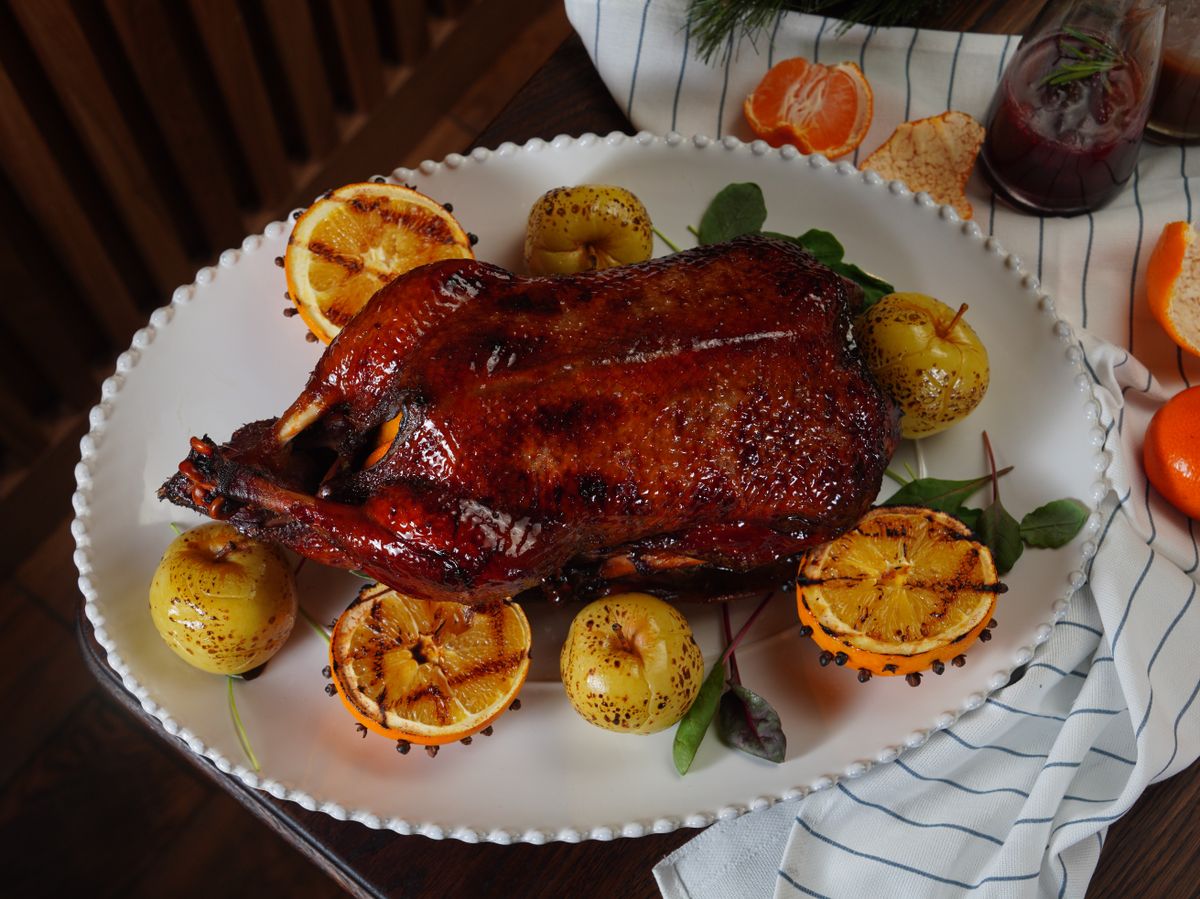
Duck à l’Orange in one sentence: roast a whole duck at 325 °F (163 °C) for about 1 hour 45 minutes, then serve it under a sauce bigarade built on a caramel-vinegar gastrique enriched with duck stock and fresh orange juice — no orange liqueur required.
The dish balances four flavors — bitter, sweet, sour and savory — that shift in every spoonful. Get the gastrique right and everything else follows. This walkthrough uses only pantry ingredients, replaces Grand Marnier with a concentrated orange-juice reduction, and keeps the classical Escoffier structure intact.
The traditional method at a glance
Every serious French recipe for canard à la bigarade rests on the same skeleton: roast the duck, build a gastrique, deglaze with citrus, and finish with the duck’s own reduced stock. What follows are the numbers professional kitchens actually use, cross-checked against Julia Child’s whole-duck version and Hank Shaw’s Bigarade Sauce with Duck.
| Stage | Temperature | Time | Key rule |
|---|---|---|---|
| Roast whole duck | 325 °F / 163 °C | 1 h 30 – 1 h 45 min | Prick skin, roast breast-up on a rack, drain fat twice |
| Gastrique (sugar + vinegar) | Medium heat | 4 – 6 min | Amber caramel, then off heat before you add the vinegar |
| Reduce sauce | Low simmer | 15 – 20 min | Stock + juice down to nappé (coats the back of a spoon) |
| Rest & carve | Room temperature | 10 min | Skin-side up, uncovered — never tent with foil |
The dish takes its French nickname — à la bigarade — from the bitter Seville orange (bigarade in old French) that originally flavored the sauce. Sweet oranges plus a lemon do the same job today. If you happen to see Seville oranges at the market between January and March, buy every one they have and freeze the juice.
Ingredients (serves 4)
For the duck:
- 1 whole duck, 2 – 2.4 kg (about 4½ – 5 lb) — Pekin (Long Island) is standard; Muscovy works if you like a leaner bird
- 2 tsp fine sea salt
- 1 tsp black pepper, freshly cracked
- 1 orange, quartered (for the cavity)
- 4 sprigs fresh thyme
For the alcohol-free bigarade sauce:
- 60 g (¼ cup) granulated sugar
- 60 ml (¼ cup) white wine vinegar or cider vinegar
- Zest of 2 oranges, cut in fine julienne with a peeler (pith-free)
- Zest of ½ lemon
- 250 ml (1 cup) fresh orange juice (about 3 oranges)
- 2 tbsp fresh lemon juice
- 2 tbsp frozen orange-juice concentrate, defrosted — this is the alcohol-free swap for Grand Marnier and delivers the same aromatic hit
- 300 ml (1¼ cups) duck stock (or chicken stock in a pinch)
- 1 tbsp cold unsalted butter, cubed (for finishing)
- Salt to taste
Why frozen OJ concentrate instead of orange liqueur
Grand Marnier, Cointreau and curaçao all supply two things — concentrated bitter-orange oil and a small caramel note from aged spirits. Frozen orange-juice concentrate matches the first perfectly. The second comes from your gastrique. Blind-tastings on French cooking forums put the concentrate version within a hair of the classical result, minus the alcohol.
Step-by-step: how to make Duck à l’Orange
- Prep the duck. Pull the giblet pack out, trim excess neck skin, and pat the bird bone-dry. Prick the skin all over the breast and thighs with a sharp fork — angle so the tines pierce skin and fat but stop above the flesh. Salt inside and out, then stuff the cavity with the orange quarters and thyme.
- First 30 minutes at 400 °F. Preheat the oven to 400 °F / 205 °C. Set the duck breast-up on a V-rack over a deep tray. Roast 30 minutes at this higher temperature to render the initial fat cap and start the skin browning.
- Drop the heat and drain. Reduce the oven to 325 °F / 163 °C. Pull the tray out (carefully — hot fat), tip the rendered fat into a heat-proof jar (save it for potatoes another day), and return the duck to the oven.
- Slow roast until 165 °F internal. Continue roasting 60 – 75 minutes more, draining the fat once more halfway through. A probe in the thickest part of the thigh should read 165 °F / 74 °C. The skin will be deep golden and audibly crisp when tapped.
- Blanch the zest strips. While the duck finishes, drop the julienned orange and lemon zest into a small pot of boiling water for 2 minutes, drain, then rinse under cold water. This step strips the bitter oil compounds so the finished sauce is bright, not medicinal.
- Build the gastrique. In a heavy saucepan combine the sugar with 1 tbsp water. Cook over medium heat, swirling (never stirring), 4 – 6 minutes until the sugar melts into a golden amber caramel. Pull the pan off the heat, stand back, and pour in the vinegar — it will hiss and seize. Return to low heat and stir until smooth.
- Add the citrus and reduce. Pour in the orange juice, lemon juice and orange-juice concentrate. Add the blanched zest and the duck stock. Simmer 15 – 20 minutes until the sauce reduces by about a third and coats the back of a spoon (this is what French cooks call nappé).
- Rest the duck. When the bird comes out, transfer it to a carving board and rest uncovered for 10 minutes. Tenting with foil steams the skin and undoes the crisp you just spent 2 hours building.
- Finish the sauce with butter. Off the heat, whisk in the cold butter cubes one at a time until the sauce is glossy. Taste and adjust with a pinch of salt. If you want it sharper, add a squeeze more lemon; if too sharp, half a teaspoon more sugar.
- Carve and serve. Remove the legs first at the joint, then carve the breasts off the bone in whole pieces before slicing on the diagonal. Spoon sauce over each portion at the plate — never on the platter, or the skin softens by the time it reaches the table.
Watch the classical method on video
Chef Jean-Pierre’s December 2024 walkthrough follows almost the exact structure above — whole duck, gastrique, reduction — and is one of the clearest visual references available for the sauce timing.
What to serve with Duck à l’Orange
The sauce is rich and bright at once, so the sides should be simple and starchy enough to soak it up. Three classical pairings that work every time:
- Pommes purée — silky mashed potato with plenty of butter. The neutral canvas lets the bigarade sing. See our French potato sides collection for the correct ricer technique.
- Haricots verts amandine — thin green beans blanched and finished with toasted almonds. The bitter almond note echoes the bitter orange zest.
- Roasted endive halves — the mild bitterness offsets the sweet sauce beautifully. Halve, brush with duck fat, roast at 400 °F for 20 minutes cut-side down.
For a drink pairing without alcohol, a sparkling clementine juice with a twist of lemon peel echoes the sauce’s citrus profile and cuts through the fat much the way a dry white classically would.
Common mistakes and how to fix them
The sauce tastes bitter, not bright
Zest wasn’t blanched, or you scraped the white pith off with the zest. The oil in orange pith carries almost all the bitterness. Use a Y-peeler to lift only the coloured layer, then blanch for 2 minutes in boiling water before adding to the sauce.
The caramel seized into a lump when I added vinegar
Cold liquid on hot caramel always shocks it. Warm the vinegar to a low simmer first, or add it off the heat and stir over low heat until the caramel melts back into the liquid — it will, given about a minute of patient whisking.
The sauce reduced too much and turned syrupy
Add stock, not water — water thins the flavor without rebuilding body. Whisk in another 100 ml of duck or chicken stock, warm through, and re-check the nappé consistency. The sauce should coat a cold spoon in a translucent film, not a lacquer.
My duck skin came out flabby, not crisp
Two usual culprits: the bird wasn’t dried thoroughly before roasting, or the fat wasn’t drained during cooking. For next time, air-dry the duck uncovered in the fridge overnight and drain the tray twice — once at 30 minutes and again at 90 minutes.
Can I make this with just duck breasts?
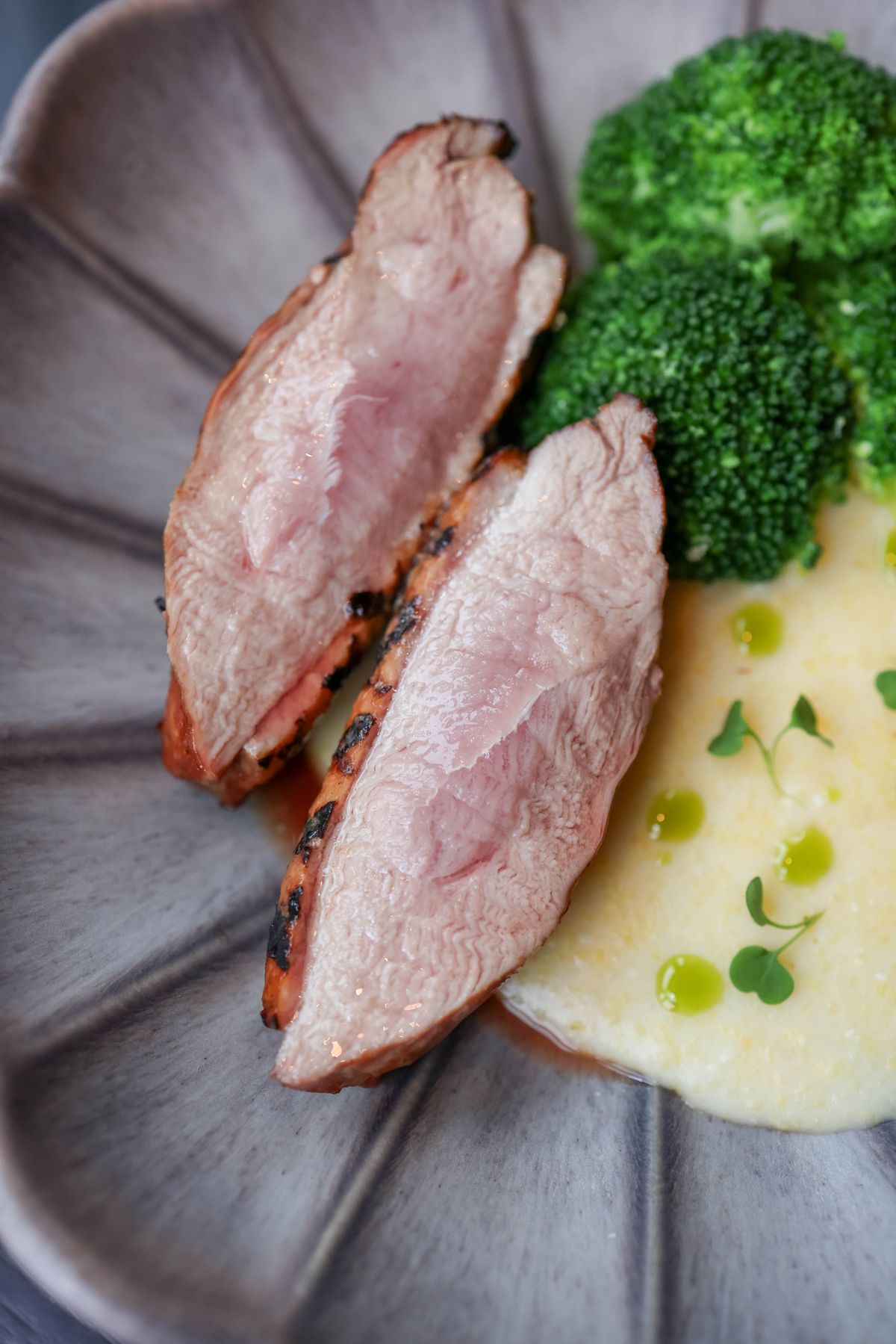
Yes, and it’s a smart weeknight version. Score the fat, salt heavily, sear skin-side-down in a cold dry pan on medium heat for 10 minutes until the fat renders and the skin is deep gold, flip for 3 – 4 minutes to medium-rare, rest 5 minutes, then slice. Serve the same bigarade sauce alongside.
Where Duck à l’Orange comes from
Sauce bigarade appears in French cookbooks as early as the 17th century, but it was Auguste Escoffier who codified the version most modern cooks recognise, in his Le Guide Culinaire (1903). The pairing of roasted duck with bitter-orange sauce almost certainly predates that by centuries — Italian cooks under Catherine de’ Medici are commonly credited with bringing it into the French court in the 16th century (see the Wikipedia entry on Duck à l’orange).
The dish had a mid-century American revival after Julia Child put it into Mastering the Art of French Cooking in 1961, and it’s been a bistro-menu fixture ever since. Once you have the gastrique-plus-citrus-plus-stock template in your hands, you own a sauce pattern that adapts to almost any roast bird — try it with pigeon, guinea fowl or a whole roast chicken. The technique stays identical; only the stock changes. For more classical French duck work, see our complete duck cooking guide.
Did You Try Our Recipe ?
Scrumptious
My husband (who is extremely picky) loved the liver & onions so much!! I didn’t have any beef broth or Sherry so I used about a tbl of Worcestershire and 1/4 c of white wine …..it was scrumptious
Response from MeatRecipesBox
Oh wow, I’m so happy to hear that!! 😍 I love that you made it work with what you had on hand — Worcestershire and white wine sound like a delicious twist. So glad your husband enjoyed it, especially being picky! Thank you for sharing your version, it makes me smile knowing it turned out scrumptious!
This was amazing
This recipe turned out really amazing! It’s juicy and spiced deliciously. I definitely would use less of the spicy pepper next time, but it really was delicious and I don’t think I’ll make chicken legs any other way from now on.!
Response from MeatRecipesBox
Thank you for taking the time to leave such a thoughtful review. I’m really glad to hear the recipe turned out juicy and full of flavor for you. That’s exactly what I was hoping for when putting it together. Good call on the spicy pepper as well. Adjusting the heat level to your own taste is always the best approach, and using a little less next time should make it just right for you. I really appreciate you trying the recipe and sharing your experience. It’s great to know it worked so well for you.
I Didn’t Expect This Cornbeef Hash Recipe to Taste This Good!!
One skillet. A handful of simple ingredients. Thirty minutes on the clock. And somehow… I ended up with the crispiest, most comforting cornbeef hash recipe I’ve made in years.
I wasn’t expecting much—just a quick, no-fuss meal. But that first bite? Crispy edges, tender potatoes, smoky corned beef, a little kick of pepper. It tasted like something straight off a cozy diner griddle.
Honestly, it caught me off guard—in the best way. Here’s why this simple skillet completely won me over.


