
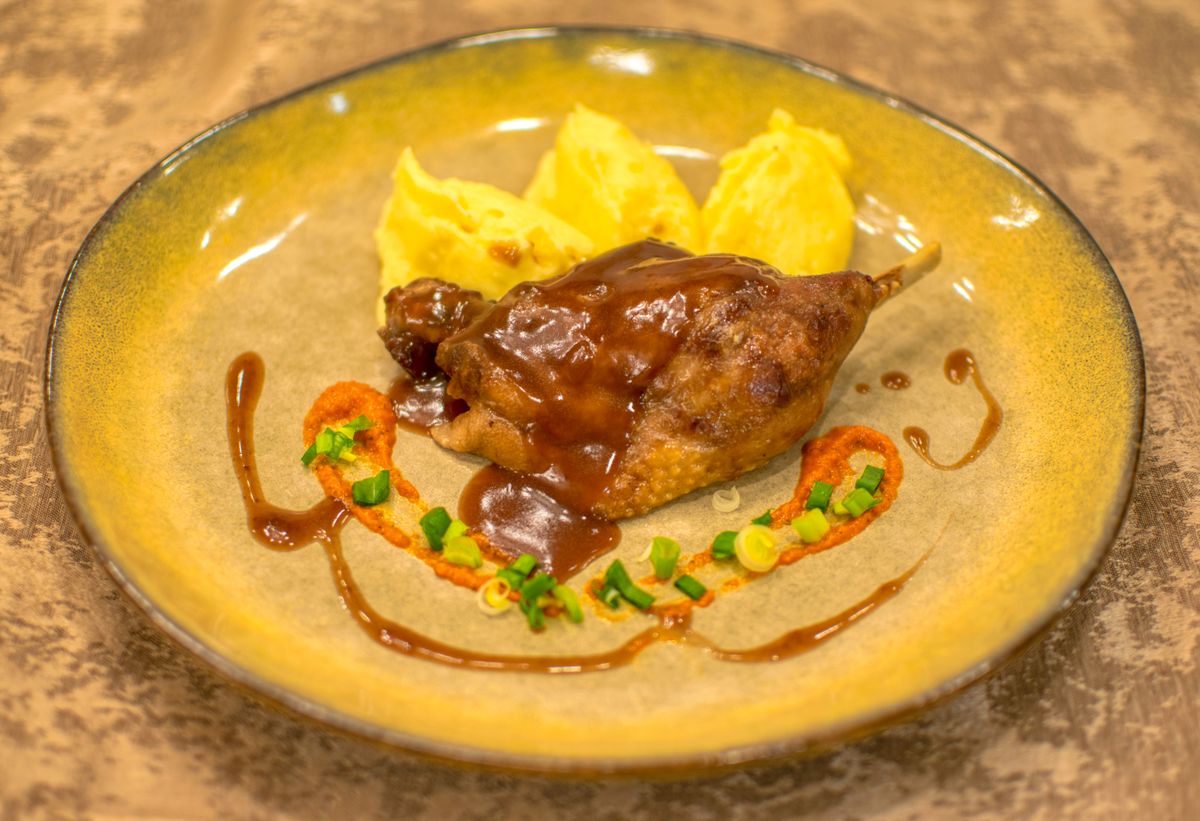
Traditional duck confit in one sentence: salt-cure whole duck legs for 24 hours, then poach them fully submerged in their own rendered fat at 190–210 °F (88–99 °C) for about 2 to 2½ hours until a skewer slides through the thigh with zero resistance.
Cool the legs in the fat, refrigerate up to 4 months (that’s the “confit” — preservation), then crisp the skin in a dry skillet the day you serve. Skip modern shortcuts like sous vide or oil substitutes if you want the real Gascon result documented since the 15th century.
The traditional method at a glance
Every authentic recipe from Gascony follows the same three-stage arc — cure, cook, keep. What varies is only the exact salt ratio and the cook temperature. Here are the numbers most French professional kitchens actually use, cross-checked against the James Beard Foundation reference recipe and Chef Michel Dumas’s classical breakdown.
| Stage | Temperature | Time | Key rule |
|---|---|---|---|
| Salt cure (dry) | Refrigerator, 38 °F / 3 °C | 18–24 hours | 1.5 % salt by weight of the meat |
| Slow poach in fat | 190–210 °F / 88–99 °C | 2 – 2½ hours | Fat must never simmer or exceed 221 °F / 105 °C |
| Rest & age | Refrigerator, ≤ 40 °F / 4 °C | 2 weeks – 4 months | Legs fully submerged, no air gap |
| Finish (day of service) | Skillet, medium heat | 6–8 minutes, skin down | Dry pan — the leg’s own fat is enough |
Two temperature points do all the heavy lifting: the salt cure ratio, and the fat cap of 221 °F. Above that number the rendered duck fat starts to oxidize and you lose the clean, mineral aroma that makes proper confit taste like confit rather than pot-roast (French Cooking Academy, 2024).
Ingredients for 4 duck legs
- 4 whole duck legs (thigh + drumstick), roughly 300 g each — Moulard or Barbary are the traditional Gascon breeds
- Coarse sea salt — 1.5 % of the total leg weight (≈ 18 g for 1.2 kg of duck)
- 4 garlic cloves, crushed with the flat of a knife
- 6 sprigs fresh thyme
- 3 bay leaves, torn
- 1 tsp black peppercorns, cracked
- 1.2 – 1.5 L (about 5–6 cups) rendered duck fat — enough to fully submerge the legs
Why 1.5 % salt and nothing more
Below 1.2 % the meat cures unevenly. Above 2 % you push into ham territory and lose the delicate poultry note. The 1.5 % by-weight ratio is the same one used industrially by Gascon producers and is the modern replacement for the “cover in a heavy layer of salt for a day” instruction you’ll still see in older French cookbooks.
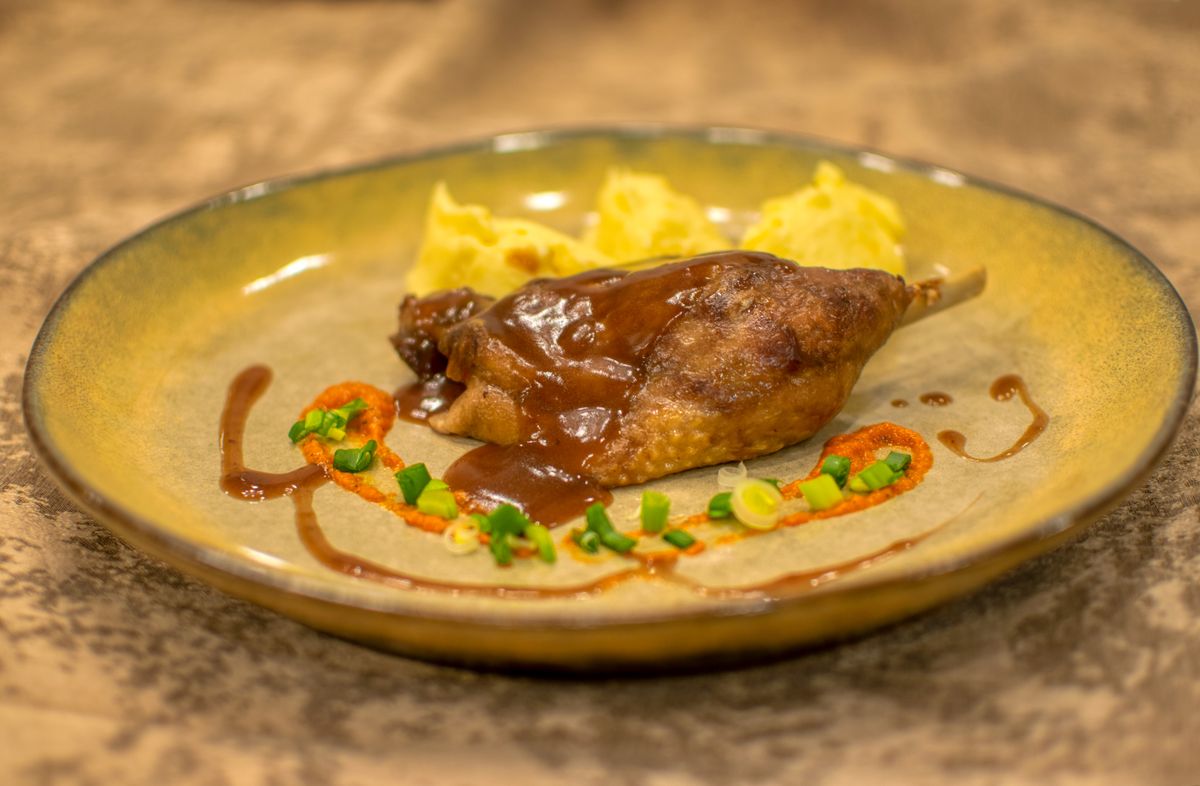
Step-by-step: how to make duck confit the classical way
- Weigh, then salt. Pat the legs completely dry. Weigh them, calculate 1.5 % of that number in salt, and rub it evenly into skin and flesh. Scatter the garlic, thyme, bay and pepper over the top.
- Cure 24 hours. Arrange the legs skin-side up in a single layer in a non-reactive dish. Cover and refrigerate 18–24 hours. You’ll see clear liquid pool underneath — that’s water leaving the muscle, which is exactly what you want.
- Rinse and dry, don’t skip this. Rinse each leg under cold water to wash off the surface cure, then pat bone-dry. Any leftover salt crystals will over-season the finished dish.
- Melt the fat gently. In a heavy Dutch oven or enameled cast iron, warm the duck fat to 190 °F / 88 °C. It should look liquid and clear but never bubble.
- Submerge and poach. Slide the legs in skin-side down. The fat must cover them by at least half an inch. Slip the pot into a 210 °F / 99 °C oven, uncovered, for 2 to 2½ hours. A probe thermometer in the fat is worth its weight here — the RecipeTin Eats test-kitchen version uses the same ceiling (RecipeTin Eats, 2023).
- Test for doneness. A wooden skewer should meet zero resistance sliding through the thickest part of the thigh, and the meat should threaten to fall off the bone when you lift a leg with tongs.
- Cool in the fat. This is non-negotiable. Turn off the oven, let the pot cool to room temperature with the legs still submerged, then transfer legs and fat to a clean container. Fat above, meat below, no air pockets.
- Age (optional, but classic). Refrigerate at least 48 hours, ideally 2 to 4 weeks. The salt and fat redistribute; the flavor rounds and deepens. It’ll keep this way for up to 4 months (Wikipedia: Duck confit).
- Finish and serve. On the day, lift a leg out of the fat, scrape off the excess, and lay it skin-side down in a cold, dry skillet. Bring the heat up slowly to medium — the skin renders its own oil and crisps to lacquer in 6 to 8 minutes. Flip for one final minute to warm through.
Watch the traditional method on video
If you’re a visual learner, this June 2025 walkthrough follows the same 1.5 %-salt / low-fat-poach method above and is one of the clearest step-by-step recordings currently on YouTube.
What to serve with duck confit
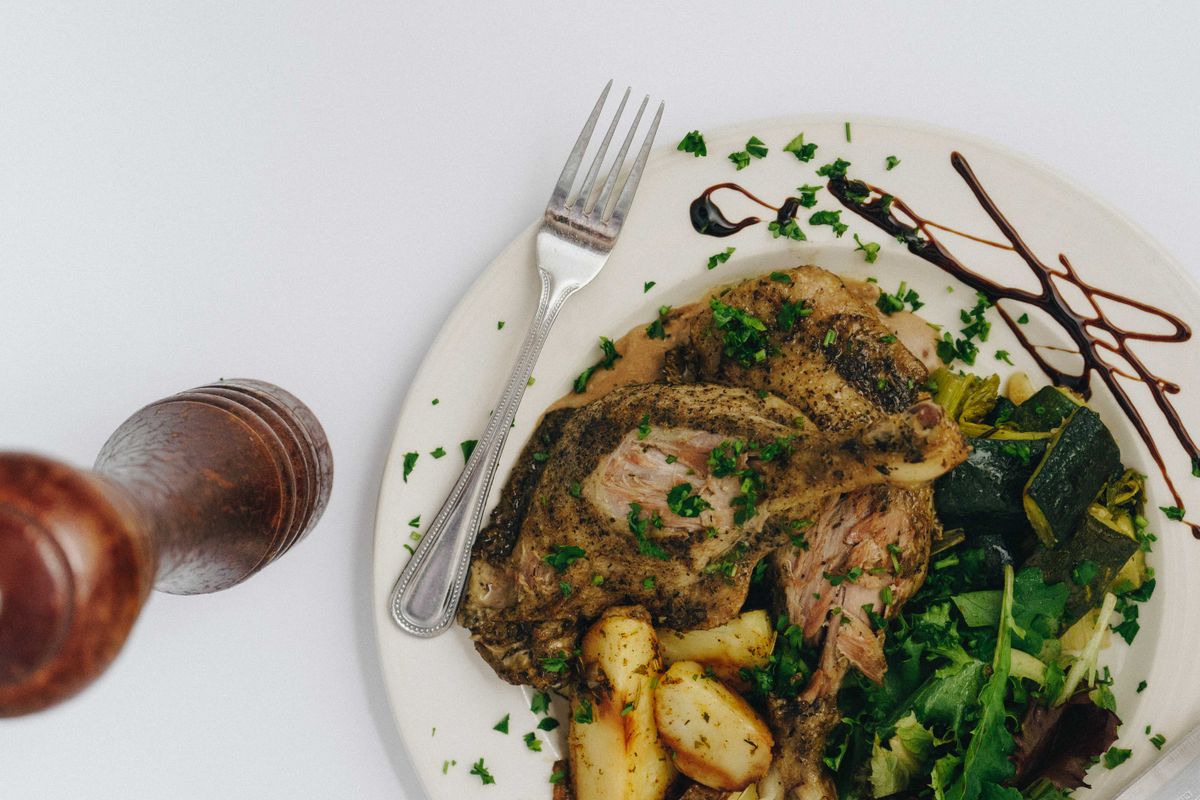
In Gascony the leg almost never travels alone. The three classic pairings, each of which cuts the richness in a different way, are:
- Pommes sarladaises — potatoes sliced into rounds, sautéed in a spoonful of the confit fat with garlic and parsley. For the full technique see our guide to French potato sides.
- Lentilles vertes du Puy — earthy green lentils braised with carrot, onion and a bay leaf. The tannin in the lentils balances the fat beautifully.
- Frisée aux herbes — bitter greens tossed in a sharp mustard-and-lemon vinaigrette to reset the palate between bites.
For a non-alcoholic drink pairing, sparkling apple cider from Normandy (look for the alcohol-free variety) or a chilled hibiscus infusion both cut the richness the way a tannic drink traditionally would.
Storage and food safety
The whole point of confit is preservation. Once cooled, kept fully submerged in fat, and refrigerated at or below 40 °F / 4 °C, cured duck legs are safe for 3 to 4 months. The Saveur Gascon-style recipe notes the same window. Freezing works — up to a year — but you lose a little of the silky texture that only long refrigeration produces.
Two rules to keep in your head:
- The legs must stay completely covered in fat. Any exposed skin oxidizes and rancidifies fast.
- Always transfer with a clean, dry utensil. Introducing moisture — even a wet spoon — is the single most common cause of a spoiled batch.
Common mistakes and how to fix them
The meat is tough
Cook temperature was too high, not too low. If the fat visibly bubbled you likely crossed 220 °F / 104 °C and the collagen tightened instead of dissolving. Drop the oven to 200 °F / 93 °C and add another 30 minutes on your next attempt.
The skin never crisps at the finish
The legs went into the pan wet, or the pan wasn’t cold at the start. Wipe every leg dry, place it in a cold skillet, and let it come up to heat with the pan — the slow ramp renders fat from inside the skin instead of scorching the surface.
The confit tastes too salty
Either the cure went longer than 24 hours, or the salt wasn’t rinsed off. Both are usually irreversible in the finished leg, so weigh your salt and rinse thoroughly next time.
Can I use olive oil instead of duck fat?
Technically yes, culturally no. Olive-oil “confit” doesn’t preserve the same way and tastes green rather than mineral. If you don’t have enough duck fat on hand, buy a jar of pure rendered duck fat — a single container is enough for a 4-leg batch and reuses for months of subsequent cooking.
Do I need a sous-vide setup?
No, and using one bypasses the point. Sous-vide gives you tender duck cooked in fat but skips the salt-cure preservation stage that defines confit. Follow the oven method above for the authentic result.
How duck confit fits into French cuisine
Duck confit predates refrigeration by roughly 500 years. The salt-and-fat preservation combo was how Gascon farmhouses banked the autumn duck slaughter through the winter, and it survived the arrival of the icebox because — as anyone who has eaten a properly-aged leg can tell you — the technique doesn’t just preserve the meat, it improves it. Today confit is protected as part of France’s patrimoine culinaire and remains one of the four or five dishes every French bistro can be legitimately judged on.
Once you’ve mastered duck legs, the same method scales sideways to lamb shoulder, chicken thighs, and even goose. The cure ratio and fat-cap temperature stay the same; only the timing changes.
Did You Try Our Recipe ?
Scrumptious
My husband (who is extremely picky) loved the liver & onions so much!! I didn’t have any beef broth or Sherry so I used about a tbl of Worcestershire and 1/4 c of white wine …..it was scrumptious
Response from MeatRecipesBox
Oh wow, I’m so happy to hear that!! 😍 I love that you made it work with what you had on hand — Worcestershire and white wine sound like a delicious twist. So glad your husband enjoyed it, especially being picky! Thank you for sharing your version, it makes me smile knowing it turned out scrumptious!
This was amazing
This recipe turned out really amazing! It’s juicy and spiced deliciously. I definitely would use less of the spicy pepper next time, but it really was delicious and I don’t think I’ll make chicken legs any other way from now on.!
Response from MeatRecipesBox
Thank you for taking the time to leave such a thoughtful review. I’m really glad to hear the recipe turned out juicy and full of flavor for you. That’s exactly what I was hoping for when putting it together. Good call on the spicy pepper as well. Adjusting the heat level to your own taste is always the best approach, and using a little less next time should make it just right for you. I really appreciate you trying the recipe and sharing your experience. It’s great to know it worked so well for you.
I Didn’t Expect This Cornbeef Hash Recipe to Taste This Good!!
One skillet. A handful of simple ingredients. Thirty minutes on the clock. And somehow… I ended up with the crispiest, most comforting cornbeef hash recipe I’ve made in years.
I wasn’t expecting much—just a quick, no-fuss meal. But that first bite? Crispy edges, tender potatoes, smoky corned beef, a little kick of pepper. It tasted like something straight off a cozy diner griddle.
Honestly, it caught me off guard—in the best way. Here’s why this simple skillet completely won me over.


