

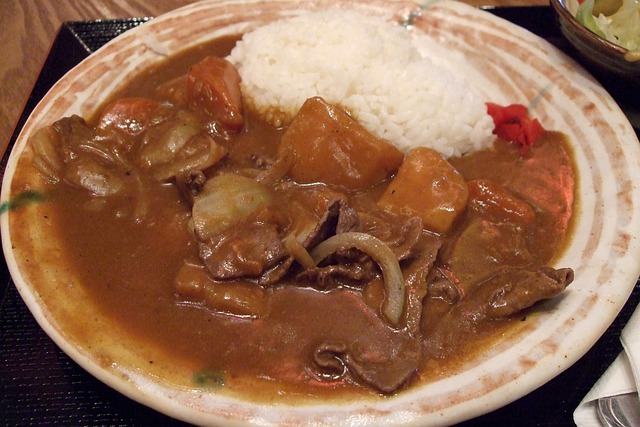
What Makes It “Japanese” and Not Indian Curry?
Japanese curry (karē) landed in Japan via the British Royal Navy in the late 1800s and was quickly re-engineered — thickened with a wheat-and-fat roux, softened with fruit, and served over sticky short-grain rice. It’s milder, sweeter and noticeably glossier than its South Asian cousins. According to Wikipedia’s entry on Japanese curry, it’s now considered one of the country’s three national dishes alongside ramen and sushi.
Add a crunchy panko cutlet on top and it becomes katsu curry — the ultimate izakaya comfort plate. Beef katsu is less common than tonkatsu (pork) or chicken katsu, but as Japanese Cooking 101 points out, the beefier flavour holds up beautifully against the sweet curry.
Ingredients (Serves 4)
| Component | Ingredient | Amount |
|---|---|---|
| Curry sauce | Yellow onion, thinly sliced | 2 large (400 g) |
| Carrot, roll-cut | 1 medium (150 g) | |
| Japanese curry roux (S&B Golden or House Vermont, medium-hot) | ½ box (~100 g) | |
| Water or dashi | 750 ml | |
| Grated apple (Fuji) | ½ apple | |
| Soy sauce + honey | 1 tbsp each | |
| Beef katsu | Beef sirloin or ribeye (2 cm thick) | 4 × 150 g steaks |
| Salt & black pepper | to taste | |
| Plain flour · beaten egg · panko | 60 g · 2 · 120 g | |
| Neutral oil for frying | 1 L | |
| Cooked Japanese short-grain rice | 4 cups |
Step-by-Step Method
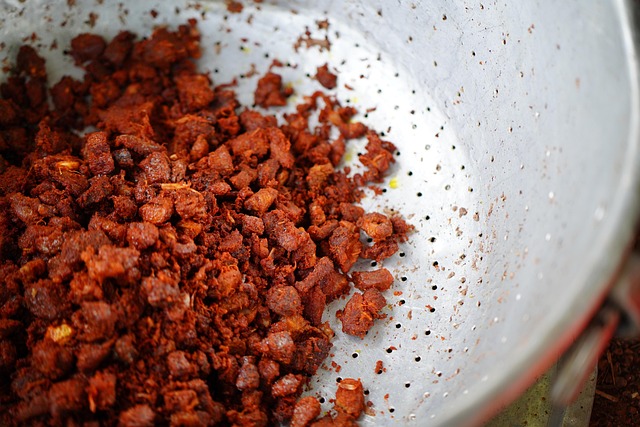
- Caramelise the onions. In a heavy pot, cook sliced onions in 2 tbsp oil over medium heat for 12–15 minutes until deeply golden. This is the flavour base — don’t rush it.
- Build the sauce. Add carrots, cook 3 minutes, then pour in 750 ml water or dashi. Simmer 15 minutes until carrots are fork-tender.
- Melt the roux. Turn off the heat. Break the roux blocks into the pot and stir until fully dissolved. Add grated apple, soy sauce, honey. Simmer 5 more minutes on low — it should coat the back of a spoon.
- Prep the beef. Pound each steak to 1 cm thick between two sheets of baking paper. Season, dredge in flour → egg → panko, pressing the crumbs on firmly.
- Fry the katsu. Heat oil to 170 °C / 340 °F (use a thermometer). Fry 2 steaks at a time for 4 minutes, flipping once. Drain on a rack, not paper towel, to keep the crust crisp. As Marc Matsumoto of No Recipes explains, pounding thinner gives you a better crust-to-meat ratio and more surface for the sauce.
- Slice and plate. Rest katsu 2 minutes, then slice across the grain into 1.5 cm strips. Mound rice on one side of the plate, ladle curry on the other, and arrange the sliced katsu across both.
Temperatures & Timing Cheat Sheet
| Stage | Temp | Time | Visual Cue |
|---|---|---|---|
| Onion caramelisation | Medium (~160 °C surface) | 12–15 min | Deep amber, jam-like |
| Vegetable simmer | Gentle boil (~95 °C) | 15 min | Carrot yields to a knife tip |
| Roux dissolve | Off heat, then low | 5 min | Glossy, coats spoon |
| Beef katsu deep-fry | 170 °C / 340 °F | 4 min (2 min/side) | Deep gold, internal 63 °C |
Watch: A 10-Minute Katsu Curry Walkthrough
If you learn better by watching, this restaurant-crispiness tutorial covers the exact panko technique and oil temperature we use above:

Common Questions, Answered
Which cut of beef works best for katsu?
Sirloin, ribeye, or tenderloin — anything tender enough to eat pink-medium after a 4-minute fry. Tougher cuts (chuck, brisket) turn rubbery under panko. If budget is tight, look for “beef minute steaks” at your butcher; they’re pre-pounded and cook in under 3 minutes.
Can I make it without the deep-fry?
Yes. Toast 120 g panko in a dry pan with 1 tbsp oil until golden, coat the beef with flour → egg → toasted panko, and bake at 220 °C / 425 °F for 8 minutes. Crust won’t be quite as shatter-crisp but you skip the oil bath entirely.
How long does the curry sauce keep?
Sealed in the fridge, 4 days. It actually improves on day two as the roux hydrates fully. Freezes well for 2 months — thaw overnight and reheat over low heat with a splash of water. Cook fresh katsu each time; reheated panko goes soggy.
What sides pair well?
The classic trio: fukujinzuke (sweet-pickled daikon and lotus), shredded cabbage with sesame dressing, and a cold Sapporo. A soft-boiled egg on top (yes, on top of the katsu) is the izakaya move.

Cook it once with the S&B blocks to learn the rhythm, then start pushing it: swap dashi for beef stock, add a square of dark chocolate at the end, or throw in a spoon of miso. That’s how every Japanese home ends up with a curry that tastes like theirs. — Emma
Did You Try Our Recipe ?
Chicken hears and gizzards
I would love you to send me the recipe please. I have no printer to print it off. [email protected]
Response from MeatRecipesBox
Hi Sharon, thank you so much for your kind words! I’ve just sent the full recipe to your inbox. Enjoy, and let me know how it turns out! 😊
Scrumptious
My husband (who is extremely picky) loved the liver & onions so much!! I didn’t have any beef broth or Sherry so I used about a tbl of Worcestershire and 1/4 c of white wine …..it was scrumptious
Response from MeatRecipesBox
Oh wow, I’m so happy to hear that!! 😍 I love that you made it work with what you had on hand — Worcestershire and white wine sound like a delicious twist. So glad your husband enjoyed it, especially being picky! Thank you for sharing your version, it makes me smile knowing it turned out scrumptious!
This was amazing
This recipe turned out really amazing! It’s juicy and spiced deliciously. I definitely would use less of the spicy pepper next time, but it really was delicious and I don’t think I’ll make chicken legs any other way from now on.!
Response from MeatRecipesBox
Thank you for taking the time to leave such a thoughtful review. I’m really glad to hear the recipe turned out juicy and full of flavor for you. That’s exactly what I was hoping for when putting it together. Good call on the spicy pepper as well. Adjusting the heat level to your own taste is always the best approach, and using a little less next time should make it just right for you. I really appreciate you trying the recipe and sharing your experience. It’s great to know it worked so well for you.
I Didn’t Expect This Cornbeef Hash Recipe to Taste This Good!!
One skillet. A handful of simple ingredients. Thirty minutes on the clock. And somehow… I ended up with the crispiest, most comforting cornbeef hash recipe I’ve made in years.
I wasn’t expecting much—just a quick, no-fuss meal. But that first bite? Crispy edges, tender potatoes, smoky corned beef, a little kick of pepper. It tasted like something straight off a cozy diner griddle.
Honestly, it caught me off guard—in the best way. Here’s why this simple skillet completely won me over.


