

The three traditional Caribbean side dishes served with jerk chicken are rice and peas, festival dumplings, and fried plantains. Together they balance jerk’s heat with coconut richness, sweetness, and starch. Below are 10 authentic Caribbean sides, ordered by tradition, each one tested against Jamaican, Trinidadian, and Bajan pairings.
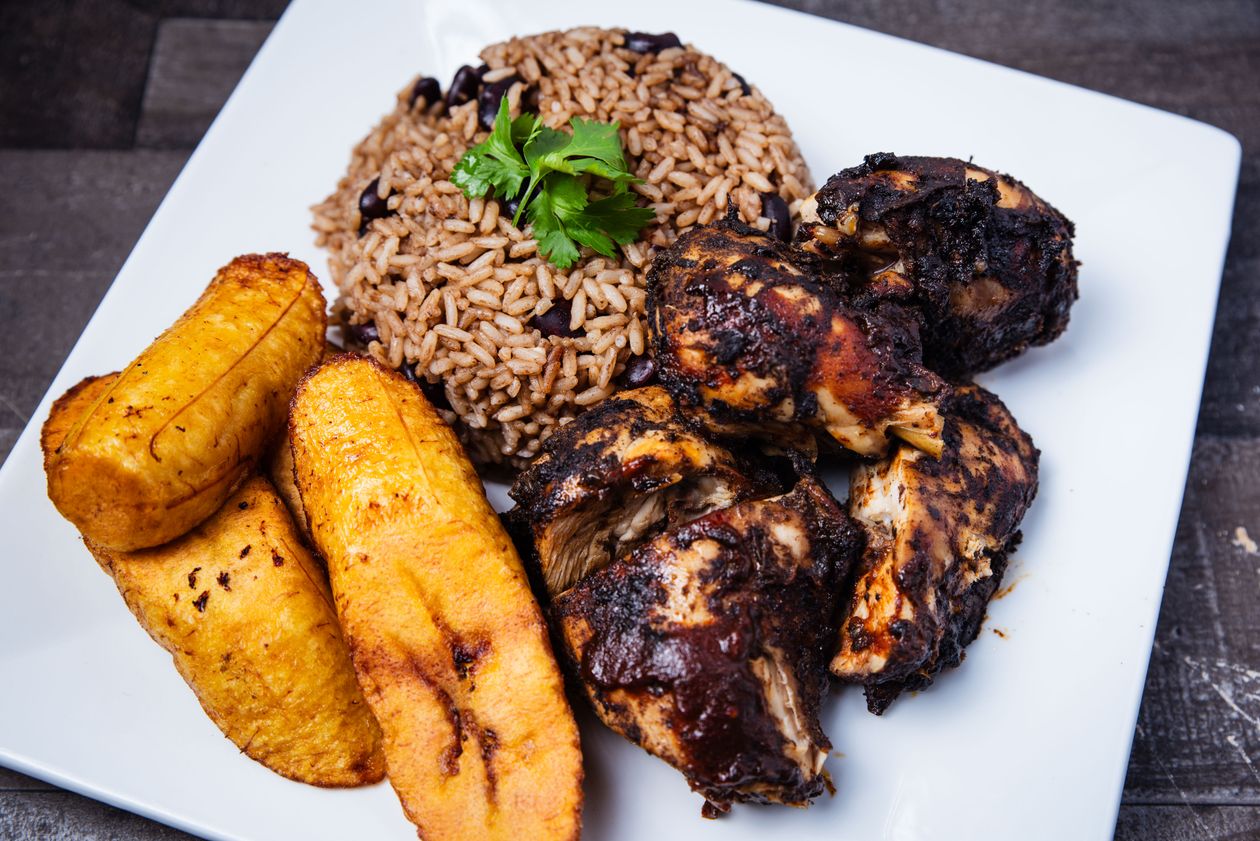
Pair jerk chicken with rice and peas (coconut base cools the scotch bonnet), festival dumplings (sweet fried bread that mops the sauce), and fried plantains (caramelized sugar cuts the smoke). Anything green and fresh (mango salsa or Caribbean coleslaw) balances the plate. Total prep for a 4-person feast: about 45 minutes if you cook rice and plantains in parallel.
Jump to a section
10 Caribbean sides at a glance
This table shows the traditional origin, the jerk cut each side works best with, and prep time. Start with rice and peas and festival if you’re new to Caribbean cooking, they’re the pairings a Jamaican grandmother would put on the plate first.
| Side | Origin | Best with | Prep time |
|---|---|---|---|
| Rice and peas | Jamaica | All jerk cuts | 35 min |
| Festival | Jamaica | Jerk chicken, escovitch fish | 20 min |
| Fried plantains | Pan-Caribbean | Jerk chicken, curry goat | 10 min |
| Bammy | Jamaica | Jerk fish, jerk chicken | 25 min |
| Callaloo | Jamaica / Trinidad | Any jerk cut | 20 min |
| Caribbean coleslaw | Pan-Caribbean | Grilled jerk, jerk sandwiches | 15 min |
| Mango salsa | Pan-Caribbean | Jerk chicken, jerk shrimp | 10 min |
| Grilled pineapple | Pan-Caribbean | Whole roast jerk | 8 min |
| Roasted sweet potato | Pan-Caribbean | Jerk chicken, jerk pork | 40 min |
| Johnny cakes | Bahamas / Jamaica | Jerk chicken, breakfast jerk | 25 min |
Want the full jerk experience? Try these sides with our oven-baked jerk chicken recipe and our traditional jerk chicken seasoning blend.
1. Rice and Peas (Jamaica)
Rice and peas is the anchor pairing for jerk chicken in Jamaica, cooked in coconut milk with red kidney beans, not green peas despite the name. The coconut fat coats the palate and neutralizes the capsaicin from scotch bonnet peppers, which is why jerk on rice and peas feels less aggressive than jerk on plain white rice. It’s the pairing my Caribbean neighbors serve every Sunday.
Cook 2 cups of long-grain rice in one 400 ml can of coconut milk plus 1 cup water, with a can of drained red kidney beans, 4 sprigs of fresh thyme, 2 crushed garlic cloves, 1 whole uncut scotch bonnet (aroma without heat), and 1 teaspoon of allspice berries. Simmer covered for 20 minutes, then rest 5 minutes off the heat.
2. Festival (Jamaica)
Festival is the sweet fried dumpling Jamaicans serve alongside jerk from every roadside stand in Portland parish. It’s cornmeal, flour, sugar, and vanilla, shaped into a small log and deep-fried until golden. The sweetness works the way sopping bread works with barbecue: it mops the jerk sauce and gives the plate a starchy anchor that isn’t rice.
Mix 1 cup flour, 1 cup fine cornmeal, 2 tablespoons sugar, 1 teaspoon baking powder, a pinch of salt, half a teaspoon of vanilla, and enough milk or water (about 3/4 cup) to make a stiff dough. Rest 10 minutes, roll into finger-length logs, fry in 350°F oil for 3 to 4 minutes per side.
3. Fried Plantains (Pan-Caribbean)
Fried ripe plantains are the sweetest counterpoint to jerk’s smoke and heat. The caramelized sugar from a fully ripe (black-spotted) plantain reads on the palate as candy against fire, which is why every Caribbean kitchen from Kingston to Trinidad puts them on the jerk plate. Use plantains that are yellow with heavy black patches, green plantains are for tostones, not this.
Peel 3 ripe plantains, slice on a diagonal into 1/2-inch pieces. Heat 1/4 inch of neutral oil (coconut oil if you want authentic aroma) in a skillet to 325°F. Fry 2 to 3 minutes per side until deep gold and lightly caramelized at the edges. Drain on paper towels, salt lightly while hot.
4. Bammy (Jamaica)
Bammy is a flat cassava bread that pre-dates European contact in Jamaica, made by the Taíno people from grated cassava root pressed into a disc and toasted. It has a mild, slightly nutty flavor and a dense, chewy texture that holds up under wet sauces. Bammy is more commonly paired with jerk fish than jerk chicken, but with a whole grilled jerk chicken carved at the table, it earns its spot.
Traditional bammy takes hours (grating and pressing raw cassava), so most home cooks buy pre-made rounds at Caribbean groceries. Soak the round in coconut milk for 5 minutes, then pan-fry in a lightly oiled skillet 3 minutes per side until golden and slightly crisp at the edges.
5. Callaloo (Jamaica / Trinidad)
Callaloo is the Caribbean answer to sautéed greens. In Jamaica it’s amaranth leaves, in Trinidad it’s dasheen leaves cooked into a thicker stew with okra and coconut milk. Either version brings green freshness and a mineral note that offsets jerk’s heavy spice load. It’s also the side that makes the plate look complete, jerk chicken plus rice plus plantain is brown-on-brown, callaloo cuts that visually and nutritionally.
For Jamaican-style callaloo: sauté 1 chopped onion, 2 cloves garlic, 1 chopped tomato, and 1 chopped scotch bonnet (seeds removed) in coconut oil. Add 1 pound chopped callaloo greens (or spinach as substitute), 1/4 cup water, salt, and 1 teaspoon of thyme. Cover and steam 8 minutes.
Watch: how to build the plate
If you want to see the exact order Caribbean cooks build a jerk plate (rice first, then chicken, then wet sides, then the fried), this short video walks through it in a home kitchen.
6. Caribbean Coleslaw (Pan-Caribbean)
Caribbean coleslaw is not the mayonnaise-heavy American version. It’s a lighter slaw dressed with lime juice, a splash of coconut milk, and often shredded fresh pineapple or mango folded in. The acidity cuts through jerk’s oily marinade and the fruit reinforces the sweet-heat balance. This is the side to make when you’re doing jerk chicken sandwiches or wraps, because it holds up in bread without going soggy.
Shred 4 cups green cabbage and 1 carrot. Whisk 3 tablespoons lime juice, 2 tablespoons coconut milk, 1 tablespoon light mayo, 1 teaspoon sugar, salt, and a pinch of allspice. Fold in 1/2 cup diced fresh pineapple. Toss the dressing through the cabbage, rest 15 minutes for the flavors to meld.
7. Mango Salsa (Pan-Caribbean)
Mango salsa is the freshest of the jerk pairings and the one that’s traveled furthest outside the Caribbean. Champagne mangoes work best because they’re less fibrous, but any ripe mango does the job. The salsa gives jerk chicken a raw, cool edge that contrasts the char, and the fruit sugar plays off the scotch bonnet the same way plantains do.
Dice 2 ripe mangoes into 1/4-inch cubes. Add 1/2 cup finely diced red onion, 1 finely diced red bell pepper, 1/2 cup chopped fresh cilantro, 1 minced jalapeño (or half a scotch bonnet for authenticity), the juice of 2 limes, and salt. Rest 10 minutes before serving.
8. Grilled Pineapple (Pan-Caribbean)
Grilled pineapple is the pairing to make when the jerk chicken is on the grill anyway. Direct heat caramelizes the pineapple’s natural sugars into deep amber edges, which reads on the plate like dessert but works as a side because the acidity keeps it savory. It’s the traditional accompaniment to whole roast jerk chicken at Caribbean weddings and Christmas dinners.
Cut a fresh pineapple into 1/2-inch rings, cores removed. Brush lightly with neutral oil. Grill over direct medium-high heat 2 to 3 minutes per side until dark grill marks appear and the surface bubbles slightly. Sprinkle with a pinch of allspice and salt while hot.
9. Roasted Sweet Potato (Pan-Caribbean)
Roasted sweet potato is the anchor starch when you don’t feel like cooking rice. Caribbean cooks use both the orange-fleshed sweet potato (moister, sweeter) and the white-fleshed “boniato” (drier, more starchy, closer to a regular potato). Either roasts into a deep, jammy texture that pairs with jerk’s smoke the way roast squash pairs with sage. It’s also the sturdiest make-ahead side, roast it in the morning and reheat at dinner.
Cube 2 pounds sweet potato into 1-inch pieces. Toss with 2 tablespoons olive oil, 1 teaspoon smoked paprika, 1 teaspoon allspice, salt, and pepper. Roast at 425°F for 30 to 35 minutes, flipping once, until edges are crisp and the centers are fork-tender.
10. Johnny Cakes (Bahamas / Jamaica)
Johnny cakes are the pan-fried cousin to festival: flour, baking powder, salt, water, and lard or butter, shaped into a small disc and cooked in a skillet until golden. In the Bahamas they’re breakfast bread, in Jamaica they’re both breakfast and dinner sides. Split hot, they’re the vehicle for eating jerk chicken by hand at a beach cookout. Drier and less sweet than festival, so they work better with the wet sides (rice and peas, callaloo) than as a standalone.
Combine 2 cups flour, 1 tablespoon baking powder, 1 teaspoon salt, and 3 tablespoons cold butter cut in with your fingers. Add 3/4 cup water until a shaggy dough forms. Rest 15 minutes, divide into 6 discs, pan-fry in a lightly oiled cast iron over medium heat 4 minutes per side.
How to build the perfect jerk chicken plate
Not every side goes on every plate. Here’s how a Caribbean cook composes the plate depending on the occasion.
Weeknight dinner
Rice and peas + fried plantains. Two sides, 45 minutes total, done. This is the pairing I fall back to on school nights when the jerk is already marinated.
Sunday family meal
Rice and peas, callaloo, plantains, plus mango salsa spooned on top of the chicken. Four sides that cover every texture and every color on the plate.
Backyard cookout
Grilled pineapple (already on the grill), Caribbean coleslaw (make-ahead), Johnny cakes for hand eating. Zero extra pots on the stove.
Christmas or wedding feast
Rice and peas, festival, plantains, bammy, callaloo, mango salsa. Full six-side spread, family style down the middle of the table.
Common pairing mistakes people make
Serving suggestions
Serve jerk chicken sides family style, not plated. Caribbean meals are communal, and putting the sides in the middle of the table lets everyone build their own plate. Use warm plates for the starches (rice, festival, plantains) because they lose their appeal fast when they cool. Keep the callaloo and slaw at room temperature so they’re not shocking against the hot chicken.
For drinks, sorrel (hibiscus) tea or a cold sparkling water with lime works better than beer, which flattens against the spice. If you want alcohol, a rum punch with fresh lime cuts the heat the same way the sides do.
Storage and reheating
Frequently asked questions
What is the most traditional side for jerk chicken?
Rice and peas is the most traditional side for jerk chicken in Jamaica, served together at over 80% of family dinners. Festival dumplings and fried plantains are the next two most common pairings.
What is festival in Jamaican food?
Festival is a sweet fried dumpling made from cornmeal, flour, sugar, and vanilla, shaped into a small log and deep-fried. It’s the standard bread accompaniment to jerk chicken at Jamaican roadside stands.
Can I serve jerk chicken with regular white rice?
Yes, but it will taste hotter. Coconut rice or rice and peas mutes the scotch bonnet’s capsaicin because the fat binds it, plain white rice does not. If you’re using white rice, add a coconut yogurt sauce on the side.
What vegetables go well with jerk chicken?
Callaloo (or spinach), grilled peppers, roasted sweet potato, and grilled pineapple are the traditional vegetable pairings. Mango salsa also counts as a fresh vegetable-fruit side.
What Caribbean side dish is easiest to make?
Mango salsa and fried plantains, both take under 10 minutes and require no cooking skill. Start there if it’s your first Caribbean meal.
Save this pairing guide for later
Pin it so it’s ready the next time jerk chicken is on the menu.
Pin to PinterestDid You Try Our Recipe ?
Chicken hears and gizzards
I would love you to send me the recipe please. I have no printer to print it off. [email protected]
Response from MeatRecipesBox
Hi Sharon, thank you so much for your kind words! I’ve just sent the full recipe to your inbox. Enjoy, and let me know how it turns out! 😊
Scrumptious
My husband (who is extremely picky) loved the liver & onions so much!! I didn’t have any beef broth or Sherry so I used about a tbl of Worcestershire and 1/4 c of white wine …..it was scrumptious
Response from MeatRecipesBox
Oh wow, I’m so happy to hear that!! 😍 I love that you made it work with what you had on hand — Worcestershire and white wine sound like a delicious twist. So glad your husband enjoyed it, especially being picky! Thank you for sharing your version, it makes me smile knowing it turned out scrumptious!
This was amazing
This recipe turned out really amazing! It’s juicy and spiced deliciously. I definitely would use less of the spicy pepper next time, but it really was delicious and I don’t think I’ll make chicken legs any other way from now on.!
Response from MeatRecipesBox
Thank you for taking the time to leave such a thoughtful review. I’m really glad to hear the recipe turned out juicy and full of flavor for you. That’s exactly what I was hoping for when putting it together. Good call on the spicy pepper as well. Adjusting the heat level to your own taste is always the best approach, and using a little less next time should make it just right for you. I really appreciate you trying the recipe and sharing your experience. It’s great to know it worked so well for you.
I Didn’t Expect This Cornbeef Hash Recipe to Taste This Good!!
One skillet. A handful of simple ingredients. Thirty minutes on the clock. And somehow… I ended up with the crispiest, most comforting cornbeef hash recipe I’ve made in years.
I wasn’t expecting much—just a quick, no-fuss meal. But that first bite? Crispy edges, tender potatoes, smoky corned beef, a little kick of pepper. It tasted like something straight off a cozy diner griddle.
Honestly, it caught me off guard—in the best way. Here’s why this simple skillet completely won me over.


