
Oven-baked jerk chicken is the version I make when it’s raining, when I don’t feel like fighting with the grill, or when I want to marinate overnight and walk into the kitchen ready to cook. At 400°F it takes 25 to 45 minutes depending on which cut you’re working with, and finishes mahogany-dark from the sugar in the marinade. Broil the last 3 minutes and you get skin that reads like it came off a Kingston jerk stall, no grill required.
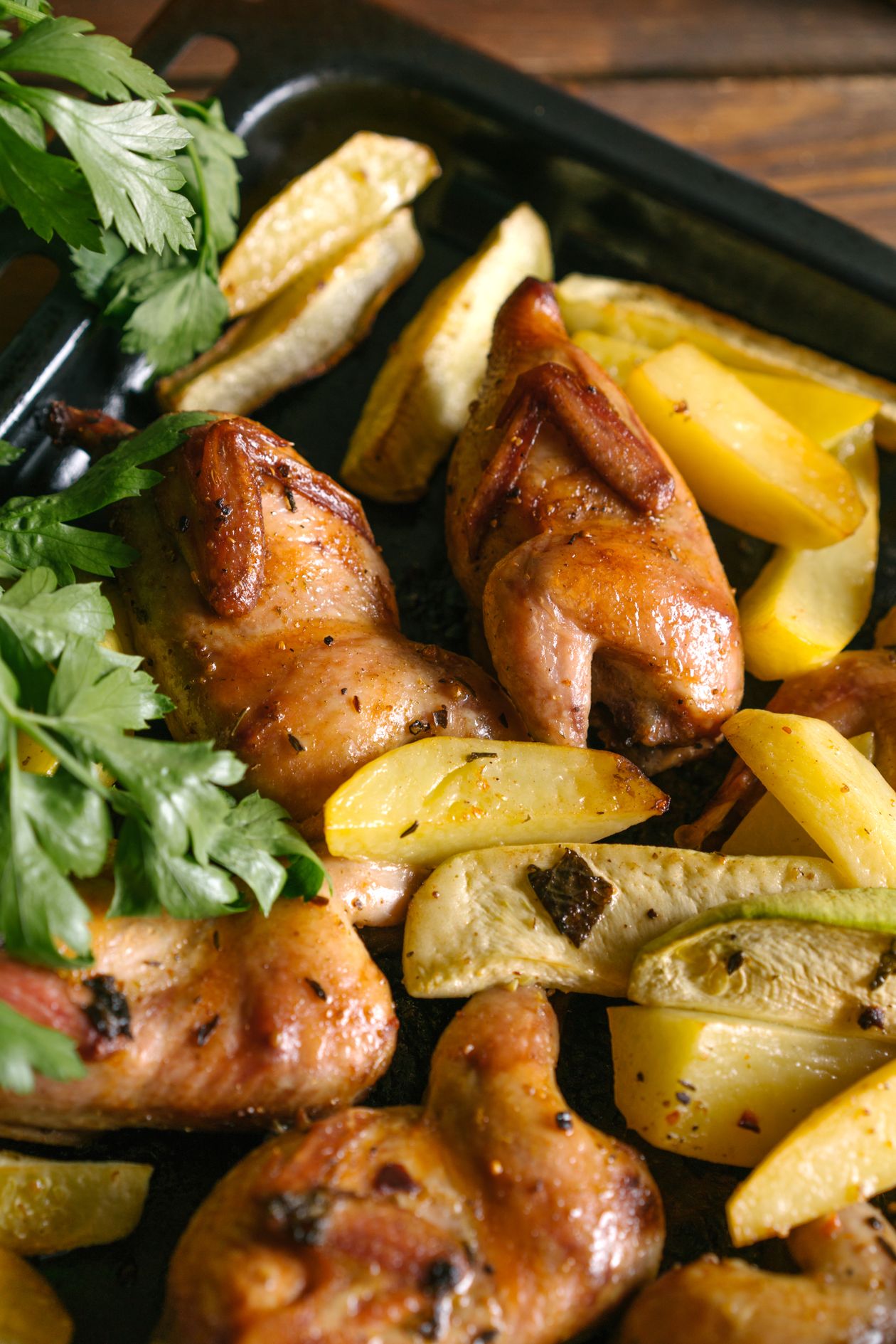
The default settings for oven baked jerk chicken: 400°F, 35 to 40 minutes for bone-in thighs, until the internal temperature reads 175°F. For a whole chicken, drop to 375°F and cook 60 to 75 minutes to 165°F breast. For wings, raise to 425°F and cook 35 to 40 minutes on a wire rack. Marinate with wet jerk paste at least 4 hours (24 hours ideal). Broil the last 3 minutes for crispy skin.
Jump to a section
Oven temperature and time by cut
Every chicken cut cooks differently in the oven. Bone-in pieces hold heat longer and forgive slight over-baking, boneless cuts dry out fast past their window. Use this chart, then check internal temperature 5 minutes before the low end of the range.
| Cut | Oven temp | Time | Internal temp | Notes |
|---|---|---|---|---|
| Whole chicken (3-4 lb) | 375°F | 60-75 min | 165°F breast / 175°F thigh | Spatchcocked: 425°F, 45 min |
| Whole chicken (5-6 lb) | 375°F | 80-95 min | 165°F / 175°F | Foil-tent last 15 min if browning fast |
| Bone-in thighs | 400°F | 35-40 min | 175°F | Skin side up on wire rack |
| Boneless thighs | 400°F | 25-30 min | 165°F | Don’t overcook, they turn rubbery |
| Drumsticks | 400°F | 40-45 min | 175°F | Turn once at midpoint |
| Bone-in breast | 400°F | 40-45 min | 165°F | Skin side up, rest 5 min |
| Boneless breast | 400°F | 22-25 min | 165°F | Pound to even thickness first |
| Wings (whole or party) | 425°F | 35-40 min | 165°F | Wire rack essential for crisp |
| Leg quarters (bone-in) | 400°F | 45-50 min | 175°F | Score skin before marinating |
Free printable
Get every time and temperature on one sheet
The 3-page Meat Temp & Timing Cheat Sheet: internal temperatures, cook times for 30 cuts, resting and storage. Print it once, stop searching.
You’ll also get occasional recipes by email. Unsubscribe anytime. Privacy policy.
Almost there: check your inbox.
Click the confirmation link and the PDF downloads right away.
For the full flavor experience, marinate with our traditional jerk chicken seasoning blend, then serve with authentic Caribbean sides.
The best chicken cut for oven-baked jerk
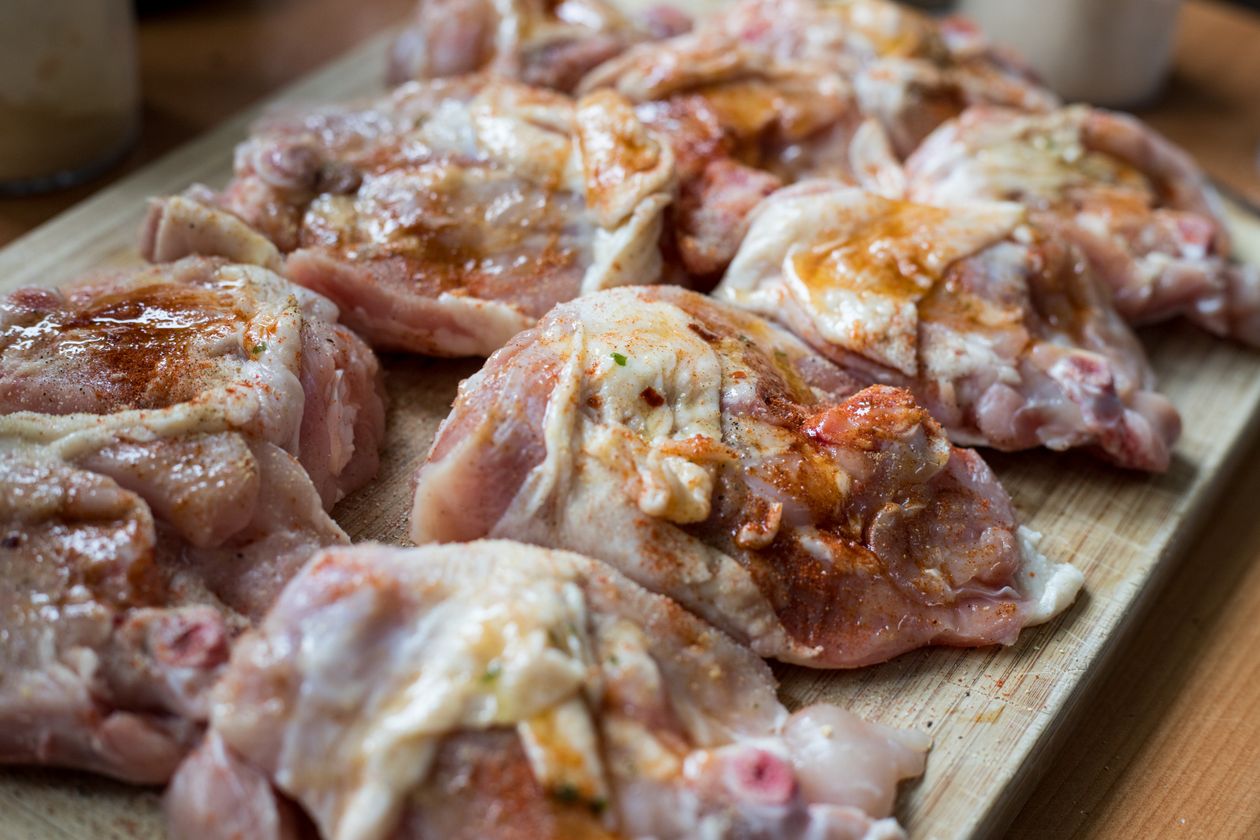
If you’re baking jerk chicken for the first time, bone-in skin-on thighs are the cut with the widest margin of error. The connective tissue holds moisture through the marinade and the bake, the skin renders and crisps under the broiler, and the bone insulates the meat so you can hit 175°F without drying the surface.
Why bone-in thighs work best
Thighs are 15% higher fat than breast, which means the jerk marinade emulsifies with the rendered fat during baking and coats the meat in a self-basting sauce. The dark meat also stays juicy up to 190°F internal, so you can push the temp for crispier skin without turning the meat chalky. Breast quality collapses above 165°F.
Ranking of cuts by ease
- Bone-in skin-on thighs — hardest to overcook, best flavor absorption
- Drumsticks — same dark meat forgiveness, slightly less surface area for marinade
- Leg quarters — biggest piece per portion, needs longer bake
- Bone-in breast — good if you prefer white meat, watch it closely at the 40-minute mark
- Whole chicken — most impressive plating, hardest to get evenly done without spatchcocking
- Boneless thighs — fastest weeknight option, less depth of flavor
- Boneless breast — only if you’re time-constrained and don’t mind the drier finish
How to get crispy jerk skin in the oven
The biggest complaint about oven-baked jerk chicken is soft skin. Jerk marinade is wet by nature (soy sauce, lime, oil, scotch bonnet paste), which steams the skin during the first phase of baking. Four techniques fix this reliably.
1. Pat dry before baking
After marinating, remove chicken from the marinade and pat the skin dry with paper towels. The marinade is now inside the meat, the surface needs to be dry for the skin to crisp. This is the single biggest improvement most home cooks miss.
2. Bake on a wire rack
Place chicken on a wire rack set over a baking sheet, never directly on the tray. Air circulates under the pieces so the bottom crisps like the top. Direct-on-tray bake gives you soggy under-skin every time.
3. Broil the last 3 minutes
Once internal temp hits target, switch to broil (high) for 2 to 3 minutes. The skin caramelizes from the sugar in the jerk marinade and darkens to the mahogany color you see at Caribbean jerk stalls.
4. Dry brine 12 hours ahead
Pat skin dry, rub 1 tsp salt per pound directly on the skin, uncovered in the fridge overnight. This pulls surface moisture out. Then marinate the next day. Combined with the wire rack, this gives grill-level crispness.
Wet marinade vs dry rub for oven baking
Both work in the oven but for different reasons. Choose based on how much time you have and how crispy you want the skin.
| Method | Marinade time | Skin crispness | Depth of flavor | Best for |
|---|---|---|---|---|
| Wet marinade | 4-24 hours | Medium (with pat-dry) | Very deep | Bone-in thighs, whole chicken |
| Dry rub | 30 min to 4 hours | Very crispy | Concentrated at surface | Wings, boneless cuts, weeknight |
| Hybrid | Wet overnight + dry rub before oven | Very crispy | Both layers | Any cut, best result overall |
Baking jerk chicken from frozen
Frozen jerk chicken is possible but the technique changes. You lose the marinade absorption phase, so the flavor stays surface-only. If you’re baking from frozen because you meal-prepped and forgot to thaw, here’s the adjusted approach.
Frozen bone-in thighs
Preheat oven to 375°F. Coat frozen thighs with jerk seasoning + oil. Bake covered with foil for 25 minutes, then uncover and bake 25 more at 400°F. Total: 50 minutes to 175°F.
Frozen boneless breast
Preheat to 400°F. Rub with jerk blend. Bake in a foil-covered dish 30 minutes, uncover 10 more. Total: 40 minutes to 165°F. Rest 5 minutes before slicing.
Frozen whole chicken
Not recommended. The center takes so long to thaw that the outside dries out. Thaw overnight in the fridge instead, or use the Instant Pot pressure cook function to safely cook from frozen.
Frozen wings
Preheat to 425°F. Toss frozen wings with 2 tbsp oil, dry jerk seasoning. Bake on a wire rack 50 minutes, flipping at 25 minutes. The extra time evaporates surface ice for skin to crisp.
Common mistakes when baking jerk chicken
Storage and reheating
Frequently asked questions
What temperature should I bake jerk chicken at?
400°F is the default for bone-in thighs, drumsticks, breast, and leg quarters. Wings go higher at 425°F for crispier skin, whole chicken goes lower at 375°F so the interior finishes without burning the exterior. Every cut hits 165°F breast or 175°F thighs internal.
How long do you bake jerk chicken at 400°F?
Bone-in thighs: 35 to 40 minutes. Boneless thighs: 25 to 30. Bone-in breast: 40 to 45. Boneless breast: 22 to 25. Drumsticks: 40 to 45. Leg quarters: 45 to 50. Always verify with a meat thermometer, oven calibration varies.
Should I cover jerk chicken while baking?
No, uncovered gives you crispy skin and the char that defines jerk. The only exception is a large whole chicken (5+ lb) that starts browning too fast at the 45-minute mark, tent it loosely with foil for the last 15 minutes to prevent burn without steaming.
Can I bake jerk chicken without marinating?
Yes, use the dry rub method with 1½ tbsp of jerk seasoning per pound. Rub it on 30 minutes before baking. You lose depth of flavor compared to wet marinade but gain crispier skin. Best for weeknight speed.
How do I know when jerk chicken is done?
Internal temperature is the only reliable indicator. Insert a meat thermometer into the thickest part without touching bone. Breast: 165°F (74°C). Thighs, drumsticks, whole chicken thigh: 175°F (79°C). Juices should run clear when pierced.
Save this baking guide for later
Pin the temperature chart so it’s ready every time jerk chicken is on the menu.
Pin to PinterestDid You Try Our Recipe ?
Scrumptious
My husband (who is extremely picky) loved the liver & onions so much!! I didn’t have any beef broth or Sherry so I used about a tbl of Worcestershire and 1/4 c of white wine …..it was scrumptious
Response from MeatRecipesBox
Oh wow, I’m so happy to hear that!! 😍 I love that you made it work with what you had on hand — Worcestershire and white wine sound like a delicious twist. So glad your husband enjoyed it, especially being picky! Thank you for sharing your version, it makes me smile knowing it turned out scrumptious!
This was amazing
This recipe turned out really amazing! It’s juicy and spiced deliciously. I definitely would use less of the spicy pepper next time, but it really was delicious and I don’t think I’ll make chicken legs any other way from now on.!
Response from MeatRecipesBox
Thank you for taking the time to leave such a thoughtful review. I’m really glad to hear the recipe turned out juicy and full of flavor for you. That’s exactly what I was hoping for when putting it together. Good call on the spicy pepper as well. Adjusting the heat level to your own taste is always the best approach, and using a little less next time should make it just right for you. I really appreciate you trying the recipe and sharing your experience. It’s great to know it worked so well for you.
I Didn’t Expect This Cornbeef Hash Recipe to Taste This Good!!
One skillet. A handful of simple ingredients. Thirty minutes on the clock. And somehow… I ended up with the crispiest, most comforting cornbeef hash recipe I’ve made in years.
I wasn’t expecting much—just a quick, no-fuss meal. But that first bite? Crispy edges, tender potatoes, smoky corned beef, a little kick of pepper. It tasted like something straight off a cozy diner griddle.
Honestly, it caught me off guard—in the best way. Here’s why this simple skillet completely won me over.


