
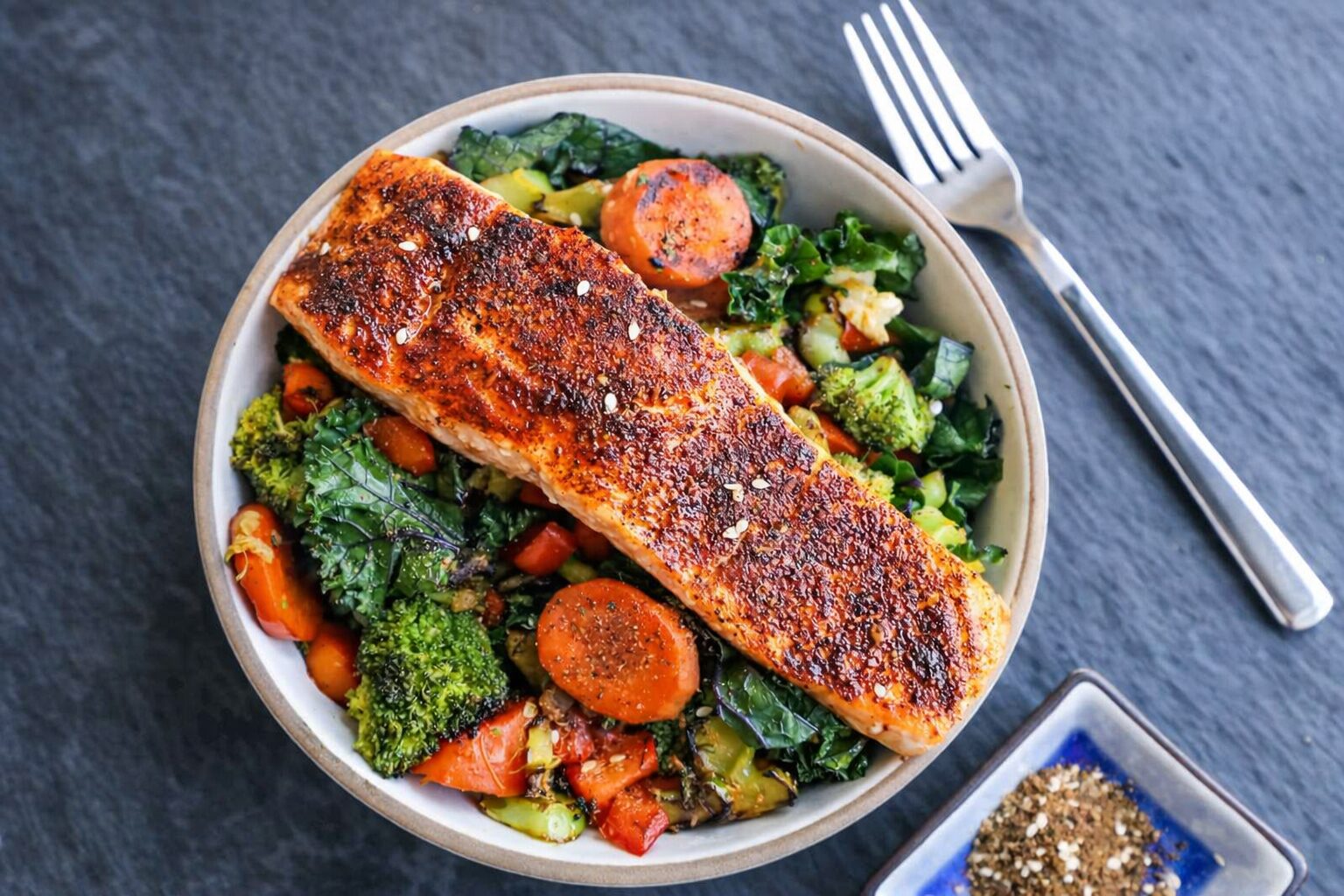
Getting crispy baked salmon with genuinely golden, crackable skin is one of those weeknight victories that feels much more technical than it actually is. I’m Emma Delacourt from MeatRecipesBox.com, and after testing this recipe across a dozen variations, the formula is clear: completely dry skin, a very hot oven, and a screaming-hot pan in the preheat. Twenty minutes, one pan, and you have salmon with skin that shatters and flesh that stays silky, moist, and barely translucent in the center.
The technique here crosses the line between baking and roasting — the high oven temperature and preheated pan mean the skin hits near-searing conditions the moment it makes contact. The result is a crackly, golden-brown skin with none of the steamed, flabby texture that gives baked fish a bad reputation.
Why You’ll Love This Recipe
Crispy baked salmon skin requires three precise conditions: dry protein surface, high initial heat, and direct pan contact. The skin’s collagen and scales form a protective barrier that, under sufficient heat, dehydrates rapidly and crisps through the Maillard reaction — the same browning chemistry responsible for a perfect burger crust. Moisture is the enemy of that reaction.
In my kitchen tests, patting the salmon completely dry — and letting it air-dry on a rack for even 5 minutes after patting — increases skin crispiness dramatically. The difference between patted-dry and truly dry skin is the difference between golden-crispy and soft-crispy. Both good, but only one extraordinary.
- 4 salmon fillets (6 oz / 170g each), skin-on — center-cut preferred
- 2 tbsp olive oil or avocado oil
- 1 tsp coarse kosher salt
- ½ tsp freshly cracked black pepper
- ½ tsp garlic powder
- ½ tsp smoked paprika
- ¼ tsp onion powder
- Lemon wedges and fresh dill or parsley, to serve
- Optional: 1 tbsp Dijon mustard (as a glaze base)
How to Make Crispy Baked Salmon
- Dry the salmon thoroughly. Pat fillets dry with paper towels on all sides, pressing firmly on the skin. If time allows, place skin-side up on a wire rack and refrigerate uncovered 10–15 minutes to further dry the surface.
- Preheat oven and pan. Place an oven-safe skillet (cast iron or stainless steel) on the center rack of the oven. Preheat to 425°F (220°C). Let the skillet heat inside the oven for at least 10 minutes. This is the step most home cooks skip — and the most important one for achieving crispy baked salmon skin.
- Season the salmon. Brush oil lightly on both sides of each fillet. Mix salt, pepper, garlic powder, smoked paprika, and onion powder. Season the flesh side generously. Season the skin side with just salt — the other spices will burn on direct pan contact before they can bloom.
- Place skin-side down on the hot pan. Remove the screaming-hot skillet from the oven using heavy oven mitts. Place salmon fillets skin-side down — you should hear an immediate, aggressive sizzle. This is the contact sear happening in the oven environment.
- Roast without flipping. Return pan to oven. Roast at 425°F for 12–14 minutes for a 1-inch thick fillet, without flipping. The salmon cooks from the bottom up through the hot pan and from the top through the oven heat. Target internal temperature: 125–130°F / 52–54°C for medium — flesh should flake easily at the thickest point.
- Rest 2 minutes, then serve. The carryover cooking will bring the center to a perfectly silky, just-set texture. Serve immediately with lemon and fresh herbs. Baked salmon crispy skin recipe results degrade quickly — serve within 5 minutes of leaving the oven.
Pro Cooking Tips
Score the skin. Use a sharp knife to make 2–3 shallow diagonal cuts through the skin (not into the flesh). This prevents the fillet from curling as the skin contracts under heat, keeping the entire skin surface in contact with the hot pan.
Don’t salt the skin early. Salt draws moisture to the surface. If you salt the skin more than 2–3 minutes before cooking, you’ll see visible beads of moisture forming on the skin. Season just before placing on the hot pan, or rely solely on the oil coating for the skin side.
For a complete protein-forward dinner spread, our salmon glaze recipes offer a full range of sauce variations — from honey-soy to herb-butter — that complement this crispy-skin technique beautifully.
The parmesan-crusted variation documented at Rachael Recipes’ crispy baked salmon guide adds a layer of grated parmesan to the flesh side before baking — the cheese creates an additional crust over the seasoning that’s worth trying once you’ve mastered the base technique.
Recipe Variations
🧀 Parmesan Crusted
Mix ¼ cup grated parmesan with 1 tbsp breadcrumbs, lemon zest, and chopped parsley. Press onto the flesh side before roasting. The cheese forms a savory, golden crust that shatters beautifully over the flaky interior.
🌿 Herb-Dijon
Brush flesh side with 1 tbsp Dijon mustard, then press a mixture of chopped fresh dill, parsley, and lemon zest onto the mustard. The acidity of the mustard cuts the richness of the salmon fat perfectly.
🍋 Lemon-Garlic Butter
Baste the flesh side halfway through cooking with a compound butter of softened butter, lemon juice, minced garlic, and capers. The butter bastes into the flesh as it melts and amplifies the ocean-bright flavor.
🌶️ Sriracha Honey Glaze
Whisk 2 tbsp sriracha, 1 tbsp honey, 1 tsp soy sauce, and ½ tsp sesame oil. Brush on the flesh side for the last 5 minutes of cooking. Sweet heat that complements the rich salmon fat without overpowering it.
What to Serve With This Dish
- Roasted asparagus with lemon zest — the grassy bitterness balances the salmon’s fat
- Garlic butter rice — absorbs the cooking juices and lemon beautifully
- Cucumber dill salad — cool, acidic, and a perfect textural contrast
- Roasted cherry tomatoes — the acidity brightens the entire plate
- Creamy cauliflower purée — low-carb and luxurious against the crispy fish
Storage & Meal Prep
Nutritional Information
Per serving (1 fillet, 6 oz, with oil and seasoning)
| Nutrient | Amount | % Daily Value |
|---|---|---|
| Calories | 390 kcal | 20% |
| Protein | 40g | 80% |
| Total Fat | 24g | 31% |
| Omega-3 Fatty Acids | 3.2g | — |
| Carbohydrates | 1g | 0% |
| Sodium | 480mg | 21% |
| Vitamin D | 18mcg | 90% |
Common Mistakes to Avoid
- Not preheating the pan inside the ovenPlacing salmon on a cold or room-temperature pan means the skin has no immediate hot surface to contact. The skin slowly warms and steams before it ever gets a chance to crisp. The preheated pan is the non-negotiable foundation of this technique.
- Skipping the drying stepSurface moisture on the skin converts directly to steam under heat. Steam prevents the Maillard reaction and crisping. Wet skin produces soft skin — no exceptions.
- Flipping the salmonThis is a skin-down cook from start to finish. Flipping disturbs the crispy skin and overcooks the top surface. Let the oven heat do the work on the flesh side — it’s sufficient at 425°F.
- Overcooking past 130°FSalmon is at its best at 125–130°F internal — the albumin (white protein) just barely sets, the flesh still separates in large, silky flakes, and the color is a vibrant coral. Above 140°F, the texture becomes chalky and dry.
FAQs
- What temperature to bake salmon for crispy skin?425°F (220°C) is the optimal temperature for crispy baked salmon skin. Lower temperatures don’t generate enough immediate surface heat for crisping. Higher risks burning the exterior before the interior reaches target temperature.
- Do I need to flip salmon when baking for crispy skin?No. Place skin-side down on a preheated pan and cook entirely skin-side down. Flipping destroys the developing skin crispness. The oven heat cooks the flesh side completely without any contact.
- Why is my baked salmon skin not crispy?Almost always one of three causes: the skin wasn’t completely dry before cooking, the pan wasn’t preheated, or the oven temperature was too low. Address all three and you will get crispy skin every time.
- Can I make crispy baked salmon without a cast iron pan?Yes — any oven-safe skillet that can be preheated inside the oven works. Stainless steel is excellent. Avoid non-stick — the coating degrades at 425°F and doesn’t hold heat evenly enough for consistent crisping.
Crispy baked salmon is a recipe that changes the way you think about weeknight fish. Once you nail the dry skin, preheated pan, and 425°F technique, it becomes your most reliable, impressive twenty-minute dinner. The skin crackles, the flesh gives in silky flakes, and the whole thing comes together faster than any takeout order.
Love This Recipe? Save It to Pinterest!
Pin this crispy baked salmon recipe — golden skin, flaky inside, done in 20 minutes with just one pan. A healthy weeknight winner.
📌 Pin This Recipe
Crispy Baked Salmon – Golden Skin, Flaky Inside, 20 Min
A 20-minute recipe for crispy baked salmon with golden, crackable skin and silky, moist flesh
- 4 fillets salmon fillets 6 oz / 170g each, skin-on, center-cut preferred
- 2 tbsp olive oil or avocado oil
- 1 tsp coarse kosher salt
- ½ tsp freshly cracked black pepper
- ½ tsp garlic powder
- ½ tsp smoked paprika
- ¼ tsp onion powder
- 1 tbsp Dijon mustard as a glaze base
Preparation
Pat the salmon skin very firmly with paper towels, pressing along the length of the skin.
Place skin-side up on a wire rack uncovered in the fridge for 10–30 minutes before cooking.
Cooking
Preheat oven and pan to 425°F (220°C).
Season the salmon with oil, salt, pepper, garlic powder, smoked paprika, and onion powder.
Place skin-side down on the hot pan and roast for 12–14 minutes.
Rest for 2 minutes, then serve.
- Oven-safe skillet
- Wire rack
Dry skin, preheated pan, and high oven temperature are key to achieving crispy skin
Did You Try Our Recipe ?
Chicken hears and gizzards
I would love you to send me the recipe please. I have no printer to print it off. [email protected]
Response from MeatRecipesBox
Hi Sharon, thank you so much for your kind words! I’ve just sent the full recipe to your inbox. Enjoy, and let me know how it turns out! 😊
Scrumptious
My husband (who is extremely picky) loved the liver & onions so much!! I didn’t have any beef broth or Sherry so I used about a tbl of Worcestershire and 1/4 c of white wine …..it was scrumptious
Response from MeatRecipesBox
Oh wow, I’m so happy to hear that!! 😍 I love that you made it work with what you had on hand — Worcestershire and white wine sound like a delicious twist. So glad your husband enjoyed it, especially being picky! Thank you for sharing your version, it makes me smile knowing it turned out scrumptious!
This was amazing
This recipe turned out really amazing! It’s juicy and spiced deliciously. I definitely would use less of the spicy pepper next time, but it really was delicious and I don’t think I’ll make chicken legs any other way from now on.!
Response from MeatRecipesBox
Thank you for taking the time to leave such a thoughtful review. I’m really glad to hear the recipe turned out juicy and full of flavor for you. That’s exactly what I was hoping for when putting it together. Good call on the spicy pepper as well. Adjusting the heat level to your own taste is always the best approach, and using a little less next time should make it just right for you. I really appreciate you trying the recipe and sharing your experience. It’s great to know it worked so well for you.
I Didn’t Expect This Cornbeef Hash Recipe to Taste This Good!!
One skillet. A handful of simple ingredients. Thirty minutes on the clock. And somehow… I ended up with the crispiest, most comforting cornbeef hash recipe I’ve made in years.
I wasn’t expecting much—just a quick, no-fuss meal. But that first bite? Crispy edges, tender potatoes, smoky corned beef, a little kick of pepper. It tasted like something straight off a cozy diner griddle.
Honestly, it caught me off guard—in the best way. Here’s why this simple skillet completely won me over.


