
Austrian Chicken Schnitzel: The Real Schnitzel Wiener Art Recipe
What you need
Ingredients for 4 servings
- 4 chicken breasts (about 4 oz / 120 g each)
- 1¼ cups (150 g) all-purpose flour
- 3 large eggs
- 2 cups (200 g) fresh breadcrumbs
- 1 cup (250 g) clarified butter or lard
- 1 tsp fine sea salt
- Freshly ground white pepper
- 1 organic lemon
- Flat-leaf parsley to garnish
Plan for the sides: 1.3 lb (600 g) waxy potatoes for the Viennese Erdäpfelsalat, and 4 tablespoons of lingonberry jam.
The Viennese method, step by step
- Pound the cutlet to 4 mm. Place each breast between two sheets of parchment and beat it with a meat mallet or a heavy pan, working from center to edges. Aim for an even 3-4 mm thickness — thinner tears, thicker burns the crust before the center cooks. Chef Dennis emphasizes this is the single most important step.
- Season only just before breading. Salt and pepper both sides. Never salt in advance: salt pulls moisture and soaks the breadcrumb coat.
- Set up three shallow dishes. Flour in the first, eggs whisked with a fork (not a whisk — avoid bubbles) in the second, fresh breadcrumbs in the third.
- Bread without pressing. Dredge in flour, tap off excess, dip in egg, then roll in the crumbs without pressing down. The coating should stick by contact only — that loose layer is what creates the famous Wellen wave.
- Heat clarified butter to 340 °F (170 °C). Use a wide skillet and about ¾ inch of fat. Test with a bread cube: it should turn golden in 30 seconds. A thermometer is the safest tool here. If you’ve never made clarified butter from scratch, it takes 10 minutes.
- Fry while basting. Slide the cutlet in and gently shake the pan so the butter flows underneath. Cook 2 to 3 minutes per side, spooning hot butter over the top the whole time. The crust puffs and lifts slightly off the meat — that’s your success signal.
- Drain and serve immediately. Rest on paper towel for 30 seconds, then plate on a warmed dish with lemon and parsley. Schnitzel waits for nobody — the crust softens within 5 minutes.
Watch the technique
Chef Jean-Pierre walks through the exact chicken-schnitzel method — the pounding pressure, the pan tilt for basting, and the way the crust should look when it’s ready to flip.
Why your crust isn’t waving
The Wellen — that golden ripple where the crust separates slightly from the meat — is what separates a restaurant schnitzel from a failed one. Three main reasons it doesn’t appear.
How the Viennese serve it
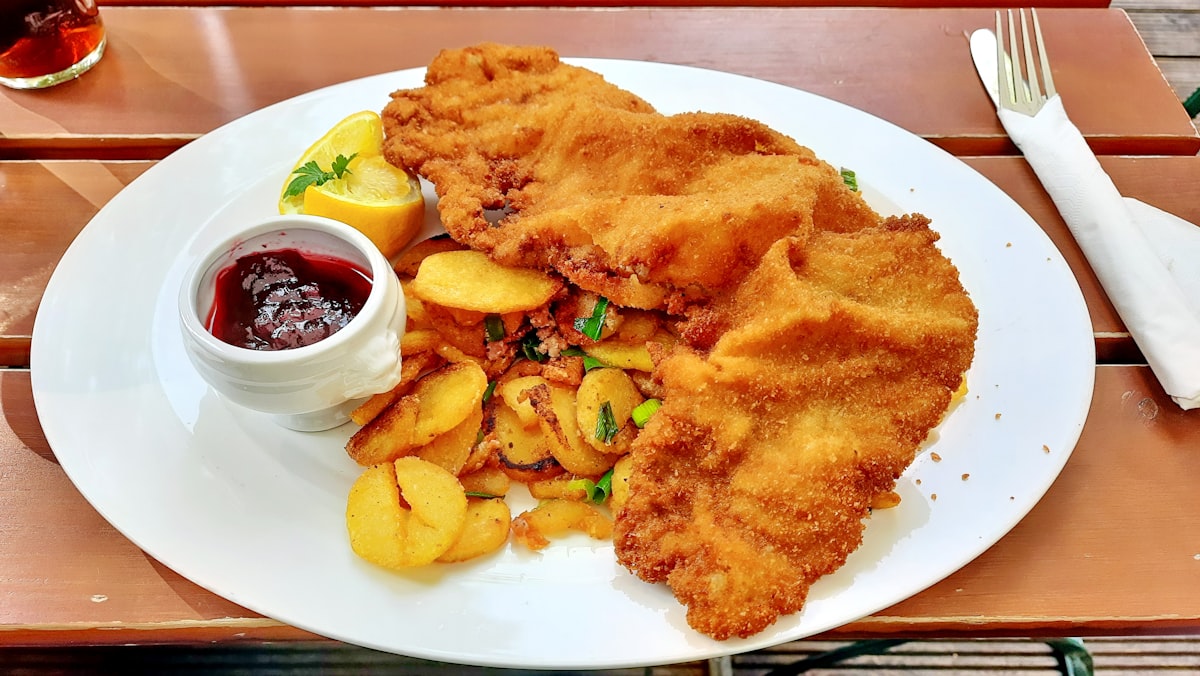
In Vienna’s traditional Beisl taverns the schnitzel arrives with three canonical sides and nothing else: half a lemon, a warm Austrian potato salad (Erdäpfelsalat) dressed with mustard and cider vinegar — never mayo — and a spoon of lingonberry jam (Preiselbeeren) whose acidity cuts the richness of the butter. Repas Simple’s Austrian recipe follows the same trio.
Squeeze the lemon at the last second, straight onto the crust: the released vapors are part of the ritual. Skip dressed green salad, which soaks the crust on contact.
Your chicken schnitzel questions
Can I call this dish “Wiener Schnitzel”?
Not in Austria or Germany. Since 1911, the name Wiener Schnitzel is legally reserved for veal. Any other meat (chicken, pork, turkey) must carry the mention Schnitzel Wiener Art, or Hänchen-Schnitzel specifically for chicken. Outside those two countries the usage is looser.
Whole breast or tenderloin?
Always the breast fillet, never the tenderloin (too thick, too short). Pick a 4 oz cutlet and pound it out to 4 mm. Turkey breast works well too and soaks up less butter than chicken.
Can I bake it or air-fry it?
Technically yes, taste-wise no. The Viennese crust needs the hot butter bath to develop its wave and its nutty flavor. In an air fryer you get crispy breaded chicken — not an Austrian schnitzel. If you’re cooking several at once, hold them on a wire rack (not a plate) in an 175 °F / 80 °C oven while you finish frying.
What oil if I don’t have clarified butter?
Clarified butter takes 10 minutes to make at home: melt 250 g unsalted butter over very low heat, skim the white foam off the top, pour off the clear golden liquid and leave the milky sediment behind. Failing that, a 70 % sunflower oil / 30 % butter blend gives a decent result — never olive oil, which drowns the aroma.
How do I keep the crust crisp?
A schnitzel is a right-out-of-the-pan dish. If you must hold it a few minutes, set it on a metal wire rack (never paper towel for extended waits — steam rises up and softens the underside) in an 175 °F / 80 °C oven with the door slightly ajar.
Austrian Chicken Schnitzel: Real Schnitzel Wiener Art Recipe
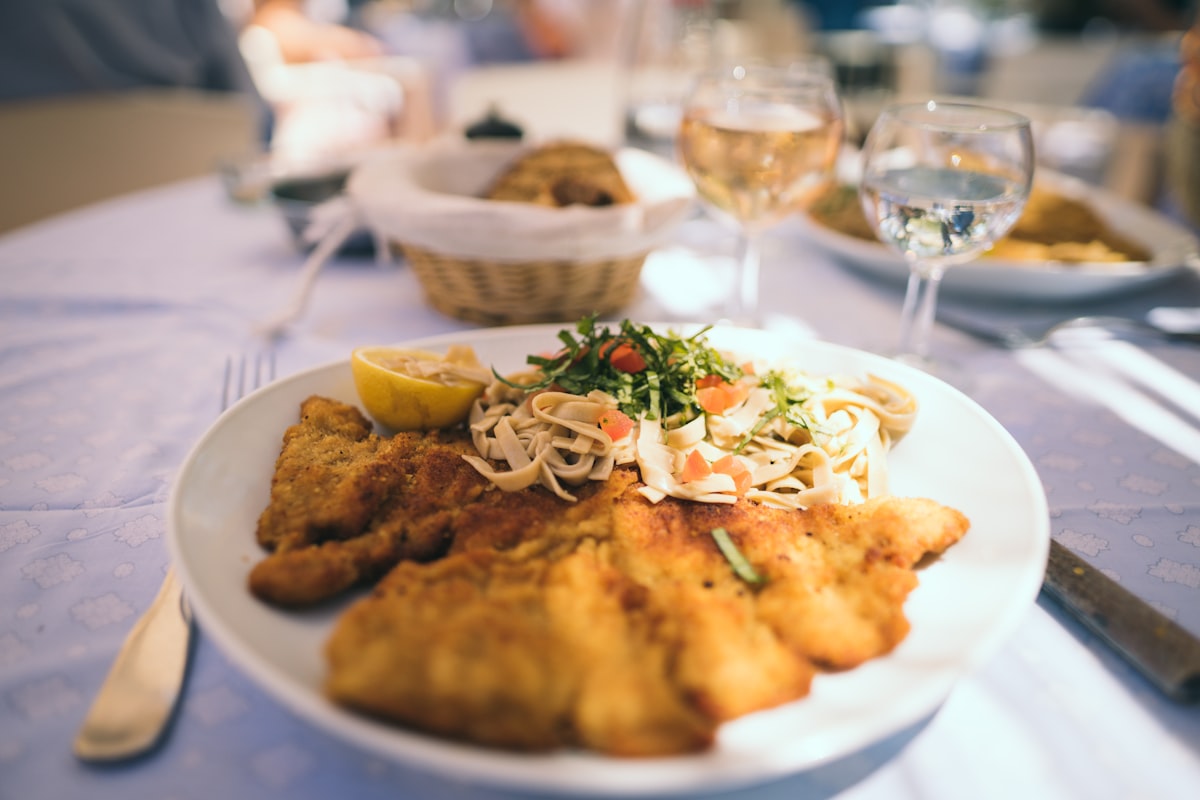
Golden pan-fried Austrian chicken schnitzel served with a lemon wedge, warm Austrian potato salad and a spoon of lingonberry jam
- 4 breasts chicken breasts about 4 oz / 120 g each
- 1 1/4 cups cups all-purpose flour
- 3 large eggs
- 2 cups cups fresh breadcrumbs
- 1 cup cup clarified butter or lard
- 1 tsp tsp fine sea salt
- white pepper freshly ground
- 1 organic lemon
- flat-leaf parsley
Preparation
Pound the cutlet to 4 mm
Season only just before breading
Set up three shallow dishes for breading
Breading
Dredge in flour, tap off excess, dip in egg, then roll in the crumbs without pressing down
Frying
Heat clarified butter to 340 °F (170 °C)
Fry while basting, cook 2 to 3 minutes per side
Serving
Drain and serve immediately, rest on paper towel for 30 seconds
Plate on a warmed dish with lemon and parsley
- meat mallet
- heavy pan
- shallow dishes
- wide skillet
- thermometer
Serve hot with a lemon wedge, warm Austrian potato salad and a spoon of lingonberry jam
Did You Try Our Recipe ?
Scrumptious
My husband (who is extremely picky) loved the liver & onions so much!! I didn’t have any beef broth or Sherry so I used about a tbl of Worcestershire and 1/4 c of white wine …..it was scrumptious
Response from MeatRecipesBox
Oh wow, I’m so happy to hear that!! 😍 I love that you made it work with what you had on hand — Worcestershire and white wine sound like a delicious twist. So glad your husband enjoyed it, especially being picky! Thank you for sharing your version, it makes me smile knowing it turned out scrumptious!
This was amazing
This recipe turned out really amazing! It’s juicy and spiced deliciously. I definitely would use less of the spicy pepper next time, but it really was delicious and I don’t think I’ll make chicken legs any other way from now on.!
Response from MeatRecipesBox
Thank you for taking the time to leave such a thoughtful review. I’m really glad to hear the recipe turned out juicy and full of flavor for you. That’s exactly what I was hoping for when putting it together. Good call on the spicy pepper as well. Adjusting the heat level to your own taste is always the best approach, and using a little less next time should make it just right for you. I really appreciate you trying the recipe and sharing your experience. It’s great to know it worked so well for you.
I Didn’t Expect This Cornbeef Hash Recipe to Taste This Good!!
One skillet. A handful of simple ingredients. Thirty minutes on the clock. And somehow… I ended up with the crispiest, most comforting cornbeef hash recipe I’ve made in years.
I wasn’t expecting much—just a quick, no-fuss meal. But that first bite? Crispy edges, tender potatoes, smoky corned beef, a little kick of pepper. It tasted like something straight off a cozy diner griddle.
Honestly, it caught me off guard—in the best way. Here’s why this simple skillet completely won me over.


