
Greek lamb kleftiko is bone-in lamb shoulder marinated in lemon, garlic and oregano, then sealed in parchment with potatoes, peppers and onions and roasted low for about four hours. Nothing escapes the parcel. The lamb steams in its own juices until it slides off the bone, and the potatoes drink up everything that drips down. It’s one of the easiest big-batch lamb dinners you can make.

The 30-second answer
Marinate a 3½ lb (1.6 kg) bone-in lamb shoulder in olive oil, lemon juice, garlic and dried oregano for at least 4 hours. Lay it over potatoes, peppers, onion and tomato on a big sheet of parchment, pour on the marinade, and seal it tight. Wrap in foil and roast at 320°F (160°C) for 3½ to 4 hours. Then open the parcel, scatter feta over, raise the oven to 400°F (200°C) and roast 25–30 minutes more until golden. Rest 10 minutes and serve straight from the pan.
Jump to
What is kleftiko?
Kleftiko is Greek “stolen lamb”: meat slow-cooked in a sealed package so no smoke or smell gives it away. The name comes from the klephts, mountain outlaws who fought Ottoman rule. As the story goes, they stole sheep or goats and cooked them in covered pits over coals, so nobody could spot the fire.
Home cooks swapped the pit for an oven and the earth for parchment paper, but the idea stayed the same. Seal the meat in, cook it low, and don’t peek. The history of kleftiko notes that UNESCO added it to Cyprus’s register of intangible cultural heritage in 2019. Cypriot versions are often cooked in a clay fournos oven with bay leaves and cinnamon. Mainland Greek versions lean on lemon, oregano and cheese.
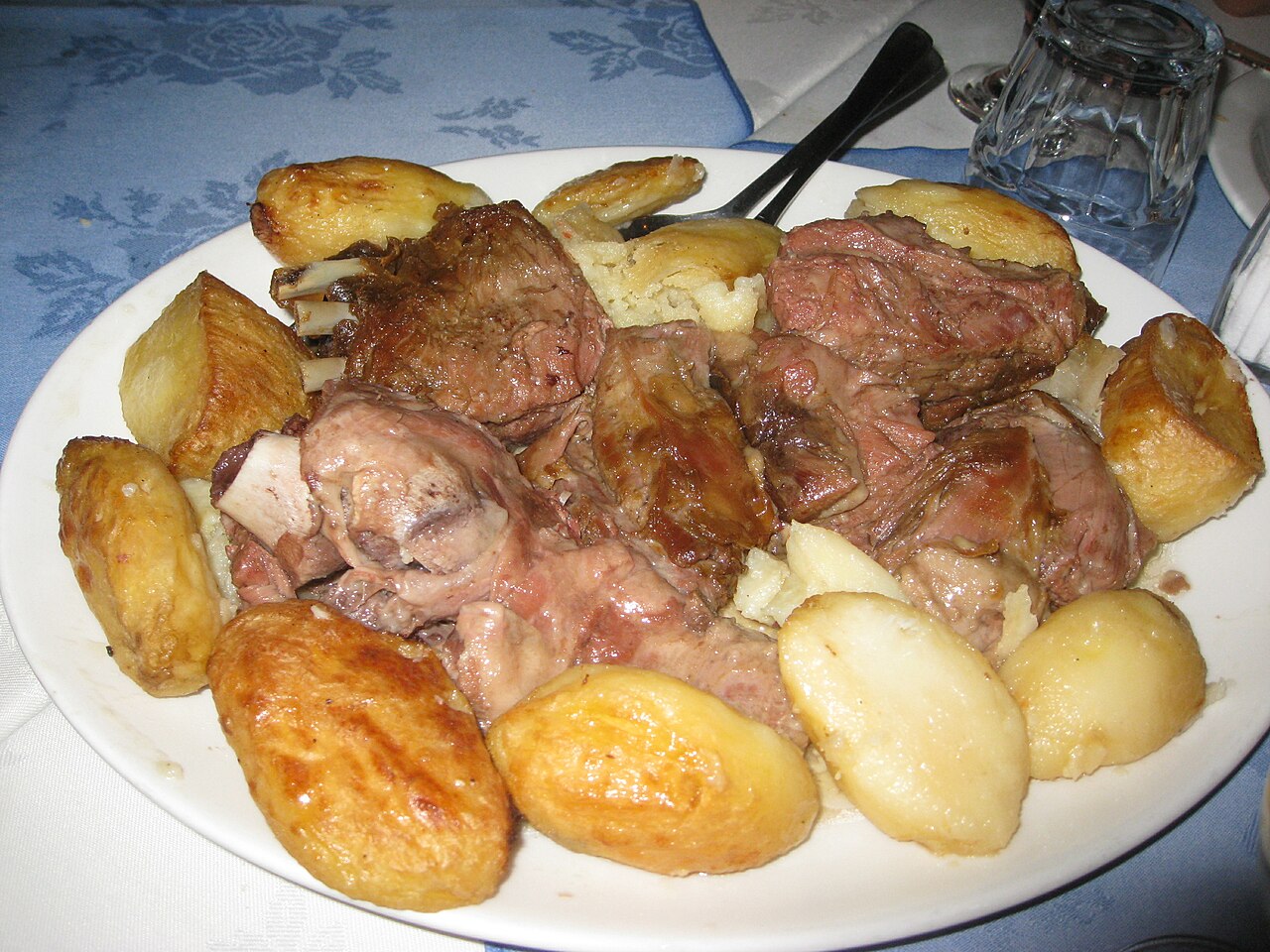
This recipe is the mainland style. It uses no wine, which some Greek cooks add. Lemon and a splash of stock give the same bright acidity, and the dish stays alcohol-free.
What’s the best cut of lamb for kleftiko?
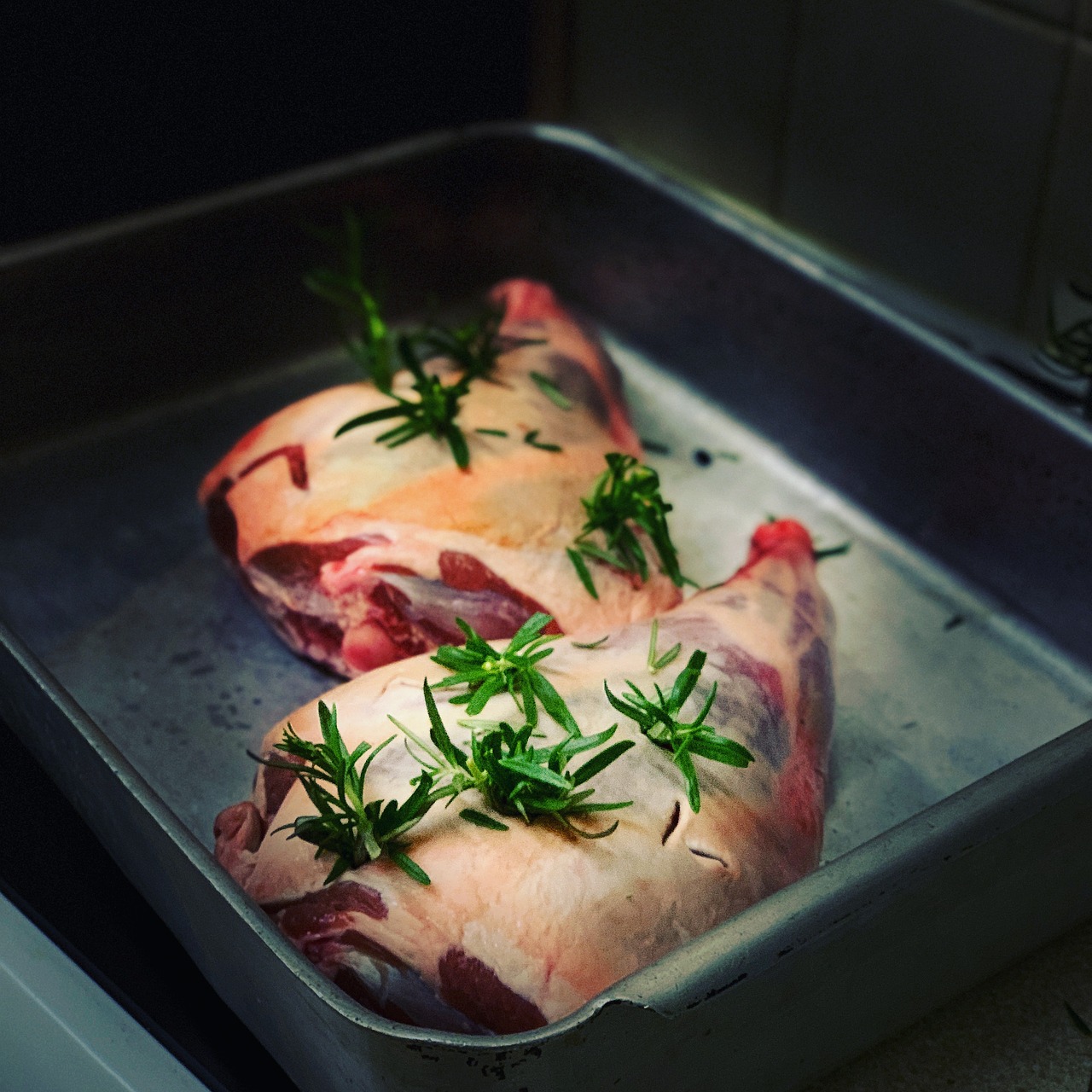
Bone-in lamb shoulder. It’s marbled with fat and packed with collagen, so it turns soft and juicy after hours of steaming. The bone keeps the meat in one piece and adds body to the juices. Ask your butcher to cut it into 4 to 6 large chunks on the bone, or cook it whole.
Shoulder (best)
Forgiving and rich. An extra 30 minutes won’t hurt it. A 3½ lb (1.6 kg) bone-in shoulder feeds 6 with the potatoes.
Leg (leaner)
Works, but it dries out faster. Cut the covered time to about 3 hours and add 2 extra tbsp of olive oil. For a pink, sliceable leg, make our roast leg of lamb instead.
Lamb shanks are a great third option. Use 4 shanks, wrap each one in its own parcel with a handful of potatoes, and roast for 3½ hours. Everyone gets their own package to open at the table.
Ingredients for Greek lamb kleftiko (serves 6)

Greek Lamb Kleftiko
Lamb and marinade
- 3½ lb (1.6 kg) bone-in lamb shoulder, whole or cut into 4–6 pieces
- ⅓ cup (80 ml) extra-virgin olive oil
- Juice of 2 lemons (about ⅓ cup / 80 ml), plus the squeezed halves
- 8 garlic cloves, 4 crushed and 4 thinly sliced
- 1 tbsp dried Greek oregano
- 1 tsp dried thyme or 2 fresh rosemary sprigs
- 2 tsp fine salt
- 1 tsp black pepper
- 1 tsp sweet paprika
Vegetables
- 2 lb (900 g) Yukon Gold potatoes, peeled and cut lengthwise into quarters
- 1 large red onion, cut into thick wedges
- 1 red and 1 green bell pepper, cut into wide strips
- 2 ripe tomatoes, sliced
- 3 bay leaves
- ½ cup (120 ml) chicken stock or water
To finish
- 5 oz (150 g) feta, in chunks, or kefalotyri, cubed (see note)
- Chopped fresh parsley
- Lemon wedges
You’ll also need
- A large roasting pan or deep baking dish
- Parchment paper and heavy-duty foil
- Kitchen string (optional)
Feta or kefalotyri? Kefalotyri is the traditional choice. It’s a hard, salty sheep’s-milk cheese that holds its shape, so you can tuck the cubes into the parcel from the start. Feta is much easier to find outside Greece, but it turns grainy after four hours. That’s why this recipe adds feta only at the end, when you open the parcel. It softens and browns without breaking.
Which oregano? Greek dried oregano, often sold on the stem, is stronger and more resinous than the generic kind. If yours has been in the cupboard for a year, use 1½ tbsp.
How to make lamb kleftiko, step by step
1. Marinate the lamb (4 hr to overnight)
- Pat the lamb dry. Cut short, deep slits all over it with a small knife and push a slice of garlic into each one.
- Whisk the olive oil, lemon juice, crushed garlic, oregano, thyme, salt, pepper and paprika in a large bowl. Add the lamb and rub the marinade into every surface.
- Cover and refrigerate for at least 4 hours, ideally overnight. Take it out 45 minutes before cooking so it isn’t fridge-cold.
2. Build the parcel (15 min)
- Heat the oven to 320°F (160°C), or 300°F (150°C) fan.
- Lay two long sheets of foil across the roasting pan, one each way, in a cross. Lay two sheets of parchment over them the same way. Leave plenty of overhang on all four sides.
- Toss the potatoes, onion and peppers with a pinch of salt and spread them in the center. Tuck in the bay leaves and squeezed lemon halves.
- Set the lamb on top, fat side up. Pour over every drop of marinade from the bowl, then lay the tomato slices over the meat. If you’re using kefalotyri, scatter it in now.
- Pour the stock around the vegetables, not over the lamb.
3. Seal it tight
- Bring the parchment up over the lamb and fold or twist the edges together to close it. Tie it with string if it won’t stay shut.
- Bring the foil up over the parchment and crimp it tightly all the way around. The goal is a sealed package with no gaps for steam to escape.
4. Roast low and slow (3½–4 hr)
- Roast for 3½ hours without opening. Don’t peek.
- Carefully open one corner (watch for steam) and test the lamb with a fork. It should pull away from the bone easily. If it resists, reseal and give it another 20–30 minutes.
5. Open, brown and rest (35–40 min)
- Raise the oven to 400°F (200°C). Open the parcel fully and fold the paper and foil back against the sides of the pan.
- Scatter the feta over the lamb and potatoes. Roast uncovered for 25–30 minutes, until the lamb browns, the potato edges crisp, and the feta turns golden in spots.
- Rest 10 minutes. Spoon the juices from the bottom of the pan over everything, then finish with parsley and lemon wedges.
Watch it done (video)
Greek chef Akis Petretzikis builds and seals a lamb kleftiko parcel. Watch how he folds the parchment.
Why wrap kleftiko in parchment instead of just foil?

Because lemon, tomato and salt react with aluminum. Four hours of acidic, salty juice sitting against bare foil can pit it, leave grey specks on the food, and give the lamb a faint metallic taste. Parchment sits between the food and the foil, so nothing reacts. The foil on the outside does the sealing.
The parchment also helps in a less obvious way. It doesn’t stick to the lamb the way foil does, so the fat and crust stay on the meat when you open the parcel. Parchment alone won’t seal well, and foil alone reacts with the food. Using both gives you a tight seal and a clean layer against the lamb.
What happens inside is simple. The meat and vegetables release their juices, which turn to steam and can’t escape. The lamb braises in its own liquid, and the potatoes at the bottom cook in a mix of lamb fat, lemon and olive oil. That’s why they come out soft in the middle and full of flavor.
Cypriot-Greek chef Theo Michaels makes kleftiko in individual parcels, the way his family does.
How long does kleftiko take to cook?
About 4 hours for a 3½ lb (1.6 kg) bone-in shoulder: 3½ hours sealed at 320°F (160°C), then 25–30 minutes open at 400°F (200°C). A bigger shoulder, around 4½ lb (2 kg), needs 4 to 4½ hours sealed. A boneless leg needs about 3 hours, and individual shank parcels need about 3½.
Go by texture, not the clock. Ovens run hot or cold, and shoulders vary a lot in thickness. The lamb is done when a fork twists into the thickest part and the meat comes away with almost no pull. Is it still springy? Reseal the parcel and check again in 20 minutes.
Can you cook it faster at a higher temperature? Not really. At 375°F (190°C) and above, the juices boil hard inside the parcel. The meat tightens before the collagen has time to melt, and you get stringy lamb. Low heat is the whole point of kleftiko.
Can you make kleftiko in a slow cooker or Instant Pot?
Yes, and both give very tender lamb. What you lose is the browned finish, so plan to crisp it in the oven or under the broiler at the end.
- Slow cooker: marinate as above. Put the potatoes and vegetables on the bottom, lamb on top, and pour in the marinade. Skip the stock, since nothing evaporates. Cook on low for 8 hours or high for 5 hours. Move everything to a roasting pan, add the feta and brown at 425°F (220°C) for 15–20 minutes.
- Instant Pot: use lamb cut into 4 pieces. Add ½ cup (120 ml) stock, then the potatoes and lamb. Cook on high pressure for 60 minutes with a natural release of 15 minutes. Brown in a hot oven or under the broiler for 10 minutes with the feta.
Would you rather skip the oven time altogether? Our braised lamb shanks cook on the stovetop in about 3 hours.
What do you serve with lamb kleftiko?
The potatoes cook in the parcel, so you only need something fresh and something to mop up the juices. A Greek horiatiki salad is the classic side.
- Greek village salad: tomato, cucumber, onion, olives and feta, dressed with oil and oregano
- Tzatziki: cool yogurt, cucumber and garlic against the rich lamb
- Crusty bread or warm pita for the pan juices
- Horta: boiled greens, such as dandelion or chard, with lemon and olive oil
- Green beans braised in tomato (fasolakia), if you want a cooked vegetable
Building a Greek spread for a crowd? Serve it alongside our Greek lemon chicken and potatoes or a platter of chicken souvlaki.
Common kleftiko mistakes
What goes wrong, and the fix
- Tough lamb: it came out too early. Shoulder needs time for the collagen to melt. Reseal and roast another 30 minutes.
- Dry lamb: the parcel leaked steam. Crimp the foil all the way around, and use a second layer if your foil is thin.
- Pale, soft potatoes: the parcel was never opened. The last 25–30 minutes uncovered at high heat are what brown the potatoes and lamb.
- Watery juices: too much stock. The lamb and vegetables give off plenty of liquid, so ½ cup (120 ml) is enough.
- Grainy, dry feta: it went in at the start. Add feta when you open the parcel, or use kefalotyri from the beginning.
- Greasy pan: shoulder releases a lot of fat. Tilt the pan and spoon some off before serving, or save it to roast potatoes another day.
Can you make kleftiko ahead or freeze it?
Yes. Kleftiko reheats better than most roasts because it’s already moist. Do the sealed roast a day ahead and the browning just before serving.
- Make ahead: roast sealed for the full time, cool and refrigerate in the pan for up to 2 days. Reheat covered at 325°F (165°C) for 40 minutes, then open, add the feta and brown at 400°F (200°C).
- Fridge: leftovers keep 3 to 4 days in a sealed container.
- Freezer: freeze the lamb and juices, without the potatoes, for up to 3 months. Potatoes turn mealy once frozen.
- Reheat: warm covered with a splash of water until it reaches 165°F (74°C) in the center.
Leftover kleftiko makes a great filling for pita with tzatziki and sliced onion. You can also shred it into a quick lamb ragù over orzo.
Questions people ask about lamb kleftiko
What does kleftiko mean?
It comes from the Greek word klephtes, meaning thief. The dish is named after the klephts, outlaws in the Greek mountains who cooked stolen lamb in sealed pits so the smoke wouldn’t give away their hideouts.
Is kleftiko Greek or Cypriot?
Both. It’s cooked across mainland Greece and is a national dish in Cyprus, where it’s often made in a clay oven. Cypriot versions tend to use bay leaves, cinnamon and potatoes with little else. Mainland versions add peppers, tomato and cheese.
Can I make kleftiko without the bone?
Yes, but tie a boneless shoulder with string so it holds its shape, and cut the sealed time to about 3 hours. The juices will be a little thinner without the bone.
Can I use goat instead of lamb?
Yes, and goat is traditional in parts of Greece. Goat is leaner, so add an extra 2 tbsp of olive oil and allow 30 minutes more sealed time.
Does kleftiko have wine in it?
Some Greek recipes add a splash of white wine to the parcel. This one doesn’t. Lemon juice and stock give the same brightness, so the dish is alcohol-free. If you use lamb from a halal butcher and halal stock, it’s fully halal.
Can I cook kleftiko on a grill or barbecue?
Yes, with a lid. Set up a charcoal or gas grill for indirect heat at 300–325°F (150–160°C). Put the sealed pan on the cool side and close the lid. Cooking time is about the same as the oven, so check the temperature every hour.
Did You Try Our Recipe ?
Scrumptious
My husband (who is extremely picky) loved the liver & onions so much!! I didn’t have any beef broth or Sherry so I used about a tbl of Worcestershire and 1/4 c of white wine …..it was scrumptious
Response from MeatRecipesBox
Oh wow, I’m so happy to hear that!! 😍 I love that you made it work with what you had on hand — Worcestershire and white wine sound like a delicious twist. So glad your husband enjoyed it, especially being picky! Thank you for sharing your version, it makes me smile knowing it turned out scrumptious!
This was amazing
This recipe turned out really amazing! It’s juicy and spiced deliciously. I definitely would use less of the spicy pepper next time, but it really was delicious and I don’t think I’ll make chicken legs any other way from now on.!
Response from MeatRecipesBox
Thank you for taking the time to leave such a thoughtful review. I’m really glad to hear the recipe turned out juicy and full of flavor for you. That’s exactly what I was hoping for when putting it together. Good call on the spicy pepper as well. Adjusting the heat level to your own taste is always the best approach, and using a little less next time should make it just right for you. I really appreciate you trying the recipe and sharing your experience. It’s great to know it worked so well for you.
I Didn’t Expect This Cornbeef Hash Recipe to Taste This Good!!
One skillet. A handful of simple ingredients. Thirty minutes on the clock. And somehow… I ended up with the crispiest, most comforting cornbeef hash recipe I’ve made in years.
I wasn’t expecting much—just a quick, no-fuss meal. But that first bite? Crispy edges, tender potatoes, smoky corned beef, a little kick of pepper. It tasted like something straight off a cozy diner griddle.
Honestly, it caught me off guard—in the best way. Here’s why this simple skillet completely won me over.


