
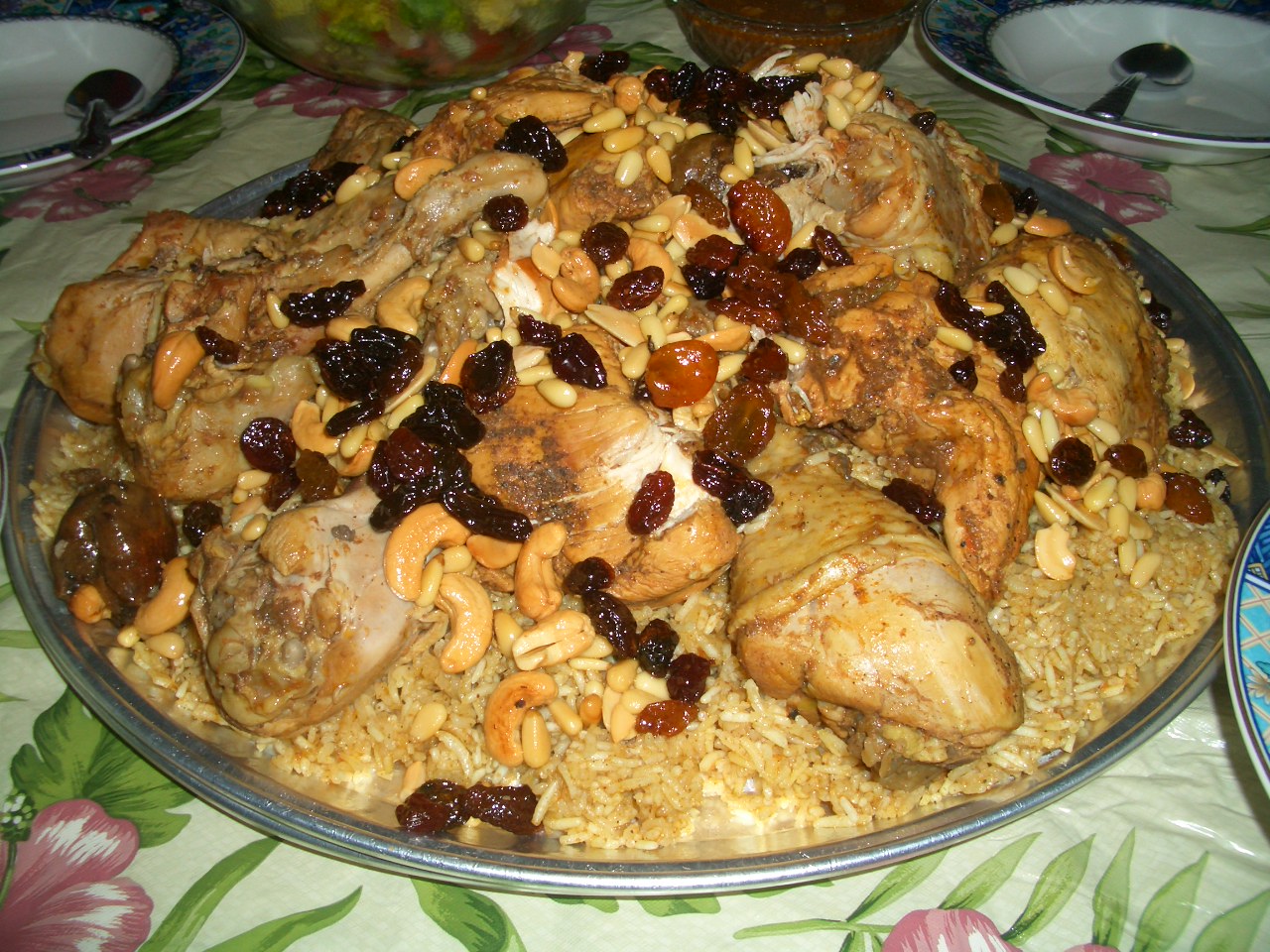
Chicken kabsa is Saudi Arabia’s everyday one-pot feast: chicken simmered with dried black lime, cardamom and a warm spice blend, then long-grain rice cooked in that same golden broth. The chicken gets a quick blast under the broiler so the skin crisps, and the whole thing lands on a big platter topped with toasted almonds and raisins. It isn’t spicy. It’s fragrant, a little tangy from the lime, and deeply savory. Start to finish it takes about 1½ hours, and most of that is simmering.
The 30-second answer
Brown onions in ghee with cinnamon, cardamom, cloves, bay leaves and 2 pierced dried limes. Add garlic, grated tomato, tomato paste and 1 tablespoon kabsa spice, then a cut-up chicken and 6 cups of water. Simmer 35 minutes. Lift out the chicken, measure 4½ cups of broth, and cook 3 cups of soaked basmati in it, covered on low, for 20 minutes. Broil the chicken until crisp, pile it on the rice and finish with toasted almonds and raisins.
Jump to
What is kabsa?
Kabsa is a mixed rice and meat dish from the Arabian Peninsula, where the rice is cooked in the meat’s own spiced broth. It’s widely seen as the national dish of Saudi Arabia, and you’ll find it across the Gulf. In Kuwait, Bahrain, Qatar and the UAE the same idea goes by machboos (or majboos).
The name comes from the Arabic root k-b-s, which means to press or pack together. That fits: meat, spices and rice all go into one pot and cook as one. The Wikipedia entry on kabsa notes it’s usually traced to Bedouin cooking, built from what kept well on the move: rice, dried spices, dried limes and whatever meat was on hand. In 2021, Saudi Arabia’s Ministry of Culture ran a campaign promoting kabsa as part of the country’s national heritage.
So what makes it different from any chicken and rice? Three things. The dried black lime, which gives a sour, almost smoky note. The broth-cooked rice, which soaks up every bit of chicken fat and spice. And the serving style: one huge platter in the middle of the table, chicken on top, everyone eating from the same tray.
What spices are in kabsa?
Kabsa uses whole cardamom, cloves, cinnamon, bay leaves and dried black lime in the pot, plus a ground blend called kabsa spice (a Gulf baharat). The ground blend usually includes black pepper, cumin, coriander, cinnamon, cardamom, cloves, nutmeg and a little turmeric or paprika for color. Saudi grocers sell it ready-mixed, but it’s easy to make.
The dried lime, called loomi, is the one ingredient people skip and shouldn’t. It’s a small lime boiled in brine and dried in the sun until it turns hard and dark brown or black. Pierce it a couple of times with a knife and it releases a sour, fermented, faintly bitter flavor into the broth. That tang keeps the dish from tasting heavy.

Can’t find loomi? Look in Middle Eastern or Persian grocers, where it’s sometimes labeled “dried lime” or “limoo amani.” If you really can’t get it, add the finely grated zest of 1 lime with the spices and squeeze in 1 tablespoon of lime juice when the rice is done. It’s brighter and less complex, but it gets you most of the way.
What’s the difference between kabsa, mandi, machboos and biryani?
Kabsa cooks the rice in the meat’s broth in one pot. Mandi slow-cooks the meat over the rice in a sealed pit or oven, so it’s smokier. Machboos is the Gulf name for nearly the same dish as kabsa. Biryani layers par-cooked rice over a thick, spiced meat gravy. They look alike on a platter but taste quite different.
Kabsa (Saudi)
Meat simmered with whole spices, tomato and dried lime. Rice cooked in that broth. Chicken usually broiled or fried at the end for crisp skin.
Mandi (Yemeni)
Meat seasoned simply and cooked in a tannour pit, hanging over the rice so the drippings fall in. Very tender and smoky, with fewer tomato notes.
Machboos (Gulf)
Kuwaiti, Bahraini and Emirati cousin of kabsa. Often heavier on loomi and baharat, sometimes made with fish or shrimp.
Biryani (South Asian)
Rice par-boiled separately, then layered over a rich, chili-forward meat masala and steamed. Spicier and more layered. See our chicken dum biryani.
There’s also mathbi, where the meat is grilled on hot flat stones, and madghout, the pressure-cooker version that’s very common in Saudi homes today. The rice side of the dish stays the same in all of them.
What chicken is best for kabsa?
A whole chicken, about 3½ to 4 lb (1.6–1.8 kg), cut into 8 pieces. Bones and skin make the broth rich, and that broth is what flavors the rice. Saudi cooks often simmer the bird in halves or quarters and serve it whole on top, which looks great on a platter.
- Best: a whole chicken, cut into 8 pieces, or halved if your pot is wide.
- Easiest: 3 lb (1.4 kg) bone-in, skin-on thighs and drumsticks. They stay juicy and are hard to overcook. Our guide to cooking chicken thighs explains why dark meat forgives so much.
- Avoid: boneless, skinless breast. It dries out in the 35-minute simmer and adds almost nothing to the broth.
Whatever you choose, the chicken should reach 165°F (74°C) at the thickest part, per the FoodSafety.gov safe minimum temperature chart. After 35 minutes of simmering and a few minutes under the broiler, bone-in pieces will be well past that.
Ingredients for chicken kabsa (serves 6)
Saudi Chicken Kabsa
Rice
- 3 cups (600 g) long-grain basmati rice (Saudi cooks often use sella, or parboiled basmati)
Chicken and broth
- 1 whole chicken, 3½–4 lb (1.6–1.8 kg), cut into 8 pieces, or 3 lb (1.4 kg) bone-in thighs and drumsticks
- 3 tbsp ghee or neutral oil
- 2 medium yellow onions, finely chopped
- 5 garlic cloves, finely grated
- 1 small green chili, slit lengthwise (optional)
- 2 ripe tomatoes, grated on a box grater (skins discarded)
- 2 tbsp tomato paste
- 1 medium carrot, coarsely grated
- 4 tsp kabsa spice (homemade above, or store-bought), divided
- 6 cups (1.4 L) hot water
- 2½ tsp fine salt, divided (or 2 tsp salt + 1 chicken bouillon cube)
Whole spices
- 2 dried black limes (loomi), pierced 2–3 times with a knife
- 1 cinnamon stick, about 3 inches (7 cm)
- 6 green cardamom pods, lightly crushed
- 5 whole cloves
- 2 bay leaves
To finish
- 1 tbsp melted ghee, for brushing the chicken
- 1 tbsp ghee or butter, for the garnish
- ⅓ cup (40 g) slivered almonds
- ¼ cup (35 g) golden raisins
- Chopped parsley or cilantro, to serve
You’ll also need
- A wide, heavy 6- to 7-quart (6–7 L) pot with a tight lid, and a rimmed baking sheet
How to make chicken kabsa, step by step
1. Soak the rice (30 min)
- Rinse the rice in a bowl of cool water, swishing and draining 3 or 4 times until the water runs almost clear. Cover with fresh water and soak 30 minutes while you make the broth.
2. Build the base (15 min)
- Heat the ghee in the pot over medium heat. Add the cinnamon, cardamom, cloves, bay leaves and pierced dried limes. Stir for 30 seconds until fragrant.
- Add the onions and a pinch of salt. Cook, stirring often, for 8 to 10 minutes until soft and light golden. Add the garlic and green chili and stir for 1 minute.
- Stir in 1 tablespoon of the kabsa spice and the tomato paste. Cook 1 minute, then add the grated tomatoes and carrot. Cook 3 to 4 minutes until thick and jammy.
3. Simmer the chicken (35 min)
- Add the chicken and turn it in the tomato mixture for 2 to 3 minutes to coat. Pour in the hot water and add 1½ teaspoons of salt.
- Bring to a boil, skim off any foam, then lower to a gentle simmer. Cover partly and cook 35 minutes, until the chicken is cooked through but not falling off the bone.
4. Cook the rice in the broth (25 min)
- Lift the chicken onto the baking sheet. Measure the broth with all its vegetables and whole spices. You want 4½ cups (1.06 L). Top up with water or spoon some off, then return it to the pot.
- Taste the broth. It should taste a little too salty, since the rice will absorb it. Add the remaining 1 teaspoon of salt if needed.
- Bring to a boil. Drain the rice and stir it in once. When the liquid drops to the level of the rice and small holes appear on the surface, about 4 to 5 minutes, cover tightly.
- Turn the heat to the lowest setting and cook 20 minutes without lifting the lid. Turn off the heat and let it sit, covered, 10 more minutes.
5. Crisp the chicken (8–10 min)
- While the rice cooks, heat the broiler with a rack about 6 inches (15 cm) below it. Pat the chicken dry, brush with the melted ghee and sprinkle with the last teaspoon of kabsa spice.
- Broil 8 to 10 minutes, turning once, until the skin is browned and blistered in spots. Watch it closely in the last few minutes.
6. Garnish and serve (5 min)
- Melt the garnish ghee in a small skillet over medium-low heat. Toast the almonds for 2 to 3 minutes until golden, then add the raisins for 30 seconds until they puff.
- Fluff the rice with a fork, picking out the cinnamon stick, bay leaves and limes. Pile it on a large platter, set the chicken on top, and scatter the almonds, raisins and parsley over everything.
Watch it done (video)
Saudi Food Eman makes a traditional home-style kabsa. Watch how the rice goes straight into the chicken broth and cooks down before the lid goes on.
How do you keep kabsa rice fluffy and not mushy?
Rinse and soak the basmati, use 1½ cups of broth per cup of rice, and don’t stir or lift the lid once it’s covered. That ratio is lower than the 2-to-1 on most rice bags because soaked rice has already taken on water. Too much liquid is the most common reason kabsa turns sticky.
- Stir once, then leave it. Stirring after the rice softens breaks the grains and releases starch.
- Use a wide pot. A shallow, wide layer of rice cooks more evenly than a deep one.
- Let it rest. The 10 minutes off the heat finishes the steaming and firms the grains so they don’t smash when you fluff.
- Parboiled (sella) basmati is very forgiving. If you use it, soak 1 hour and add ¼ cup extra broth.
Want a golden crust at the bottom? Leave the pot on low for 5 extra minutes before resting. In many Gulf homes that crispy layer is the best part. If you like crunchy rice, our Hainanese chicken rice uses the same broth-cooked method, with a very different flavor.
Can you make kabsa with lamb or beef?
Yes. Lamb kabsa is just as traditional as chicken, and the method is the same except for the simmering time. Use bone-in lamb shoulder or neck, cut into large pieces. It needs about 1½ hours of gentle simmering before the rice goes in, so start with 8 cups of water to allow for evaporation.

- Lamb shoulder or neck: 3 lb (1.4 kg) bone-in, simmered 1½ hours until tender.
- Lamb shanks: 4 shanks, simmered 2 hours. The same slow logic as our braised lamb shanks.
- Beef chuck: 3 lb (1.4 kg), cut into 3-inch (7 cm) pieces, simmered 2 hours.
- Pressure cooker: lamb takes 35 minutes at high pressure with natural release. Chicken takes 10.
With red meat, skip the broiler step. The meat is so tender by then it would fall apart. Just lay it on top of the rice and spoon a little broth over it.
What do you serve with kabsa?
Dakkous, a quick spicy tomato sauce, is the classic partner, along with a simple chopped salad and plain yogurt. Kabsa is rich and mildly spiced, so it needs something sharp, fresh or cool next to it. In Saudi homes, all three usually show up together.
- Arabic salad: diced tomato, cucumber and onion with lemon juice, olive oil and salt.
- Plain yogurt or laban, or yogurt mixed with cucumber and dried mint.
- Lemon wedges and sliced raw onion, as in the photo above.
- Pickled vegetables or hot green chilies for anyone who wants heat.
Cooking a bigger Middle Eastern spread? Kabsa sits well next to our sheet-pan chicken shawarma or a tray of lamb kofta kebabs. For a North African twist on chicken and warm spices, try our Moroccan chicken tagine.
Middle Eats makes the Gulf version, machboos, with plenty of loomi and baharat. It’s a good way to see how close the two dishes are.
Common kabsa mistakes
What goes wrong, and the fix
- Mushy, sticky rice: too much broth, or the rice wasn’t rinsed. Measure exactly 4½ cups of broth for 3 cups of soaked rice, and rinse until the water runs nearly clear.
- Hard, undercooked grains on top: the lid wasn’t tight, so steam escaped. Cover the pot with foil under the lid, or lay a clean kitchen towel under it.
- Bitter broth: the dried limes were left in too long or broken up. Pierce them, don’t crush them, and fish them out before serving.
- Bland rice: the broth wasn’t salty enough before the rice went in. It should taste slightly over-salted at that point.
- Pale, soft chicken skin: the broiling step was skipped, or the chicken went in wet. Pat it dry and give it the full 8 to 10 minutes.
- Burnt bottom: heat too high after covering. Use the lowest setting, or move the pot to a smaller burner.
Can you make kabsa ahead or freeze it?
Yes, though the rice is best the day it’s made. Kabsa keeps well for a few days, and the spices taste even rounder on day two. Store the rice and chicken together, in shallow containers so they cool quickly.
- Fridge: refrigerate within 2 hours of cooking, covered, for up to 4 days.
- Freezer: freeze in airtight containers for up to 3 months. Thaw overnight in the fridge.
- Reheat: sprinkle the rice with 2 tablespoons of water per serving, cover and microwave, or warm in a covered pan over low heat, until steaming hot, 165°F (74°C). Re-crisp the chicken in a hot oven or air fryer for 5 minutes.
Questions people ask about chicken kabsa
Is kabsa spicy?
No. Kabsa is warmly spiced but not hot. Black pepper and an optional green chili give a gentle kick, while cardamom, cinnamon and dried lime set the flavor. If you want heat, serve it with dakkous or fresh green chilies on the side.
What is kabsa spice made of?
Kabsa spice is a Gulf-style baharat. Most blends include black pepper, cumin, coriander, cinnamon, cardamom, cloves, nutmeg, and paprika or turmeric for color. Some add ground dried lime or saffron. The homemade blend above makes enough for two batches.
Is kabsa the same as biryani?
No. Kabsa cooks the rice directly in the meat’s broth, so it’s one pot with mild, warm spices. Biryani par-boils the rice separately and layers it over a thick, spicier meat masala before steaming. Biryani is richer and hotter. Kabsa is lighter and tangier.
Can I make kabsa without dried limes?
You can. Add the grated zest of 1 lime with the spices and squeeze 1 tablespoon of lime juice over the rice at the end. It won’t have the same fermented, earthy depth, but it keeps the sour note that balances the dish.
Can I use regular long-grain rice instead of basmati?
Yes, but use 1¼ cups of broth per cup of rice instead of 1½, and skip the soak. It cooks a little faster, so check it at 15 minutes. The grains will be shorter and less fragrant than basmati.
Why are there raisins and almonds on kabsa?
They’re the traditional garnish across Saudi Arabia and the Gulf. The toasted almonds add crunch and the raisins add small bursts of sweetness against the salty, tangy rice. Pine nuts and cashews are common too, so use whatever you have.
Cook next on Meat Recipes Box
Did You Try Our Recipe ?
Scrumptious
My husband (who is extremely picky) loved the liver & onions so much!! I didn’t have any beef broth or Sherry so I used about a tbl of Worcestershire and 1/4 c of white wine …..it was scrumptious
Response from MeatRecipesBox
Oh wow, I’m so happy to hear that!! 😍 I love that you made it work with what you had on hand — Worcestershire and white wine sound like a delicious twist. So glad your husband enjoyed it, especially being picky! Thank you for sharing your version, it makes me smile knowing it turned out scrumptious!
This was amazing
This recipe turned out really amazing! It’s juicy and spiced deliciously. I definitely would use less of the spicy pepper next time, but it really was delicious and I don’t think I’ll make chicken legs any other way from now on.!
Response from MeatRecipesBox
Thank you for taking the time to leave such a thoughtful review. I’m really glad to hear the recipe turned out juicy and full of flavor for you. That’s exactly what I was hoping for when putting it together. Good call on the spicy pepper as well. Adjusting the heat level to your own taste is always the best approach, and using a little less next time should make it just right for you. I really appreciate you trying the recipe and sharing your experience. It’s great to know it worked so well for you.
I Didn’t Expect This Cornbeef Hash Recipe to Taste This Good!!
One skillet. A handful of simple ingredients. Thirty minutes on the clock. And somehow… I ended up with the crispiest, most comforting cornbeef hash recipe I’ve made in years.
I wasn’t expecting much—just a quick, no-fuss meal. But that first bite? Crispy edges, tender potatoes, smoky corned beef, a little kick of pepper. It tasted like something straight off a cozy diner griddle.
Honestly, it caught me off guard—in the best way. Here’s why this simple skillet completely won me over.


