

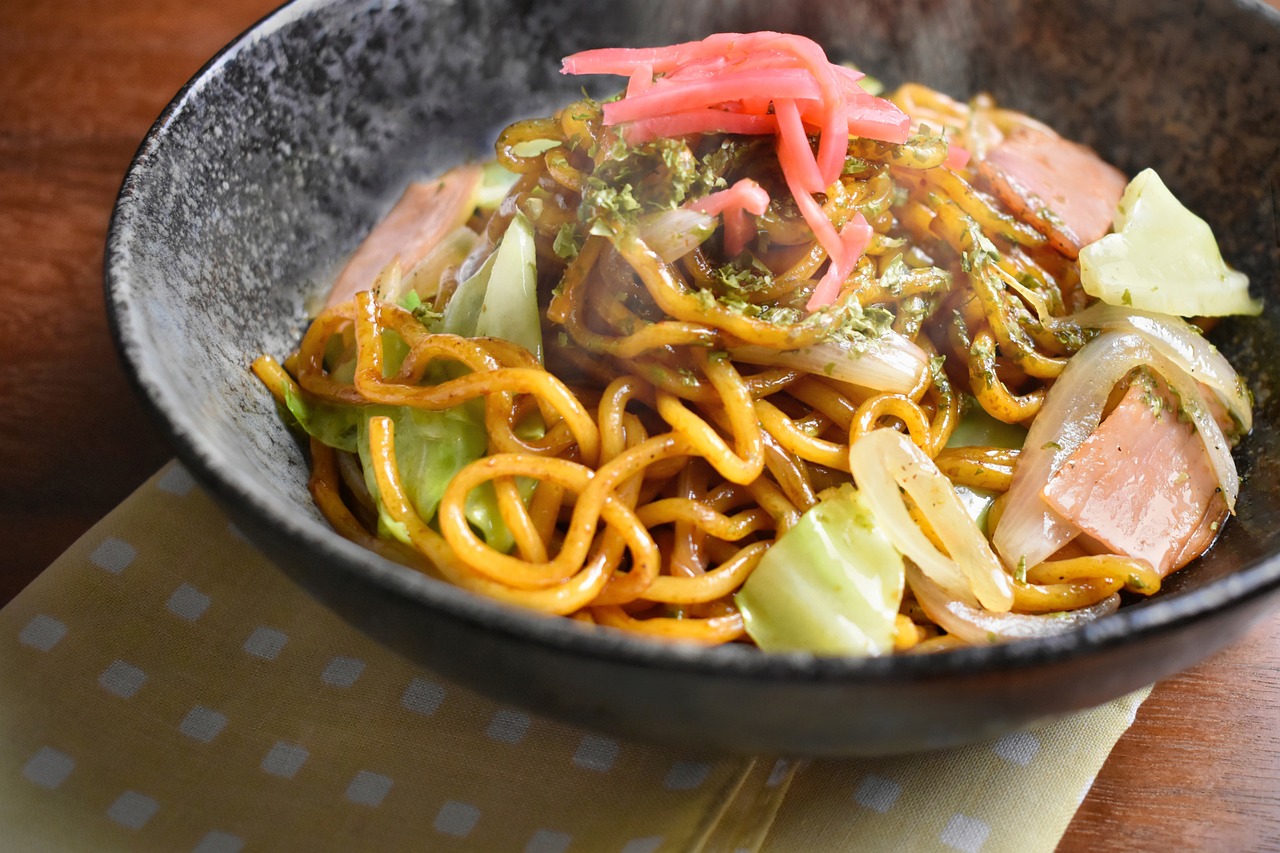
What Is Yakisoba (and Where Does Beef Fit In)?
Yakisoba (焼きそば, “fried noodle”) is Japan’s festival-stall noodle stir-fry, built on Chinese-style wheat noodles called chukamen — no buckwheat despite the name. It boomed after WWII as cheap, filling street food and now shows up everywhere from matsuri stalls to convenience-store bento. As Namiko Chen at Just One Cookbook notes, pork belly is the traditional protein — but thin-sliced beef has become the go-to swap at home for a richer, meatier finish.
The magic isn’t the noodle or the meat — it’s the sauce. A splash of Japanese Worcestershire (tonkatsu or chuno sauce) balanced with oyster and soy is what makes yakisoba taste like yakisoba and not just stir-fried noodles.
Ingredients (Serves 4)
| Component | Ingredient | Amount |
|---|---|---|
| Beef | Flank steak (or sirloin), sliced 3 mm across the grain | 300 g |
| Soy sauce · sake · cornstarch | 1 tsp each | |
| Neutral oil | 1 tbsp | |
| Noodles & veg | Fresh yakisoba noodles (chukamen) | 500 g (3 packs) |
| Green cabbage, roughly chopped | 3 cups (~250 g) | |
| Carrot, thin batons · yellow onion, sliced | 1 medium · ½ | |
| Spring onions, 4 cm pieces | 3 stalks | |
| Sauce | Japanese Worcestershire (tonkatsu / chuno) | 3 tbsp |
| Oyster sauce | 2 tbsp | |
| Soy sauce · ketchup · sugar | 1 tbsp · 1 tbsp · 1 tsp | |
| Sesame oil (finish) | 1 tsp | |
| Toppings | Aonori, benishoga (red pickled ginger), bonito flakes | to taste |
The 20-Minute Method, Step by Step

- Marinate the beef (5 min). Slice flank across the grain into 3 mm strips. Toss with soy, sake, cornstarch, and 1 tsp oil. Rest while you chop.
- Loosen the noodles (2 min). Open the yakisoba packs into a colander, rinse under warm water for 30 seconds, and shake dry. This unclumps them so they stir-fry evenly instead of clumping into a ball.
- Mix the sauce. Whisk Worcestershire, oyster sauce, soy, ketchup, and sugar in a small bowl. Keep it by the stove — this whole recipe moves fast.
- Sear the beef (60 sec). Heat a wide wok or 30 cm cast-iron pan until smoking. Add 1 tbsp oil and the beef in one layer. Don’t stir for 20 seconds. Toss another 40 seconds until 80 % browned. Push to one side.
- Fire the vegetables (2 min). Add onion and carrot to the empty side, stir 60 seconds. Add cabbage, cook another 60 seconds — you want it wilted but still with snap.
- Add noodles + sauce (2 min). Drop in the noodles and 2 tbsp water. Toss everything together, then pour the sauce down the hot side of the pan. Stir-fry 90 seconds until every strand is glossy and dark.
- Finish and top. Kill the heat, drizzle sesame oil, toss in the spring onions. Plate immediately and top with aonori, pickled ginger, and a generous pinch of bonito flakes. As Yumiko at RecipeTin Japan explains, the bonito flakes dance in the steam — that’s the sign it’s hot enough to serve.

Sauce & Timing Cheat Sheet
| Stage | Heat | Time | Visual Cue |
|---|---|---|---|
| Beef sear | Max, wok smoking | 60 sec | Deep brown edges, pink centres |
| Onion + carrot | High | 60 sec | Onion turns translucent |
| Cabbage wilt | High | 60 sec | Bright green, still snappy |
| Noodle + sauce toss | High | 90 sec | Glossy, brown, no white noodle showing |
Watch: A Full Beef Yakisoba Walkthrough
If you learn better by watching, this homemade beef yakisoba tutorial nails the beef-first-then-noodles rhythm and shows the finished plate with all the classic toppings:

Common Questions, Answered
Are yakisoba noodles the same as ramen or soba?
No. Yakisoba noodles are a Chinese-style wheat noodle called chukamen — same family as ramen but sold pre-cooked and lightly oiled in refrigerated packs. True soba is a buckwheat noodle served cold or in broth, never stir-fried. If you buy dried ramen as a stand-in, boil it 3 minutes, rinse cold, then use.
Which cut of beef gives the best texture?
Flank steak is my default — cheap, lean, and slices thin without shredding. Sirloin, skirt, or hanger all work. Shabu-shabu beef (pre-sliced paper-thin at Japanese groceries) is the fast-lane choice: no knife work, and it cooks in 30 seconds flat.
Can I make it vegetarian or gluten-free?
Vegetarian: swap beef for firm tofu cubes or shiitake and use vegetarian oyster sauce (Lee Kum Kee makes one). Gluten-free is trickier — chukamen is wheat-based. Substitute rice noodles and use tamari plus a GF Worcestershire. Same sauce ratios, same technique, still delicious.
How do I keep the noodles from turning mushy?
Two rules: rinse the fresh noodles first to unstick them, then don’t stir-fry longer than 90 seconds after the sauce hits. Extra water beyond the 2 tbsp turns them gluey. If your pan can’t handle the volume, cook in two batches and combine at the end.
Once you have the sauce ratio memorised, yakisoba becomes your weekly clean-out-the-fridge dinner. Bell peppers, mushrooms, bean sprouts, leftover roast pork — anything works. That’s the whole point of festival food: fast, generous, and never fussy. — Emma


