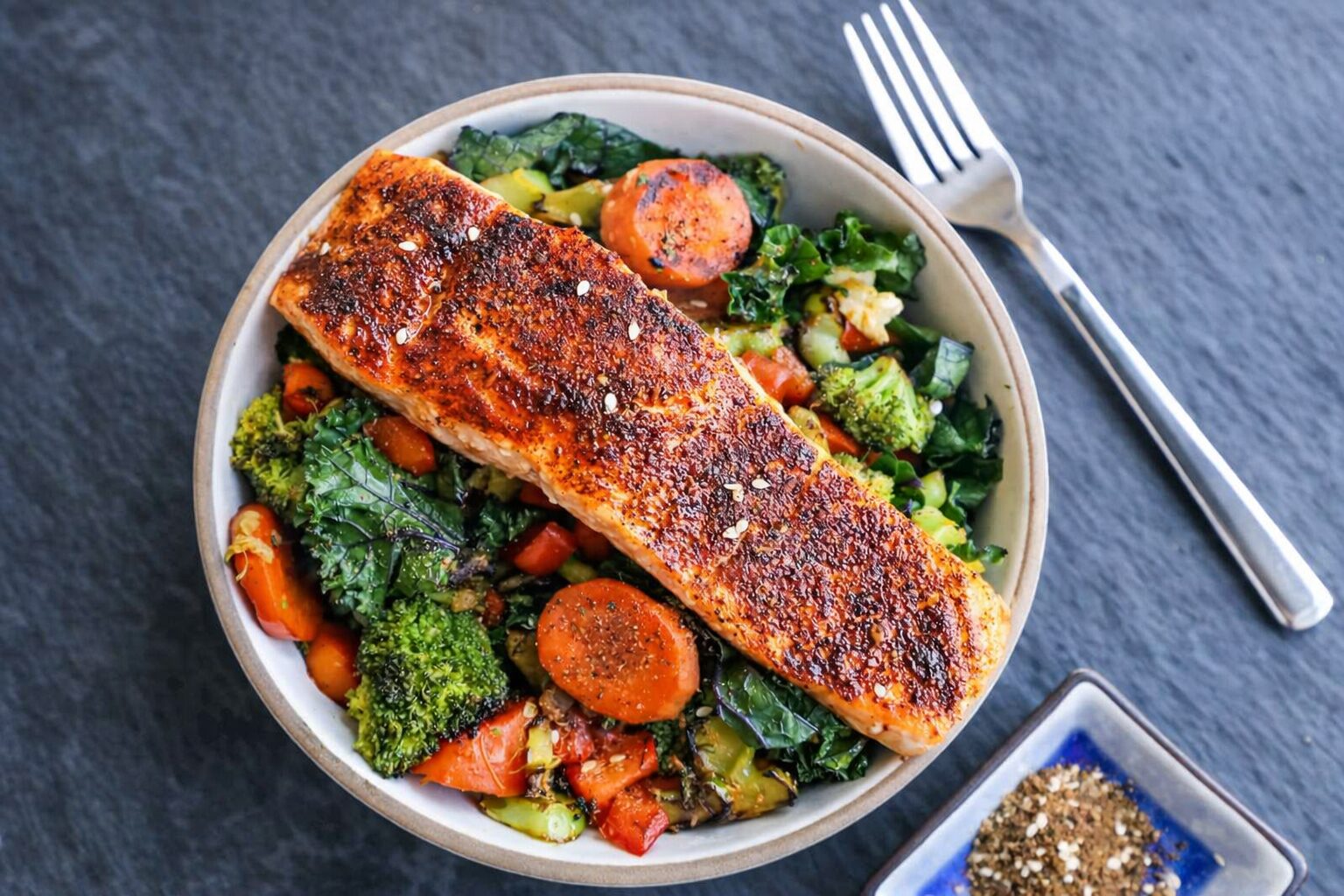
A salmon wellington recipe sits at the intersection of approachable technique and genuinely impressive results. You wrap a seasoned salmon fillet in a spinach-and-cream-cheese layer, seal the whole thing in buttery wellington pastry, and the oven does the rest — producing shatteringly crisp, golden pastry over silky, perfectly cooked fish. In my kitchen tests, this has become the dinner I reach for when I want guests to feel like they’ve sat down at a serious restaurant without me spending the afternoon in distress.
The technique borrows from the classic beef Wellington but works more forgivingly. Salmon’s higher moisture content and shorter muscle fibers mean it reaches target temperature faster and stays tender even with a couple of extra minutes in the oven. The pastry shell acts as an insulating layer, moderating heat transfer to the fish and giving you a wider window of doneness than a bare roasted fillet ever could.
Why You’ll Love This Recipe
The structural logic of a salmon wellington is sound from a meat-science perspective. Puff pastry is roughly 50% fat by weight — those alternating layers of butter and dough create an insulating barrier around the fish that slows the rate of heat transfer. Where an uncovered fillet in a 425°F oven would reach 145°F (63°C) in 12–15 minutes, the same fillet wrapped in pastry takes 22–25 minutes. That slower, more controlled heat curve produces a more evenly cooked result, with no overcooked exterior surrounding an underdone center.
The spinach and cream cheese layer between the fish and the pastry serves two functions. First, it acts as an additional moisture buffer. Second, the fat content in cream cheese coats the salmon surface and prevents direct steam from the fish from soaking into the pastry from the inside — one of the key failure modes of this dish.
This is a dinner-party recipe that scales down to a cozy weeknight if you want it to. The components assemble in 20 minutes and the oven handles everything else.
The Butcher’s Selection – Ingredients & Fat Ratios
The fish selection here matters more than in foil-based recipes because the pastry constrains your ability to adjust mid-cook. Use a center-cut Atlantic salmon fillet, 1 to 1.5 inches thick, skinless. Center cuts are rectangular, uniform in thickness, and wrap cleanly. Tail sections taper and create uneven domes in the pastry that bake inconsistently. Atlantic salmon’s 13–14% intramuscular fat also means it stays moist through the full 25-minute bake — leaner varieties like sockeye risk drying out before the pastry browns.
Use all-butter puff pastry, not vegetable shortening-based. All-butter pastry contains roughly 60% fat versus 45% in shortening versions. That higher fat content produces more distinct laminated layers, a deeper golden color from the Maillard reaction on the pastry surface, and a richer, more complex flavor that complements rather than masks the fish.
- 1.5 lb center-cut salmon fillet, skinless, uniform thickness
- 1 sheet all-butter puff pastry, thawed (approx. 14 × 9 in.)
- 4 oz full-fat cream cheese, softened
- 2 cups fresh baby spinach, wilted and squeezed very dry
- 2 cloves garlic, minced
- 1 tbsp fresh dill, chopped (or 1 tsp dried)
- 1 tsp lemon zest
- 1 tsp Dijon mustard
- 1 egg, beaten (egg wash)
- ¾ tsp flaky sea salt + cracked black pepper
- 1 tsp sesame or poppy seeds (optional, for crust)
Squeezing the spinach completely dry is not a suggestion — it’s structural. Raw spinach is 91% water by weight. Even after wilting, residual moisture steams outward during baking and saturates the pastry from the inside. Properly dried spinach releases less than 5% of that moisture. The difference between a soggy bottom and a crisp one is entirely in how thoroughly you squeeze.
How to Make Salmon Wellington
The assembly sequence is precise. Each layer needs to be cold going into the oven — warm cream cheese or a room-temperature fillet will begin softening the pastry before it reaches the heat, compromising the laminated layers that create the flaky texture. Assemble, then chill briefly, then bake.
- Prepare the spinach filling. Wilt spinach in a dry pan over medium-high heat for 90 seconds. Transfer to a clean kitchen towel and squeeze aggressively until no more liquid comes out. Chop finely. Combine with cream cheese, garlic, dill, lemon zest, salt, and pepper. Mix until smooth and uniform.
- Season the salmon. Pat the fillet completely dry with paper towels — surface moisture is the enemy of pastry adhesion. Season both sides with salt and pepper. Spread a thin layer of Dijon mustard on the top face of the fillet. The mustard adds depth and helps the filling adhere.
- Lay out the puff pastry on a lightly floured sheet of parchment. Spread the cream cheese and spinach filling in a rectangle slightly larger than the footprint of the fillet, centered on the pastry.
- Place the salmon on the filling, mustard side down. Fold the pastry up and over the fillet, pressing the seams firmly. Trim any excess with scissors — a thick double-fold at the seam traps steam and creates a doughy, undercooked edge. Flip the whole parcel seam-side down onto a lined baking sheet.
- Brush with egg wash and score the top surface lightly with a sharp knife in a cross-hatch or diagonal pattern. Scoring creates steam vents and improves the Maillard browning on the pastry surface by increasing exposed surface area. Sprinkle with sesame seeds if using.
- Chill for 15 minutes in the refrigerator. This firms the butter in the pastry and re-tightens any seams that softened during assembly. Do not skip this step if you want clean, distinct layers.
- Bake at 425°F (220°C) for 22–25 minutes, until the pastry is deep golden brown and the internal temperature of the salmon at the center reads target temperature.
- Rest 5 minutes before slicing. The salmon continues to cook at the center for the first 2–3 minutes out of the oven. Resting also allows the pastry layers to set, making clean slices possible.
Use a serrated knife to slice the Wellington, not a chef’s knife. A straight blade compresses the pastry layers on the downstroke and produces a ragged cut. A serrated blade saws through the crust without disturbing the interior, giving you clean cross-sections that reveal the layers beautifully on the plate.
Pro Cooking Tips
Temperature management is everything. The oven must be fully preheated to 425°F (220°C) before the Wellington goes in. A cold or under-temperature oven allows the pastry fat to melt and run out before the layers set, producing a flat, dense crust with no flake. If you have a convection setting, use it — the moving air accelerates surface browning and helps the pastry crisp more evenly.
The egg wash technique matters. Apply it in one smooth, even coat using a pastry brush. Pooling egg wash in the score marks or at the seams causes those areas to brown faster than the surrounding pastry and can burn before the salmon reaches temperature. Brush lightly, once, and let the oven do the work.
For a more traditional take on how this dish is built at the home-cook level, the AllRecipes salmon wellington version is a useful reference point showing how the base technique translates across different filling approaches and pastry brands.
Recipe Variations
🧀 Brie & Leek
Swap cream cheese for thinly sliced brie and replace spinach with slowly caramelized leeks. The brie melts into the salmon during baking for an intensely rich, silky interior.
🌿 Pesto & Sun-Dried Tomato
Spread basil pesto directly on the salmon before wrapping. Add a layer of finely chopped sun-dried tomatoes on top of the pesto. Bright, acidic, and deeply savory.
🍄 Mushroom Duxelles
Replace the cream cheese filling with finely minced mushrooms sautéed down to a concentrated paste. The classic Wellington treatment — earthy, umami-forward, and elegant.
🐟 Individual Portions
Cut the salmon into four 6 oz portions and wrap each individually. Reduce bake time to 18–20 minutes. Cleaner plating and easier temperature control per serving.
Make-Ahead Option
Assemble the Wellington completely — filling, wrapping, egg wash — and refrigerate uncovered on the baking sheet for up to 12 hours before baking. The chill time actually improves the pastry texture by firming the butter layers. Bake directly from the fridge, adding 3–4 minutes to the cook time.
Air Fryer Adaptation
For individual-portion Wellingtons (6 oz each), air fry at 375°F (190°C) for 16–18 minutes. The circulating air produces excellent pastry browning. Check internal temperature at 16 minutes — thin portions cook faster than expected in a confined air fryer chamber.
What to Serve With This Dish
A salmon wellington is rich and self-contained — it needs sides that provide contrast rather than adding more fat or starch to an already substantial plate. Acidic or lightly dressed accompaniments work best, cutting through the buttery pastry and cream cheese layer without competing with the fish.
- 🥗 Watercress salad with lemon vinaigrette
- 🥕 Roasted asparagus with flaky salt
- 🍋 Lemon beurre blanc sauce
- 🥔 Crushed new potatoes with herbs
- 🫛 Tender-stem broccoli with garlic
- 🍷 Dry white Burgundy or Viognier
If you want a faster salmon dinner on lower-key evenings, my classic baked salmon recipe uses the same flavor principles — lemon, dill, butter — in a fraction of the time and pairs with the same sides listed above.
Storage & Meal Prep – Preserving Juiciness
Salmon Wellington is at its absolute best the moment it comes out of the oven. The pastry begins absorbing moisture from the filling the instant it cools, and no reheating method fully restores the initial crisp. That said, leftovers are still genuinely good if handled correctly.
Wrap individual slices in parchment, then loosely in foil. Consume within 2 days. Do not store in plastic wrap — it steams the pastry soft.
Freeze raw assembled Wellington (before egg wash) for up to 1 month. Thaw overnight in fridge, apply egg wash, bake from cold adding 5 minutes.
375°F (190°C) oven, uncovered, on a wire rack, 10–12 minutes. The rack allows air circulation under the pastry base, partially restoring crispness.
The wire rack trick is critical for reheating. Placing leftover Wellington directly on a baking sheet traps steam beneath it and produces a soft, damp bottom crust. A wire rack elevates the parcel so hot air circulates on all sides.
Nutritional Information (Per Serving)
Values calculated for one quarter of a 1.5 lb Wellington with all-butter puff pastry, cream cheese, and spinach filling.
| Nutrient | Amount | % Daily Value* |
|---|---|---|
| Calories | 542 kcal | — |
| Protein | 34 g | 68% |
| Total Fat | 34 g | 44% |
| Saturated Fat | 14 g | 70% |
| Omega-3 Fatty Acids | 1,840 mg | — |
| Carbohydrates | 28 g | 10% |
| Dietary Fiber | 1 g | 4% |
| Sodium | 560 mg | 24% |
| Potassium | 740 mg | 16% |
| Vitamin D | 14 mcg | 70% |
*Percent Daily Values based on a 2,000-calorie diet. Fat values reflect all-butter puff pastry. Omega-3 data from USDA FoodData Central for farmed Atlantic salmon.
Common Mistakes to Avoid
Not squeezing the spinach dry enough
This is the single most common failure point. Residual water in the spinach converts to steam at 212°F (100°C) inside the pastry — well before the salmon reaches 145°F (63°C). That steam has nowhere to go except into the pastry layers, producing a soggy, underbaked underside. Squeeze the spinach twice, by hand, using a clean kitchen towel.
Skipping the refrigerator rest before baking
Warm pastry fat melts before the oven heat can set the laminated layers. The result is a dense, flat crust with no flake. Even 15 minutes in the refrigerator after assembly firms the butter and significantly improves the final texture. An overnight chill produces an even better result.
Using a tapered fillet instead of a center cut
A tapered tail section creates an uneven dome in the pastry. The thin end overcooks to 165°F+ (73°C+) while the thick end is still climbing toward 145°F (63°C). A uniform center-cut fillet — rectangular, consistent in thickness across its length — is non-negotiable for even results.
Leaving thick seam folds on the pastry
Double or triple-folded seams are too thick to bake through at the same rate as the single-layer top surface. They emerge pale and doughy when everything else is golden. Trim seams to a single-layer overlap — enough to seal, no more.
Slicing immediately out of the oven
The salmon’s internal temperature continues rising for 2–3 minutes after the Wellington leaves the oven — carryover cooking inside the insulating pastry shell is more significant than in exposed roasting. Cutting immediately also causes the cream cheese filling to run. Five minutes of rest produces clean, stable slices and a properly finished center.
Frequently Asked Questions
Yes — this is one of the best make-ahead dinner-party dishes available. Assemble the Wellington fully up to 12 hours in advance, refrigerate uncovered on the baking sheet, and apply the egg wash just before it goes into the oven. The extended chill time actually improves the pastry texture. Add 3–4 minutes to the bake time to account for the cold start.
The FDA minimum safe internal temperature for fish is 145°F (63°C), which produces fully opaque, firmly flaky salmon. Many professional cooks prefer 125–130°F (52–54°C) for a silkier, medium texture — particularly with high-fat Atlantic or King salmon. Insert the thermometer horizontally through the pastry end to reach the center of the fillet without puncturing the top crust.
Yes, and most home cooks do. Thaw overnight in the refrigerator — never at room temperature. Room-temperature thawing causes the butter to partially melt and merge with the flour layers, eliminating the lamination that creates flaky texture. Keep the dough cold until the moment you start rolling and assembling.
Three practices work together: dry the spinach completely, chill the assembled Wellington before baking, and bake on a preheated heavy baking sheet. A cold pan going into a hot oven produces a slow initial heat transfer to the pastry base. A preheated sheet delivers immediate bottom heat, setting the pastry crust before the filling moisture has a chance to soak through.
The structure is identical — protein wrapped in a filling layer inside puff pastry — but the behavior during cooking differs significantly. Beef Wellington uses a duxelles (mushroom) filling and requires precise timing because beef continues cooking rapidly after the pastry is done. Salmon Wellington is more forgiving: salmon’s natural fat content keeps it moist through a wider temperature range, and the fish reaches target temperature before the pastry can overbrown at 425°F (220°C).
Ready to Impress at the Table?
This salmon wellington recipe delivers restaurant-quality results from a home oven — golden pastry, silky fish, and a filling that makes every slice look intentional. Make it once and it becomes your dinner-party signature. Tag @MeatRecipesBox on Pinterest when you do.
📌 Pin This Recipe to Pinterest
Salmon Wellington Recipe – Elegant Puff Pastry Dinner
A recipe for salmon wellington, wrapping a seasoned salmon fillet in a spinach-and-cream-cheese layer and puff pastry.
- 1.5 lb center-cut salmon fillet, skinless, uniform thickness
- 4 oz full-fat cream cheese, softened
- 2 cups fresh baby spinach, wilted and squeezed very dry
- 2 cloves garlic, minced
- 1 tbsp fresh dill, chopped (or 1 tsp dried)
- 1 tsp lemon zest
- 1 tsp Dijon mustard
- 1 sheet all-butter puff pastry, thawed (approx. 14 × 9 in.)
- 1 egg, beaten (egg wash)
- ¾ tsp flaky sea salt + cracked black pepper
- 1 tsp sesame or poppy seeds (optional, for crust)
Prepare the Spinach Filling
Wilt spinach in a dry pan over medium-high heat for 90 seconds. Transfer to a clean kitchen towel and squeeze aggressively until no more liquid comes out. Chop finely. Combine with cream cheese, garlic, dill, lemon zest, salt, and pepper. Mix until smooth and uniform.
Assemble the Wellington
Season the salmon. Pat the fillet completely dry with paper towels. Season both sides with salt and pepper. Spread a thin layer of Dijon mustard on the top face of the fillet.
Lay out the puff pastry on a lightly floured sheet of parchment. Spread the cream cheese and spinach filling in a rectangle slightly larger than the footprint of the fillet, centered on the pastry.
Place the salmon on the filling, mustard side down. Fold the pastry up and over the fillet, pressing the seams firmly. Trim any excess with scissors.
Flip the whole parcel seam-side down onto a lined baking sheet. Brush with egg wash and score the top surface lightly with a sharp knife in a cross-hatch or diagonal pattern. Sprinkle with sesame seeds if using.
Chill for 15 minutes in the refrigerator.
Bake at 425°F (220°C) for 22–25 minutes, until the pastry is deep golden brown and the internal temperature of the salmon at the center reads 125–130°F (52–54°C) for medium or 145°F (63°C) for FDA minimum.
Rest 5 minutes before slicing.
- Baking sheet
- Pan
- Kitchen towel
- Pastry brush
- Sharp knife
- Thermometer
The technique borrows from beef Wellington but is more forgiving. Temperature management is crucial for flaky pastry.
Did You Try Our Recipe ?
Scrumptious
My husband (who is extremely picky) loved the liver & onions so much!! I didn’t have any beef broth or Sherry so I used about a tbl of Worcestershire and 1/4 c of white wine …..it was scrumptious
Response from MeatRecipesBox
Oh wow, I’m so happy to hear that!! 😍 I love that you made it work with what you had on hand — Worcestershire and white wine sound like a delicious twist. So glad your husband enjoyed it, especially being picky! Thank you for sharing your version, it makes me smile knowing it turned out scrumptious!
This was amazing
This recipe turned out really amazing! It’s juicy and spiced deliciously. I definitely would use less of the spicy pepper next time, but it really was delicious and I don’t think I’ll make chicken legs any other way from now on.!
Response from MeatRecipesBox
Thank you for taking the time to leave such a thoughtful review. I’m really glad to hear the recipe turned out juicy and full of flavor for you. That’s exactly what I was hoping for when putting it together. Good call on the spicy pepper as well. Adjusting the heat level to your own taste is always the best approach, and using a little less next time should make it just right for you. I really appreciate you trying the recipe and sharing your experience. It’s great to know it worked so well for you.
I Didn’t Expect This Cornbeef Hash Recipe to Taste This Good!!
One skillet. A handful of simple ingredients. Thirty minutes on the clock. And somehow… I ended up with the crispiest, most comforting cornbeef hash recipe I’ve made in years.
I wasn’t expecting much—just a quick, no-fuss meal. But that first bite? Crispy edges, tender potatoes, smoky corned beef, a little kick of pepper. It tasted like something straight off a cozy diner griddle.
Honestly, it caught me off guard—in the best way. Here’s why this simple skillet completely won me over.

Emma Delacourt
Recipe Developer & Founder, MeatRecipesBox
Emma has been developing and testing meat recipes since 2019. She focuses on temperature precision, food science, and making restaurant-quality results accessible for home cooks. Every recipe on this site is tested multiple times before publishing.